GL4100 >
GL4100
Sharp Microelectronics
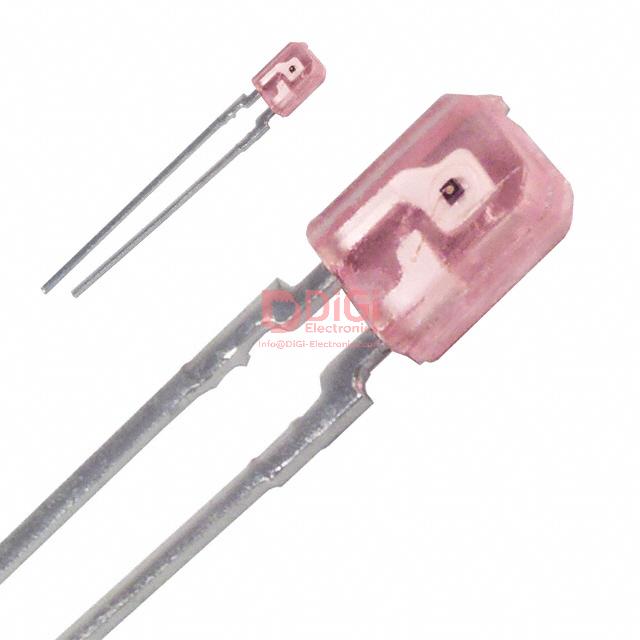
EMITTER IR 950NM 50MA RADIAL
3813 Pcs New Original In Stock
Infrared (IR) Emitter 950nm 1.2V 50mA 180° Radial
Request Quote (Ships tomorrow)
*Quantity
Minimum 1
GL4100 Sharp Microelectronics
5.0 / 5.0 - (171 Ratings)

GL4100

Product Overview

7929559

DiGi Electronics Part Number

GL4100-DG
GL4100

Description

EMITTER IR 950NM 50MA RADIAL

Inventory

3813 Pcs New Original In Stock
Infrared (IR) Emitter 950nm 1.2V 50mA 180° Radial
Quantity
Minimum 1

Purchase and inquiry

Quality Assurance

365 - Day Quality Guarantee - Every part fully backed.

90 - Day Refund or Exchange - Defective parts? No hassle.

Limited Stock, Order Now - Get reliable parts without worry.

Global Shipping & Secure Packaging

Worldwide Delivery in 3-5 Business Days

100% ESD Anti-Static Packaging

Real-Time Tracking for Every Order

Secure & Flexible Payment

Credit Card, VISA, MasterCard, PayPal, Western Union, Telegraphic Transfer(T/T) and more

All payments encrypted for security

Request Quote (Ships tomorrow)
* Quantity
Minimum 1
(*) is mandatory
We'll get back to you within 24 hours

GL4100 Technical Specifications

Category LED Emitters - Infrared, UV, Visible

Manufacturer Sharp Microelectronics

Packaging -

Series -

Datasheet & Documents

HTML Datasheet

GL4100-DG

Reviews

5.0/5.0-(Show up to 5 Ratings)
No***ibe
December 02, 2025
5.0
Their consistent and stable delivery process is something I rely on.
Qui***aven
December 02, 2025
5.0
The support portal is well-organized, enabling me to find relevant help articles quickly.
Happ***rizon
December 02, 2025
5.0
Speedy delivery and thorough after-sales support make me a loyal customer.
Publish Evalution
* Product Rating
(Normal/Preferably/Outstanding, default 5 stars)
* Evalution Message
Please enter your review message.
Please post honest comments and do not post ilegal comments.

Frequently Asked Questions (FAQ)

When integrating the Sharp GL4100 IR emitter into a compact product, what are the primary design risks associated with its 180° radiation pattern and how can they be mitigated?

The broad 180° radiation pattern of the Sharp GL4100 can lead to unintended IR signal detection in adjacent sensors or interference in multi-emitter systems. To mitigate this, consider using optical shielding or baffles to collimate the beam to a narrower angle if precise directional sensing is required. For proximity detection, ensure sufficient spacing between the GL4100 and other IR-sensitive components to prevent crosstalk. Additionally, modulating the IR signal and using synchronized receivers can help isolate the GL4100's output.

What are the potential failure modes and reliability concerns when driving the Sharp GL4100 IR emitter at its maximum continuous forward current of 50mA over extended operating periods in a demanding industrial environment?

Operating the Sharp GL4100 IR emitter consistently at its 50mA maximum forward current can increase junction temperature, potentially accelerating degradation and reducing its operational lifespan. Design considerations should include adequate heatsinking or airflow to manage thermal dissipation, especially in enclosed systems. Intermittent operation or pulsed driving with a higher peak current (within datasheet limits) can often yield similar IR output with lower average power, thereby improving reliability and extending the life of the GL4100. Monitoring the forward voltage can also be an indicator of impending degradation.

If a direct replacement for the Sharp GL4100 IR emitter is unavailable due to inventory issues, what are the critical parameters to consider when selecting an alternative, and what are the risks of mismatch, particularly with the 950nm wavelength and 1.2V forward voltage?

When seeking a replacement for the Sharp GL4100, the most critical parameters are the peak emission wavelength (950nm), forward voltage (around 1.2V), and radiant intensity at a given current. A mismatch in wavelength can significantly affect the sensitivity of your IR receiver. A forward voltage difference will necessitate adjustments to your current-limiting resistor or driver circuit. For instance, if you choose a part with a 1.3V forward voltage, your current-limiting resistor needs to be adjusted accordingly. Always verify the angular distribution as well, as a significant difference might alter your system's detection range or coverage. Direct pin-to-pin compatibility should also be a consideration for ease of integration.

In a system requiring precise IR signal detection, such as an optical encoder, what are the potential integration challenges when using the Sharp GL4100 IR emitter, and how can its 180° emission angle be managed for accurate readings?

Integrating the Sharp GL4100 into precise detection systems like optical encoders presents a challenge due to its wide 180° radiation angle. This broad emission can cause stray light interference or reduce the signal-to-noise ratio if not properly managed. To overcome this, design a narrow aperture or slit in front of the GL4100 to collimate the IR beam towards the target. Additionally, consider using a complementary IR photodetector with a narrow acceptance angle to spatially filter the received signal. Employing modulation and demodulation techniques for the GL4100 can also improve accuracy by distinguishing its signal from ambient IR.

For applications requiring a robust and long-lasting IR illumination source, what are the advantages and disadvantages of selecting the Sharp GL4100, especially when compared to higher-power or surface-mount IR LEDs in terms of thermal management and potential degradation over time?

The Sharp GL4100, as a radial-mount IR emitter, offers simpler through-hole integration and often a more predictable, diffuse radiation pattern compared to high-power SMDs. Its lower maximum current (50mA) generally results in less self-heating for a given optical output, potentially contributing to better longevity if operated conservatively. However, its radiant intensity may be lower than specialized high-power IR LEDs, potentially limiting its effective range. For demanding, continuous high-output applications, thermal management for the GL4100 is still crucial, and alternative SMDs might offer higher efficiency and better thermal conductivity if their integration complexity and higher driving currents can be managed effectively.

Quality Assurance (QC)

DiGi ensures the quality and authenticity of every electronic component through professional inspections and batch sampling, guaranteeing reliable sourcing, stable performance, and compliance with technical specifications, helping customers reduce supply chain risks and confidently use components in production.

Quality Assurance
Counterfeit and defect prevention

Counterfeit and defect prevention

Comprehensive screening to identify counterfeit, refurbished, or defective components, ensuring only authentic and compliant parts are delivered.

Visual and packaging inspection

Visual and packaging inspection

Electrical performance verification

Verification of component appearance, markings, date codes, packaging integrity, and label consistency to ensure traceability and conformity.

Life and reliability evaluation

DiGi Certification
Blogs & Posts
GL4100 CAD Models
productDetail
Please log in first.
No account yet? Register