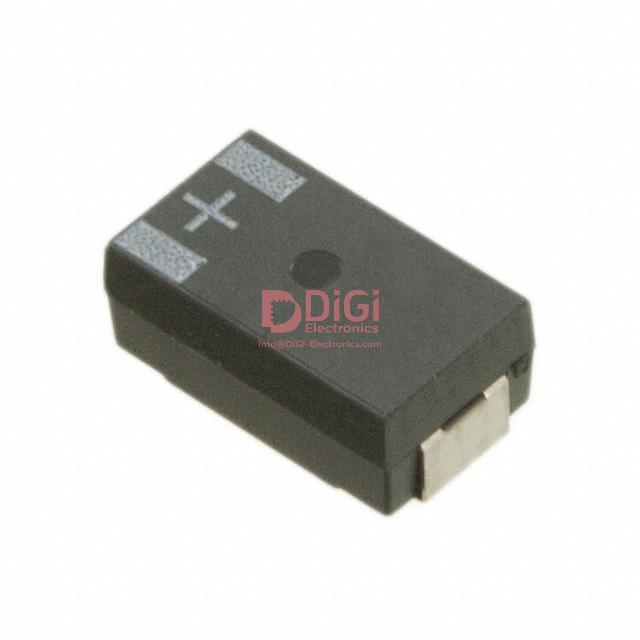
4SW180M >
4SW180M
Rubycon
CAP ALUM POLY 180UF 20% 4V SMD
1132 Pcs New Original In Stock
180 µF 4 V Aluminum - Polymer Capacitors 2917 (7343 Metric) 9mOhm 2000 Hrs @ 105°C
Request Quote (Ships tomorrow)
*Quantity
Minimum 1
4SW180M Rubycon
5.0 / 5.0 - (307 Ratings)

4SW180M

Product Overview

7869544

DiGi Electronics Part Number

4SW180M-DG

Manufacturer

Rubycon
4SW180M

Description

CAP ALUM POLY 180UF 20% 4V SMD

Inventory

1132 Pcs New Original In Stock
180 µF 4 V Aluminum - Polymer Capacitors 2917 (7343 Metric) 9mOhm 2000 Hrs @ 105°C
Quantity
Minimum 1

Purchase and inquiry

Quality Assurance

365 - Day Quality Guarantee - Every part fully backed.

90 - Day Refund or Exchange - Defective parts? No hassle.

Limited Stock, Order Now - Get reliable parts without worry.

Global Shipping & Secure Packaging

Worldwide Delivery in 3-5 Business Days

100% ESD Anti-Static Packaging

Real-Time Tracking for Every Order

Secure & Flexible Payment

Credit Card, VISA, MasterCard, PayPal, Western Union, Telegraphic Transfer(T/T) and more

All payments encrypted for security

Request Quote (Ships tomorrow)
* Quantity
Minimum 1
(*) is mandatory
We'll get back to you within 24 hours

4SW180M Technical Specifications

Category Aluminum - Polymer Capacitors

Manufacturer Rubycon

Packaging -

Series PC-CON, SW

Product Status Obsolete

Type Polymer

Capacitance 180 µF

Tolerance ±20%

Voltage - Rated 4 V

ESR (Equivalent Series Resistance) 9mOhm

Lifetime @ Temp. 2000 Hrs @ 105°C

Operating Temperature -55°C ~ 105°C

Ratings -

Applications General Purpose

Ripple Current @ High Frequency 3.5 A @ 100 kHz

Lead Spacing -

Size / Dimension 0.287" L x 0.169" W (7.30mm x 4.30mm)

Height - Seated (Max) 0.114" (2.90mm)

Surface Mount Land Size 0.287" L x 0.169" W (7.30mm x 4.30mm)

Mounting Type Surface Mount

Package / Case 2917 (7343 Metric)

Datasheet & Documents

HTML Datasheet

4SW180M-DG

Environmental & Export Classification

RoHS Status ROHS3 Compliant
Moisture Sensitivity Level (MSL) 3 (168 Hours)
REACH Status REACH Unaffected
ECCN EAR99
HTSUS 8532.22.0020

Additional Information

Other Names
1189-1636-6
1189-1636-1
1189-1636-2
Standard Package
2,000

Alternative Parts

View Details
PART NUMBER
MANUFACTURER
QUANTITY AVAILABLE
DiGi PART NUMBER
UNIT PRICE
SUBSTITUTE TYPE
EEF-SX0G181ER
Panasonic Electronic Components
877
EEF-SX0G181ER-DG
0.6382
Similar

Reviews

5.0/5.0-(Show up to 5 Ratings)
SportS***ialist
December 02, 2025
5.0
Ich bin begeistert von der Kosteneffizienz bei DiGi Electronics und der benutzerfreundlichen Gestaltung der Webseite.
Herz***Wald
December 02, 2025
5.0
Der Checkout-Prozess war zügig, und ich konnte meine Bestellung ohne Verzögerung abschließen.
Blos***Trail
December 02, 2025
5.0
Bright, eco-conscious packaging made my unboxing a delightful experience, conveying quality from the start.
Mysti***rizon
December 02, 2025
5.0
The quality of products from DiGi Electronics is always top-notch, exceeding expectations.
Chas***Light
December 02, 2025
5.0
Even during peak hours, the site remained responsive and fast.
Publish Evalution
* Product Rating
(Normal/Preferably/Outstanding, default 5 stars)
* Evalution Message
Please enter your review message.
Please post honest comments and do not post ilegal comments.

Frequently Asked Questions (FAQ)

Can I safely replace the obsolete Rubycon 4SW180M polymer capacitor with a Panasonic EEF-SX0G181ER in a high-frequency DC-DC converter design operating at 1 MHz switching frequency?

Yes, the Panasonic EEF-SX0G181ER is a technically viable replacement for the Rubycon 4SW180M in high-frequency applications, but with important caveats. While both are 180 µF, 4V polymer capacitors with similar ESR (~9–10 mΩ), the EEF-SX0G181ER has a slightly larger footprint (7.3 mm x 4.3 mm vs. 7.3 mm x 4.3 mm nominal, but verify land pattern compatibility) and a lower rated ripple current (2.8 A @ 100 kHz vs. 3.5 A for the 4SW180M). At 1 MHz, actual ripple handling may differ due to frequency-dependent ESR behavior—bench validation under load is strongly recommended. Also, confirm thermal management, as sustained high ripple can cause localized heating even with low ESR. Always re-evaluate stability margins in your control loop, as capacitance vs. frequency roll-off characteristics may vary between manufacturers.

What are the key reliability risks when using the Rubycon 4SW180M in an industrial ambient environment with frequent thermal cycling between -40°C and 95°C?

The Rubycon 4SW180M, rated for -55°C to +105°C, can operate within this range, but frequent thermal cycling poses reliability risks due to CTE (coefficient of thermal expansion) mismatch between the polymer electrolyte, aluminum electrodes, and PCB. Over time, this can lead to increased ESR or intermittent connections, especially if the PCB lacks proper thermal relief or uses thin copper layers. Although the 2000-hour lifetime is rated at 105°C steady-state, thermal cycling accelerates fatigue beyond Arrhenius-based predictions. Mitigate risk by ensuring adequate pad design per IPC-7351, avoiding placement near high-heat components, and considering underfill or conformal coating in harsh environments. Monitor for ESR drift during burn-in testing.

How does the voltage derating strategy for the Rubycon 4SW180M compare to standard aluminum electrolytic capacitors in a 3.3V rail application with occasional 3.6V transients?

Unlike traditional aluminum electrolytics, polymer capacitors like the Rubycon 4SW180M exhibit more stable performance under light derating, but they still benefit from conservative voltage margins. Operating the 4SW180M at 3.3V nominal (82.5% of its 4V rating) with brief 3.6V transients (90% rating) is generally acceptable due to the robust oxide layer in polymer types. However, avoid sustained operation above 3.8V, as exceeding 95% of rated voltage accelerates oxide degradation, even in polymer designs. Compared to standard electrolytics—which often require 50% derating—the 4SW180M allows tighter design margins, but transient overshoots from inductive loads or hot-plug events must be clamped (e.g., with TVS diodes) to prevent cumulative damage.

Is the Rubycon 4SW180M suitable for parallel configuration to increase ripple current handling in a compact POL (point-of-load) regulator, and what layout pitfalls should I avoid?

Yes, the Rubycon 4SW180M can be used in parallel to boost ripple current capability, but layout symmetry is critical to prevent current imbalance. Place capacitors as close as possible with identical trace lengths and widths to the power and ground planes to ensure even current sharing. Avoid routing one capacitor’s path through vias while another uses direct plane connection, as this introduces parasitic inductance and resistance differences. Also, ensure the combined ripple current does not exceed the thermal limits of the PCB copper—each 4SW180M generates heat despite low ESR. Use thermal vias under each capacitor if stacking more than two. Finally, verify stability: parallel capacitors reduce total ESR, which may require adjusting compensation networks in voltage-mode controllers.

Given that the Rubycon 4SW180M is obsolete, what long-term sourcing and qualification steps should I take before redesigning a medical device power supply that currently uses it?

Since the Rubycon 4SW180M is obsolete, immediate action is required to avoid production disruptions. First, secure last-time buy inventory if feasible, but do not rely solely on it. Second, qualify the listed substitute—Panasonic EEF-SX0G181ER—under full operating conditions, including ripple stress, thermal cycling, and long-term bias testing (e.g., 1000+ hours at 105°C). Perform cross-correlation of impedance vs. frequency plots to ensure dynamic response matches. For medical applications, also validate biocompatibility of materials (though both are ROHS3 compliant) and update your device’s risk management file per ISO 14971. Consider dual-sourcing with a second alternate (e.g., United Chemi-Con APS series) and document all changes per your QMS. Never assume drop-in compatibility without empirical validation in the actual circuit.

Quality Assurance (QC)

DiGi ensures the quality and authenticity of every electronic component through professional inspections and batch sampling, guaranteeing reliable sourcing, stable performance, and compliance with technical specifications, helping customers reduce supply chain risks and confidently use components in production.

Quality Assurance
Counterfeit and defect prevention

Counterfeit and defect prevention

Comprehensive screening to identify counterfeit, refurbished, or defective components, ensuring only authentic and compliant parts are delivered.

Visual and packaging inspection

Visual and packaging inspection

Electrical performance verification

Verification of component appearance, markings, date codes, packaging integrity, and label consistency to ensure traceability and conformity.

Life and reliability evaluation

DiGi Certification
Blogs & Posts
4SW180M CAD Models
productDetail
Please log in first.
No account yet? Register