 >
>


Product overview of LM393DMR2G onsemi dual comparator
The LM393DMR2G from onsemi exemplifies efficient analog signal processing through its dual precision comparator architecture, engineered for both single and split power supply configurations. Its integration within an 8-MSOP package delivers high space utilization, critical for dense PCB layouts in contemporary electronic assemblies. The open-collector output stage facilitates seamless interfacing with a diverse array of logic levels and external pull-up voltages, extending its functional interoperability across TTL, CMOS, and specialized voltage domains.
A core technical advantage arises from the device’s input circuitry, which maintains low offset voltage and delivers accurate differential sensing near the rails. This design ensures reliability under fluctuating supply conditions and ambient noise, a frequent concern in automotive modules and industrial control loops. The common-mode input voltage range encompasses ground to near Vcc, enabling robust operation in low-voltage systems and battery-fed measurement nodes. The ability to drive outputs even when inputs swing to the rail underscores suitability for high-side and low-side detection tasks, such as window comparators within smart sensor interfaces.
In practice, design teams have leveraged the LM393DMR2G’s open-collector topology to implement multi-point wired-AND logic arrangements, optimizing fault tolerance in distributed sensing networks. For instance, consolidating alert signals from multiple sensor nodes through a simple shared bus exploits this comparator’s output flexibility and minimizes external component count. Such applications reveal its value in production environments, where simplified maintenance and system scalability are prioritized.
Thermal and electrical performance metrics—such as propagation delay, input bias current, and power dissipation under high-frequency switching—have proven beneficial for real-time response requirements. Designers routinely select the LM393DMR2G for monitoring voltage thresholds in consumer and automotive circuits, where stringent timing and accuracy must be preserved amid transient disturbances. Noise immunity, achieved through device layout and supply decoupling, supports deployment in factory automation and energy management units, where precise signal discrimination is mandatory.
From an engineering perspective, the LM393DMR2G achieves optimal balance between analog precision and digital compatibility. When integrating legacy hardware with modern MCU-based systems, its consistent performance and pinout familiarity streamline both prototype and volume production workflows. Design margins are enhanced by the device’s predictable response curve across temperature and voltage fluctuations, minimizing calibration overhead and lifecycle maintenance. These characteristics encourage its adoption as a staple component throughout mixed-signal and control system architectures.
Key technical insight emerges from its symmetrical architecture and careful biasing, which together mitigate input offset drift—a persistent challenge in comparators subjected to wide temperature cycling. The device’s operational reliability in mission-critical applications can be attributed to these architectural choices, reinforcing onsemi’s reputation for durable analog solutions. This methodology, when extended to system-wide implementations, facilitates robust fault detection and deterministic safety mechanisms in edge nodes of industrial and transport electronics.
Key electrical characteristics of LM393DMR2G onsemi
The LM393DMR2G embodies a suite of electrical characteristics optimized for robust and precise analog signal comparison within a wide range of systems. Central to its architecture is its ability to operate from a single supply voltage as low as 2.0 Vdc and up to 36 Vdc, or alternatively across symmetrical split supplies ranging from ±1.0 Vdc to ±18 Vdc. This voltage flexibility enables deployment across industrial, automotive, and portable battery-powered applications, where design constraints may necessitate operation at either low or high voltages without circuit redesign.
A distinctive aspect is its ultra-low supply current, specified at 0.4 mA typical, and this figure remains stable regardless of supply voltage fluctuations. This characteristic directly translates to minimized thermal load and extended operation in energy-sensitive designs, particularly in always-on monitoring or sensing subsystems. For projects where cumulative standby current can impact power budgets—such as distributed sensor grids—the comparably flat supply current curve of the LM393DMR2G becomes a decisive factor in component selection.
On the input stage, the comparator exhibits a typical input bias current of only 25 nA, matched with an ultra-low input offset current of 5.0 nA. These parameters, combined with a maximum input offset voltage of 5.0 mV (guaranteed for LM393 and LM293 grades), maintain signal fidelity even when resolving small differential voltages atop substantial common-mode noise. Since the common mode range extends to ground, the device is well-suited for single-supply topologies where the reference level may coincide with the system ground, thus eliminating errors from negative input excursions and supporting accurate measurements close to the lower rail.
The architecture supports input differential voltages up to the full power supply span, a provision that safeguards the device in scenarios with unpredictable or varying input levels, such as fault detection or level-shifting circuits. In practical analog front-end design, these margins protect against damage while ensuring output state clarity, even when input conditions briefly exceed typical operating points.
Deploying the LM393DMR2G in precision threshold detection, zero-cross detectors, or window comparator circuits reveals its resilience. High input impedance allows direct interfacing with high-resistance voltage-divider networks or the outputs of resistive sensors, avoiding signal loading and preserving linearity. The absence of phase reversal further underlines the device’s reliability in mission-critical nodes where comparator output needs to reflect real input conditions unambiguously.
Enhanced noise immunity and rail-to-rail common-mode input compliance address many design pitfalls encountered in compact or mixed-signal environments, such as ground bounce or supply transients. This enables flexible PCB floorplanning without elaborate analog ground routing. Experience shows that leveraging the LM393DMR2G in designs with expansive supply variation and low-voltage logic eliminates the need for complex power management or input attenuation, reducing overall system cost and engineering effort.
Advanced system designers often favor the LM393DMR2G not just for its solid baseline specifications, but also for its predictable real-world behavior under non-ideal power and signal conditions. Its parameter stability and tolerance for diverse supply architectures integrate seamlessly into platforms requiring both analog robustness and digital logic compatibility. These qualities extend the device’s applicability from classic comparator functions into new roles within adaptive control loops, fault monitoring, and power-on reset circuits, reflecting the trend toward tighter analog-digital integration in modern system engineering.
Design features and operating parameters of LM393DMR2G onsemi
The LM393DMR2G from onsemi demonstrates a systematic approach to analog comparator design, emphasizing input resilience, versatile logic interfacing, and stringent quality assurance. Central in its architecture, robust ESD protection at the input stage extends survivability under demanding electrical environments commonly encountered in automotive and industrial control systems. The device’s ESD clamps guard sensitive differential input circuitry against voltage transients, allowing designers to address noisy system nodes without risking catastrophic failure or creeping parametric shifts—a critical reliability advantage when deploying multiple mixed-signal nodes across expansive installations.
On the interface front, output-stage compatibility with a spectrum of digital logic standards—including DTL, ECL, TTL, MOS, and CMOS—is implemented via open-collector outputs, enabling direct connection with downstream circuitry of varying logic families. This architecture ensures fast, noise-immune switching while providing designers the flexibility to tailor pull-up resistors for optimal speed versus power dissipation. Integration into multi-vendor design chains is thus streamlined, reducing system validation time.
In automotive-oriented variants—identifiable by the NCV prefix—additional qualification according to AEC-Q100 and PPAP protocols underscores suitability for safety-critical and long-lifecycle applications. This means predictable performance under wide temperature excursions, rapid thermal cycling, and exposure to mechanical stress. Here, meticulous documentation and lot traceability simplify deployment in regulatory-constrained supply chains.
The device accommodates differential input voltages exceeding the supply rail, a protection mechanism achieved through careful front-end device sizing and current-limiting. Internally, design safeguards constrain the common-mode voltage so it does not fall more than 0.3 V below ground, as sub-threshold operation risks activating parasitic structures or latchup, especially with substrate-injecting events typical in high-speed switching environments. Practically, this is managed by placing resistor dividers or analog protection networks in the signal path, especially when dealing with long cable runs known to pick up ground potentials or negative spikes.
Output capability supports sink currents up to 20 mA, sufficient for driving multiple TTL loads or interface LEDs. However, shorting the output directly to VCC leads to rapid thermal accumulation in the open collector stage. Many experienced layouts employ external series resistors or specify recommended test conditions during factory validation to ensure consistent junction temperature control, especially in compact PCB designs with constrained thermal paths. In real-world deployments, derating curves are referenced to avoid operational boundaries where reliability metrics degrade. This reflects the principle that robust comparator usage entails not just specification adherence but deliberate margining and incident management at the power-interface level.
Such layered attention to protection, qualification, and interface flexibility positions the LM393DMR2G as more than a commodity comparator. Its design allows for seamless drop-in upgrades, while the conservatism in front-end protections and output capabilities directly reduces field returns and lifecycle costs. Selection of this device in an engineering project thus embodies a preference for stable operation under diverse power-quality scenarios, with stress-tested assurance extending from bench prototypes to fleet-scale deployment.
Package options and mechanical dimensions for LM393DMR2G onsemi
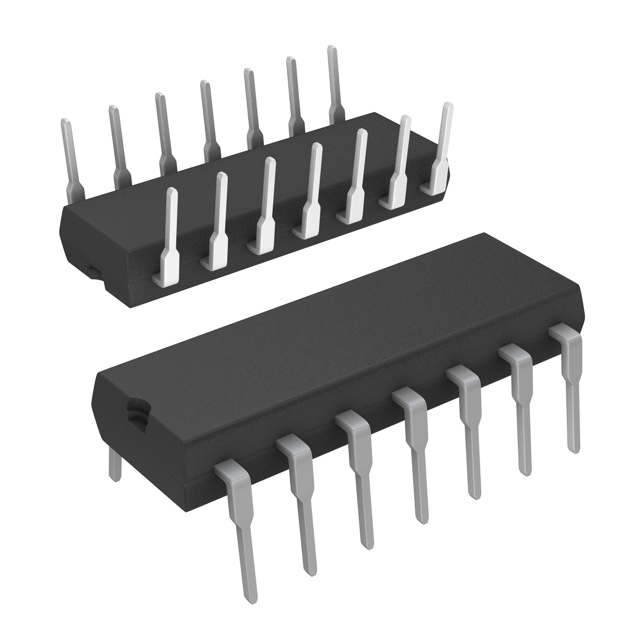
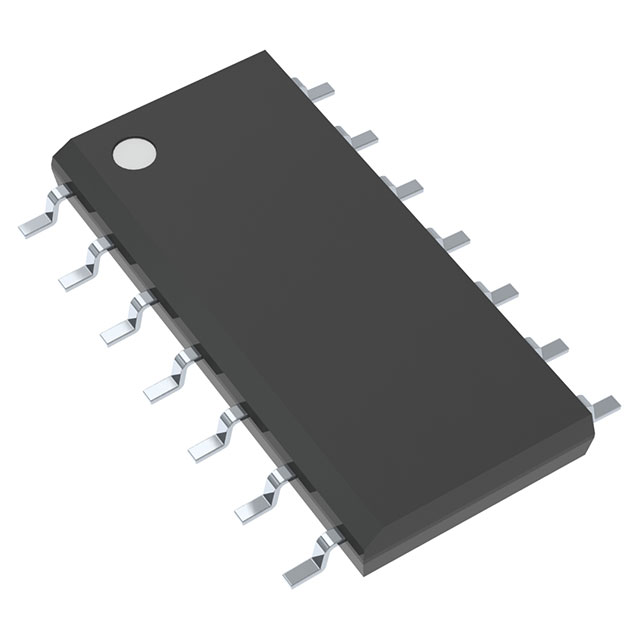
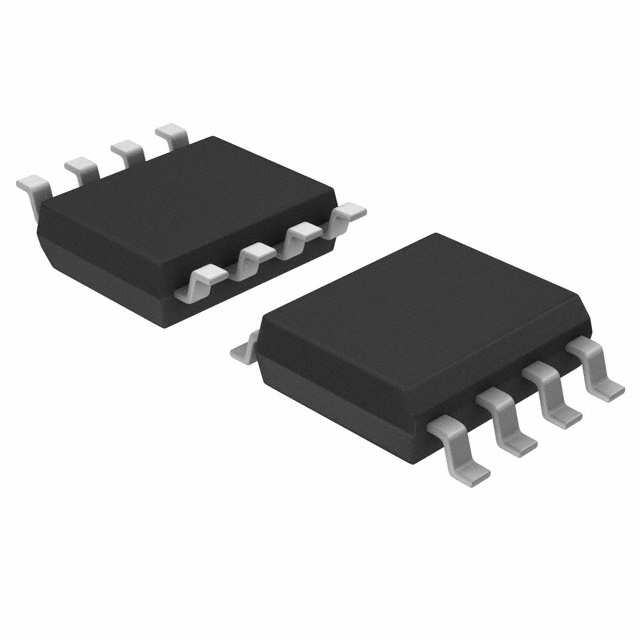
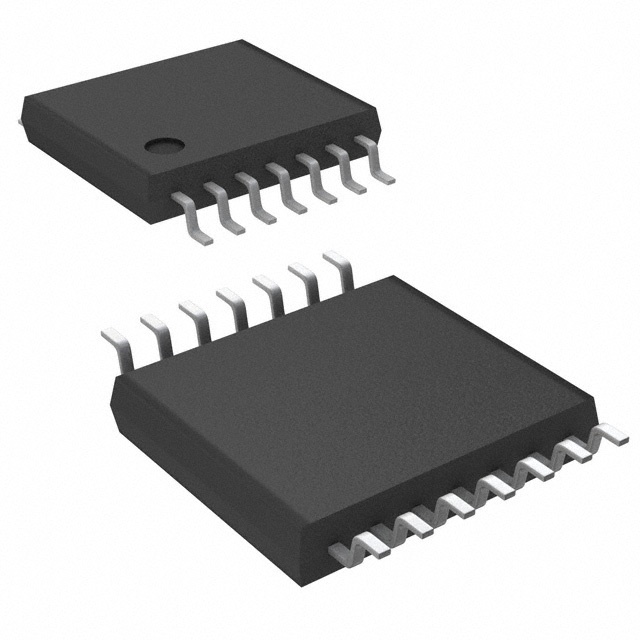
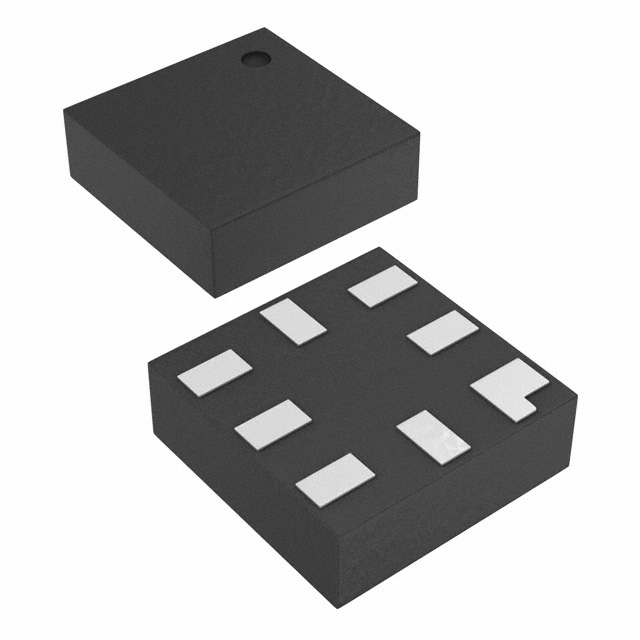
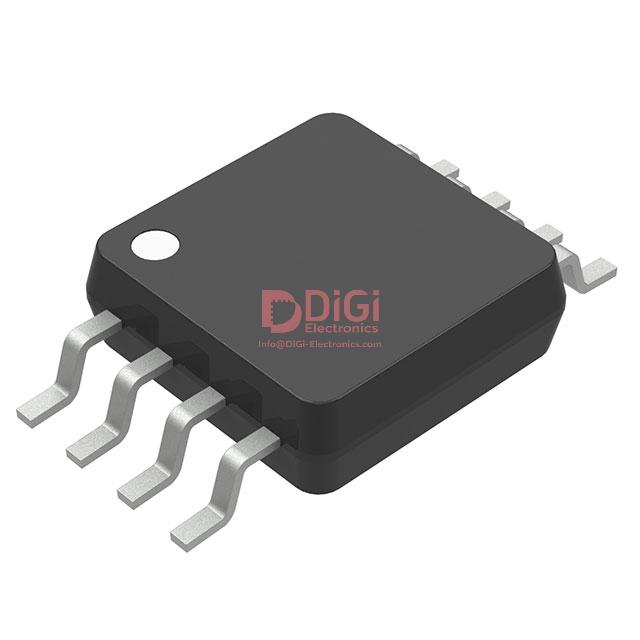
The LM393DMR2G represents an advanced implementation of dual comparators, engineered for adaptability within diverse circuit topologies. Emphasizing engineering efficiency, its availability spans three compact, industry-standard packaging formats: 8-MSOP, SOIC-8, and Micro8. Each configuration embodies precision mechanical design, closely aligned with ASME and ANSI dimensional criteria. This alignment streamlines compatibility within high-throughput, automated assembly environments, minimizing placement errors and maximizing yield.
Core to the device’s versatility, the MSOP-8 package enables high-density PCB layouts suited to miniaturized consumer and portable applications, where board area and thermal management are at a premium. The SOIC-8 format, by contrast, presents increased pin pitch and body dimensions, offering tangible handling advantages during manual and automated reflow processes. The Micro8 configuration further advances integration capabilities for space-constrained circuits, supporting tight arrayed placement and fast, reliable optical inspection.
Mechanical robustness is accentuated through careful attention to case geometry. Features such as reduced mold flash, controlled lead coplanarity, and minimized protrusion are consistently engineered across all packages. These details safeguard against common SMT issues including misalignment, tombstoning, and intermittent contact during both initial assembly and subsequent thermal cycling or vibration events. Pinout clarity is engineered to expedite schematic capture and PCB routing, with design files readily matching standard EDA libraries, expediting time-to-market for new product introductions.
Fabrication materials meet stringent Pb-free and RoHS environmental regulations, integrating seamlessly into global supply chains. Throughout numerous deployment scenarios, from automotive sensor front ends to compact industrial control modules, the LM393DMR2G’s dimensional consistency eliminates unplanned redesigns, facilitating rapid prototyping and production scalability. These packaging strategies encapsulate a balance between manufacturability and electrical performance; the direct relationship between form factor selection and process throughput is evident, empowering designers to optimize for application-specific constraints without compromising reliability.
A nuanced insight emerges in observing the direct impact of mechanical tolerancing on analog signal integrity and thermal performance. Even subtle variances in case form can propagate parasitic capacitance and inductance changes at high frequencies, underscoring the value of standardization not merely for logistical simplification, but for board-level electrical predictability. Experience confirms that appropriate selection and understanding of mechanical options often impart significant downstream advantages, from benchtop prototyping to mass production, particularly when harmonized with robust regulatory compliance and assembly process stability.
Application notes and usage scenarios for LM393DMR2G onsemi
The LM393DMR2G integrates a wide bandwidth and high open-loop voltage gain, characteristics that directly address the dynamic response required in fast-switching or high-frequency analog environments. When deploying the LM393DMR2G in applications where the output is capacitively coupled to the inputs or where board layout introduces parasitic capacitance, particular attention is required to suppress unwanted oscillatory behavior. The device’s susceptibility in these cases stems from its inherent high gain-bandwidth product, which, if undamped, can amplify stray feedback paths. To mitigate this, input resistors below 10 kΩ serve to lower the noise gain and blunt the transconductance edge, yielding more stable transitions during input threshold crossing. Introducing a small degree of positive feedback—typically limited to less than 10 mV—further enforces clean switching by creating a self-holding region; this modulates comparator threshold and suppresses low-level input chatter, which is especially valuable in environments with noisy supply rails or significant ambient interference.
A disciplined engineering approach extends to grounding all unused comparator inputs, a step that cuts down susceptibility to EMI and cross-talk on densely routed PCBs. This hardware practice not only prevents spurious activations but also preserves input biasing integrity, allowing the device to operate predictably across temperature and supply voltage swings—critical for high-reliability analog front-end design.
In practical circuits, the LM393DMR2G exhibits versatility across several canonical topologies. Within zero-crossing detectors, both in single- and split-supply configurations, the device’s fast propagation delay and minimal input offset voltage ensure clean identification of signal transitions with negligible phase error, a property exploited in precision motor control or AC waveform sampling circuits. For free-running square wave oscillators, the combination of high input impedance and rail-to-rail output swing enables stable oscillation over a broad frequency range with consistent duty cycles. In time delay generators, precise threshold definition is achievable through the aforementioned input resistor/positive feedback pairing, resulting in repeatable and low-jitter output pulse widths—an attribute leveraged in timing reference or watchdog applications.
The comparator’s ability to incorporate hysteresis via feedback is foundational for noise-immune signal discrimination. When tasked with slicing signals in harsh analog environments, carefully selected feedback paths (defining hysteresis windows on the order of tens of millivolts) yield robust performance, even where signal integrity is compromised by power electronics or high dV/dt transients.
The layered design strategy behind using the LM393DMR2G emphasizes not only optimizing for canonical parameter sets—bandwidth, gain, and input bias—but also tailoring physical circuit topology to the dominant failure modes of each use case, including noise pickup and regeneration. Through iterative refinement of component values, grounding schemes, and PCB layout discipline, the LM393DMR2G can be entrusted with critical signal processing tasks in systems where deterministic performance and noise resilience are non-negotiable. The device’s characteristic blend of speed and robustness, when harnessed appropriately, yields designs that perform predictably under real-world conditions, often exceeding laboratory expectations when anti-oscillation provisions and feedback networks are engineered with application context firmly in view.
Potential equivalent/replacement models for LM393DMR2G onsemi
Careful evaluation of replacement or alternative models for the LM393DMR2G dual comparator centers on ensuring electrical equivalence, maintaining interface compatibility, and addressing broader system requirements such as extended temperature performance or automotive qualification. Within the onsemi portfolio, close analogs include the LM393E, LM293, LM2903, LM2903E, LM2903V, and NCV2903. Each variant leverages the fundamental architecture of the LM393 family, which is characterized by robust offset voltage parameters, stable input bias currents, and open-collector output topology enabling rail-to-rail interfacing flexibility.
The LM393E preserves core electrical characteristics, including input offset limits and supply voltage range, making it a straightforward drop-in for assemblies that prioritize BOM stability and minimal redesign risk. The LM293 offers expanded usage scenarios by tolerating a wider ambient temperature window, making it suitable for sensor interfaces and monitoring applications subject to environmental fluctuations beyond standard commercial ranges. When requirements dictate more stringent temperature endurance or automotive-grade specifications, the LM2903 series—including LM2903E and LM2903V—introduces options certified for operation from -40°C up to 125°C, with package variations supporting installation in legacy or space-constrained footprints.
For automotive and mission-critical implementations, the NCV2903 is engineered for full compatibility with AEC-Q100 standards, integrating validation protocols for enhanced reliability under vibration, thermal cycling, and voltage transients. This facilitates seamless integration in automotive ECUs and distributed sensing networks requiring subsystem compliance without custom qualification routines.
In practical design reviews, assessing the nuances of propagation delay, output drive capability, and common-mode input range against the target system envelope is essential. Field data suggests that relatively minor shifts in input offset—even within datasheet limits—can materially impact analog decision thresholds in precision comparators, particularly in ratiometric sensor circuits. When migrating across package forms, attention to lead inductance and pad geometry optimizes analog performance and mitigates susceptibility to conducted or radiated EMI. Use-case driven sourcing flexibility benefits from these nearly pin-compatible derivatives, offering streamlined second-sourcing paths as well as production resilience against obsolescence or supply chain volatility.
An implicit insight arises in the cross-selection process: prioritizing suppliers with strong vertical integration and a consistent qualification strategy enhances lifecycle stability for comparator-based subsystems. The LM393 family’s widespread adoption ensures ongoing availability, technical support, and gradual migration opportunities, facilitating engineering decisions that balance immediate functional parity with longer-term platform evolution. By stratifying alternatives according to environmental specification, application domain, and compliance requirements, engineers achieve optimal alignment between device attributes and real-world deployment constraints, minimizing the need for iterative hardware adjustment or recertification.
Conclusion
The LM393DMR2G, a dual comparator from onsemi, establishes a benchmark in precision analogue design through its low-offset voltage architecture and broad input voltage tolerance. Its core topology leverages a differential input stage explicitly engineered to suppress offset drift, ensuring stable threshold detection even under variable temperature and supply voltage conditions. The internal layout minimizes parasitic coupling, reducing the risk of signal error in densely packed PCB designs, while its open-collector outputs facilitate seamless integration into mixed-voltage systems through straightforward pull-up configurations.
Operational efficiency is achieved via its minimized quiescent current, allowing for long-term deployment in battery-powered or energy-sensitive installations. Comprehensive supply range—from 2V to 36V—enables consistent operation across diverse platforms, accommodating both legacy 5V logic systems and higher-voltage industrial boards without additional conditioning circuits. The LM393DMR2G excels in translating analogue sensor data into discrete logic states, underpinning applications in motor controllers, HVAC monitoring, and failsafe interlock circuits. Its disturbance immunity and swift response time are frequently substantiated in demanding environments, through precise pulse discrimination in noisy conditions.
Mechanical form factor diversity plays an influential role in design phase decisions. The device is available in multiple packages, including compact SMD variants optimized for automated assembly and high-density layouts. This flexibility not only expedites the prototyping cycle but also enables targeted cost management during production scaling. A rigorous approach to qualification—including AEC-Q100 compliance for automotive deployment—ensures long-term reliability and compliance with global standards.
Integrating LM393DMR2G into real-world circuits repeatedly demonstrates the advantageous balance between sensitivity and robustness. Its dual-channel format facilitates compact arrangement for dual-threshold monitoring or differential signal comparison, reducing BOM complexity and routing congestion. When paired with precision reference voltages and high-impedance sensors, the comparator maintains low propagation delay and negligible input bias, confirming suitability for high-frequency and low-level signal tasks.
The LM393DMR2G family’s evolutionary support and cross-platform compatibility impart a significant strategic advantage: designs anchored on this comparator can be iterated rapidly to address changing technical or regulatory requirements. This capability, magnified by stable sourcing and backward-compatible revisions, effectively futureproofs infrastructure built upon it. In professional circles, preference for the LM393DMR2G is frequently justified by minimized troubleshooting overhead and a proven record of system-level dependability across semiconductor-heavy deployments.
Ultimately, thoughtful integration of LM393DMR2G enriches analogue front-ends and digital interface layers, serving as a foundational element in circuits prioritizing precision, operational flexibility, and lifecycle longevity. Its nuanced blend of engineering parameters and contextual application support continues to define industry standards in comparator performance.