>
>


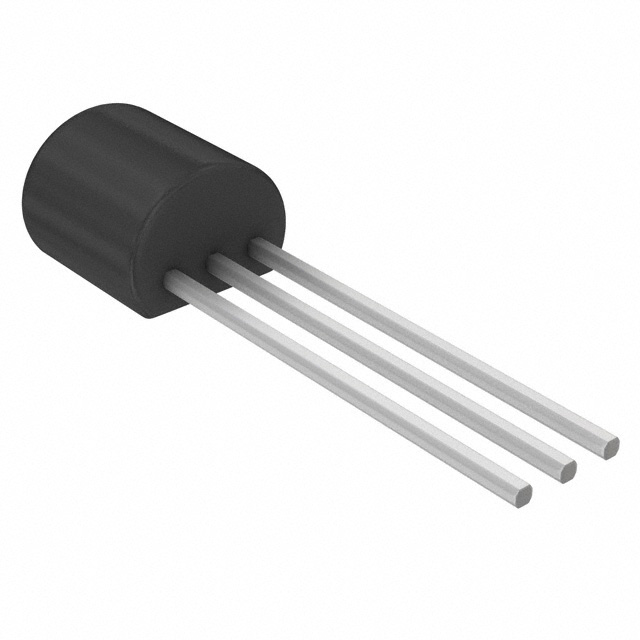
Product overview: FZT790A onsemi PNP Low Saturation Transistor
The FZT790A from onsemi exemplifies a PNP low saturation bipolar junction transistor optimized for surface-mount applications where reliability and spatial efficiency drive system architecture. Utilizing the SOT-223-4 package, the device enables dense circuit layouts, improving thermal transfer while minimizing PCB real estate—a priority in modern compact designs. The device’s key electrical attributes—a 40 V collector-emitter voltage rating, 3 A continuous collector current, and 2 W power dissipation envelope—are tightly calibrated to support medium-power requirements across both intermittent and continuous operation cycles.
At the core of its utility is the transistor’s very low collector-emitter saturation voltage (V_CE(sat)), a characteristic essential for minimizing conduction losses during high-current switching events. This directly reduces system power consumption, translating to less heat generation. Such performance yields measurable improvements in both system efficiency and component longevity, particularly when scaled across numerous switching cycles or in load-driving profiles with frequent state transitions. The low saturation threshold also allows more precise voltage control across load nodes—an important factor in downstream analog and digital signal integrity.
In power management circuits, the FZT790A demonstrates remarkable resilience under repetitive load surges. When used in linear or pulse-width modulated regulators, it promptly adapts to load variations without excessive gain degradation or risk of thermal overrun, even when PCB trace width or copper weight is constrained by overall board design. Device integration into switching circuits, such as high-side drivers or relay interfaces, showcases excellent drive characteristics when turnaround speed and fault tolerance matter. This is further enhanced by the device’s moderate gain bandwidth, which permits versatile use in both amplification and switching topologies without risk of unwarranted oscillation or slow-edge artifacts.
Signal amplification tasks benefit from the FZT790A’s stable current gain at moderate to high collector currents, sustaining low-noise operation across a broad frequency range. Direct replacement in legacy automotive or industrial assemblies has demonstrated the part’s robustness against electrical transients and moderate ambient temperature fluctuations. Its stable operation, even in unregulated environments, underpins its acceptance in field-deployed sensor interfaces and low-voltage analog front ends.
When optimizing circuit thermal profiles, layout designers frequently leverage the SOT-223-4’s exposed pad for enhanced heat sinking via direct soldering to enlarged copper pours. This approach allows greater operational headroom and extends mean time between failure under real-world load. Materials compatibility and package solderability mitigate manufacturing defects, supporting automated assembly while maintaining consistent performance metrics.
A salient observation is that while the FZT790A’s headline characteristics align with numerous mainstream applications, its best-in-class low-saturation performance uniquely positions it for evolving markets that demand battery endurance and miniaturization without trade-offs in switching robustness. Embedded engineers have found particular value in synchronizing this device with microcontroller GPIOs incapable of sourcing high drive currents, enabling robust actuation in low-voltage, space-constrained endpoint devices.
The FZT790A thus embodies a convergence of practical engineering values: efficiency, robust operation under stress, mechanical compactness, and versatile deployment in contemporary circuit designs. Incorporating this device in power and signal chains yields both measurable improvements in system-level metrics and intangible benefits in design predictability and lifecycle reliability.
Key features and advantages of the FZT790A series
High current gain and low saturation voltage characterize the FZT790A series, setting it apart in scenarios demanding efficient power handling and stringent thermal budgets. The device achieves superior collector-emitter efficiency, particularly under elevated collector currents, due to a carefully optimized doping profile and geometric design within its base and emitter regions. This intrinsic structure minimizes the voltage drop during conduction while sharply reducing energy losses, enabling circuits to maintain higher efficiency and tighter thermal margins. For battery-powered systems and space-constrained platforms, such as portable instrumentation or telecom interface modules, these attributes directly translate to extended operational time and increased component reliability.
The transition frequency (ft) of 100 MHz further extends application opportunities, allowing the FZT790A to perform effectively in both high-speed discrete switching tasks and as a gain element in moderate RF circuits, such as preamplifiers and signal conditioning nodes where phase margin and noise immunity are critical. Selecting BJTs with appropriate ft becomes pivotal in driving analog front ends, balancing bandwidth with predictable saturation properties, and avoiding adverse switching artifacts that can compromise signal integrity.
From a compliance and manufacturability viewpoint, full RoHS, Pb-Free, Halogen Free, and BFR Free certifications align with stringent supply chain requirements and global environmental standards. These factors are increasingly non-negotiable for teams designing products for international deployment or sensitive markets. The SOT-223-4 footprint offers practical experience in mitigating thermal hotspots via its expansive tab, while also enabling high-density layouts. Automated pick-and-place compatibility and standardized reflow profiles streamline assembly, reducing production variability and the risk of cold solder joints.
Integration of the FZT790A into circuit designs is further enhanced by its predictable switching characteristics. During prototyping for compact DC/DC converters and protected load switches, consistent low Vce(sat) performance has proven beneficial in minimizing heat dissipation around dense component clusters, simplifying thermal modeling and allowing for lighter cooling solutions. A distinctive viewpoint emerges in leveraging the device’s robust gain response across a wide temperature envelope, supporting stable biasing even in the presence of supply fluctuations or under heavy load transients.
SBOM planning and long-term field support are also facilitated by the series’ broad qualification and sustained availability. In sum, the FZT790A embodies a synthesis of electrical performance, compliance, and manufacturability. For engineers optimizing for efficiency, footprint, and regulatory assurance, it presents a balanced intersection of physical properties and practical deployment merits.
Absolute maximum ratings and reliability considerations for the FZT790A
Absolute maximum ratings define the operational boundaries for the FZT790A and provide the framework for ensuring device longevity and maintaining a stable system design. These limits, set by the manufacturer, demarcate the safe working envelope—exceeding them not only elevates the risk of irreversible degradation but also often initiates silent damage processes that accumulate over time. At 25°C ambient, the collector-emitter voltage must not surpass 40 V, while the continuous collector current should be held at or below 3 A. The upper threshold for junction temperature is 150°C, demanding specific attention to thermal management.
Internally, excess voltage can induce avalanche breakdown within the collector-base junction, resulting in localized heating and the generation of defect sites. A sustained overcurrent promotes electromigration in bond wires and metal traces, while excessive junction temperatures accelerate diffusion and intermetallic growth, shortening the useful lifespan of the transistor. The interplay of electrical and thermal stresses often amplifies the susceptibility to early failure; for instance, momentary overvoltage events occurring at elevated junction temperatures can have a disproportionate impact compared with the same event at nominal conditions.
Selecting the FZT790A for applications with pulsed loads or non-steady operational modes introduces additional reliability complexities. Although absolute maximum ratings are provided for DC or steady-state operation, pulsed current spikes—even if brief—can push the junction close to, or beyond, these ratings due to finite thermal time constants. Practical circuit designs mitigate this risk by implementing derating strategies: reducing the applied voltage and current levels relative to the published maxima, especially as ambient temperatures increase or cooling efficiency is constrained. Empirical results in high-switching environments suggest allowing operational headroom of 10–20% below rated maxima provides a robust safety margin, particularly when component tolerances and real-world voltage transients are considered.
Thermal design is a primary safeguard. The use of low-thermal-resistance PCB layouts, appropriate copper land areas, and high-quality thermal interface materials ensures effective heat dissipation. In forced-air or convective environments, placement of the FZT790A within the system’s airflow path significantly lowers junction temperature excursions. Continuous monitoring of both case and ambient temperatures, correlated against instantaneous load profiles, establishes a feedback loop that can trigger preemptive shutdown or current limiting before critical limits are approached.
Long-term field data reinforce the significance of conservative design in applications subjecting the FZT790A to fluctuating or unknown environmental extremes. De-rating the device not only curtails early-life failures but also dampens the aging acceleration caused by cyclical electrical and thermal stress. Additionally, clear communication of operational headroom requirements at the schematic level facilitates maintainability and ease of diagnostic troubleshooting throughout the product lifecycle.
In integrating the FZT790A into demanding or safety-critical systems, a proactive approach to rating adherence is fundamental. Rather than design to the edge, a layered defense—involving specification conservatism, robust thermal architecture, and real-time monitoring—ensures that transient excursions and cumulative fatigue remain within acceptable reliability bounds. This practice elevates overall system durability and informs a disciplined design culture where margin and monitoring are paramount.
Thermal characteristics and PCB mounting guidelines for FZT790A
Thermal management is a pivotal design consideration when integrating the FZT790A in power-dissipating circuits. At its core, the device in a SOT-223 package relies heavily on the efficiency of heat transfer from the silicon junction through the package and into the PCB. The thermal resistance from junction to ambient is significantly influenced by both copper coverage on the board and overall board layout, making PCB design a primary thermal bottleneck in most implementations.
When operating near the typical dissipation threshold of 2 W, the effectiveness of the underlying FR-4 substrate and the chosen land pattern become critical. A standard board size of 76 × 114 × 1.57 mm with a minimal copper area provides a baseline; however, further reduction in junction temperature can be realized by proactively enlarging the copper area connected to the SOT-223 thermal pad. Direct attachment of the package’s exposed pad to a substantial copper plane substantially enhances heat spreading. Via stitching through the thermal pad footprint into internal or back-side ground layers further improves thermal conductivity and reduces hotspots.
Pad geometry and soldering profile directly impact both thermal and mechanical reliability. Precise adherence to the recommended SOT-223/CASE 318H footprint ensures low-resistance joints and consistent thermal contact. An optimized reflow profile prevents excessive intermetallic growth and void formation, which are common sources of thermal failure in high-reliability applications. Reference to onsemi’s specialized soldering documentation minimizes process variations, yielding reproducible results.
From practical deployment, iterative prototyping with variations in copper area and via quantity reveals diminishing returns past a certain footprint size due to spreading resistance limitations of typical PCBs. It becomes clear that a balance must be struck between PCB real estate constraints and target thermal performance; beyond modest increases in copper, board cost and routing complexity rise disproportionately compared to thermal gain. In high-power scenarios, supplementing the PCB-based thermal path with external heatsinking or forced airflow becomes essential.
A nuanced understanding of the FZT790A’s thermal pathway supports robust circuit operation and extended device lifespans. While datasheet guidance forms a foundation, success hinges on disciplined PCB engineering that exploits package features and layout techniques. Ultimately, the reliability envelope for the FZT790A is defined not by package alone, but by the synergy between component, board architecture, and assembly discipline—a point often overlooked in component-centric thermal analysis.
Electrical parameters and performance profiles of FZT790A
Selecting the FZT790A for circuit integration demands a meticulous understanding of its electrical characteristics and their implications in practical scenarios. Central to its appeal is the collector-emitter saturation voltage (VCE(sat)), which remains exceptionally low even at elevated collector currents. This trait is pivotal in minimizing conduction losses, directly enhancing efficiency in power-sensitive applications such as DC-DC converters and PWM motor drivers. Empirical curve analysis reveals that, under sustained high current loads, the device maintains its low VCE(sat), thereby supporting tight thermal budgets and system reliability.
The base-emitter saturation and turn-on voltages (VBE(sat), VBE(on)) are charted across a broad spectrum of collector current values, providing crucial granularity for optimal bias network configuration. This enables designers to tailor the drive circuitry, ensuring rapid and consistent transistor switching. In practice, careful attention to VBE(on) at specific operating points facilitates accelerated rise and fall times, indispensable for high-frequency switching environments.
Current gain (hFE) stability is another core parameter, verified through laboratory evaluation under variable load and drive conditions. The FZT790A maintains predictable gain across its rated collector current envelope, avoiding pronounced beta-rollback at higher currents. This consistent hFE profile simplifies amplification stage calculations and fosters robust behavior under dynamic load transients. Engineering documentation includes detailed hFE versus IC graphs, supporting closed-loop system optimization and error margin reduction in analog signal chains.
Capacitance metrics, specifically input and output capacitance, are engineered for high-speed operation, as evidenced by their bias-dependent variability and minimal parasitic values at low voltages. This contributes to enhanced waveform fidelity in digital switching and reduced electromagnetic interference. When implemented in high-frequency pulse networks or RF front-ends, the low Ciss/Coss translates to lower propagation delays and minimal cross-talk, as validated through waveform integrity measurements.
Power dissipation relative to ambient temperature is critical for thermal management strategy refinement. The FZT790A’s thermal curves, derived from real-world stress tests, guide heat sinking decisions and PCB layout strategies to ensure junction temperature stays within safe limits. Deploying the device in environments with fluctuating airflow or constrained board area highlights the necessity for precise thermal modeling, where the dissipation data informs both passive and active cooling solutions.
Mechanical integration utilizes the SOT-223/CASE 318H package, characterized by dimensional stability and compatibility with both manual and robotic assembly lines. Adherence to ASME Y14.5M, 2009 standards ensures interoperability across automated pick-and-place setups, with tolerances minimizing the likelihood of placement errors and maintaining process uniformity. The mechanical robustness afforded by this package supports repeated thermal cycling, crucial in ruggedized and automotive installations.
Mounting recommendations, including land and footprint patterns, are tailored to maximize solder joint integrity and heat conduction. Optimized pad dimensions influence both yield and reliability during reflow soldering, contributing to predictable thermal impedance and long-term device endurance. Cross-referencing these patterns with specific PCB stackup and copper weight choices offers a practical route to fine-tuned heat dissipation and minimized mechanical stress, as validated through accelerated life testing.
The layered structure of these parameters and their mapped interactions underpins a systematic engineering approach to integration and high-reliability deployment. The FZT790A’s balance of electrical efficiency, mechanical precision, and thermal resilience affirms its suitability for advanced power management and switching architectures, where predictable behavior and endurance are paramount. Implicit in this assessment is the viewpoint that robust pre-layout validation—anchored in comprehensive parametric data and real-world stress profiles—remains the key to leveraging the full potential of this device.
Potential equivalent/replacement models for FZT790A
Effective identification of potential replacement models for the FZT790A begins with a methodical examination of critical parameters. Central to this process are the collector-emitter voltage rating (minimum 40 V), maximum collector current rating (minimum 3 A), and preservation of a compatible surface-mount package type—most importantly, SOT-223 or its functional equivalents. These act as immediate gating factors, shaping the field of suitable alternatives at the earliest design stage.
Electrically, ensuring a low collector-emitter saturation voltage (VCE(sat)) is essential because it minimizes conduction losses during switching cycles and sustains system efficiency, especially in designs where power density and thermal margins are tightly controlled. Additionally, substitutions must provide current gain (hFE or β) on par with or superior to the original, since insufficient gain may compromise drive circuit performance—potentially imposing hidden burdens such as excessive base drive requirements or altered response dynamics. A practical implementation frequently reveals these secondary effects when suboptimal alternatives introduce unanticipated power dissipation in the driving circuitry or even shift the operating region of the transistor outside optimal bounds.
The package selection transcends simple physical compatibility. Variations in SOT-223 land patterns, pinouts, and thermally conductive pad arrangements can challenge retrofit compliance, demanding careful cross-checking against PCB layouts and heat-sinking provisions. When integrating a substitute, measuring real-world thermal resistance from junction to ambient provides clarity on whether the projected performance persists under actual loading and airflow. Some engineers preempt unforeseen thermal bottlenecks by temporarily over-specifying replacement parts, thereby establishing additional design headroom and enabling smoother qualification under diverse environmental scenarios.
Exploring the broader onsemi portfolio, or direct alternatives from established manufacturers such as STMicroelectronics, Nexperia, or Toshiba, often reveals drop-in-compatible models—yet, nominal datasheet conformity should never replace direct bench validation. Parameters including safe operating area (SOA), avalanche energy ratings, and switching speed, while formally secondary, may surface as reliability bottlenecks in high-duty-cycle or safety-critical installations. For instance, certain applications underline the significance of repetitive peak current capability or enhanced robustness under transient events, factors less obvious in standard tables but critical in automotive or industrial switching nodes.
Substituting in high-reliability systems mandates a conservative, data-driven approach: empirical validation across the full range of operational and derated conditions yields a much higher certainty of robust field performance. Fast prototyping using load boards and live-circuit stress tests can expose subtle incompatibilities—such as oscillation tendencies, latch-up susceptibility, or minute performance regressions under cold or hot soak conditions—that traditional parameter matching cannot reveal. Those experiences consistently reinforce the value of not just technical parity, but holistic system compatibility, as the underlying mechanism for truly seamless replacement.
Ultimately, equivalency with the FZT790A is determined not by isolated parameter metrics but by system-level performance under real dynamic stresses. This layered evaluation, from datasheet combing through to in-circuit validation, ensures that alternative models are not only technically pertinent but also operationally robust, providing tangible reliability improvements and flexible sourcing assurance for both current and future design cycles.
Conclusion
The FZT790A, a PNP low saturation transistor from onsemi, addresses critical requirements in compact and energy-efficient electronic systems. At its core, the device leverages low V_CE(sat) characteristics, minimizing conduction losses during switching and steady-state operations. This efficiency is achieved without compromising current capability, supporting collector currents up to 2A, which enables robust signal buffering and power interface functions in space-constrained assemblies such as power management boards, motor driver circuits, and high-density modular systems.
Mechanically, the SOT-223 package optimizes heat dissipation within limited board real estate, aligning with high-reliability targets in both ambient and forced-air cooling scenarios. Proper PCB copper area allocation and strategic via placement directly influence junction temperature stability—a factor often underestimated during fast-paced prototyping cycles. Empirical data reveals that suboptimal board layouts can increase thermal resistance disproportionately, impairing the transistor’s longevity under load. Thus, integrating simulation-based thermal analysis early in the design phase streamlines validation and reduces the risk of field failures.
Electrical robustness is further reinforced by avalanche energy tolerance and reverse polarity resilience, supporting reliable operation in dynamic load environments such as battery-powered devices and automotive subsystems. Selection workflows benefit from the FZT790A’s RoHS-compliant construction and halogen-free status, facilitating smooth qualification processes for international regulatory frameworks.
Given current geopolitical and supply-chain uncertainties, the ability to cross-reference with proven equivalents (such as ZXTN(P)2023G or BCX54-16T1G) without sacrificing electrical or mechanical compatibility is a significant asset. Such flexibility supports agile procurement strategies and mitigates single-source risks.
For circuit designers seeking repeatable performance, the FZT790A’s tightly binned h_FE and low leakage current simplify biasing stability across production batches. These attributes, combined with mature SPICE models and readily available reference designs, streamline iterative hardware validation and accelerate time-to-market. In high-mix, low-volume (HMLV) manufacturing environments, the device’s manufacturability and reliable automated placement contribute to lower defect rates and reduced rework cycles.
Altogether, the FZT790A defines a balanced approach: it unites efficiency, compliance, and integration fidelity, making it a sound investment for projects requiring both immediate performance and long-term maintainability. The device’s characteristics not only address today's performance needs but provide a pragmatic platform for evolving design requirements across diverse applications.