2SC5302 >
2SC5302
onsemi
POWER BIPOLAR TRANSISTOR NPN
2408 Pcs New Original In Stock
Bipolar (BJT) Transistor NPN 800 V 15 A 3 W Through Hole TO-3PML
Request Quote (Ships tomorrow)
*Quantity
Minimum 1
2SC5302 onsemi
5.0 / 5.0 - (384 Ratings)

2SC5302

Product Overview

12931663

DiGi Electronics Part Number

2SC5302-DG

Manufacturer

onsemi
2SC5302

Description

POWER BIPOLAR TRANSISTOR NPN

Inventory

2408 Pcs New Original In Stock
Bipolar (BJT) Transistor NPN 800 V 15 A 3 W Through Hole TO-3PML
Quantity
Minimum 1

Purchase and inquiry

Quality Assurance

365 - Day Quality Guarantee - Every part fully backed.

90 - Day Refund or Exchange - Defective parts? No hassle.

Limited Stock, Order Now - Get reliable parts without worry.

Global Shipping & Secure Packaging

Worldwide Delivery in 3-5 Business Days

100% ESD Anti-Static Packaging

Real-Time Tracking for Every Order

Secure & Flexible Payment

Credit Card, VISA, MasterCard, PayPal, Western Union, Telegraphic Transfer(T/T) and more

All payments encrypted for security

In Stock (All prices are in USD)
  • QTY Target Price Total Price
  • 54 5.2264 282.2256
Better Price by Online RFQ.
Request Quote (Ships tomorrow)
* Quantity
Minimum 1
(*) is mandatory
We'll get back to you within 24 hours

2SC5302 Technical Specifications

Category Transistors, Bipolar (BJT), Single Bipolar Transistors

Manufacturer onsemi

Packaging Bulk

Series -

Product Status Active

Transistor Type NPN

Current - Collector (Ic) (Max) 15 A

Voltage - Collector Emitter Breakdown (Max) 800 V

Vce Saturation (Max) @ Ib, Ic 5V @ 3A, 12A

Current - Collector Cutoff (Max) 1mA

DC Current Gain (hFE) (Min) @ Ic, Vce 20 @ 1A, 5V

Power - Max 3 W

Frequency - Transition -

Operating Temperature 150°C (TJ)

Grade -

Qualification -

Mounting Type Through Hole

Package / Case TO-3P-3 Full Pack

Supplier Device Package TO-3PML

Datasheet & Documents

HTML Datasheet

2SC5302-DG

Environmental & Export Classification

RoHS Status ROHS3 Compliant
Moisture Sensitivity Level (MSL) 1 (Unlimited)
REACH Status Vendor Undefined
ECCN EAR99
HTSUS 8541.29.0095

Additional Information

Other Names
2156-2SC5302
ONSONS2SC5302
Standard Package
54

Reviews

5.0/5.0-(Show up to 5 Ratings)
月***約定
December 02, 2025
5.0
整個購買流程很順暢,運送速度非常快,產品品質令人滿意!
Fre***awn
December 02, 2025
5.0
I've tested their components in harsh conditions, and they have shown excellent resilience and longevity.
Celest***Dreams
December 02, 2025
5.0
Timely delivery paired with durable products makes them my preferred choice.
Skyli***eeker
December 02, 2025
5.0
I appreciate how they handle shipping delays transparently, providing solutions without hassle.
Vivi***ments
December 02, 2025
5.0
Efficient shipping and professional support. My experience was seamless and enjoyable.
Sunn***deUp
December 02, 2025
5.0
Quality packaging maintained the product’s condition during shipping, and its durability is evident.
Publish Evalution
* Product Rating
(Normal/Preferably/Outstanding, default 5 stars)
* Evalution Message
Please enter your review message.
Please post honest comments and do not post ilegal comments.

Frequently Asked Questions (FAQ)

Can the 2SC5302 be used as a drop-in replacement for the older 2SC3852 in a 600V offline flyback converter, and what design risks should I evaluate before making the switch?

While the 2SC5302 (800V, 15A) has a higher voltage rating than the 2SC3852 (650V, 15A), it is not a direct electrical drop-in due to differences in Vce(sat) characteristics and switching behavior. The 2SC5302 exhibits higher saturation voltage (5V @ 3A, 12A) compared to typical 2SC3852 performance, which may increase conduction losses and thermal stress in continuous conduction mode. Additionally, the absence of published transition frequency (fT) data for the 2SC5302 suggests it may be optimized for low-to-mid frequency hard-switching applications rather than high-frequency resonant designs. Before substitution, validate thermal performance under worst-case load, verify snubber circuit compatibility, and ensure gate/base drive current capability matches the 2SC5302’s higher input capacitance. Always perform accelerated life testing under actual operating conditions to assess long-term reliability in your specific topology.

What are the key reliability concerns when using the 2SC5302 in a high-voltage DC-DC converter operating near its 800V breakdown limit, especially under repetitive avalanche conditions?

Operating the 2SC5302 close to its 800V Vceo rating significantly increases the risk of premature failure due to secondary breakdown or localized hot spots, particularly under inductive switching loads. Although the device is rated for 1mA collector cutoff current, real-world leakage can increase with temperature and voltage stress, degrading long-term stability. The 2SC5302 lacks guaranteed repetitive avalanche energy (EAS) specifications—common in modern high-voltage BJTs—making it unsuitable for applications with frequent inductive kickback without external clamping. To mitigate risk, implement a robust RCD snubber, derate the maximum operating voltage to ≤700V (87.5% of rating), and ensure heatsinking maintains Tj well below 125°C during transients. Monitor for gradual increases in Icbo during burn-in testing as an early indicator of degradation.

How does the 2SC5302 compare to the STMicroelectronics BDW93C in terms of thermal performance and ruggedness for linear regulation in industrial power supplies?

The 2SC5302 and BDW93C are both NPN power transistors in TO-3P packages, but the BDW93C (100V, 12A, 125W) is fundamentally mismatched for high-voltage applications like those suited to the 2SC5302 (800V, 15A, 3W). The BDW93C’s lower voltage rating makes it inappropriate for direct comparison in 400–600V bus applications. However, in low-voltage linear regulators (<50V), the BDW93C offers superior power handling (125W vs. 3W) and better thermal resistance (RθJC ≈ 1.25°C/W vs. ~40°C/W estimated for 2SC5302). The 2SC5302’s lower power rating demands careful thermal design—even at modest currents—due to limited heat dissipation in the TO-3PML package. For high-voltage linear applications, consider the 2SC5302 only if voltage blocking is the primary constraint; otherwise, evaluate modern alternatives like the FJA4313 or MJH6284, which offer better SOA and thermal performance at similar voltages.

Is the 2SC5302 suitable for use in a phase-controlled rectifier circuit with inductive loads, and what base drive considerations are critical to avoid false triggering or shoot-through?

The 2SC5302 can be used in phase-controlled rectifiers, but its relatively slow turn-off characteristics (inferred from lack of fT specification and high Vce(sat)) increase the risk of cross-conduction in bridge configurations. With inductive loads, stored energy can cause voltage overshoots exceeding 800V during commutation, especially without fast freewheeling paths. To ensure reliable operation, use a Baker clamp or active base pull-down circuit to accelerate turn-off and minimize storage time. Drive the base with a low-impedance source capable of delivering ≥1A peak current to maintain saturation during conduction, but include a speed-up capacitor (e.g., 10–100nF) in series with the base resistor to improve edge response. Always include a reverse-biased diode across the base-emitter junction to protect against negative voltage spikes during turn-off, which can degrade hFE over time.

What derating guidelines should I follow for the 2SC5302 when used in an automotive under-hood environment where ambient temperatures can reach 105°C, and how does this impact maximum allowable collector current?

In an automotive under-hood environment with 105°C ambient, the 2SC5302’s maximum junction temperature (150°C) leaves only a 45°C margin, severely limiting power dissipation. Given its 3W max power rating at 25°C and typical derating factor of ~20mW/°C above that, allowable dissipation drops to approximately 1W at 105°C ambient. Using the thermal resistance of the TO-3PML package (estimated RθJA > 40°C/W without a heatsink), even 1W dissipation would push Tj beyond safe limits. Therefore, you must use a substantial heatsink (target RθSA < 10°C/W) and apply aggressive current derating: at 105°C ambient, limit Ic to ≤300mA continuous in saturation mode. For pulsed operation, ensure duty cycle and pulse width stay within the safe operating area (SOA) curves—though these are not provided in the datasheet, so empirical validation is essential. Consider switching to a more thermally robust alternative like the NJVMJD44H11 if sustained high-current operation is required.

Quality Assurance (QC)

DiGi ensures the quality and authenticity of every electronic component through professional inspections and batch sampling, guaranteeing reliable sourcing, stable performance, and compliance with technical specifications, helping customers reduce supply chain risks and confidently use components in production.

Quality Assurance
Counterfeit and defect prevention

Counterfeit and defect prevention

Comprehensive screening to identify counterfeit, refurbished, or defective components, ensuring only authentic and compliant parts are delivered.

Visual and packaging inspection

Visual and packaging inspection

Electrical performance verification

Verification of component appearance, markings, date codes, packaging integrity, and label consistency to ensure traceability and conformity.

Life and reliability evaluation

DiGi Certification
Blogs & Posts
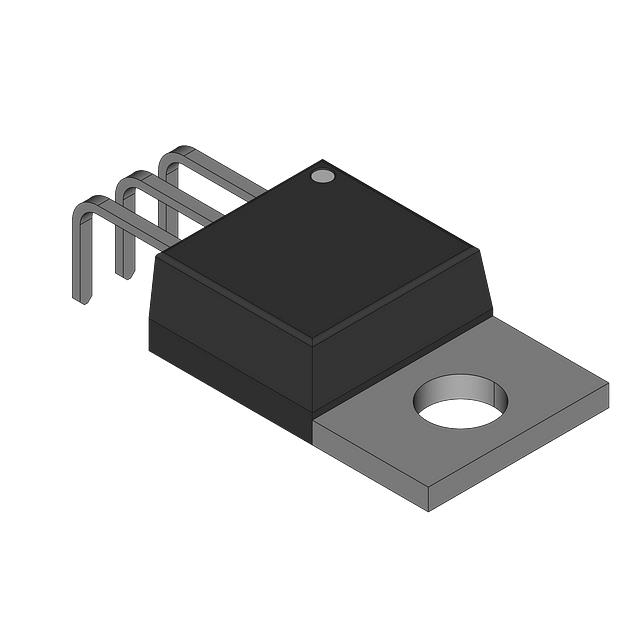
2SC5302 CAD Models
productDetail
Please log in first.
No account yet? Register