>
>


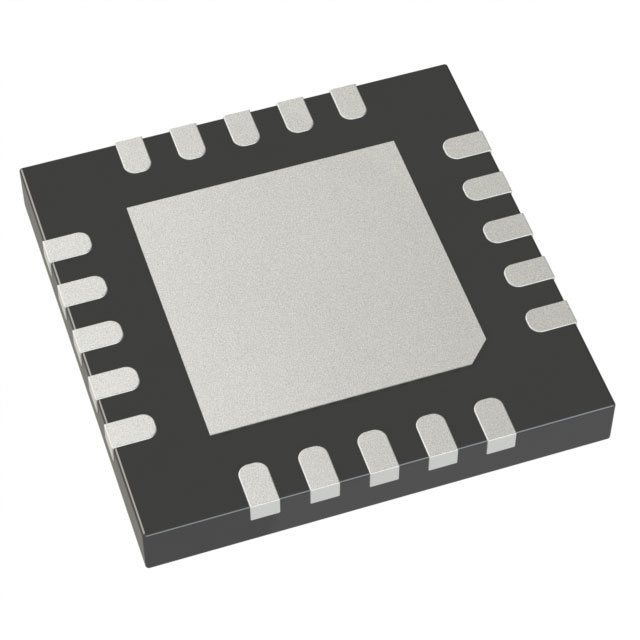
Product Overview: PIC18F4331-E/PT Series Highlights
The PIC18F4331-E/PT microcontroller represents an advanced 8-bit architecture optimized for precise motor and power control. Centered on a robust 40MHz core with an efficient instruction pipeline, it strikes a balance between processing performance and predictable timing—a critical requirement in closed-loop motor and power conversion designs. The 8KB Enhanced Flash memory facilitates flexible firmware updates, accelerates prototyping, and simplifies field upgrades, supporting an iterative product development cycle.
The integrated peripheral suite is engineered for fast, deterministic response in real-time control scenarios. The device’s multiple high-resolution PWM modules operate with programmability, supporting three-phase and single-phase motor drives, resonant power conversion, and digitally controlled power supplies. Combined with the high-speed, multi-channel 10-bit ADC, precise sampling of analog feedback such as current, voltage, or positional signals is enabled, ensuring low-latency control loops and minimal phase lag. Such architectural characteristics are leveraged in applications ranging from variable frequency drives to brushless DC motor systems, resulting in enhanced efficiency, smoother torque response, and adaptive protection logic.
Motion feedback capability is embedded at the hardware level, allowing direct interfacing with sensors like Hall elements, encoders, or shunts. This feature minimizes software overhead and reduces control loop jitter—attributes essential for reliable position and speed regulation. The nanoWatt power-saving suite integrates multiple energy management modes, optimizing quiescent current draw during periods of inactivity or low-load operation. Incremental adoption of these modes has demonstrated observable improvements in overall system efficiency, especially where power budgets are a limiting factor or regulatory compliance is non-negotiable.
The 44-pin TQFP package achieves a compact system footprint while maximizing I/O density and functional multiplexing. Five bidirectional ports and nine independent ADC channels offer flexible analog and digital routing, enabling designers to implement expanded sensor arrays, safety interlocks, and multi-axis feedback—without external expanders. Peripheral mapping further supports seamless integration with high-side/low-side drivers, digital isolators, and gate drive circuits, streamlining PCB layout and reducing signal integrity issues seen in more fragmented solutions.
From a practical integration standpoint, the peripheral responsiveness and deterministic interrupt architecture significantly reduce firmware complexity in control loops. Diagnostics and fault handling routines can execute with minimal overhead, ensuring real-time protection—key for deployment in safety-critical automation and energy control systems. Notably, in densely instrumented motor drive implementations, leveraging the device’s event-driven features translates to lower EMI emissions and improved heat management due to finer pulse control granularity.
Within the broader PIC18F2331/2431/4331/4431 family, the 4331 offers a configuration optimized for scalable control platforms. The combined provision of program Flash, ADC channels, and I/O flexibility positions it as a differentiator for complex mechatronic assemblies—delivering extended sensor fusion capability, expanded actuator integration, and enhanced hardware abstraction for modular firmware architectures. This enables product developers to adapt a single hardware platform across multiple end uses, yielding faster time to market and simplified stock management without sacrificing performance metrics.
The convergence of these hardware and architectural features establishes the PIC18F4331-E/PT as a preferred controller in advanced industrial automation, motion control, and digitally driven power stages. Its platform enables control-optimized, size-efficient designs without the complexity of a 16-bit or 32-bit migration, ensuring predictable performance and cost efficiency within demanding embedded environments.
Architecture and Core Features of PIC18F4331-E/PT
The PIC18F4331-E/PT exemplifies a targeted blend of enhanced architectural mechanisms, tailored for precision embedded control and real-world reliability. At its core, the device employs an advanced PIC18 8-bit CPU architecture, which integrates carefully optimised instruction timing and sophisticated register management. The inclusion of a native 8 x 8 hardware multiplier streamlines multiply operations to a single clock cycle, directly benefitting high-throughput tasks such as motor control, sensor fusion, and algorithmic computations. This multiplier, accessible at both machine-level and through compiler directives, significantly accelerates embedded control loops—where deterministic timing and low-latency numerical operations become critical.
Memory infrastructure is constructed around Enhanced Flash technology, supporting frequent code and parameter updates with endurance up to 100,000 erase/write cycles and assured data retention for up to 100 years. This facilitates deployment in industrial automation or energy management systems, where firmware must adapt to evolving standards or field calibration. High-speed SRAM and EEPROM complement Flash, enabling efficient storage of volatile and non-volatile runtime states. System designers leverage these memories in applications necessitating persistent configuration or rapid buffering—such as dynamic algorithm switching or real-time event logging during operational diagnostics.
Power management is handled through advanced nanoWatt Technology, diffusion-engineered for multi-level power-saving modes—including sleep, idle, and controlled clock throttling. The smart power approach is both hardware- and firmware-controllable, allowing seamless transitions between active and low-power states without constraint on process continuity. This strategy yields observable battery life extensions in portable sensor modules, remote data acquisition nodes, and automotive sub-systems. Practical deployment frequently involves dynamic power mode switching triggered by real-time events, workload prediction, or scheduled tasks.
Real-time performance is further enhanced by a flexible interrupt system, allowing granular prioritization across up to three levels. This mechanism ensures deterministic response to critical events while providing controlled preemption for less urgent tasks. Embedded engineers often configure timer-overflow, ADC completion, and communication error handlers with elevated priority, preserving reliable control loop timing under unpredictable signal conditions.
The device’s self-programmability feature underpins robust in-field firmware maintenance, bootloader flexibility, and straightforward system upgrades. By enabling application code to write to internal Flash, updates can be distributed securely and atomically, minimizing downtime. For example, remote monitoring platforms use this capability for over-the-air bugfixes and feature expansions, without physical intervention.
A distinctive aspect of the PIC18F4331-E/PT is its balanced orchestration of single-cycle arithmetic acceleration, long-lifetime data storage, meticulous power control, and sophisticated real-time responsiveness. This architecture supports practical system requirements—such as tight control bandwidth, dynamic parameterization, and secure field maintenance—while maintaining design simplicity and cost-effectiveness. Such design choices set the foundation for versatile adoption, from high-integrity servo drives to adaptive environmental controls, making the PIC18F4331-E/PT a mainstay where predictable computation, rugged reliability, and scalable software strategy are primary concerns.
Oscillator and Clock Management in PIC18F4331-E/PT
Oscillator and clock management within the PIC18F4331-E/PT architecture unveils a highly adaptable timing subsystem, built to accommodate diverse application demands through a combination of selectable oscillator sources and advanced control circuitry. At the foundational level, the device’s extensive support for up to ten oscillator modes provides tailoring options for both performance and economic constraints. Four of these modes permit direct interfacing with crystal or ceramic resonators, achieving frequencies up to 40 MHz. Such capability streamlines precision timing for control loops, motor drives, and high-speed data acquisition, where signal fidelity and low phase noise are critical.
Complementing crystal-based modes, two external clock input paths expand system integration flexibility, supporting synchronization with alternate sources such as programmable function generators or real-time synchronization modules, a necessity in distributed control or networked sensor clusters. For entry-level or cost-limited scenarios, the inclusion of two resistor-capacitor (RC) oscillator modes achieves a balance between reduced BOM cost and moderate timing stability, a tradeoff often leveraged in ancillary subsystems or non-critical functional blocks. Contributing further, the internal oscillator (INTOSC) block offers eight factory-calibrated frequency options spanning 31 kHz to 8 MHz. This resource, especially when exploited for rapid development or diagnostic modes, minimizes reliance on external hardware and facilitates low-power, quick-start operational modes.
A key architectural enhancement lies in the 4x Phase-Locked Loop (PLL) mode. This mechanism allows the system to leverage low-frequency crystal sources for high-speed operation, attenuating electromagnetic interference (EMI) and easing system compliance with emission standards without sacrificing throughput. In practical mixed-signal environments, the PLL’s isolation from noisy supply lines or board crosstalk becomes indispensable, especially in automotive or industrial control nodes that demand both speed and reliability.
Clock reliability is assured through integrated safeguards. The Fail-Safe Clock Monitor continuously supervises the primary oscillator health, with instantaneous switchover capabilities to the INTOSC to preserve execution continuity under fault conditions. This is particularly valuable in hard real-time applications where clock failure mitigation must be automatic and transparent to upper system layers. Two-Speed Start-up further elevates resilience—initiating device operation with the INTOSC during main oscillator acquisition—eliminating latent boot delays and optimizing power-up sequences in time-sensitive manufacturing processes.
Fine-grained control over frequency accuracy is afforded by the OSCTUNE register, enabling active calibration of the internal oscillator. This register supports post-assembly adjustments to compensate for thermal variations and supply voltage drift, ensuring stability in communication protocols or timing-critical interfaces such as UART or pulse-width modulation. Subtle periodic recalibration, captured during production or maintenance cycles, maintains specification compliance without component-level changes.
Layering these mechanisms together, the PIC18F4331-E/PT exemplifies clock management systems that merge flexibility with robustness. Integration of multiple oscillator modes and dynamic clock switching informs scalable architectures, while empirical experience underscores the tactical use of PLL and OSCTUNE features to exceed baseline timing requirements under real-world stressors. Priority should be given to initial frequency margining and continuous diagnostic strategies to fully realize these advantages in deployed systems, thereby enhancing both reliability and functional scope in advanced embedded applications.
Power-Managed Operating Modes in PIC18F4331-E/PT
Power-managed operating modes in the PIC18F4331-E/PT microcontroller form the backbone of energy optimization in both line-powered and battery-powered embedded systems. The device provides three distinct power domains—Run, Idle, and Sleep—each engineered to balance computational capability against energy expenditure.
The Run mode engages all system resources at full clock speed, ensuring rapid processing and peripheral activity. This mode is essential for compute-intensive periods, such as real-time signal processing, where latency and throughput are prioritized. During continuous motor control or high-frequency data acquisition, the predictable responsiveness of Run mode eliminates the risk of missed events or delayed edge detection.
Transitioning to Idle mode, the microcontroller strategically halts the CPU core while allowing peripherals to remain active. This is crucial for applications involving periodic input, PWM generation, or real-time communication where uninterrupted peripheral functions coexist with infrequent data computation. In practice, leveraging Idle mode extends battery life significantly in sensor networks and remote control systems, especially when peripheral-driven interrupts are the main trigger for event handling. The mode’s efficacy relies on a nuanced design—optimally configuring wakeup sources and fine-tuning timer operations to ensure minimal consumption while maintaining task readiness.
The Sleep mode serves as the most aggressive power-saving stage, suspending nearly all activity except for core data retention and minimal-control logic. With controller currents dropping to sub-microamp levels, Sleep mode allows long-term standby while preserving critical states in memory. Wakeup circuitry, using pin activity or clock sources, can reinitiate higher-power states almost instantaneously. This capability is particularly relevant in remote sensor deployments, medical wearables, and precision battery-driven devices, where runtime requirements impose stringent constraints on energy budgets.
A pivotal mechanism that underpins these modes is the flexible oscillator management. Dynamic clock switching, between internal and external sources, empowers circuit designs to alter speed and power profiles at runtime without compromising timing accuracy. Intelligent clock source selection—often paired with fine-grained power domain control—enables split-second tradeoffs, toggling from high-speed sampling to ultra-low-power monitoring in accordance with workload demands.
Integrated experience in embedded system architecture reveals that successful adoption of such power-managed modes requires well-orchestrated software routines and meticulous hardware layout. Optimal results are driven by interrupt-driven task design, real-time diagnostics on wake/sleep transitions, and asynchronous event handling that minimize unnecessary activity. Peripheral register configuration, coupled with judicious use of low-leakage components, is critical to achieving advertised current thresholds. Early prototyping and power analysis with real system loads often expose overlooked bottlenecks, inspiring refinements in both firmware and hardware.
A nuanced understanding of these power states, combined with robust clock source agility and thoughtful interrupt handling, not only enhances energy efficiency but unlocks new levels of application flexibility. Architectures leveraging the programmable transition pathways of the PIC18F4331-E/PT routinely surpass traditional static systems in performance-per-watt—allowing complex, responsive functionality even in highly constrained environments.
Reset Mechanisms and Reliability Features in PIC18F4331-E/PT
Reset and reliability features in the PIC18F4331-E/PT are designed to ensure system resilience across diverse operating conditions. At the power supply entry point, the hardware Power-on Reset (POR) circuitry monitors initial voltage rise, guaranteeing that device operation begins only once stable supply thresholds are met. Closely related, Brown-out Reset (BOR) continuously supervises supply voltage during runtime, asserting a reset if voltage dips beneath a critical margin, thereby averting undefined logic states and reducing susceptibility to erratic behavior during brownouts.
The Master Clear (MCLR) pin extends external reset control, allowing firmware or supervisory hardware to force a device reset. This pin plays a pivotal role in in-circuit debugging, field upgrades, and robust fail-safe strategies. Integrating the MCLR network with supervision ICs or manual control buttons provides rapid, deterministic fault recovery and simplifies testing of reset-driven state machines.
For resilience against firmware anomalies, the Watchdog Timer (WDT) leverages a programmable timeout architecture. Timeout periods extending from 41 ms to 131 s accommodate both time-critical and slower subsystems. This breadth enables careful tuning: high-frequency servicing for latency-sensitive routines, or longer intervals where debounce or cooperative multitasking is involved. In embedded deployments, a well-configured WDT dramatically limits the mean time to recovery (MTTR) following code execution stalls or peripheral lockups. Field observation shows that, by synchronizing WDT servicing with critical loop completions, system recovery can be made both targeted and minimally invasive, avoiding unnecessary resets caused by benign non-determinism.
Stack overflow and underflow detection, along with a programmable reset response, introduce direct hardware-level protection to the subroutine call stack. This feature is critical in scenarios with tight memory constraints or where untrusted code paths might induce malformed returns. By triggering a forced reset on stack boundary violations, the device preempts stack corruption propagation, a common root cause of persistent system instability in embedded platforms. Fine-tuning the reset behavior to match the exception criticality enables a balance between uptime and safety, especially in safety-instrumented systems or industrial controls.
Diagnostic fidelity is addressed through the RCON register. Persistent storage of reset causality flags equips developers with granular insight into prior events, whether a POR, BOR, MCLR, WDT, or stack-related reset. Leveraging this information at startup empowers predictive maintenance routines, adaptive configuration strategies, and more secure boot loaders that can respond conditionally to the reason for the latest reset. With careful logging and post-mortem analysis, latent design flaws and environmental vulnerabilities can be surfaced and mitigated, directly translating into sustained product reliability in the field.
The interplay of these reset mechanisms with programmable and diagnostic capabilities builds a robust foundation for high-reliability application domains such as industrial automation, remote instrumentation, and motor control systems. Well-engineered reset strategies not only guard system integrity but also accelerate root cause analysis and long-term operational stability, distinguishing resilient hardware platforms from merely functional ones.
Memory Organization and Data Handling in PIC18F4331-E/PT
Memory resources in the PIC18F4331-E/PT are architected to balance robust program execution with flexible data management, supporting demanding embedded control applications. The 8KB Enhanced Flash program memory delivers not only sufficient capacity for compact control code but also incorporates code protection mechanisms and the ability to execute self-modifying routines. This supports secure firmware updates and dynamic code adaptation—a valuable advantage in applications requiring field calibration or customizable behavior, such as adaptive servo controls or intelligent sensor nodes. The self-write capability must be managed carefully, with appropriate interrupt masking and power event handling to mitigate the risk of memory corruption during runtime reprogramming.
A dedicated Data EEPROM segment, comprised of 256 bytes rated for high endurance (1,000,000 erase/write cycles), provides a tailored solution for storing persistent configuration data or critical parameters subject to frequent updates. This endurance and nonvolatile nature allow for routine storage of calibration constants, operational logs, or user-defined variables, even in harsh or power-cycled environments. In practice, efficient write-cycling mechanisms and wear-leveling algorithms can be integrated at the software layer to extend the lifespan of EEPROM resources when extensively utilized for parameter logging.
The device’s 768 bytes of user RAM, managed through a banked Harvard architecture, enables high-throughput data manipulation. By segmenting RAM into accessible banks, simultaneous code and data access become streamlined, minimizing bus contention and supporting parallelism in time-critical routines. For engineering tasks such as multi-axis servo computation or burst-mode data acquisition, structured RAM mapping coupled with efficient bank switching significantly enhances determinism and execution speed.
Flexible data addressing—encompassing direct, indirect, and indexed modes—serves as a foundational tool for organizing buffers, tables, and stacks. These addressing capabilities allow developers to construct compact ring buffers for signal processing, scalable lookup tables for control nonlinearities, and efficient stack-based state tracking in task schedulers. Indexed addressing streamlines table-driven algorithm implementation, particularly in computational hot spots like control loops or real-time event logging, while indirect addressing proves valuable in generic buffer manipulation and protocol parsing.
Integrated hardware support for table read/write operations further accelerates data-intensive computations by offloading repetitive memory accesses from the CPU. This feature is especially pertinent in applications relying heavily on fixed-point arithmetic, waveform synthesis, or complex state machines, where swift access to compact lookup tables is paramount. Leveraging table instructions in tandem with indexed addressing achieves optimal throughput, minimizing software overhead and maximizing code density.
Pinpointing the interplay between memory organization, addressing flexibility, and hardware acceleration mechanisms is instrumental in exploiting the full potential of the PIC18F4331-E/PT. This calibrated balance allows for deterministic real-time performance and robust nonvolatile data management in environments where reliability and precision are essential.
Peripheral Features of PIC18F4331-E/PT
The PIC18F4331-E/PT microcontroller integrates a comprehensive set of peripherals engineered for deterministic embedded control and precise measurement applications. Fundamentally, its five bidirectional I/O ports provide configurable boundaries, supporting seamless toggling between digital logic levels and analog signal acquisition. These ports couple high-drive capabilities—allowing up to 25mA sink/source per pin—with multi-modal operation, an asset in actuator control, sensor interfacing, or driving opto-isolators directly, streamlining system board layouts where external buffers or drivers would otherwise be necessary.
The presence of three independent external interrupt lines enables robust event-driven architectures. Each line allows direct coupling of asynchronous hardware signals (for instance, encoder pulses or emergency stop triggers) with minimal software latency, enhancing responsiveness. The two 16-bit Capture/Compare/PWM modules offer precision timing and waveform generation. In practice, these facilitate integration of advanced motor control algorithms such as speed regulation or vector control, providing both the resolution and configurability essential for smooth performance in demanding automation environments. Applications using these modules benefit from features like edge-triggered capture and variable duty-cycle PWM outputs, critical for energy-efficient power delivery and noise mitigation in switched-mode circuits.
Serial communication features exhibit significant robustness. The enhanced USART accommodates high-reliability data exchange, supporting RS-232 for legacy data links, RS-485 for industrial multi-node buses, and LIN/J2602 for automotive subsystem networks. Its auto-wake and auto-baud features bring efficiency to multi-drop environments, dynamically adjusting communication parameters or waking from low-power states. This translates into reduced system overhead for network management and greater tolerance of varied signal conditions often seen in field deployments.
The inclusion of an SSP module expands interfacing flexibility, supporting industry-standard SPI and I2C protocols. This hardware-driven functionality offloads critical timing from firmware, reducing complexity and jitter risk in control loops. Applications benefit from seamless communication with peripheral sensors, EEPROMs, and real-time clocks, with the ability to scale up to multi-slave networks or fast data streaming scenarios without sacrificing reliability.
Analog subsystem enhancements include programmable comparator inputs and built-in low-voltage detect (LVD) logic. The comparators enable adaptive thresholding, useful in battery management or fault detection workflows where analog signals must trigger system responses. Integrated watchdog support further underpins operational reliability; periodic system health checks become automatic, reducing susceptibility to firmware lockups or unforeseen runtime states. In well-designed installations, these features collectively reduce downtime and promote autonomous recovery, which are pivotal for critical process control and remote monitoring applications.
Through layering peripheral capabilities atop a robust core, the design philosophy behind the PIC18F4331-E/PT anticipates real-world engineering requirements: compactness of signal routing, minimization of external components, and microsecond-level determinism. It’s evident that optimal use of these features depends not just on API familiarity, but on a systematic approach to signal integrity, resource arbitration, and power budget planning. Subtle efficiencies arise when analog comparators are coupled with digital I/O interrupts for hybrid triggering, or when PWM operations are synchronized with SPI sensor reads for closed-loop control. A nuanced perspective recognizes that leveraging combinatorial features yields tangible increases in system reliability and performance density—crucial metrics in time-sensitive automation, instrumentation, and distributed measurement scenarios.
Power Control PWM Module in PIC18F4331-E/PT
The Power Control PWM (PCPWM) module in the PIC18F4331-E/PT establishes a robust foundation for precise, real-time modulation of power electronic stages, a necessity in modern drive and inverter systems. At its core, the PCPWM architecture integrates up to four independent channels, each supporting 14-bit resolution. This high granularity enables meticulous duty cycle adjustments and fine torque or voltage control, which are essential in field-oriented and direct torque control schemes for advanced motor drives.
Dead-band control is programmable on a per-channel basis, facilitating safe switching in full- or half-bridge topologies. By mitigating shoot-through and cross-conduction, such dead-time insertion ensures MOSFET and IGBT safety even under conditions of aggressive commutation and high current slopes. In actual deployment, fine-tuning dead-time to accommodate device-specific turn-off and turn-on characteristics, as well as PCB layout parasitics, significantly extends reliability and operational margins.
The module accommodates both edge- and center-aligned PWM strategies. Edge-alignment is typically leveraged in simpler single-ended applications or where switching noise thresholds are critical and symmetric harmonics are less relevant. Center-aligned PWM, favored in three-phase vector control and high-dynamic servo drives, delivers superior harmonic attenuation and reduces common-mode EMI. The ability to switch between single-pulse and multi-pulse modes allows seamless adaptation to varying power stage requirements—ranging from unipolar DC-DC regulation to multi-phase synchronous inverters.
Duty and period parameters are dynamically updateable, with built-in interrupt synchronization. Real-time modulation becomes feasible, enabling deterministic implementation of techniques such as space vector modulation or non-linear PWM for optimized harmonic distribution. Integrating interrupt-driven parameter adjustments also underpins cycle-by-cycle current limiting and precise modulation of regenerative braking in energy recovery scenarios.
Each PWM output channel features per-channel override controls and fast-reacting fault management. Active shutdown pathways—triggered by comparator events or external hardware—immediately disable outputs in response to overcurrent, undervoltage, or thermal excursions. These mechanisms are indispensable for safety compliance in industrial drives and power supply units, where cycle-level response to fault events is a pivotal design constraint. Practical experience suggests configuring override logic with hardware redundancy (including external latches or watchdogs) to further enhance functional safety.
Typical application targets include three-phase and single-phase motor control covering BLDC, PMSM, and AC induction motors, as well as switched reluctance and universal motors. In complex inverter architectures, such as solar micro-inverters or frequency converters, multi-channel synchronization of PWMs supports interleaved and phase-shifted operation, thereby reducing current ripple and optimizing thermal profiles. In UPS and DC-DC conversion, high-resolution PWM underpins precise voltage regulation and efficient load transitions.
A subtle but crucial insight arises in the interaction between PWM timing and system-level digital control. The deterministic nature of the PCPWM’s timing architecture offloads critical modulation tasks from the CPU, freeing headroom for high-level algorithms and network communication. This design pattern anticipates the trend toward distributed real-time control in interconnected drives, where deterministic peripheral operation underpins reliable, scalable motion and power management. The PCPWM module in the PIC18F4331-E/PT, through its combination of resolution, flexibility, and robust safety features, exemplifies an integrated approach to demanding power conversion and drive applications.
Motion Feedback and Encoder Capabilities in PIC18F4331-E/PT
Motion feedback in embedded drive systems demands high precision and adaptability, both of which are addressed by the integration of advanced feedback mechanisms within the PIC18F4331-E/PT microcontroller. The Motion Feedback Module (MFM) enhances closed-loop control by providing three independent 16-bit input capture channels. Each channel supports flexible prescaler configuration, allowing developers to tailor the time base for diverse motor profiles and optimize noise immunity through adjustable digital filters. This design supports accurate measurements of signal timing, period, and pulse width, enabling meticulous monitoring of actuator and sensor output characteristics across varying environments.
The embedded Quadrature Encoder Interface (QEI) extends versatility by supporting tri-signal input architecture with QEA, QEB, and INDX channels. This direct hardware-level connection efficiently tracks directionality, velocity, and encoder count rollover or index events, eliminating the need for supplemental external encoder circuitry. High encoder resolution—often essential for precise position feedback in servo drives and robotics—becomes manageable within the system’s real-time constraints. Sequencing tasks benefit from hardware-assisted event detection, while rollovers and indexing facilitate reliable homing and reference operations even in high-speed regimes.
Velocity computation is managed through programmable division logic, empowering developers to dynamically configure sampling intervals for speed measurement. This capability proves vital when implementing advanced algorithms such as Field Oriented Control (FOC) or discrete position and speed control loops within industrial automation frameworks. By modulating the velocity sampling rate, system designers can balance latency and throughput, ensuring that feedback remains cohesive with actuator requirements while avoiding unnecessary computational overhead. Real-world deployment demonstrates the significance of configuring prescalers and filter parameters to minimize jitter, especially in applications where encoder noise, intermittent load disturbances, or high-speed transitions are prevalent.
The interrupt architecture delivers effective resource sharing by multiplexing input capture and encoder functionality—streamlining application complexity and freeing microcontroller bandwidth for supplementary logic, diagnostics, or communications. This mutual exclusivity prevents conflicts during concurrent operation, maintaining system stability and task determinism. Experience reveals that careful event prioritization and nuanced interrupt configuration enhance reliability, particularly in multi-axis coordination schemes where feedback must remain both synchronized and isolated.
Core to these implementations is the ability to adapt the feedback platform to update rates, signal quality, and control intricacies unique to each system. As drive technologies advance, the modular nature of the MFM within the PIC18F4331-E/PT provides an agile toolkit for achieving both fine-grained control and scalable performance. This approach emphasizes low-latency digital feedback, enabling elevated precision without external dependencies—a decisive factor for efficiency gains in next-generation embedded motion designs.
Recommended Usage and Design Guidelines for PIC18F4331-E/PT
Power management forms the foundation for reliable PIC18F4331-E/PT operation. The specified 0.1μF ceramic capacitor per VDD/AVDD pair should be physically located within 6mm of each supply pin to minimize inductive parasitics and localize high-frequency noise suppression. Complement this with bulk capacitance, optimally between 4.7μF and 47μF, positioned close to the power entry point to moderate transients and maintain steady voltage under dynamic load conditions. This arrangement mitigates both board-level EMI and microcontroller voltage dips during switching events, directly influencing analog subsystem fidelity and ADC accuracy.
Reset circuit integrity is essential to secure predictable behavior during both development and field use. The MCLR pin must be equipped with low-impedance pull-up and anti-glitch filtering, tailored for robust response against noise, ESD, and fast transients. When designing for programming or debug access, include provisions for isolation and test points without compromising the reset path’s electrical resilience during normal operation. This dual-mode approach extends system immunity to both bench-side interventions and operational hazards, streamlining firmware iteration cycles without introducing latent reliability risks.
Oscillator selection and layout require precision. For crystal-oscillator modes, route trace pairs tightly and symmetrically, avoiding parallel adjacency to digital lines. Maintain crystal manufacturer layout recommendations, minimizing stray capacitance and grounding sensitive elements nearby, reducing phase jitter and frequency drift. Tactical ground plane segmentation under oscillator sections significantly lowers radiated emissions while enhancing clock stability, crucial for timing-sensitive motor control and sensor interfacing tasks. Where external clocks are provided, ensure amplitude and edge rates conform to input requirements, to prevent sporadic misclocking in high-noise environments.
Unused I/O configuration defines the system’s baseline electromagnetic tolerance. All residual pins should be explicitly configured as outputs driven low, or alternatively, tied to VSS through 1kΩ–10kΩ resistors, nullifying susceptibility to ambient electrical coupling and reducing spurious leakage paths. This approach is pivotal when deploying in industrial settings prone to high voltage induction or in EMC-critical assemblies. Strategic grounding of unused pins also empirically reduces microcontroller sleep current, contributing positively to low-power designs.
Throughout prototyping and volume production, integrating in-circuit programming and debugging tools from Microchip streamlines firmware validation, field update cycles, and factory test sequences. Embedding programming headers early in layout enables seamless transitions from breadboard to automated test stations, minimizing manual handling and rework. Leveraging integrated toolchains—MPLAB ICD or PICkit—alongside boundary scan or serial download protocols, unlocks rapid iteration and traceability, reducing risk of late-stage regression defects.
A nuanced application experience highlights the pivotal importance of synchronized hardware-software co-design. Early adoption of the above physical guidelines in conjunction with firmware fault handling (e.g., brownout detection, watchdog timers) yields systems with demonstrably improved tolerance to real-world stresses. Layering strict pin-state control and precision analog layout, even in resource-constrained projects, routinely results in platforms that sustain calibration, resist ambient interference, and lower the rate of field failures. Such details, rooted in disciplined engineering, often underpin competitive and resilient embedded systems utilizing the PIC18F4331-E/PT architecture.
Potential Equivalent/Replacement Models for PIC18F4331-E/PT
When evaluating viable equivalent or replacement options for the PIC18F4331-E/PT within Microchip’s portfolio, it is essential to consider electrical, firmware, and layout compatibility to minimize transition effort. The PIC18F4431-E/PT presents a seamless substitution, maintaining pin compatibility while doubling available program Flash to 16KB. This expanded memory directly addresses applications requiring more elaborate control loops, additional state logging, or layered communication stacks, especially in advanced motor drive or inverter designs. Importantly, existing board layouts and power supplies remain valid, keeping hardware change costs minimal. Utilizing the PIC18F4431-E/PT often provides a buffer for future firmware expansion, which is particularly advantageous as feature sets evolve.
Where board space or BOM cost are primary constraints, the PIC18F2331/2431 series allows system designers to scale down. These devices retain the core peripheral toolkit—including enhanced PWM modules and analog comparators—yet offer lower pin counts and reduced Flash sizes. This makes them optimal for tightly packaged modules or cost-sensitive designs such as compact sensor nodes or smart actuators, where only essential control logic is required. In practical deployment, pinout reduction can simplify layout for dense multi-board assemblies, but may necessitate remapping of I/O assignments during migration.
Low-voltage operation demands, such as in battery-powered or energy-harvesting systems, are addressed through the PIC18LF4331-E/PT. This variant enables supply operation down to 2.0V, extending device lifetime in intermittently powered designs or where strict energy budgets exist. Notably, firmware and performance characteristics remain almost entirely preserved, which accelerates design validation and reliability qualification phases. Power-sensitive products stand to benefit directly, especially where persistent operation and cold start behavior are design-limiting factors.
For scenarios where more computational bandwidth or specialized digital signal processing is necessary, consideration shifts toward dsPIC or PIC32 families. Here, designers leverage enhanced core throughput, integrated DSP engines, and richer peripheral mixes. However, migrating to these architectures introduces significant code adaptation due to divergent instruction sets, register maps, and interrupt structures. Hardware porting may require schematic updates to accommodate new power or reference requirements. Nevertheless, in high-speed control, sensor fusion, or complex protocol handling, the non-linear gains in performance and capability can justify this upfront investment. Layered migration strategies—such as developing hardware abstraction layers and staged board spins—are effective in mediating transition risk.
In selecting alternatives, direct compatibility should be weighted against roadmap flexibility and long-term supply assurance. Incremental upgrades, as seen with the PIC18F4431-E/PT, offer low-risk, high-leverage value. Conversely, cross-family migration to dsPIC or PIC32 positions products for substantial capability expansion, provided the design team is equipped to absorb the steeper integration curve. Strategic component choices must weigh present requirements against both manufacturing support and architectural headroom, optimizing not only for functional delivery but future-proofing in dynamic application spaces.
Conclusion
The PIC18F4331-E/PT microcontroller demonstrates a high level of integration tailored for advanced motor and power control applications, uniting specialized architectural features with practical flexibility. At the silicon level, the device employs nanoWatt power management mechanisms, minimizing energy overheads without compromising processing performance—an aspect essential for power-sensitive embedded designs. This efficiency is supported by adaptive clocking through flexible oscillator selections, allowing dynamic scaling of throughput to match real-time workload demands. Such features not only optimize energy consumption but also facilitate thermal management, promoting reliability in challenging environments.
Signal-generation capabilities are anchored by high-speed, high-resolution PWM modules, which underpin precise actuation of motors and power stages. The native support for complementary, center-aligned, and phase-shifted PWM modes enables sophisticated drive topologies, including field-oriented control and space vector modulation. These outputs synchronize seamlessly with peripheral feedback channels such as quadrature encoders and high-speed analog-to-digital converters, establishing robust closed-loop control. This tightly-coupled feedback-processing pipeline ensures minimal latency from sensor acquisition to actuation, enabling accurate torque and velocity regulation even in high-inertia systems.
The integration of motion feedback peripherals—such as a dedicated quadrature encoder interface and capture/compare units—streamlines the design of position and speed-control subsystems. These hardware-accelerated feedback paths offload critical-timing tasks from the main processor core, enhancing determinism and reducing firmware complexity. In practice, this architecture supports the realization of sensorless BLDC drives and vector-controlled inverters with reduced bill-of-materials and board footprint.
Complementing real-time control, robust memory and communication subsystems extend the platform’s capability for diagnostics and networking. On-chip Flash and RAM resources permit complex program logic and data buffering, enabling advanced fault-handling strategies and parameterization. Native SPI, I²C, and UART interfaces facilitate seamless integration within distributed automation networks or automotive communication backbones where deterministic messaging is vital. This interface flexibility supports modular scaling of applications, accommodating remote sensors, auxiliary processors, or external safety modules.
Long-term codebase sustainability is achieved through widespread family-level compatibility. The upward-portable architecture and the prevalence of pin-compatible variants ensure straightforward migration as control algorithms evolve or when system requirements outpace initial design thresholds. Experience shows that selecting such scalable microcontroller families early in architecting a platform streamlines later expansions without necessitating disruptive hardware redesigns or rewriting of core firmware logic.
Key to extracting maximum advantage from the PIC18F4331-E/PT lies in methodical application of manufacturer-recommended design methodologies. Careful attention to PCB layout around high-speed PWM and analog ground returns curbs noise injection, which is particularly crucial in high-precision metrology or servo applications. Strategic deployment of built-in diagnostics—such as PWM dead-time insertion and analog comparator-based fault detection—bolsters operational safety margins without excessive firmware burden.
The layered confluence of power efficiency, deterministic control, and communication agility in the PIC18F4331-E/PT aligns well with modern needs in motor drives, solar inverters, and automotive power units. Integrating these elements early in the design cycle fosters code reusability, system scalability, and resilience, positioning the platform as a future-proof choice for evolving embedded control requirements.