 >
>


Product overview: MIC5219-5.0YM5-TR linear regulator from Microchip Technology
The MIC5219-5.0YM5-TR linear regulator exemplifies precision voltage management in compact, high-density electronic designs. At its core lies a refined LDO topology, optimized to maintain a consistent 5V output despite fluctuations in load or input voltage. The regulator supports up to 500 mA, providing ample current for diverse subsystems while maintaining stringent output accuracy—a critical factor for digital logic rails and analog front-ends. Its ultra-low dropout voltage, typically well below 0.5V at full load, permits stable operation even as input voltages approach output levels, directly enhancing energy efficiency, especially in battery-powered architectures.
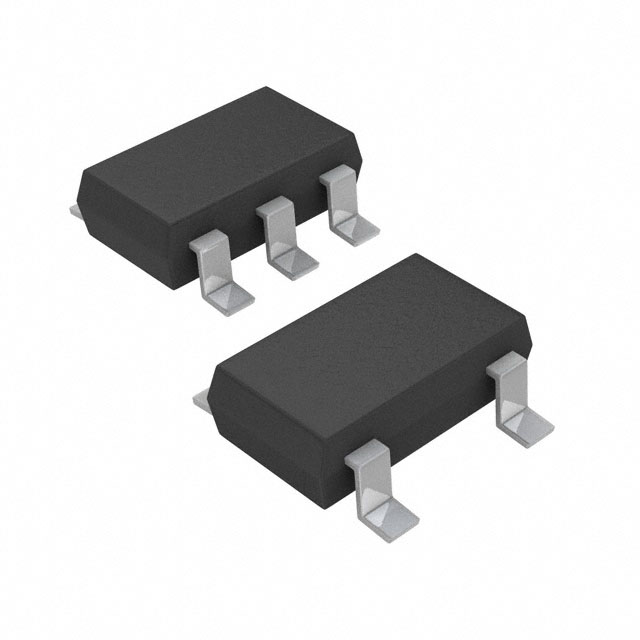
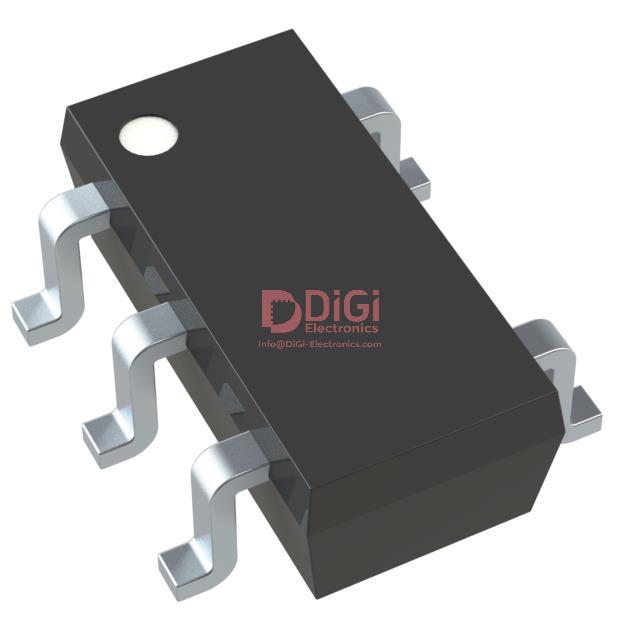
Integrated within the SOT23-5 package, the MIC5219-5.0YM5-TR minimizes PCB area consumption, streamlining layout complexity for space-constrained designs. Thermal performance is carefully balanced: heat dissipation is complemented by thoughtfully engineered protection features. Built-in overcurrent and thermal shutdown safeguards preemptively address fault scenarios, securing downstream circuitry from transient or sustained overload events. This reliability elevates platform longevity in mission-critical devices—where repair or replacement is impractical.
Noise performance is addressed through internal compensation and a precise reference circuit, delivering superior ripple rejection and minimal output voltage deviation. Such characteristics favor sensitive RF circuitry, precision ADCs, and sensor interfaces, limiting the need for downstream filtering. In practical implementation, the device exhibits stable startup behavior and rapid line/load transient response, mitigating voltage droop and overshoot when downstream loads change abruptly—a frequent occurrence in embedded controls and wireless communication modules.
Adapting the MIC5219-5.0YM5-TR in battery-oriented platforms highlights its advantage: low quiescent current and high efficiency translate to extended system uptime, particularly when input voltage trails battery discharge curves. This efficient utilization proves especially relevant for portable medical devices, instrumentation, and IoT nodes, where every microwatt matters and battery replacement cycles are infrequent.
A subtle, yet notable aspect in advanced designs is the regulator’s tolerance to input supply noise and variation. In multi-rail setups, where switching artifacts can propagate, the MIC5219-5.0YM5-TR’s architecture suppresses supply-induced disturbances, maintaining stable downstream performance without resorting to complex noise management techniques.
Evaluating application scenarios, the device fits seamlessly into digital sensor networks and compact consumer electronics, securing clean, reliable power under constrained thermal and spatial limits. When managing power-up sequencing across heterogeneous loads, its predictability in voltage ramping and transient regulation reduces design complexity—enabling tighter system integration.
The MIC5219-5.0YM5-TR illustrates how engineered precision, robust protection, and miniature form factor converge to support evolving requirements for efficiency, reliability, and modularity in next-generation embedded systems. Consistent results under varied operating conditions suggest the regulator’s agility in meeting both legacy and emerging power demands, underscoring its role as a foundational element in reliable circuit design.
Key features and application scenarios of MIC5219-5.0YM5-TR
The MIC5219-5.0YM5-TR linear regulator is engineered for applications demanding rigorous efficiency with minimal voltage overhead. Its defining characteristic is the exceptionally low dropout voltage, typically only 10 mV at light loads, and kept under 500 mV at maximum 500 mA output. This low dropout behavior directly translates to extended operational times in energy-constrained systems and reliable voltage continuity as battery levels decline. The device’s output voltage precision, maintained within 1%, guarantees consistent rail performance, which is fundamental when powering precision analog front-ends, RF blocks, or logic domains sensitive to voltage fluctuation.
Beneath these specifications lies a carefully optimized internal architecture, leveraging advanced pass-element design and precision feedback references. The regulator’s current-handling pathway, coupled with an adaptive control loop, efficiently balances load transients and minimizes ground current across operation ranges. The line and load regulation achieve stability through silicon-level compensation mechanisms, further reducing ripple and suppressing noise propagation—a critical factor in systems where noise margins govern signal integrity, such as high-resolution audio DACs or low-level sensor nodes.
The MIC5219-5.0YM5-TR is fortified with comprehensive protection circuitry. Integrated overcurrent protection ensures safe operation during accidental short circuits by throttling the output, while the overtemperature cutoff disrupts conduction before thermal thresholds can degrade device reliability. The reverse polarity safeguard provides resilience against wiring mishaps during deployment or servicing, mitigating risks of catastrophic failure even in fielded equipment. These features contribute to a robust profile suitable for mission-critical or industrial-grade applications, where power faults must not propagate or induce latent damage.
System interfacing is streamlined through a CMOS/TTL-compatible enable/shutdown lead. This control pin provides hardware designers flexible sequencing and burst-mode power management, supporting battery-powered systems where microcontrollers must enter deep sleep while drawing negligible quiescent current. By enabling almost zero-shutdown current, subsystems can remain dormant for extended periods without draining system reserves, a necessary asset for always-on sensor modules or intermittently activated wireless endpoints.
Application scenarios for the MIC5219-5.0YM5-TR span a broad spectrum of portable and energy-sensitive domains. In ultrabook and handheld computer architectures, rapid load transients from sleep-to-active transitions are commonplace; the regulator’s fast recovery, low inrush limitation, and precision output circumvent voltage sag or digital latch-up events. Battery-powered mobile equipment, such as cellular handsets and wearables, particularly benefit from the device’s low quiescent draw and superior dropout performance, translating to tangible increases in usage cycles between charges. The sub-microvolt noise spectral density becomes particularly valuable in supporting cameras, biomedical instrumentation, or high-speed data acquisition channels where supply noise directly influences end-signal quality. Additionally, PC Card Vcc/Vpp rails, secondary regulation stages in switch-mode power supply (SMPS) architectures, and sensitive analog or high-speed data circuits all capitalize on the regulator’s clean, efficient voltage conversion—often eliminating the need for elaborate filtering.
Practical use occasionally exposes the nuanced interplay between input capacitance, board layout, and the MIC5219-5.0YM5-TR’s stability margin. Bypassing input rails with high-frequency ceramic capacitors close to the regulator’s input pin consistently yields optimum transient results and mitigates electromagnetic interference. During system integration, careful sequencing of the enable logic can coordinate with processor sleep modes to maximize aggregate power savings without introducing start-up voltage overshoot. Thus, the device not only preserves supply integrity but also empowers engineers to implement power architectures that are agile, fault-tolerant, and attuned to the unique demands of modern battery-operated and noise-critical systems.
It is evident that the MIC5219-5.0YM5-TR’s unique blend of low dropout voltage, precise regulation, advanced protection, and flexible feature set supports its deployment in environments where power integrity and energy efficiency directly impact system performance and end-user experience.
Package options and layout considerations for MIC5219-5.0YM5-TR
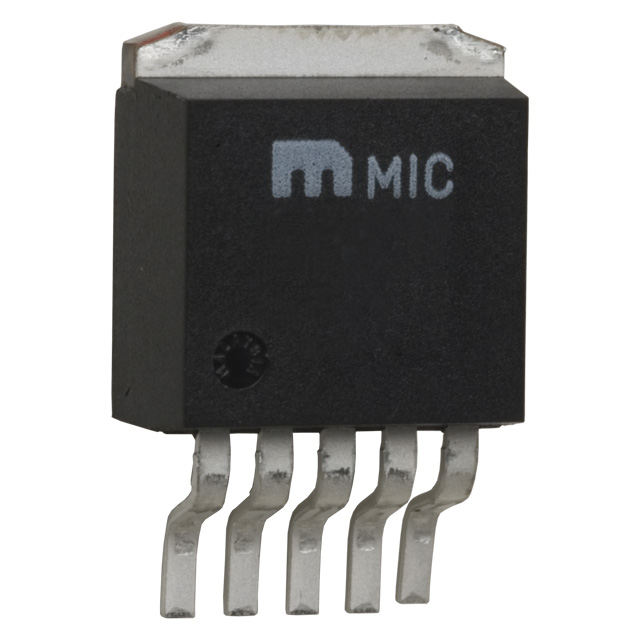
Package selection for the MIC5219-5.0YM5-TR directly influences integration strategy and thermal management within power supply subsystems. The SOT23-5 package, measuring just 2.9 mm x 1.6 mm x 1.1 mm, maps onto modern high-density layouts, making it especially appropriate for size-constrained designs such as wearables and compact IoT nodes. While its small footprint streamlines routing in multi-layer PCBs, it simultaneously imposes a higher junction-to-ambient thermal resistance, typically around 220°C/W under minimum recommended pad dimensions. In practice, minimizing thermal rise often requires refining the land pattern to extend copper below and around the device. Efficient heat spreading through inner layers connected by thermal vias can substantially reduce effective thermal resistance, mitigating derating in elevated ambient environments.
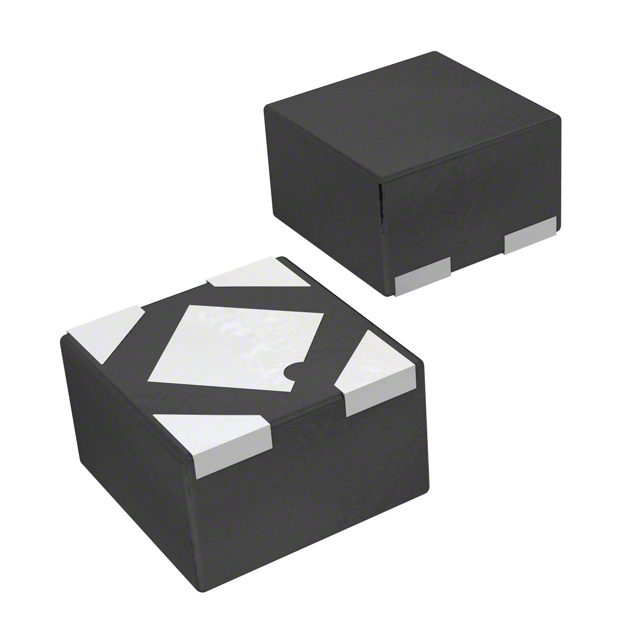
For scenarios demanding higher output currents or superior thermal headroom, alternative packages—MSOP-8, VDFN-6, or TDFN-6—should be evaluated. These options provide increased copper connectivity and thermal pad area. Experience demonstrates that leveraging exposed pad packages together with well-designed ground planes substantially improves convective and conducted heat transport. Balancing solder mask coverage and via density in these regions prevents thermal bottlenecks and ensures reliable long-term operation even under continuous high loads.
Electrical integration is facilitated by thoughtfully arranged pinouts, reducing routing complexity and minimizing parasitics in typical LDO application schematics. Notably, the inclusion of a dedicated bypass pin allows for incorporation of a low-ESR ceramic capacitor; this addition sharply attenuates output voltage noise, which is advantageous in sensitive analog front-ends or RF biasing. Attention to the physical placement and return path of this bypass element can yield a measurable improvement in noise floor and overall supply integrity.
Practically, the optimal package choice aligns with both system-level constraints and board manufacturing capabilities. For example, while SOT23-5 is preferable in minimalistic sensor nodes, migrating to a thermally enhanced package with robust PCB copper around the device can unlock higher-efficiency operation in embedded compute modules. Real-world design cycles benefit from early thermal simulation and iterative prototyping, reducing late-stage surprises and streamlining compliance with thermal derating guidelines.
In sum, selecting the MIC5219-5.0YM5-TR's SOT23-5 variant allows for tight mechanical integration but requires proactive PCB thermal optimization. Alternative packages should not be discounted where long-term reliability and higher power envelopes are critical. Strategic use of bypassing and board copper directly links physical layout with regulator performance, underlining the interconnected nature of package, layout, and application outcome in modern power management circuits.
Electrical characteristics and performance data for MIC5219-5.0YM5-TR
The MIC5219-5.0YM5-TR linear regulator is engineered for precision voltage management within compact, noise-critical systems. Its input voltage flexibility, spanning +2.5V to +12V, enables seamless integration into designs powered by lithium-ion cells, multi-cell alkaline stacks, or regulated DC rails. This broad compatibility streamlines power sourcing across portable and embedded platforms, particularly in environments where voltage transients or spikes can present reliability challenges.
Voltage regulation is precise, with tight ±1% accuracy under standard operating conditions. Even under extremes, the device maintains a maximum deviation of ±2%, a result of sophisticated internal reference architectures that reduce susceptibility to line and load variations. The temperature coefficient, characterized at a worst-case 40 ppm/°C, mitigates output drift, proving advantageous in dense enclosures lacking active thermal management. This stability supports analog front-end circuits and RF modules, minimizing offset errors induced by ambient fluctuations.
At full rated load, the dropout voltage is capped at 500 mV for 500 mA output current. This parameter is crucial where battery voltage approaches the regulator's output—a frequent scenario in mobile nodes and remote sensor units. The low dropout level extends runtime by utilizing residual battery voltage more effectively. Consistency in load regulation (max. 0.7%) ensures voltage output integrity during dynamic current demands, critical for microprocessor platforms and high-speed memory interfaces.
Power supply rejection ratio (PSRR) performance reaches 75 dB at 120 Hz, demonstrating substantial attenuation of line ripple and high-frequency noise components. Such capability is essential in mixed-signal environments where converters or digital sections operate adjacent to sensitive analog blocks. The regulator’s architecture leverages bandgap reference and low-noise error amplifier stages, a combination proven to suppress interference in data acquisition modules and audio subassemblies.
Current consumption scales efficiently with load, with a baseline ground current of 80 μA at 100 μA output. This figure climbs incrementally, reaching 12 mA at maximum output, reflecting design optimizations for minimal overhead, especially at low and mid-range currents. This dynamic quiescent current profile directly supports extended battery lifetimes and reduces thermal dissipation, a necessity in tightly encapsulated IoT nodes.
The regulator’s ability to deliver peak currents up to 1000 mA briefly is structurally integrated to handle surge events, including processor or radio module start-ups. Effective thermal and current limit protections allow for controlled response to transient loads without risk of latching or runaway conditions. This peak capability proves indispensable when interfacing with subsystems exhibiting pronounced inrush at initialization.
The enable/shutdown function responds reliably to logic thresholds below 0.4V for disable and above 2.0V for enable, aligning with both classic and contemporary logic families. This compatibility streamlines power sequencing and system-wide energy conservation strategies. From board bring-up through to deployed applications, robust electrical behavior underpins reliable operation, reduced debug cycles, and adherence to stringent energy budgets.
In practical deployment, design teams benefit from the MIC5219-5.0YM5-TR’s balance of efficiency and precision, especially where low-noise performance is non-negotiable and battery longevity is a core metric. Layered integration of dropout minimization, thermal stability, and rapid transient tolerance makes it an effective choice in both high-volume consumer and specialized industrial applications. This regulator resides at the convergence of high efficiency and low noise, presenting a strong defense against voltage instability and electromagnetic disturbances across diverse, mission-critical usage scenarios.
Thermal management and reliability of MIC5219-5.0YM5-TR
Thermal management in the MIC5219-5.0YM5-TR hinges on understanding its temperature thresholds and safeguarding strategies embedded at the silicon and packaging level. The device specifies an operating junction temperature range from –40°C to +125°C, with storage resilience stretching down to –65°C and up to +150°C. Short-duration soldering conditions—maximum 260°C for five seconds—ensure that assembly does not threaten device integrity.
The heart of robust operation lies in controlled power dissipation, tightly correlated with the package’s thermal resistance. The SOT23-5 package exhibits thermal resistance on the order of 220°C/W, which is considerably higher than the roughly 90°C/W values achieved in VDFN and TDFN variants. A higher thermal resistance typically translates to greater temperature rise for a given power, necessitating careful layout considerations. For instance, wider copper traces and increased PCB thermal vias help mitigate localized heating, especially when deploying SOT23-5 in compact designs with limited airflow. Selecting a package variant with lower thermal impedance benefits dense systems and environments with challenging ambient profiles.
Calculating allowable power dissipation requires integrating ambient temperature, measured load current, and worst-case voltage drop across the regulator. As a methodical approach: derive the maximum permissible internal temperature rise by subtracting the ambient temperature from the 125°C junction limit, then divide by the package’s thermal resistance. The practical experience confirms that marginal violations—such as placing the device near heat sources or insufficient copper area—can accelerate thermal shutdown cycles and degrade output stability over time. The integrated thermal shutdown circuit acts decisively by disengaging output when the junction temperature overshoots its protection threshold, providing immediate defense against excessive power stress. This self-activating mechanism preserves long-term reliability, but recurrent activation should be interpreted as a signal for system-level design review—often best resolved by reducing load or improving board heat sinking.
Deeper system reliability emerges via proactive design margining. By targeting a typical junction temperature notably lower than the upper extreme, it’s possible to extend service life and reduce failure rates induced by cumulative thermal stress. The tendency to prioritize package selection based solely on footprint or pinout can be shortsighted; effective thermal management demands a holistic assessment of electrical load, environmental constraints, and mechanical integration. In multi-regulator boards, thermal interactions between multiple hot spots must not be underestimated—thermal simulation tools and empirical validation on the prototype prove invaluable. A nuanced layer of understanding is gained by observing device behavior under rapid load transients, confirming that the thermal time constant of the package and PCB compound can delay shutdown response, occasionally allowing short-term overshoot but averting permanent damage.
Integrating these considerations, the MIC5219-5.0YM5-TR achieves reliable regulation when board-level strategies and package attributes are aligned with application demands. In practice, designs leveraging low thermal resistance variants, optimal copper area allocation, and thoughtful isolation from adjacent heating components routinely demonstrate enhanced uptime, with diagnostic logs corroborating fewer instances of thermal-related faults. Such systemic coherence amplifies device reliability far beyond the datasheet limits, underscoring the critical impact of thermal management in precision analog circuits.
Potential equivalent/replacement models for MIC5219-5.0YM5-TR
Evaluating alternative low dropout regulators (LDOs) to the MIC5219-5.0YM5-TR requires a precise mapping between device characteristics and target application demands. Within Microchip’s catalog, the MIC5209 and MIC5237 are salient options, providing advancements in output current capability and extended feature sets such as enhanced fault protection and voltage accuracy. Their architecture, based on robust linear regulation, maintains low quiescent current and supports tight output voltage tolerances, directly suiting sensitive digital and analog subsystems.
Technical differentiation emerges in practical attributes—dropout voltage, thermal management, and noise performance. MIC5209, for instance, offers superior thermal handling due to its scalable output current and improved transient response, while MIC5237 presents optimized noise characteristics and integrated enable control for system-level power sequencing. Pinout and package variants dictate layout flexibility, especially in high-density PCBs and heat-constrained designs. Assessment of the dropout specification is critical, as real-world scenarios often reveal voltage dips near the regulator’s minimum input-to-output delta during peak load, affecting downstream performance if inadequately specified.
Migration to third-party alternatives extends the evaluation matrix: output voltage precision, overcurrent and overtemperature protection, and electromagnetic compatibility should align with or surpass baseline device parameters. Devices such as Texas Instruments’ LP2985-50 or ON Semiconductor’s NCP1117ST50T3G offer near-identical fixed voltage outputs and robust current ratings. However, pin-to-pin compatibility and functional parity in dropout figures and soft-start features must be cross-verified against reference designs to avoid latent integration faults.
Field experience underscores the necessity of bench validation under dynamic load profiles and temperature ranges, as subtle variances in startup characteristics or line regulation manifest as unexpected glitches or oscillations in mixed-signal environments. Prioritizing regulators with comprehensive documentation and proven supply chain reliability mitigates unforeseen redesign cycles. Integrating modular testing routines to simulate brownout, short-circuit, and thermal events reveals nuances that datasheets may abstract, enabling bottom-up tuning for stability and efficiency.
Ultimately, depth in regulator selection is achieved by correlating theoretical specifications with empirical evidence—designs that leverage expanded feature sets not only future-proof system scalability but also reinforce predictable behavior under margin-stretching conditions. Such a layered approach yields resilient power architectures and accelerates time-to-market, distinguishing robust engineering processes from ordinary component swaps.
Conclusion
The MIC5219-5.0YM5-TR linear regulator operates at the convergence of reliability, efficiency, and integration, solving critical power management challenges in compact circuit architectures. Its low dropout voltage ensures sustained 5V output even under minimal input-to-output differentials, allowing seamless performance as supply rails tighten in energy-conscious designs. This property significantly enhances system resilience—particularly in battery-powered devices—where maximizing usable cell capacity is imperative.
The regulator's core voltage regulation circuit employs precision reference and error amplification, delivering stable output across wide temperature and load variations. Integrated features such as overcurrent and thermal shutdown directly mitigate risks associated with transient load conditions and ambient temperature fluctuations. Field deployment often reveals the value of these safeguards: consistent voltage rails during startup in harsh environments, predictable recovery from overload scenarios, and resistance to fault-induced failures.
Noise performance remains central in mixed-signal and RF subsystems. The MIC5219-5.0YM5-TR leverages optimized grounding and output filtering, enabling sensitive analog components to operate without interference, while minimizing EMI coupling on densely routed PCBs. Selectable package formats, including compact SOT-23-5, simplify board-level layout optimization, conserving space and supporting high component densities typical in wearable, IoT, and handheld domains. The enable pin supports straightforward remote power sequencing and brownout management strategies, facilitating coordinated subsystem activation and system-level power saving modes.
Deployment in iterative product cycles underscores another advantage: consistent electrical behavior across varied manufacturing runs and environmental profiles, reducing debug overhead and safeguarding long-term reliability. Supply chain teams benefit from stable availability and documentation support that aligns with strict QA and traceability frameworks. Crucially, integration into modular DC/DC or hybrid switching architectures unlocks versatile sequencing and redundancy tactics, often promoting fault tolerance beyond standalone regulator implementations.
A distinctive insight is that careful selection of power management ICs like the MIC5219-5.0YM5-TR does more than secure voltage stability—it forms a foundational element for scalable hardware, unlocking new opportunities for miniaturization, performance tuning, and feature integration. This regulator exemplifies how engineering-focused choices in component sourcing can propagate upstream across a product’s lifecycle, elevating system integrity, and advancing overall design maturity.