>
>


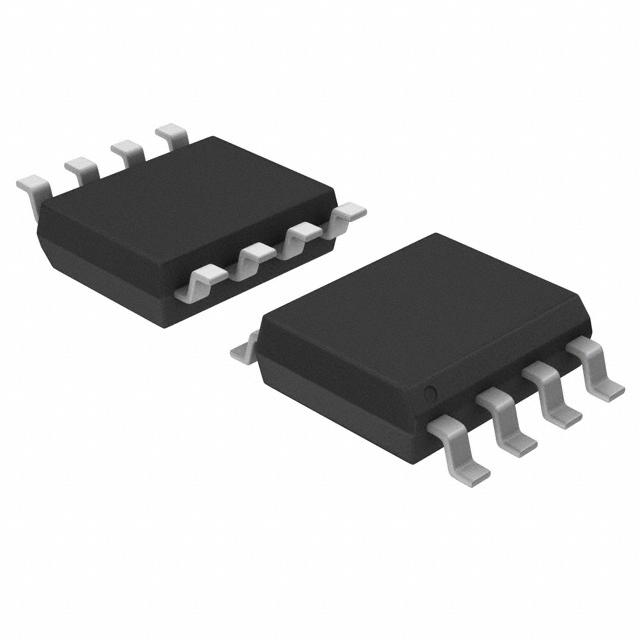
Product Overview: MIC4451YN Low-Side Gate Driver from Microchip Technology
The MIC4451YN low-side gate driver capitalizes on advanced BiCMOS/DMOS process integration to deliver precise high-speed switching for power MOSFETs and IGBTs in applications subject to significant capacitive loading and electromagnetic interference. Its optimized drive circuitry achieves rapid transition times, typically less than 25ns, which minimizes gate charge delay and promotes lower switching losses within converter and inverter topologies. The output stage, architected for low output impedance, supports peak currents up to 1.5A, enabling effective control of even large-area power MOSFETs. This direct drive capability is critical for minimizing shoot-through and cross-conduction phenomena in half-bridge and synchronous rectification circuits, where protection against spurious turn-on events is paramount.
In deployment scenarios involving harsh noise environments or supply line fluctuations, the MIC4451YN’s inherent robustness—anchored in the latch-up immunity conferred by its BiCMOS/DMOS foundation—significantly reduces system-level fault propagation. Engineers routinely leverage this resilience to simplify peripheral protection circuits when designing industrial motor drivers or programmable logic controller interfaces. In switch-mode power supplies and class-D amplifiers, the ability to operate reliably at frequencies exceeding 1MHz ensures the MIC4451YN supports both energy efficiency and compact magnetic component design, attributes highly valued in modern power-dense architectures.
The familiar 8-pin PDIP package facilitates straightforward integration into legacy designs, while easing prototyping and debugging due to its convenient pin spacing and thermal characteristics. Careful PCB layout—such as minimizing trace inductance and optimizing ground returns—can further extract maximum performance from the gate driver, reducing EMI while maintaining transient integrity at the output node. Emphasizing a robust, low-latency drive path, the device also incorporates undervoltage lockout protection, averting inadvertent operation during brownout events and thus safeguarding sensitive downstream power switches.
Designers adopting the MIC4451YN frequently cite its predictable behavior under repetitive stress cycles and thermal transients, positioning it as a trusted solution in mission-critical applications where downtime and replacement costs are highly undesirable. With its blend of speed, drive strength, and reliability under adverse electrical conditions, the MIC4451YN sets a benchmark for discrete low-side gate drivers. It enables engineering teams to consolidate performance and protection requirements within a single, cost-efficient solution, thus supporting the evolution of resilient, high-density power electronics platforms.
Core Features of the MIC4451YN Low-Side Gate Driver
The MIC4451YN low-side gate driver integrates a rich feature set tailored for robust high-speed and high-current switching environments. At its electrical core, the device operates as an inverting driver, making it inherently compatible with common logic topologies where inverting signal chains simplify timing and control sequencing for complex systems. The inverting configuration enables effortless interface with both TTL and CMOS logic families, supporting logic high input thresholds ranging from 2.4V up to the full supply voltage (VS). This broad compatibility facilitates direct integration in mixed-voltage environments and multi-domain power architectures, reducing interface circuitry and potential signal integrity challenges.
The device’s capacity for 12A peak output current directly targets the demands of driving large MOSFET gates. Drive capability at this scale eliminates the necessity for external buffer stages when handling high input capacitance loads, significantly streamlining PCB design and layout. The low typical input capacitance (7 pF) ensures minimal feedback loading on the upstream signal, allowing microcontrollers and FPGAs to drive the MIC4451YN without performance degradation or the need for extra level shifting components.
Speed is a critical differentiator, with matched rise and fall times of 25 ns and a propagation delay of approximately 30 ns. This symmetry proves vital in switching applications above 1 MHz, such as DC-DC converters and high-side load switches, where balanced transitions reduce switching losses, improve overall efficiency, and minimize EMI generation. In practical deployment, these characteristics also alleviate common issues like cross-conduction in synchronous rectification, supporting high-fidelity operation in motor drives or compact power inverters.
The wide input voltage compliance and –5V negative input tolerance grant the MIC4451YN resilience against ground bounce, undershoot, and noise transients, especially prevalent in tightly-packed layouts, aggressive switching environments, and long-trace interconnections. This robustness translates to superior signal integrity, as the driver reliably rejects noise events that might otherwise induce false triggering. Internal ESD protection further fortifies the device against handling and in-circuit events, reinforcing operational reliability—paramount in automotive, industrial, or avionic switching circuitry.
Output voltage swing to within 25 mV of both GND and VS maximizes the delivered gate charge to the driven MOSFET, achieving full enhancement and minimizing static conduction losses. In practical circuits, this ensures the power transistor operates in its optimal region, reducing stress and thermal loading. Low quiescent supply current, measured at or below 450 μA with logic “1” input, is instrumental in reducing standby power losses in power-sensitive systems or applications requiring continuous gate drive availability.
In real-world designs, deploying MIC4451YN typically results in simplified gate drive footprints, lower part counts, and improved performance stability across temperature and supply variations. Its high drive strength, fast switching, and noise immunity collectively enable a clean, precise gate control signal—even when switching large power devices at high frequencies. These capabilities allow for reliable scaling in both current and voltage demands, as seen in industrial motor control, resonant converters, or digitally controlled power systems.
Ultimately, the MIC4451YN’s feature integration balances speed, robustness, and drive capability in a manner that not only addresses fundamental switching challenges but also supports forward-looking design practices—such as PCB space minimization and EMI reduction—delivering sustained value in demanding application domains.
Applications of the MIC4451YN in Modern Electronics
The MIC4451YN is engineered to deliver superior gate drive performance for high-speed power switching, grounded in a robust output stage that supports peak currents up to 12 A. At its core, the device leverages advanced CMOS technology to minimize propagation delays and output rise/fall times, directly addressing efficiency bottlenecks in systems requiring rapid signal transitions and minimizing switching losses.
In switch-mode power supply (SMPS) designs, fast and sharp MOSFET gate pulses generated by the MIC4451YN not only optimize energy transfer but also facilitate tighter voltage regulation and improved transient response, crucial for demanding loads. The low output impedance further suppresses voltage overshoot and ringing, which translates to enhanced electromagnetic compatibility for densely packed board layouts.
Motor control applications benefit from the device’s ability to drive both low- and high-side switches in H-bridge and half-bridge configurations. This enables precise timing and phase control, especially when dealing with variable torque and speed requirements in brushless and stepper motor architectures. The inherent ruggedness of the MIC4451YN, including tolerance to voltage spikes and wide supply rails, allows for direct integration into industrial environments with fluctuating power buses.
For pulse transformer drivers, the device’s high current capability and short pulse width support compact transformer designs with minimal core size. Fast gate drive translates to elevated efficiency in isolated gate drive circuits, which are essential in high-voltage and multichannel systems where safety and noise isolation are baseline requirements.
Class-D audio and switching amplifiers demand linearity and low signal distortion under high frequency, where the MIC4451YN excels by delivering saturated gate voltages to output devices. The result is tighter control over quiescent current and switching symmetry, driving premium waveform fidelity and system reliability in audio power stages.
In industrial signaling, long wire runs and harsh EMI environments require line drivers with formidable noise immunity and consistent pulse shaping—parameters readily achieved with the MIC4451YN’s drive strength and fast response. The device also streamlines local power switching logic, simplifying layouts for distributed load modules without external buffers or level shifters.
The implementation of parallel MOSFET or IGBT operation, intended to increase load current or manage heat distribution, relies on uniform gate charging characteristics. The MIC4451YN ensures synchronized switching with negligible propagation jitter, allowing for seamless current sharing and reduced device stress.
Custom pulse generator systems employing demanding pulse widths and repetition rates find utility in the device’s high-speed switching capability. Precise pulse formation is attainable even under non-standard voltage or timing constraints, supporting applications from test bench tools to specialized timing circuits in automation frameworks.
An insightful consideration emerges when assessing thermal management and PCB layout. The package design and output topology of the MIC4451YN permit straightforward thermal conduction paths and flexible placement near critical switches, reducing both resistance loss and parasitic inductance. Strategic use of ground planes and compact trace routing can further exploit its speed without incurring layout-induced artifacts.
In design practice, deploying the MIC4451YN in close proximity to the gate terminals and decoupling supply rails with low ESL capacitors will optimize switching edge integrity. Careful matching of drive impedance to MOSFET gate charge profiles often reveals improvements in turn-on/off matching, measurable in reduced cross-conduction and dead time intervals.
Overall, the MIC4451YN exemplifies an integration-friendly solution for scalable power architectures, striking a balance between speed, durability, and versatility. Its engineering merits extend from fundamental gate drive physics to multi-layered, real-world systems, distinguishing itself as a pivotal component for contemporary electronics demanding precise and efficient power control.
Electrical and Thermal Characteristics of the MIC4451YN
Electrical and thermal management of the MIC4451YN requires precision throughout the entire integration cycle, beginning with strict adherence to its fundamental parameter constraints. Supply voltage must remain between 4.5V and 18V to ensure both output linearity and switching integrity, while the absolute ceiling of +20V acts as a buffer against transient overshoots, but not as a recommended design target. Input tolerance extends marginally above VS and well below GND, enabling flexibility for interfacing with downstream logic, provided negative excursions—specifically below GND – 5V—are actively suppressed to avoid forward-biasing input structures.
The output impedance, typically 1.0Ω, requires careful load matching, especially when driving capacitive gates in high-frequency switching applications. This relatively low impedance capacity benefits from the MIC4451YN's robust output stage, minimizing propagation delay variance even when sourcing or sinking peak currents. In temperature-controlled environments, power dissipation must be carefully derated: above 25°C, the 960 mW limit reduces by 7.7 mW per degree. This linear derating curve is particularly relevant for designs exposed to fluctuating ambient conditions or compact enclosures with limited airflow. Empirical testing shows the device maintains its switching speed symmetry—matched rise and fall times—even as junction temperatures shift, providing predictable temporal margins for timing-sensitive circuits such as motor drivers and precise digital pulse shaping.
Underlying resilience to latch-up events emerges from thoughtful process engineering, employing layout and doping strategies that shield junctions from parasitic SCR formation. In practical terms, this immunity fortifies mixed-voltage environments, where inadvertent voltage spikes are common. Further, the internal ESD structures provide a broad safety net during assembly or external field exposure, accommodating handling scenarios that would otherwise impair gate driver reliability. These features combine to afford substantial design latitude in harsh settings, including inductive-load switching and energy-critical control nodes.
A structured approach to MIC4451YN deployment integrates thermal characterization, waveform measurement, and stress simulation as iterative steps. For instance, benchmarking the device in both saturated and linear output regimes exposes subtle variations in output impedance and recovery time, aiding in circuit optimization for both speed and endurance. Integrating the aforementioned electrical and thermal insights ensures reliable operation across diverse application landscapes—from high-side gate driving in industrial inverter stages to rapid pulse delivery in precision instrumentation—where downtime is penalized and parameter drift must be minimized.
The confluence of rugged process design with balanced electrical parameters uniquely positions the MIC4451YN for demanding operational envelopes. Design strategies that leverage these strengths, while maintaining a disciplined approach to supply, load, and thermal constraints, optimize long-term functionality and facilitate scalable system architectures in aggressive use cases.
Package Options and Pinout Information for the MIC4451YN
Package options and pinout configuration for the MIC4451YN are central to supporting robust gate driver integration across diverse power electronics applications. The device is offered in three distinct, widely adopted package formats: 8-lead PDIP, 8-lead SOIC, and 5-lead TO-220, each tailored for specific PCB design strategies and thermal management requirements.
The 8-lead PDIP presents a straightforward layout ideal for breadboard prototyping and legacy through-hole assemblies, ensuring mechanical stability and ease of hand-soldering during initial evaluation phases. Its generous pin pitch simplifies routing of critical signals, notably improving accessibility during iterative redesigns. Meanwhile, the 8-lead SOIC package introduces notable reductions in physical footprint, targeting high-density surface-mount architectures. Designers benefit from minimized parasitic capacitance between adjacent pins and lower loop inductance, supporting higher switching speeds in compact systems. In demanding power environments, the 5-lead TO-220 format excels by facilitating substantial heat sinking, leveraging its substantial exposed lead frame and increased creepage clearance. This package reliably delivers sustained high current capability and improved thermal conduction, ensuring operational integrity under elevated switching loads typical in motor drive or SMPS circuits.
At the pin-level, the MIC4451YN's 8-PDIP arrangement integrates double-bonded connections for supply (VDD), ground (GND), and output terminals. This meticulous bonding topology substantially reduces lead resistance and pin-to-pin parasitic inductance, directly translating to lower voltage drop under high di/dt events. Such engineering approaches are critical when driving capacitive MOSFET gates where precise turn-on timing and minimized loss dictate overall power stage efficiency. Empirical observations reveal that strategic pin optimization—such as reinforced output paths and supply rails—not only strengthens current delivery during transient switching but also enhances the device’s resilience to noise synthesis and electromagnetic interference.
Selecting among package variations inherently aligns with end-use environments. For example, prototypes leverage PDIP for accessibility, while final products prioritize the SOIC’s spatial economy or the TO-220’s cooling capability. Layering these considerations with detailed analysis of pinout architecture enables tailored solutions; output load demands, existing PCB real estate constraints, and anticipated thermal dissipation can be systematically matched with package selection. Where switching frequencies and gate charge requirements escalate, double bonding and minimized inductive paths frequently emerge as silent enablers of reliable circuit performance. This interdependence of packaging and pinout, often overlooked in early design stages, ultimately dictates the attainable switching speed and electromagnetic compatibility profile.
Advanced implementation strategies take advantage of available detailed datasheet documentation, not only to clarify exact pin definitions and placement, but also to vet signal return paths and ensure optimal PCB layout. Implicit in this is the recognition that each variant of the MIC4451 series can unlock key trade-offs between assembly convenience, space constraints, and power dissipation. Effectively harnessing these hardware attributes fortifies the gate driver’s role as a linchpin for agile, thermally robust, and EMI-resilient switching circuits.
Detailed Application Considerations for the MIC4451YN
Detailed understanding and thoughtful integration of the MIC4451YN are essential for achieving its optimal switching performance, especially in demanding power management and motor control contexts.
Stable operation begins with supply bypassing: a layered approach using low-inductance ceramic capacitors in parallel with low-ESR film capacitors directly adjacent to the IC supply pins. This dual strategy provides immediate charge reservoirs during sharp current transients, suppresses high-frequency supply noise, and mitigates voltage droop under maximum gate drive demand. Placing these capacitors within a few millimeters of the device’s power and ground pins yields measurable reduction in switching artifacts, particularly when driving large MOSFET gate capacitances at high frequencies.
Effective grounding is foundational. The MIC4451YN, by virtue of its advanced drive strength, generates substantial instantaneous current during fast edges. Engineering layout with segregated logic and power returns is necessary to avoid coupling noise from the high-current MOSFET returns into the sensitive input reference. A star-ground philosophy, or at minimum a split-plane approach, isolates these domains. Extremely low-resistance, wide traces from the output and supply pins back to the power ground node are mandatory to minimize voltage differentials and prevent spurious device behavior. In inverting configurations and synchronous rectifier applications, uncontrolled ground shift often leads to timing jitter or loss of drive symmetry, undermining conversion efficiency and device reliability.
The input stage of the MIC4451YN is specifically engineered for seamless connection to standard 5V TTL/PWM controllers. Its internal 200 mV hysteresis counteracts false triggering from input ringing or incremental logic glitches, ensuring clean edge discrimination across a range of supply voltages. This attribute supports interoperability with both legacy and modern microcontroller-based gate drive schemes, and allows for dependable operation even in environments subject to modest EMC interference.
PCB layout is critical for preserving signal fidelity and minimizing parasitic effects. High-current paths—chiefly those carrying the gate drive pulses—demand the use of thick, short copper traces to limit resistive voltage drop and reduce ringing by lowering trace inductance. Equally, output pin fanout designs benefit from broad polygon pours rather than single-point traces, thus lowering dynamic impedance as gate charge surges. Anticipating the realities of EMI and radiated noise, compact pin-to-transistor routing achieves a dual benefit: efficient current delivery at very low propagation delay, and minimal loop area for transient containment.
Electrostatic discharge protection constitutes a recurring issue in high-speed MOSFET driver deployment phases, especially during manufacture and handling. The sensitivity to ESD is heightened by internal MOS gate structures; thus, standard protocols for grounded work surfaces, controlled humidity, and antistatic packaging cannot be bypassed without risking latent damage or field failures.
A practical insight emerges during rapid prototyping: maximizing the benefits of the MIC4451YN’s current capability requires direct observation of switching nodes with high-bandwidth oscilloscopes, not just simulation. Iterative refinement of bypassing and ground separation has repeatedly resulted in reduced overshoot and ground bounce, especially where multiple drivers operate collaboratively in bridge configurations. Additionally, the device’s fast rise and fall times, while beneficial for edge purity, magnify the importance of layout discipline; otherwise, PCB parasitics can easily defeat the driver’s intrinsic speed advantage.
The synergy of robust supply decoupling, precise ground management, deliberate trace design, and physical handling protocols underpins not just nominal, but long-term and high-reliability operation of the MIC4451YN across diverse gate drive scenarios, from power conversion in SMPS topologies to high-speed H-bridge control. Integrating these techniques at the architectural stage ensures exploitation of the driver’s full potential and significantly reduces troubleshooting time during subsequent validation and field deployment.
Power Dissipation Analysis and Thermal Management in MIC4451YN Designs
Power dissipation in MIC4451YN-based designs is governed by the device’s inherent architecture as a high-current MOSFET driver, diverging substantially from conventional low-power logic components. Power dissipation emerges not only from load-driven switching activity but also from static and dynamic contributions intrinsic to the driver's operation, especially as switching frequencies or load demands escalate.
Understanding underlying mechanisms begins with dissecting principal power elements. Load power (PL) dominates in scenarios where capacitive MOSFET gates are cycled at significant rates. Here, PL is determined by the product of switching frequency, load capacitance, and the square of supply voltage (PL = f × C × VS²). The relationship underscores sensitivity to increases in frequency and voltage, a critical point often underestimated during system-level integration. In high-frequency applications, even moderate increments in frequency or supply levels provoke considerable hikes in dynamic loss, making PL the pivot for power calculations—particularly relevant in power conversion topologies or synchronous rectification stages.
Quiescent power (PQ) introduces a less dynamic but persistent baseline dissipation. Its dependency on logic state, increasing when driven high, means that input signal duty cycles can subtly but materially affect aggregate power consumption. Optimizing for PQ becomes significant in scenarios where static drive predominates or power management is at a premium, such as battery-powered switching regulators or standby-biased gate drivers.
Transition power (PT), rooted in non-ideal switching artifacts, manifests as momentary shoot-through currents when both high- and low-side output devices briefly conduct during switching events. PT’s contribution scales with both supply voltage and transition repetition rate, often revealed as elevated package temperatures during sustained high-frequency pulses. Circuit layouts that minimize transition times via adequate gate resistors or tailored rise/fall characteristics can mitigate PT, reflecting the non-trivial role of PCB trace impedance and gate capacitance matching in tuning dissipation profiles.
Comprehensive thermal management demands a unified approach. Summing PL, PQ, and PT across expected operational regimes offers a realistic estimate of total device dissipation. For instance, in environments where PD approaches or exceeds the PDIP-8 package thermal threshold (960 mW at 25°C), active derating is essential. Real-world implementations demonstrate that expanding PCB copper in direct contact with package ground pins markedly lowers junction-to-ambient thermal resistance—an often-used technique in automotive or industrial gate-drive modules. Supplementary airflow or dedicated heatsinks further augment dissipation, yet the most effective thermal solutions are holistic, engineered into board layout from inception rather than as post-design afterthoughts.
A notable insight arises from the tight interplay between switching strategy and enclosure thermal management. Maintaining generous thermal margins requires not just adherence to datasheet maximums, but an application-aware calculation that factors in usage patterns, expected duty cycles, and environmental thermal loads. Over-designing for worst-case yet infrequent scenarios can lead to unwarranted complexity; instead, dynamic monitoring and system-level power budgeting deliver efficient, robust solutions without excessive cost or board area.
Practical experience reinforces the importance of predictive simulation combined with hardware validation. While datasheet formulae offer initial guidance, real-world parasitics, transient behaviors, and thermal coupling between adjacent components frequently affect actual device temperature more than theoretical calculations suggest. Integrating thermal via arrays under the device, optimizing supply decoupling, and employing well-screened switching node geometries all serve to bolster both electrical reliability and thermal resilience.
In summary, engineering effective MIC4451YN-based systems for high-current, high-speed operation necessitates a sophisticated balancing of electrical performance and thermal management. Layered analysis—beginning with accurate load characterization and extending through detailed PCB and mechanical design—yields designs that remain both thermally stable and electrically robust across a variety of demanding application scenarios.
Potential Equivalent/Replacement Models for the MIC4451YN
Analyzing potential substitutes for the MIC4451YN involves careful evaluation of electrical characteristics, package compatibility, and signal topology requirements. At the core, the MIC4451YN is a high-speed, low-side MOSFET driver with a 12A peak output, designed for robust switching and minimal propagation delay, vital in power electronics and motor drive circuits. Any equivalent solution must address these engineering constraints to prevent degradation in system performance or trigger unforeseen EMI and thermal management issues.
A primary candidate for equivalency, the MIC4452YN, shares identical drive strength, propagation timing, supply range, and package form factor, differing only in input logic polarity. This non-inverting version suits applications directly driven by positive logic, saving inversion resources in digital control chains. Substituting the MIC4451YN with the 4452YN often requires only minor firmware or schematic-level input signal adjustments, provided careful attention is paid to circuit logic compatibility. This subtle shift streamlines inventory by standardizing on a single package footprint while addressing both logic inversion cases within a design family.
Evaluating alternatives from competing manufacturers—such as the TC4420, IR4427, or MAX4420 series—demands a close look at propagation delay, drive capability, and input thresholds. Devices matching or exceeding the MIC4451YN’s 12A peak current and fast edge rates are critical for minimizing shoot-through and optimizing switching efficiency, especially in high-frequency synchronous rectifiers or gate-drive-intensive power converters. Tolerance to input voltages and precise timing also factor into compatibility; models must reliably interpret the same Vih/Vil logic swing to avoid false triggering at the gate-source node. In drop-in replacement scenarios, nuanced differences in rise/fall times or latch-up immunity can have measurable downstream effects, regarding both signal integrity and thermal profile.
When faced with constraints of board layout, thermal dissipation, or pin accessibility, close scrutiny of package options within the MIC4451/52 family becomes essential. The diversity of SOIC and TO-220 footprints allows adaptation between compact SMD assembly and through-hole prototyping. Experience reveals that TO-220 variants provide enhanced heat sinking and mounting flexibility for harsh environments, while SOIC forms facilitate automated assembly and high-density layouts, especially in multi-phase or parallel driver stages.
The pursuit of seamless interchangeability also often uncovers design subtleties—such as the necessity for tailored gate resistors or minor PCB tweaks—to harmonize with substituted drivers. Preemptively considering these integration points during initial schematic design promotes resilience in supply chain disruptions. Proactive review of manufacturer application notes and scrutinizing absolute maximum ratings under switching transients can further mitigate unforeseen system tolerance issues, underscoring the value of a holistic, detail-oriented qualification process.
A comprehensive approach to replacement selection not only mitigates risk but builds in design headroom. Positioning alternatives that exceed baseline MIC4451YN specifications can future-proof circuits against evolving requirements, higher power densities, or unexpected thermal environments. This forward-looking stance reduces the probability of costly redesigns and enables sustained system reliability across product cycles.
Conclusion
The MIC4451YN embodies a technically refined approach to low-side gate driving, emphasizing rapid switching capabilities and operational robustness crucial for high-frequency, high-power scenarios. Underlying its performance is a totem-pole output that enables direct driving of substantial MOSFET gate capacitances, minimizing propagation delays and supply-induced disturbances. This architectural choice inherently dampens gate oscillations and prevents shoot-through, favoring reliable operation in power conversion topologies such as synchronous buck or boost converters.
Key electrical attributes—high peak output current, broad supply voltage range, and strong noise immunity—address the challenges found in switching power supplies and motor control environments. Enhanced latch-up resistance and ESD protection further fortify the device against transient events ubiquitous in industrial and automotive settings. Whereas legacy drivers often succumb to logic threshold ambiguity or voltage spikes, the MIC4451YN sustains predictable switching margins even under severe conditions. This hardening translates into sustained field performance, reducing incidence of performance drift across temperature or input voltage variations.
Optimal exploitation requires a disciplined approach to board-level integration. Robust supply bypassing utilizing low-impedance ceramic capacitors in close proximity to both VDD and ground pins suppresses oscillatory supply ripple. Strategic PCB layout—maintaining short gate trace lengths, adequate ground returns, and segregated power/signal routing—mitigates parasitic ringing, which is particularly critical when driving MOSFETs at gate charge levels approaching several nanocoulombs. Experience reveals that thermal buildup in compact enclosures can be a hidden bottleneck; leveraging copper pours and thermal vias below the device package efficiently transfers heat, ensuring long-term reliability and extending lifecycle.
The MIC4451YN’s availability in DIP and SOIC packages simplifies prototyping and production migration, while its track record with Microchip Technology guarantees logistical continuity—an often overlooked advantage amid rapid supply chain fluctuations. Its repeatable electrical model enables confident simulation, supporting accelerated design iterations without ambiguity around switching speed or drive capability. Engineers have found that standardizing on the MIC4451YN as a reference gate driver streamlines schematic templates, thereby reducing development time and procurement risk.
In systems demanding both throughput and uptime, the MIC4451YN distinguishes itself through a synthesis of reliable triggering, rugged transient tolerance, and layout flexibility. Its suitability extends from modular power bricks to distributed motor controllers, where uniform gate drive characteristics and field-hardened protection mechanisms minimize erratic failures. Analysis of deployment data underscores that using the MIC4451YN as a main driver rather than an auxiliary element achieves superior MOSFET switching fidelity and reduces electromagnetic interference, showcasing the impact of integrating engineering insights with proven device characteristics.