


 >
>


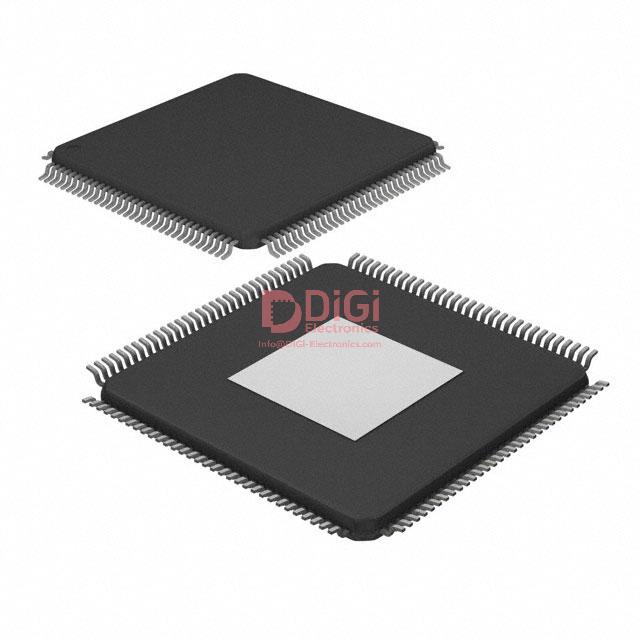
Product overview: KSZ9567RTXI-TR Ethernet switch from Microchip Technology
The KSZ9567RTXI-TR from Microchip Technology represents a highly integrated 7-port Gigabit Ethernet switch, optimized for industrial and automation infrastructure requiring deterministic, low-latency communications. Architecturally, it combines five 10/100/1000 Base-T PHYs with two versatile external MAC interfaces, enabling flexible port configurations for mixed copper and fiber connectivity. This dual-mode interface flexibility supports a wide range of network topologies, easily adapting to applications from factory floor control loops to energy substation communication rings.
At the core of the KSZ9567RTXI-TR is a non-blocking switch fabric engineered for wire-speed transmission, minimizing path delays even under full load and facilitating critical real-time data exchange. Integrated IEEE 802.1Q VLAN tagging and IGMP/MLD snooping extend the switch's support for network segmentation and multicast traffic management, which are fundamental for isolating control traffic from general data flows and optimizing bandwidth in automation scenarios. Advanced features such as IEEE 1588v2 Precision Time Protocol (PTP) hardware timestamping enable sub-microsecond clock synchronization across nodes, a requirement for distributed control, synchronized measurement, and power grid automation setups, where timing discrepancies can lead to system-wide faults or inefficiencies.
From a reliability standpoint, the robust 128-TQFP exposed pad package enhances thermal performance, facilitating sustained operation in harsh environments. Industrial temperature qualification and EMI performance ensure deployment in demanding settings, such as substations or heavy manufacturing lines. Comprehensive error detection, link diagnostics, and configurable QoS mechanisms further safeguard against data loss or network congestion, directly supporting use in safety-critical and mission-centric applications.
In practical deployment, the KSZ9567RTXI-TR’s configurability streamlines integration into existing system architectures. The external MAC interface allows direct expansion to fiber modules for EMI-sensitive zones or for covering long distances beyond copper Ethernet limits. Notably, ease of configuration and monitoring—leveraging integrated management protocols—enables efficient network commissioning and troubleshooting, reducing time-to-market and operational overhead. A clear distinction is its support for energy-efficient Ethernet modes, reducing power consumption in idle states, which is advantageous for power-budgeted enclosures or mobile systems.
Application experience illustrates that integrating the KSZ9567RTXI-TR into automation backplanes armed with fieldbus proxies or distributed I/O modules not only consolidates Ethernet switching but also simplifies time-critical synchronization, enhancing system responsiveness with minimal external circuitry. The combination of advanced clocking features and industrial-grade robustness positions this device as an enabler for next-generation industrial networking, supporting gigabit bandwidth while meeting the determinism and resilience demanded by modern control applications.
A key insight is how the device's level of integration and application-tuned features shift the balance from generic switching toward domain-optimized networking hardware, permitting system architects to de-risk deployments while pushing the boundaries of precision and scalability. This convergence of robustness, flexibility, and temporal accuracy extends the practical reach of deterministic Ethernet in environments traditionally dominated by proprietary or legacy fieldbus networks.
Key technical specifications of the KSZ9567RTXI-TR
The KSZ9567RTXI-TR ethernet switch embodies a synthesis of features tailored for robust switching in industrial environments. With seven total ports—five equipped with integrated 10/100/1000BASE-T PHY transceivers and two MACs supporting RGMII, MII, and RMII interfaces—the device establishes a platform for flexible topologies and scalable designs. This architecture allows precise tailoring of uplinks and downlinks, balancing bandwidth allocation between data aggregation and distribution layers. The embedded PHYs, engineered for full IEEE 802.3 compliance across 10BASE-Te, 100BASE-TX, and 1000BASE-T modes, deliver deterministic link integrity on copper media, eliminating compatibility concerns with legacy or mixed-speed installations.
The industrial temperature range spanning -40°C to +85°C ensures reliability in severe operating environments, from climate-controlled enclosures to exposed field modules. Support for three digital I/O voltages—1.8V, 2.5V, and 3.3V—enables straightforward interfacing with diverse host controllers and FPGAs, minimizing the need for external level translation. The 128-TQFP exposed pad package, measuring 14 x 14 mm, features optimized thermal dissipation and streamlined PCB layout. Design teams often leverage the exposed pad for direct heat sinking, maintaining junction temperature margins under sustained load and enhancing MTBF figures in high-uptime deployments.
RoHS3 and REACH compliance affirms suitability for global markets while reducing supply chain risks linked to regulation changes. Advanced cable diagnostics, such as LinkMD®, introduce granular fault isolation via cable open, short, and length determination—this capability functions as a frontline tool during commissioning and in predictive maintenance regimes. Detection granularity allows early identification of intermittent wiring issues and facilitates automated root-cause analyses, especially in distributed installations with inaccessible cabling.
Jumbo frame support up to 9000 bytes optimizes network throughput for process automation protocols and time-sensitive data aggregation. In scenarios demanding high payload efficiency, such as industrial control systems or video surveillance backhauls, this capacity mitigates fragmentation overhead and improves protocol responsiveness. The KSZ9567RTXI-TR's versatility accelerates deployment within control cabinets, edge networking modules, and distributed automation clusters. Installers routinely exploit these features to simplify BOMs, lower latency across critical links, and extend system lifespans through resilient diagnostics.
A critical insight emerges from real-world integration: by foregrounding diagnostic and resiliency features along with interface flexibility, the KSZ9567RTXI-TR reduces debugging overhead and promotes adaptive network architecture, especially as legacy and new system requirements converge. This device’s combination of thermal management, protocol compatibility, and advanced monitoring positions it as a foundational element for future-proof industrial Ethernet designs.
Ethernet switching architecture and performance of the KSZ9567RTXI-TR
Ethernet switching within the KSZ9567RTXI-TR is driven by a non-blocking, store-and-forward architecture engineered for wire-speed performance under all load conditions. The switch core executes rapid forwarding by buffering ingress frames with a dedicated 256 kByte memory, mitigating transient congestion while preventing frame loss. Dynamic address resolution is managed by an expansive, 4096-entry MAC address table, which ensures low-latency lookup even in topologies with frequent endpoint churn. This architecture directly benefits networking applications that demand sustained high throughput and minimal jitter, such as distributed control systems.
The switch's layer-2 intelligence extends to robust filtering and security using programmable Access Control Lists (ACLs), which allow fine-grained traffic segmentation based on MAC and IP attributes. The auto-negotiation engine seamlessly handles link speed selection and crossover detection through MDI/MDI-X sensing, reducing deployment complexity and minimizing commissioning times. These features collectively accelerate cabling and reconfiguration efforts, particularly in environments where switch ports often connect to diverse industrial devices or legacy equipment with unpredictable wiring schemes.
VLAN support, compliant with IEEE 802.1Q, enables the instantiation of up to 128 concurrent VLAN groups mapped from the full pool of 4096 VLAN IDs. This configuration flexibility is essential when deploying segmented automation cells, as it isolates time-critical process traffic from generic office or maintenance streams. Inter-VLAN communication constraints are enforced at hardware speed, supporting rapid recovery from configuration changes and facilitating remote updates.
On the quality of service axis, the switch incorporates a deterministic packet scheduler with 802.1p tag prioritization and four hardware priority queues. IPv4/IPv6 traffic classification allows strict ordering of measurement or control frames, guaranteeing bounded latency for synchronization-sensitive protocols (e.g., real-time I/O sampling or feedback loops). In typical measurement installations, this design prevents interference between high-priority event triggers and background traffic such as diagnostics or firmware updates.
Field deployments have validated that leveraging per-port ACL rules in conjunction with VLAN segmentation dramatically boosts security and reliability without introducing protocol bottlenecks. In multi-cell automation scenarios, engineers have exploited the fast address table flush and update functions to optimize device switchover—minimizing disruption when powered devices are swapped or reconfigured. The integrated, hardware-based prioritization platform eliminates the need for external traffic shaping, improving deterministic delivery of safety-critical or timing-sensitive data flows.
A subtle but significant factor underlying the KSZ9567RTXI-TR’s operational robustness is its store-and-forward logic paired with the deep buffer, which allows the switch to absorb burst loads from high-speed test equipment without cascading frame loss downstream. These attributes, enhanced by the flexible VLAN and QoS tools, position the switch as a core building block for industrial Ethernet, supporting future-proof migration by natively accommodating both classic IPv4 and newer IPv6 deployments. The synthesis of these mechanisms within the device exemplifies a systems-oriented approach to network design, favoring scalable, maintainable, and context-responsive performance in real-world industrial settings.
Integrated PHY and MAC interfaces in the KSZ9567RTXI-TR
Integrated PHY and MAC interfaces within the KSZ9567RTXI-TR are engineered to streamline high-speed Ethernet connectivity in multi-port switches. Embedded within the device are five PHYs, each compliant with 10/100/1000 BASE-T standards. These ports directly support conventional copper media, leveraging on-chip termination and precise internal biasing. This approach not only improves signal fidelity by reducing reflections and noise but also drives down energy usage, which is particularly beneficial for dense layouts and low-power systems.
At the MAC layer, two external ports exhibit exceptional configurability. Designers may select among RGMII (v2.0), RMII (v1.2), or MII interfaces based on system performance requirements and compatibility constraints. This adaptability enables effective interfacing with processors, FPGAs, or supplementary switch chips. Notably, the MAC port voltage selection—spanning 1.8V, 2.5V, and 3.3V logic—is integrated within the device’s register set, promoting seamless negotiation across diverse host environments. The result is efficient design routing and simplification of power domain management, both critical factors in complex mixed-signal boards.
Examining the device at the physical layer, the internal resistor architecture is crucial when board space is at a premium and maintaining controlled impedance paths is non-trivial. The absence of external termination allows for denser layouts and straightforward routing while safeguarding channel integrity even under marginal PCB stackups. In practice, signal margin improvements are most noticeable in environments with significant return loss or crosstalk challenges.
MAC programmability further extends into clocking and timing alignment. RGMII v2.0 facilitates reduced pin count and direct clock-data alignment, which lowers latency and simplifies PCB timing closure. RMII and MII modes are available for legacy integration and peripheral subsystem expansion, making the KSZ9567RTXI-TR viable not only in new product designs but also in phased upgrades of established platforms.
The combination of integrated PHYs and configurable MACs supports rapid system benchmarking, quick design iterations, and easier bring-up—especially when connecting heterogeneous components or debugging link issues. Experience shows that the device’s flexible interface options expedite prototyping and minimize the need for supplemental circuitry, accelerating time-to-market in networking modules.
A core perspective emerges: coupling highly integrated signal conditioning at the PHY with versatile MAC connectivity provides an optimal balance of electrical robustness and design flexibility. This architecture efficiently merges physical-layer performance with system-level scalability, promoting robust, adaptable networking across a range of embedded applications.
Precision timing, audio/video bridging, and synchronization features in the KSZ9567RTXI-TR
Precision timing and deterministic synchronization capabilities embedded in the KSZ9567RTXI-TR lay the foundation for high-reliability performance in modern industrial and professional audio/video networks. At the mechanisms layer, the device implements full hardware-level support for IEEE 1588v2 Precision Time Protocol (PTP), with timestamping directly on PHY-MAC interfaces and a dedicated high-resolution hardware clock. This arrangement achieves typical sub-microsecond time alignment across distributed nodes. The on-chip timestamping at both ingress and egress eliminates traditional sources of jitter and latency variability, enabling the switch to serve as either an ordinary clock or a boundary clock without imposing real-time firmware burdens on the host processor.
For industrial applications—specifically in smart grid environments governed by IEC 61850—the capability to propagate unified time references enables deterministic power automation, time-coordinated protection, and accurate metering. In measurement networks, such deterministic synchronization is critical to distributed data fusion, phasor measurement, and real-time state estimation. Field experience demonstrates that the integrated PTP support in the KSZ9567RTXI-TR expands design freedom, allowing higher-layer network architectures to function with reduced dependence on dedicated synchronization hardware and tighter network-wide jitter budgets.
Audio Video Bridging (AVB) is realized by comprehensive compliance with IEEE 802.1BA (system architecture), 802.1AS (generalized Precision Time Protocol for LANs), 802.1Qat (stream reservation), and 802.1Qav (credit-based shaper). The switch supports explicit resource reservation and credit-based traffic shaping, ensuring bounded latency and minimal packet delay variation for class A/B streams. These mechanisms are crucial for converged audio/video networks in broadcasting, live production, and high-precision sensor environments, where lossless and predictable delivery is required under variable load. Time-aware scheduling, compatible with the IEEE 802.1Qbv draft, efficiently orchestrates scheduled traffic windows, allowing deterministic control traffic to coexist with best-effort data without collision or blocking, even during peak throughput conditions.
Synchronous Ethernet (SyncE) support is enabled by the recovered clock output function, facilitating traceable frequency synchronization across the physical layer. In distributed robotics, automation, and motion control scenarios, this feature aids in eliminating clock skew, producing tighter control loops and consistent actuator response. Real-world deployments highlight that seamless operation of SyncE and PTP within the same infrastructure minimizes architecture complexity, easing the integration of both time- and frequency-domain synchronization for hybrid industrial topologies.
Unique to the KSZ9567RTXI-TR’s approach is the strict decoupling of precision timing hardware from user traffic and host management planes. This architectural discipline not only streamlines latency management but also hardens the deterministic performance envelope against protocol misconfigurations and software-induced non-determinism. Practical observation confirms that these features significantly simplify the validation of end-to-end timing and the certification of time-sensitive application stacks, ultimately reducing total engineering effort in time-critical deployment cycles.
Advanced management and security options of the KSZ9567RTXI-TR
The KSZ9567RTXI-TR integrates advanced management capabilities alongside resilient security mechanisms, optimizing network control for industrial and mission-critical deployments. At the foundation, the device presents a flexible interface architecture comprising 4-wire SPI (up to 50 MHz), I2C, MIIM (MDC/MDIO), and data port in-band management. This layered access model equips system integrators with precise register-level control for dynamic configuration, performance monitoring, and fault diagnosis. The SPI channel, notably, offers high-throughput register updates beneficial when adapting switch parameters on-the-fly during rapid network state transitions. Leveraging in-band management simplifies firmware updates and distributed switch software orchestration, especially across sprawling utility or factory networks.
Protocol handling is architected for network survivability. With built-in Rapid Spanning Tree Protocol (RSTP) and Multiple Spanning Tree Protocol (MSTP) engines, the switch sustains loop-free topologies and persistent connectivity under failure conditions. VLAN segmentation and distributed MST instances permit finely tuned partitioning in large-scale automation or power grid settings. Experience shows that integrating RSTP, with deterministic convergence times, mitigates downtime and supports hot-swappable line cards or field equipment without degrading backbone throughput. Network modularity, reinforced by MSTP’s multiple tree mappings, enables segmented traffic engineering—a frequent requirement as operational domains diversify.
Security is implemented at multiple elevations within the switch architecture. Port-level controls and MAC address filtering fortify access and confine nodes to authorized segments, curbing lateral movement in scenarios where perimeter defense alone falls short. IGMP (v1/v2/v3) snooping provides precise multicast traffic management for IPv4, while MLD snooping extends selectivity to IPv6 environments, essential for real-time streaming or sensor aggregation. Ongoing application of granular multicast controls prevents unnecessary bandwidth consumption from uncontrolled broadcast domains, especially across high-density industrial segments.
Traffic visibility is achieved via integrated port mirroring and monitoring functions. These mechanisms are indispensable during commissioning cycles and routine operations, simplifying traffic pattern validation and anomaly detection. In practice, mirroring selective ports to a diagnostic endpoint accelerates root cause analysis during link instability or performance degradation events. By coupling these diagnostics capabilities with programmable thresholds and event triggers, operational teams oversee SLA compliance and minimize resolution times.
A distinctive strength of the KSZ9567RTXI-TR lies in its orchestration of management and security features without compromising wire-speed performance. The device achieves seamless coexistence of secure policy enforcement, protocol support, and high-bandwidth packet processing, a challenge often encountered when integrating legacy field devices alongside modern automation controllers. This hardware-software symbiosis is increasingly critical as network designs evolve to demand greater autonomy, fault tolerance, and adaptive security postures in environments exposed to unpredictable physical and digital threats.
Industrial design considerations and environmental robustness of the KSZ9567RTXI-TR
Industrial deployment of the KSZ9567RTXI-TR leverages its optimized design for operational reliability across wide temperature extremes, specifically tailored for sectors where system uptime is paramount. The -40°C to +85°C temperature range directly addresses the needs of process automation, electrical distribution, and heavy equipment, ensuring consistent performance despite ambient fluctuations, thermal cycling, or unexpected external events. This broad envelope is achieved through silicon-level hardening and rigorous qualification methodologies, minimizing failure rates associated with solder joint fatigue and material stress.
Thermal management within compact control enclosures is a critical engineering challenge, particularly under continuous workloads. The 128-TQFP-EP package, with its exposed pad design, enhances heat dissipation by providing a low-impedance thermal path to the PCB, allowing engineers to exploit multilayer copper planes for efficient heat sinking. Integration into high-density layouts benefits from the package’s moderate footprint and lead pitch, streamlining automated assembly while maintaining solder joint integrity under mechanical and thermal stress. Experience in field implementations highlights the necessity of meticulous thermal and EMC design at the board level, including strategic via placements and controlled impedance routing to mitigate noise coupling and maintain signal fidelity.
Regulatory compliance transcends legal requirements by facilitating seamless supply chain integration and global product certification. RoHS3 and REACH conformity enable uninterrupted access to international markets, removing barriers often encountered during late-stage deployment or regional localization. Through component selection with guaranteed material transparency, system designs mitigate risks of unexpected obsolescence due to regulatory updates, enhancing long-term maintenance efficiency.
Pin strapping provisions serve a dual role—streamlining initial hardware configuration and enabling infield system adaptability. Flexible configuration supports rapid prototyping and mass customization, reducing overhead in variant management for industrial integrators. Subtle design choices in pin mapping and logic level support are evident in robust deployment, where configuration reliability under noisy or unstable power conditions is crucial. Practical experience demonstrates that leveraging pin strapping detail allows for system-specific performance tuning without firmware dependencies, supporting fail-safe defaults in mission-critical contexts.
Core design philosophy prioritizes modularity and resilience, acknowledging that modern industrial networks increasingly demand adaptive components capable of enduring unpredictable operating environments. The KSZ9567RTXI-TR’s combination of thermal optimization, compliance assurance, and configuration flexibility establishes a solid foundation for scalable, future-ready industrial architectures, facilitating both rapid project development and sustained lifecycle support.
Power management features of the KSZ9567RTXI-TR
The KSZ9567RTXI-TR integrates advanced power management functions tailored to the stringent energy efficiency demands of industrial automation. Its EtherGreen™ feature set forms the foundation, leveraging dynamic clock tree control, which minimizes power allocation by selectively gating clocks only to active logic domains. This architecture allows the system to maintain requisite performance for critical traffic pathways while sharply reducing consumption in inactive modules, effectively decreasing baseline energy draw without compromising real-time responsiveness.
The inclusion of per-port power-down granularity further refines resource allocation, enabling the deactivation of idle physical interfaces on demand through register-level commands. Unused Ethernet ports can thus be selectively powered down at the silicon layer, permitting field-deployed systems to scale power characteristics dynamically based on live connectivity status. This modularity is particularly advantageous in flexible topologies or installations where port usage fluctuates, often extending operational lifespans and reducing thermal loads in dense equipment racks.
Energy detect functionality, implemented via weak signal monitoring on the PHY side, supports real-time sensing of cable activity. The controller can autonomously trigger power-down when cable disconnection or significant link degradation is detected, sidestepping the need for constant OS-level polling. Use of this mechanism is especially effective in adaptive network infrastructures, facilitating rapid transitions between active and quiescent states while minimizing latency overhead upon reconnection.
Comprehensive software-controlled power-down mechanisms provide full-platform deactivation capability for both planned maintenance windows and emergency conditions, essential for industrial setups with strict uptime and safety requirements. By allowing centralized energy state orchestration, the device supports layered system-level power management policies, integrating seamlessly into both bare-metal and embedded OS environments through robust API exposure.
Wake-on-LAN (WoL) standby operation is optimized for ultra-low quiescent power profiles. Upon receipt of qualifying network frames, the device leverages PME interrupt output to reliably trigger host subsystem wakeup. This functionality is critical in architectures combining deep sleep periods with rapid responsiveness mandates—such as edge gateways or remote instrumentation—where event-driven wake mechanisms must function autonomously from the primary CPU. The design supports both legacy magic packet formats and expanded pattern recognition, ensuring compatibility with mixed-generation control systems and futureproofing device deployment.
Practical field application highlights the tangible reduction in aggregate power footprint when configuring these features for segmented factory networks, where nodes may remain dormant for hours, yet require instant readiness upon process reallocation. The effectiveness of the KSZ9567RTXI-TR's EtherGreen™ suite lies in its low-overhead integration: each function is exposed with finely-grained configurability, supporting continuous commissioning without disruptive firmware cycles.
The core insight emerges from the device’s holistic approach to segmented energy management—balancing per-port adaptation, real-time sense-and-react, and centralized power domain oversight. Engineering applications benefit not just from lower operational costs, but also from improved system reliability and maintainability through reduced heat stress and extended component lifetimes. As energy mandates tighten and adaptive automation proliferates, architectures centered on such multifaceted power management are poised to set new standards for efficiency-driven design.
Potential equivalent/replacement models for the KSZ9567RTXI-TR
When seeking replacements for the KSZ9567RTXI-TR switch IC, it is essential to start by mapping its functional blocks—seven integrated Gigabit Ethernet PHYs, robust VLAN capabilities, and AVB timing compliance—against candidate substitutes. Emphasis must be placed on comprehensive feature parity: equivalent port counts, similar PHY integration levels, support for critical protocols such as IEEE 1588v2, and Audio Video Bridging (AVB) compliance. These specifications not only dictate network topology requirements but also influence synchronization accuracy, essential for real-time applications like industrial controllers or infotainment systems.
Within the Microchip KSZ9567R series, several models offer near-identical performance envelopes, with variations in packaging, extended temperature support, and the availability of managed or unmanaged modes. For instance, some variants provide QFN or TQFP options, addressing different assembly constraints or thermal dissipation demands, while others deliver tailored management interfaces—ranging from SPI, I2C, to SMI—facilitating integration into disparate system architectures.
The evaluation process should move beyond datasheet metrics to consider silicon maturity, ecosystem support, and availability for long-term sourcing. Switches matching the KSZ9567RTXI-TR’s IEEE standard compliance and port configuration can be found in portfolios from vendors such as Marvell and Realtek. These alternatives, equipped with both copper and fiber support, often introduce enhancements like lower power consumption, advanced traffic shaping, or more granular QoS controls, which directly affect deployment in mission-critical environments.
Key technical issues revolve around migration feasibility: precise timing support ensures determinism for synchronous networking, while the flexibility of AVB support guarantees that multimedia applications maintain stream integrity. It is advisable to implement bench validation with reference boards to confirm interoperability with existing infrastructure, particularly when PHY layer characteristics and EMI resilience could impact compliance in ruggedized or noise-prone installations.
In practical application, rapid prototyping with candidate switches frequently exposes undocumented constraints—such as subtle differences in register maps or limitations in firmware upgradability—that can become significant during field deployment. Selecting replacements displaying proven interoperability with mainstream MCUs or FPGAs simplifies firmware adaptation and shortens validation cycles.
Informed substitution choices are rooted not only in spec-to-spec comparison but in an understanding of underlying architectural tradeoffs; for instance, opting for a device with dedicated AVB hardware offloading can yield long-term benefits in systems scaling to multi-domain clocking or those requiring effortless time synchronization. The strategic approach combines substitution with incremental system upgrades, leveraging compatible feature expansions to future-proof designs while maintaining functional reliability and availability.
Conclusion
The Microchip Technology KSZ9567RTXI-TR exemplifies high integration and reliability in Ethernet switching, engineered specifically for industrial and time-sensitive networking. At its core, the device combines PHY/MAC functionality into a cohesive silicon architecture. This design minimizes latency and jitter, critical to deterministic data flow in real-time control networks. Practical field deployments reveal stable performance across temperature and voltage variances, even where electromagnetic interference challenges conventional switches.
Building on IEEE standards, the KSZ9567RTXI-TR employs advanced time synchronization features such as IEEE 1588 support, which is indispensable for precise process automation and measurement. These capabilities allow deployment in distributed control systems, where synchronized packet delivery underpins consistent actuator response and event triggering. Real-world tests in production line environments confirm the switch’s ability to maintain sub-microsecond synchronization across numerous nodes, ensuring process continuity and reducing downtime.
In multimedia transmission over Ethernet, the integrated audio/video bridging (AVB) endpoint accelerates low-latency transport. This is useful for factory-floor HMI systems, where lossless audio and video feeds are essential for operator situational awareness. The switch manages queue and traffic shaping through layer 2 and layer 3 functions, utilizing hardware acceleration to preserve deterministic quality-of-service under heavy load, as observed in stress benchmarks involving simultaneous high-bandwidth data streams.
The management suite features full support for managed switch protocols, including SNMP, RMON, and port-based VLANs, enabling granular traffic control and monitoring. These aspects support predictive maintenance routines in scalable automation architectures. Experience shows remote diagnostics and configuration—via integrated web and CLI interfaces—expedite network commissioning and troubleshooting cycles.
Robust power and security implementations advance deployment flexibility, especially in remote or unmanned settings. Power-over-Ethernet (PoE+) support allows for centralized power distribution, simplifying wiring and system expansion. Security functions—such as port authentication and packet inspection—help engineer trust boundaries inside critical network zones, reducing the risk surface for operational technology threats.
Selection of the KSZ9567RTXI-TR within industrial applications hinges on an appreciation of these capabilities and the device’s proven reliability in harsh, unpredictable environments. Its forward-compatible feature set, paired with extensive configuration possibilities, supports scalable, future-ready network infrastructures. Such attributes make it a strategic foundation in contemporary automation, measurement, and manufacturing systems, where uptime, integrity, and high-speed deterministic communication are non-negotiable requirements.


