24FC01-I/P >
24FC01-I/P
Microchip Technology
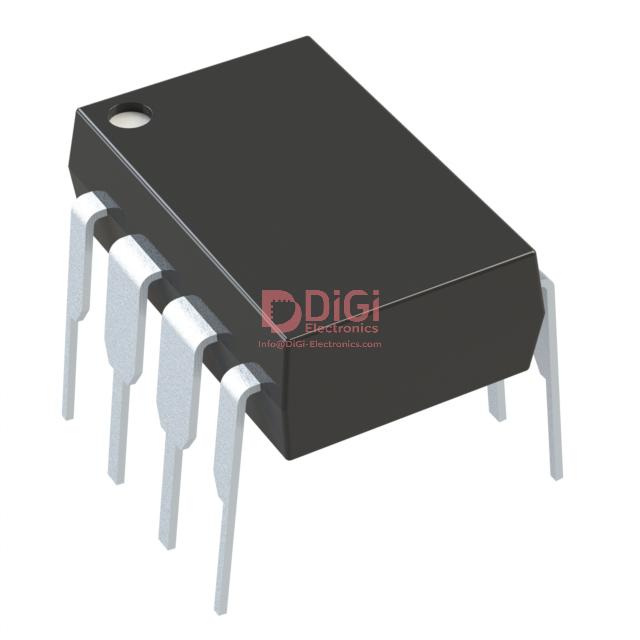
IC EEPROM 1KBIT I2C 1MHZ 8DIP
1294 Pcs New Original In Stock
EEPROM Memory IC 1Kbit I2C 1 MHz 450 ns 8-PDIP
Request Quote (Ships tomorrow)
*Quantity
Minimum 1
24FC01-I/P Microchip Technology
5.0 / 5.0 - (216 Ratings)

24FC01-I/P

Product Overview

1237255

DiGi Electronics Part Number

24FC01-I/P-DG
24FC01-I/P

Description

IC EEPROM 1KBIT I2C 1MHZ 8DIP

Inventory

1294 Pcs New Original In Stock
EEPROM Memory IC 1Kbit I2C 1 MHz 450 ns 8-PDIP
Memory
Quantity
Minimum 1

Purchase and inquiry

Quality Assurance

365 - Day Quality Guarantee - Every part fully backed.

90 - Day Refund or Exchange - Defective parts? No hassle.

Limited Stock, Order Now - Get reliable parts without worry.

Global Shipping & Secure Packaging

Worldwide Delivery in 3-5 Business Days

100% ESD Anti-Static Packaging

Real-Time Tracking for Every Order

Secure & Flexible Payment

Credit Card, VISA, MasterCard, PayPal, Western Union, Telegraphic Transfer(T/T) and more

All payments encrypted for security

In Stock (All prices are in USD)
  • QTY Target Price Total Price
  • 1 0.4324 0.4324
Better Price by Online RFQ.
Request Quote (Ships tomorrow)
* Quantity
Minimum 1
(*) is mandatory
We'll get back to you within 24 hours

24FC01-I/P Technical Specifications

Category Memory, Memory

Manufacturer Microchip Technology

Packaging Tube

Series -

Product Status Active

DiGi-Electronics Programmable Not Verified

Memory Type Non-Volatile

Memory Format EEPROM

Technology EEPROM

Memory Size 1Kbit

Memory Organization 128 x 8

Memory Interface I2C

Clock Frequency 1 MHz

Write Cycle Time - Word, Page 5ms

Access Time 450 ns

Voltage - Supply 1.7V ~ 5.5V

Operating Temperature -40°C ~ 85°C (TA)

Mounting Type Through Hole

Package / Case 8-DIP (0.300", 7.62mm)

Supplier Device Package 8-PDIP

Base Product Number 24FC01

Datasheet & Documents

HTML Datasheet

24FC01-I/P-DG

Environmental & Export Classification

RoHS Status ROHS3 Compliant
Moisture Sensitivity Level (MSL) Not Applicable
REACH Status REACH Unaffected
ECCN EAR99
HTSUS 8542.32.0051

Additional Information

Standard Package
60

Reviews

5.0/5.0-(Show up to 5 Ratings)
Sol***low
December 02, 2025
5.0
Trust in their product quality and pricing transparency has kept me a loyal customer.
Morni***litter
December 02, 2025
5.0
The delivery was remarkably fast, and the customer support was equally attentive and helpful.
Joy***ple
December 02, 2025
5.0
I trust Di Digi Electronics for my gaming needs because their products are consistent and budget-friendly.
Publish Evalution
* Product Rating
(Normal/Preferably/Outstanding, default 5 stars)
* Evalution Message
Please enter your review message.
Please post honest comments and do not post ilegal comments.

Frequently Asked Questions (FAQ)

Can the 24FC01-I/P be safely used as a drop-in replacement for the AT24C01B-PU in a 3.3V I2C system with 100 kHz clocking, and what are the key compatibility risks?

Yes, the 24FC01-I/P is generally compatible with the AT24C01B-PU in 3.3V systems running at 100 kHz, but critical differences exist: the 24FC01-I/P supports faster 1 MHz I2C speeds and has a lower minimum supply voltage (1.7V vs. 1.8V), offering better low-voltage margin. However, verify address pin mapping—both use A0–A2 for slave addressing, but confirm pull-up/pull-down states match your PCB layout. The 24FC01-I/P also guarantees 5ms max write cycle time (same as AT24C01B), but its 450 ns access time enables tighter timing loops. Risk: if your firmware assumes slower EEPROM response or uses non-standard ACK polling, unexpected timeouts may occur—always validate with an oscilloscope during design-in.

What are the reliability implications of operating the 24FC01-I/P near its -40°C lower temperature limit in an automotive under-hood application with frequent thermal cycling?

While the 24FC01-I/P is rated for -40°C to 85°C, sustained operation at the cold extreme—especially with rapid thermal cycling—can accelerate mechanical stress on the 8-PDIP package leads and internal wire bonds. Though Microchip’s industrial-grade process improves robustness, repeated expansion/contraction may degrade solder joints over time. Mitigation: use conformal coating to reduce moisture-induced corrosion during cold starts and ensure PCB pad design follows IPC-7351 for through-hole components to minimize stress. Additionally, avoid writing data during extreme cold transients, as electron tunneling efficiency in EEPROM cells decreases slightly below -20°C, potentially increasing effective write time beyond 5ms—buffer critical writes during stable thermal conditions.

How does the 24FC01-I/P compare to the STMicroelectronics M24C01-WMN6TP in terms of long-term data retention and endurance when logging sensor data every 10 seconds in an industrial IoT node?

Both the 24FC01-I/P and M24C01-WMN6TP specify 1 million write cycles and 200-year data retention at 25°C, but real-world endurance differs under frequent writes. Logging every 10 seconds equates to ~3.15M cycles/year—exceeding either part’s rating within 4 months. The 24FC01-I/P’s page-write architecture (8-byte pages) allows more efficient block updates, reducing partial-write wear if your firmware aligns writes to page boundaries. In contrast, the M24C01-WMN6TP uses similar architecture but lacks Microchip’s proprietary endurance-enhancing cell design. Recommendation: implement wear-leveling across multiple addresses or consider FRAM (e.g., FM24C01) for high-frequency logging. If sticking with 24FC01-I/P, log to rotating buffers and validate retention after accelerated aging tests at 85°C.

Is it safe to share the I2C bus between the 24FC01-I/P and a high-speed sensor like the BMP388 without risking communication errors due to timing mismatches?

Yes, but with caveats: the 24FC01-I/P supports standard-mode (100 kHz), fast-mode (400 kHz), and fast-mode plus (1 MHz) I2C, while the BMP388 typically runs at 100–400 kHz. However, the EEPROM’s 450 ns access time means it may stretch the clock (via SCL low) during read operations, which can conflict with sensors expecting uninterrupted clocks. To avoid bus hangs, ensure your MCU’s I2C peripheral supports clock stretching and configure timeouts (>10 ms). Also, place the 24FC01-I/P on a separate I2C segment with stronger pull-ups (2.2 kΩ vs. 4.7 kΩ) if bus capacitance exceeds 200 pF—this improves signal integrity during EEPROM read bursts. Never initiate EEPROM reads during sensor critical sampling windows to prevent priority inversion.

What design precautions are needed when replacing a surface-mount 24FC01-SN (SOIC-8) with the through-hole 24FC01-I/P in a legacy PCB redesign, beyond pin compatibility?

Beyond matching the 8-pin DIP footprint to your SOIC adapter or new board, consider three key risks: first, the 24FC01-I/P’s longer lead inductance (~5–10 nH per pin) can cause signal ringing on SDA/SCL lines at 1 MHz—add 22–47 Ω series resistors near the EEPROM pins to dampen reflections. Second, through-hole mounting increases mechanical vulnerability in high-vibration environments; secure the package with epoxy or use a socket with strain relief. Third, thermal mass of the DIP package slows reflow during hand rework—use a temperature-controlled iron (320°C max) to avoid overheating adjacent components. Always verify I2C signal integrity with a scope after assembly, especially if trace lengths exceed 10 cm.

Quality Assurance (QC)

DiGi ensures the quality and authenticity of every electronic component through professional inspections and batch sampling, guaranteeing reliable sourcing, stable performance, and compliance with technical specifications, helping customers reduce supply chain risks and confidently use components in production.

Quality Assurance
Counterfeit and defect prevention

Counterfeit and defect prevention

Comprehensive screening to identify counterfeit, refurbished, or defective components, ensuring only authentic and compliant parts are delivered.

Visual and packaging inspection

Visual and packaging inspection

Electrical performance verification

Verification of component appearance, markings, date codes, packaging integrity, and label consistency to ensure traceability and conformity.

Life and reliability evaluation

DiGi Certification
Blogs & Posts
24FC01-I/P CAD Models
productDetail
Please log in first.
No account yet? Register