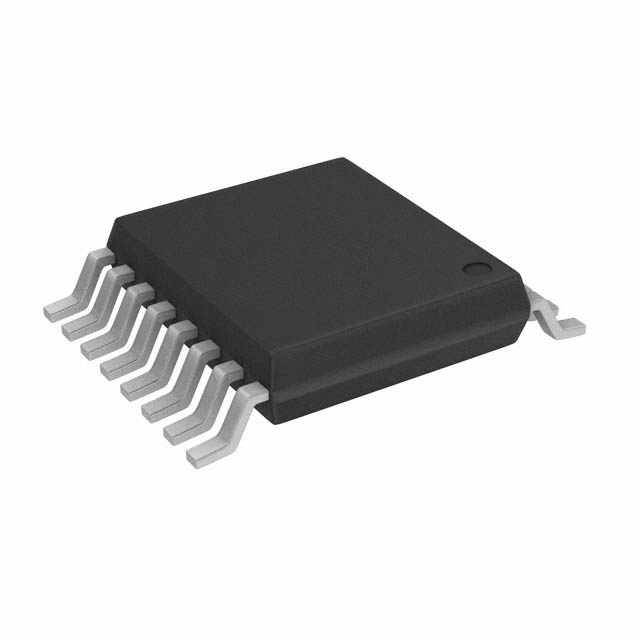
SP202ECT-L >
SP202ECT-L
MaxLinear, Inc.
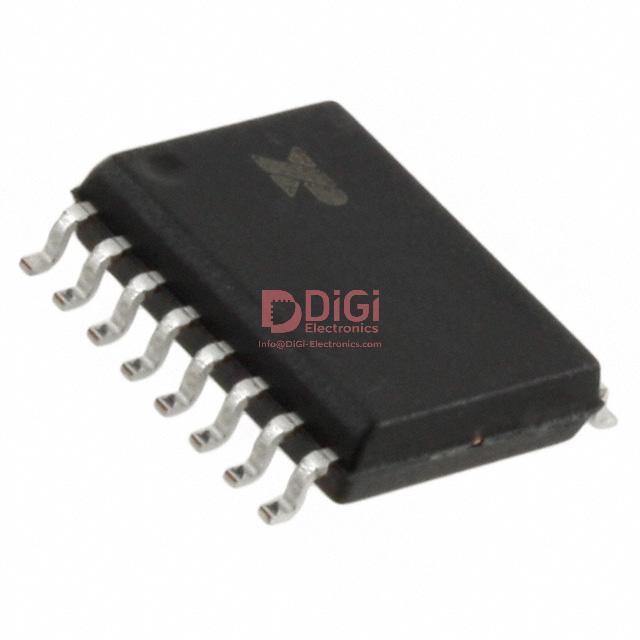
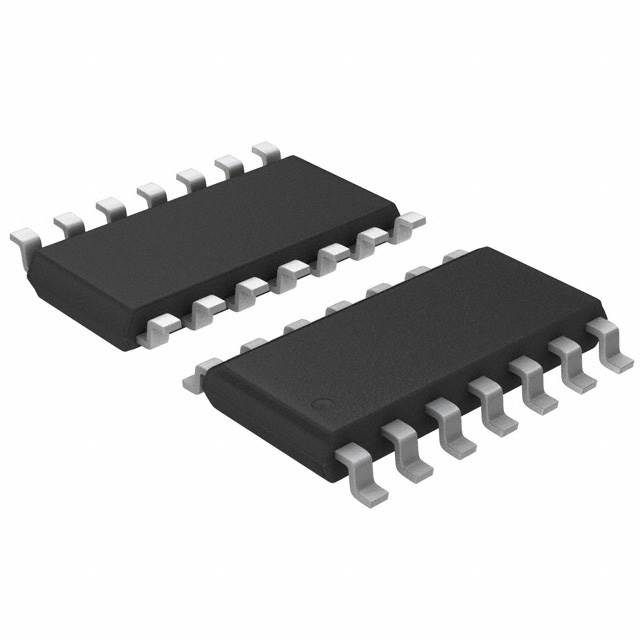
IC TRANSCEIVER FULL 2/2 16SOIC
2325 Pcs New Original In Stock
2/2 Transceiver Full RS232 16-SOIC
Request Quote (Ships tomorrow)
*Quantity
Minimum 1
SP202ECT-L MaxLinear, Inc.
5.0 / 5.0 - (113 Ratings)

SP202ECT-L

Product Overview

6687779

DiGi Electronics Part Number

SP202ECT-L-DG

Manufacturer

MaxLinear, Inc.
SP202ECT-L

Description

IC TRANSCEIVER FULL 2/2 16SOIC

Inventory

2325 Pcs New Original In Stock
2/2 Transceiver Full RS232 16-SOIC
Quantity
Minimum 1

Purchase and inquiry

Quality Assurance

365 - Day Quality Guarantee - Every part fully backed.

90 - Day Refund or Exchange - Defective parts? No hassle.

Limited Stock, Order Now - Get reliable parts without worry.

Global Shipping & Secure Packaging

Worldwide Delivery in 3-5 Business Days

100% ESD Anti-Static Packaging

Real-Time Tracking for Every Order

Secure & Flexible Payment

Credit Card, VISA, MasterCard, PayPal, Western Union, Telegraphic Transfer(T/T) and more

All payments encrypted for security

In Stock (All prices are in USD)
  • QTY Target Price Total Price
  • 1 0.9672 0.9672
  • 10 0.8528 8.5284
  • 47 0.8180 38.4462
  • 141 0.6719 94.7391
  • 282 0.6280 177.1092
  • 517 0.5491 283.8660
  • 1034 0.4476 462.8210
  • 2538 0.4090 1037.9823
  • 5029 0.3927 1974.9118
Better Price by Online RFQ.
Request Quote (Ships tomorrow)
* Quantity
Minimum 1
(*) is mandatory
We'll get back to you within 24 hours

SP202ECT-L Technical Specifications

Category Interface, Drivers, Receivers, Transceivers

Manufacturer MaxLinear

Packaging Tube

Series -

Product Status Active

Type Transceiver

Protocol RS232

Number of Drivers/Receivers 2/2

Duplex Full

Receiver Hysteresis 500 mV

Data Rate 240kbps

Voltage - Supply 4.5V ~ 5.5V

Operating Temperature 0°C ~ 70°C

Mounting Type Surface Mount

Package / Case 16-SOIC (0.295", 7.50mm Width)

Supplier Device Package 16-SOIC

Base Product Number SP202

Datasheet & Documents

HTML Datasheet

SP202ECT-L-DG

Environmental & Export Classification

RoHS Status RoHS Compliant
Moisture Sensitivity Level (MSL) 3 (168 Hours)
ECCN EAR99
HTSUS 8542.39.0001

Additional Information

Other Names
1016-1007-5
SP202ECTL
Standard Package
47

Alternative Parts

PART NUMBER
MANUFACTURER
QUANTITY AVAILABLE
DiGi PART NUMBER
UNIT PRICE
SUBSTITUTE TYPE
MAX3232CDWRG4
Texas Instruments
945
MAX3232CDWRG4-DG
0.3927
MFR Recommended
HIN202EIB
Renesas Electronics Corporation
2185
HIN202EIB-DG
0.3927
Similar
DS232AS
Analog Devices Inc./Maxim Integrated
5938
DS232AS-DG
0.3927
MFR Recommended
HIN202CB-T
Renesas Electronics Corporation
18122
HIN202CB-T-DG
0.3927
Similar
ST232ECWR
STMicroelectronics
2131
ST232ECWR-DG
0.3927
Similar

Reviews

5.0/5.0-(Show up to 5 Ratings)
Welt***derer
December 02, 2025
5.0
Die Lieferung kam in einwandfreiem Zustand an, und das Tracking-System hat mir die Dauer und den Fortschritt der Sendung genau angezeigt.
Sere***yFlow
December 02, 2025
5.0
The toughness of the product makes it suitable for demanding environments.
Crims***anvas
December 02, 2025
5.0
Delivery was remarkably fast, and the packaging was very secure.
Publish Evalution
* Product Rating
(Normal/Preferably/Outstanding, default 5 stars)
* Evalution Message
Please enter your review message.
Please post honest comments and do not post ilegal comments.

Frequently Asked Questions (FAQ)

Can the SP202ECT-L be used as a drop-in replacement for the MAX202ECPE in an existing 5V RS232 design, and what layout or power considerations should I verify before making the switch?

Yes, the SP202ECT-L from MaxLinear is functionally compatible with the MAX202ECPE and can serve as a drop-in replacement in most 5V RS232 applications. However, you must verify that your PCB layout supports the 16-SOIC package (vs. the DIP-16 of the MAX202ECPE) and confirm that your charge pump capacitors are rated for at least 10V and match the recommended values (typically 0.1µF). The SP202ECT-L also has a tighter supply voltage range (4.5V–5.5V), so ensure your 5V rail doesn’t sag below 4.5V under load. Additionally, check for any firmware or timing dependencies on slew rate or startup behavior, as subtle differences in internal charge pump architecture may affect power-up sequencing in sensitive systems.

What are the key reliability risks when using the SP202ECT-L in industrial environments near its upper temperature limit (70°C), and how can I mitigate them?

Operating the SP202ECT-L near its maximum rated temperature of 70°C increases the risk of accelerated capacitor aging in the internal charge pump and potential degradation of output signal integrity over time. In industrial settings with ambient temperatures approaching 60°C, self-heating from continuous full-duplex operation can push the junction temperature beyond safe margins, leading to premature failure. To mitigate this, ensure adequate PCB copper pour for thermal dissipation, avoid enclosing the device in tight spaces without airflow, and consider derating the data rate or duty cycle if sustained high-temp operation is unavoidable. For applications regularly exceeding 60°C ambient, evaluate higher-temp-rated alternatives like the SP3222E (–40°C to +85°C).

How does the SP202ECT-L compare to the ST3232CDR in terms of EMI performance and robustness in electrically noisy environments, and when should I choose one over the other?

The SP202ECT-L offers better receiver hysteresis (500 mV vs. ~300 mV on the ST3232CDR), which provides superior noise immunity on the receive lines in electrically noisy environments such as motor control or long cable runs. However, the ST3232CDR supports a wider supply range (3.0V–5.5V) and operates down to -40°C, making it more suitable for battery-powered or extended-temperature designs. Choose the SP202ECT-L when you need robust signal integrity in 5V-only industrial systems with moderate ambient temperatures; opt for the ST3232CDR if you require broader voltage flexibility or operation below 0°C. Always pair either device with proper TVS diodes and ground plane isolation to maximize EMI resilience.

What design constraints should I consider when routing the SP202ECT-L’s RS232 I/O traces on a 2-layer PCB to avoid signal integrity issues at 240 kbps?

When routing the SP202ECT-L on a 2-layer board, keep RS232 I/O traces as short as possible (ideally <15 cm) and avoid crossing split ground planes or running parallel to high-speed digital lines, which can induce crosstalk. Since the SP202ECT-L uses an internal charge pump to generate ±10V RS232 levels, ensure the decoupling capacitor (0.1µF) on VCC is placed within 5 mm of the pin and connected directly to a solid ground pour. Do not route sensitive analog or high-impedance signals beneath the device. Use guard rings or ground shielding if trace length exceeds 10 cm, and terminate unused driver/receiver channels properly—floating inputs can cause excessive power consumption or oscillation.

Is it safe to use the SP202ECT-L in a design where the RS232 cable may be accidentally connected to ±12V industrial serial ports, and what protection circuitry is recommended?

The SP202ECT-L is not rated for continuous exposure to ±12V external voltages and can be damaged by such misconnections, despite RS232 standards nominally supporting ±12V. While its inputs have some built-in ESD protection (±15 kV IEC 61000-4-2), they lack robust overvoltage clamping for sustained ±12V exposure. To protect against accidental connection to higher-voltage ports, add external bidirectional TVS diodes (e.g., SMAJ12A) on each RS232 line, along with 100Ω series resistors to limit fault current. For mission-critical designs, consider using isolated RS232 transceivers like the ADM2587E, but if cost and space constrain you to the SP202ECT-L, the TVS + resistor network is essential for field reliability.

Quality Assurance (QC)

DiGi ensures the quality and authenticity of every electronic component through professional inspections and batch sampling, guaranteeing reliable sourcing, stable performance, and compliance with technical specifications, helping customers reduce supply chain risks and confidently use components in production.

Quality Assurance
Counterfeit and defect prevention

Counterfeit and defect prevention

Comprehensive screening to identify counterfeit, refurbished, or defective components, ensuring only authentic and compliant parts are delivered.

Visual and packaging inspection

Visual and packaging inspection

Electrical performance verification

Verification of component appearance, markings, date codes, packaging integrity, and label consistency to ensure traceability and conformity.

Life and reliability evaluation

DiGi Certification
Blogs & Posts
SP202ECT-L CAD Models
productDetail
Please log in first.
No account yet? Register