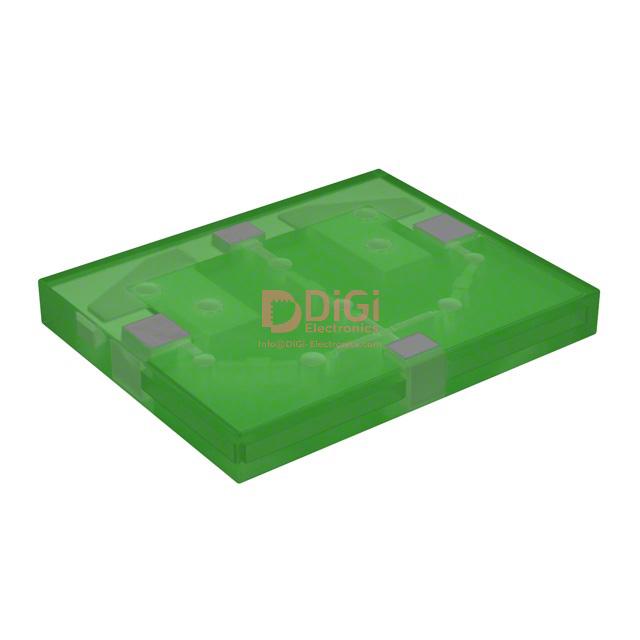
MA4SW310 >
MA4SW310
MACOM Technology Solutions
IC RF SWITCH SP3T 20GHZ DIE
1353 Pcs New Original In Stock
RF Switch IC General Purpose SP3T 20 GHz Die
Request Quote (Ships tomorrow)
*Quantity
Minimum 1
MA4SW310 MACOM Technology Solutions
5.0 / 5.0 - (220 Ratings)

MA4SW310

Product Overview

7031695

DiGi Electronics Part Number

MA4SW310-DG
MA4SW310

Description

IC RF SWITCH SP3T 20GHZ DIE

Inventory

1353 Pcs New Original In Stock
RF Switch IC General Purpose SP3T 20 GHz Die
Quantity
Minimum 1

Purchase and inquiry

Quality Assurance

365 - Day Quality Guarantee - Every part fully backed.

90 - Day Refund or Exchange - Defective parts? No hassle.

Limited Stock, Order Now - Get reliable parts without worry.

Global Shipping & Secure Packaging

Worldwide Delivery in 3-5 Business Days

100% ESD Anti-Static Packaging

Real-Time Tracking for Every Order

Secure & Flexible Payment

Credit Card, VISA, MasterCard, PayPal, Western Union, Telegraphic Transfer(T/T) and more

All payments encrypted for security

In Stock (All prices are in USD)
  • QTY Target Price Total Price
  • 50 18.2834 914.1714
  • 100 16.6991 1669.9100
  • 250 15.7624 3940.6022
  • 500 14.8419 7420.9350
Better Price by Online RFQ.
Request Quote (Ships tomorrow)
* Quantity
Minimum 1
(*) is mandatory
We'll get back to you within 24 hours

MA4SW310 Technical Specifications

Category RF Switches

Packaging Bulk

Series HMIC™

Product Status Active

RF Type General Purpose

Topology Reflective

Circuit SP3T

Frequency Range 50MHz ~ 20GHz

Isolation 42dB

Insertion Loss 0.9dB

Test Frequency 20GHz

P1dB -

IIP3 -

Features -

Impedance -

Voltage - Supply -

Operating Temperature -65°C ~ 125°C

Package / Case Die

Supplier Device Package Die

Datasheet & Documents

HTML Datasheet

MA4SW310-DG

Environmental & Export Classification

RoHS Status ROHS3 Compliant
Moisture Sensitivity Level (MSL) 1 (Unlimited)
ECCN EAR99
HTSUS 8541.10.0060

Additional Information

Other Names
1465-1051
Standard Package
50

Reviews

5.0/5.0-(Show up to 5 Ratings)
快***曲
December 02, 2025
5.0
DiGi Electronics的物流非常準時,讓我能按時收到商品,感謝他們的貼心服務!
Horiz***eeker
December 02, 2025
5.0
They strike a great balance between price and quality.
Tran***lTide
December 02, 2025
5.0
I recommend DiGi Electronics for their dependable shipping and caring post-sales support.
Qui***uest
December 02, 2025
5.0
I received my order faster than anticipated. The affordability of the products is a bonus.
Publish Evalution
* Product Rating
(Normal/Preferably/Outstanding, default 5 stars)
* Evalution Message
Please enter your review message.
Please post honest comments and do not post ilegal comments.

Frequently Asked Questions (FAQ)

What are the key design-in risks when integrating the MA4SW310 RF switch die into a high-frequency PCB assembly above 15 GHz?

When integrating the MA4SW310 above 15 GHz, the primary design-in risks involve maintaining signal integrity due to die-level packaging. Since the MA4SW310 is supplied as a bare die, improper die attach, wire bonding inductance, or insufficient ground vias can degrade performance—especially at 20 GHz. To mitigate, use controlled impedance transmission lines, minimize bond wire length (ideally <1mm), and implement a low-inductance grounding scheme. Simulate the RF environment using EM tools that model wire bonds and nearby structures to avoid resonance or mismatch issues that aren't apparent from datasheet specs alone.

How does the MA4SW310 compare to the HMC348LC3B in SP3T reflective switch applications at 18 GHz, and when should I choose one over the other?

Both the MA4SW310 and HMC348LC3B support SP3T reflective switching up to 20 GHz, but the MA4SW310 offers superior isolation (42dB vs. ~38dB at 18 GHz) and slightly lower insertion loss (0.9dB vs. 1.1dB). However, the HMC348LC3B comes in a packaged QFN, simplifying assembly, while the MA4SW310 is a bare die requiring die bonding and wire bonding. Choose the MA4SW310 for size-constrained, high-performance phased array or aerospace systems where packaging is custom. Opt for HMC348LC3B if rapid prototyping, thermal management, or assembly yield is a priority.

Can the MA4SW310 replacement in an existing module design cause reliability issues under thermal cycling, and how do I assess compatibility?

Replacing a packaged RF switch with the MA4SW310 bare die introduces reliability risks under thermal cycling due to differences in CTE (coefficient of thermal expansion) between the die and substrate. If replacing a packaged device like the PE4259, ensure the new die attach material (e.g., conductive epoxy or solder) matches the thermal profile of the assembly. Use finite element analysis (FEA) to model stress on bond wires and the die edge. Additionally, verify moisture resistance since the MA4SW310 has MSL 1 but lacks hermetic sealing—avoid high-humidity environments unless conformal coated.

What practical limitations should I consider when using the MA4SW310 in a space-constrained mmWave front-end module operating at 60°C ambient?

While the MA4SW310 operates from -65°C to 125°C, in a 60°C ambient mmWave module, thermal dissipation becomes critical due to the lack of a heatsink in die form. The absence of a specified P1dB means linearity performance under high RF power must be validated in-system. Additionally, integration challenges include proximity effects—ensure inactive ports are well isolated from active routes to maintain the 42dB isolation spec. Use thermal vias beneath the die attach area and monitor junction temperature via IR imaging during burn-in to prevent premature aging.

What application-specific risks arise when using the MA4SW310 in a multi-switch multiplexer chain for 5G test equipment?

In a multiplexer chain for 5G test equipment, cascading MA4SW310 dies amplifies insertion loss (0.9dB per switch) and can reduce overall signal-to-noise ratio—three switches in series contribute ~2.7dB loss, potentially necessitating an intervening amplifier. Additionally, mismatch between stages can cause ripple in the passband; use matching networks or resistive pads if VSWR accumulates. Since the MA4SW310 is reflective, ensure external circulators or terminations are properly integrated to avoid reflected power interfering with sensitive sources like VNA ports.

Quality Assurance (QC)

DiGi ensures the quality and authenticity of every electronic component through professional inspections and batch sampling, guaranteeing reliable sourcing, stable performance, and compliance with technical specifications, helping customers reduce supply chain risks and confidently use components in production.

Quality Assurance
Counterfeit and defect prevention

Counterfeit and defect prevention

Comprehensive screening to identify counterfeit, refurbished, or defective components, ensuring only authentic and compliant parts are delivered.

Visual and packaging inspection

Visual and packaging inspection

Electrical performance verification

Verification of component appearance, markings, date codes, packaging integrity, and label consistency to ensure traceability and conformity.

Life and reliability evaluation

DiGi Certification
Blogs & Posts
MA4SW310 CAD Models
productDetail
Please log in first.
No account yet? Register