 >
>


Product overview: AA4040ZGS Kingbright Green SMD LED
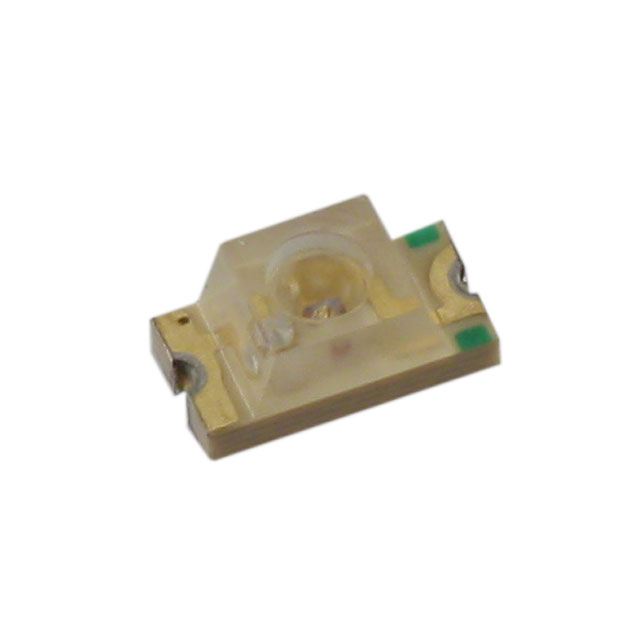
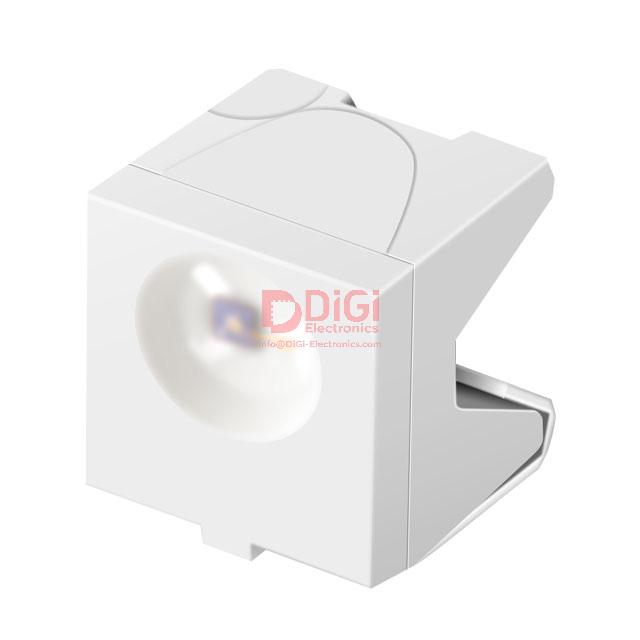
The AA4040ZGS leverages advanced InGaN-on-sapphire epitaxial technology to deliver a highly stable and efficient green 525 nm emission characteristic. This right-angle surface-mount device (SMD) exhibits strong directionality, optimized for both discrete status indication and compact backlighting applications. The 4.0 × 4.0 mm boomerang-style package introduces mechanical advantages by simplifying routing for perpendicular signal planes, providing design flexibility for PCB layouts where vertical emission or limited footprint is critical.
The emitter’s InGaN architecture ensures consistent photon output under variable current loads, integrating robust thermal management inherent to sapphire substrates. This results in minimal wavelength drift and preserves luminous intensity even during extended operation cycles, improving reliability. The green output falls within the enhanced human visual response region, maximizing perceived brightness at lower drive currents—key for energy-sensitive systems. Optical uniformity is particularly important in matrix arrangements or tight clusters, where these LEDs can be placed densely with minimal crosstalk, due to package geometry and controlled viewing angles.
From a manufacturing standpoint, the RoHS and halogen-free conformance streamlines qualification for eco-conscious applications. The solder pad layout aligns readily with standard pick-and-place systems, enabling high-throughput board assembly and reducing manual intervention. Reflow soldering yields secure bonds, while the boomerang format lowers risk of mechanical stress during handling and deployment. In large-scale deployments, reliable batch consistency reduces calibration effort for automated optical inspection platforms.
Integrating these LEDs into high-density control panels illustrates the value of right-angle SMDs in reducing board layers and simplifying visual mapping. In field deployments, extended continuous operation in ambient temperature variations tests photon stability; here, the device exhibits strong color retention and low degradation—attributes linked to emitter material choice and thermal design. Subtle improvements in luminous efficacy at lower currents allow precise modulation in dynamic signaling systems, supporting power optimization without perceptible drop in notification clarity.
Critically, leveraging the physical form factor for innovative optical designs—such as panel edge illumination or compact interface lighting—emphasizes the utility of the AA4040ZGS in modern product engineering. The unique boomerang footprint and right-angle orientation resolve longstanding integration constraints, permitting more efficient use of PCB space and facilitating refined light output control for miniaturized electronics. This convergence of advanced materials, robust packaging, and thoughtful compliance shapes a solution that merges optical performance with pragmatic manufacturing and deployment needs.
Core features of AA4040ZGS Kingbright Green SMD LED
The AA4040ZGS Kingbright Green SMD LED is engineered to address critical requirements in compact board-level designs, delivering high-visibility green emission at a peak wavelength of 525 nm. This precise spectral selection ensures optimal human eye sensitivity, resulting in efficient signal indication across varied ambient lighting conditions. The single-color output streamlines control circuitry, minimizing design complexity compared to multicolor indicators and increasing system reliability.
Mechanically, this device leverages a right-angle mounting configuration, which shifts the emission axis to lie parallel with the PCB plane. This geometry is advantageous for edge-mounted applications, light pipes, and scenarios demanding panel illumination within confined device profiles. Situations such as rack indicators, modular display boards, and interface status lines benefit directly from this space-saving emission strategy, enabling clear optical signaling without increasing product dimensions.
AA4040ZGS is fabricated with halogen-free, RoHS-compliant materials. The LED composition supports stringent environmental directives and reduces the risk of hazardous substance exposure during processing and operation. Integrators working under global safety mandates can deploy this component without secondary qualification, streamlining compliance documentation and reducing overhead in multi-jurisdictional production.
Electronic packaging is optimized for high-throughput automated handling. Tape-and-reel format (500 units per reel) integrates smoothly with pick-and-place equipment, sustaining assembly line flow and lowering potential for feeding errors. The component’s SMD form factor fully supports reflow soldering cycles—a preferred thermal profile in modern PCB assembly—allowing for consistent joint formation and reduced stress on the soldered connections. This compatibility ensures robust electrical and mechanical performance across repeated thermal excursions during board build-up.
Moisture sensitivity is rated at level 3 in conformance with J-STD-020 standards. This rating provides a balanced window before mandatory pre-bake, supporting flexible storage and logistics in high-volume environments. In practice, such tolerance alleviates bottlenecks in inventory management, especially when LEDs are temporarily exposed to ambient humidity outside controlled storage.
Consistent manufacturing results are promoted through the device’s straightforward bill of materials, minimizing the risk of supply disruptions tied to complex subcomponent sourcing. A strong correlation exists between this simplicity and the maintenance of long-term PCB assembly yield, especially in workflows targeting high field reliability and rapid design cycling. This focus on manufacturability, combined with adaptable optical geometry, positions the AA4040ZGS as a repeatable solution for new and established platforms where uptime, safety, and precision signaling take priority.
Application scenarios for AA4040ZGS Kingbright Green SMD LED
AA4040ZGS Kingbright Green SMD LEDs offer a robust solution for engineers managing tight space and demanding visual performance requirements in modern electronic systems. The SMD encapsulation provides inherent advantages in terms of footprint reduction and automated assembly compatibility, facilitating high-throughput manufacturing processes without sacrificing mechanical reliability. Its right-angle emission geometry enables lateral, board-parallel illumination, a significant benefit in compact mechanical architectures—especially where vertical PCB height constraints or side-firing light output are critical.
In display and panel backlighting, precise spectral output ensures consistent color rendering and legible graphics even in ambient light variations. The highly controlled luminous intensity distribution helps eliminate hot spots and ensures uniform backlight diffusion, optimizing user experience for products ranging from small handheld displays to complex instrument control panels.
When deployed as status indicators in smart appliances or consumer IoT hardware, the LED’s long-life and high-efficiency characteristics directly contribute to overall device longevity and energy profile. The stable forward voltage and minimal thermal drift under typical current regulation schemes make it simple to integrate into low-power control circuits. This aspect is particularly impactful for always-on indicators and standby signals, where reliability and consistent visibility over extended operation are paramount.
Portable and wearable electronics benefit from the AA4040ZGS’s constrained size, minimal weight, and low thermal output. Integration efforts are streamlined by the device’s low-profile package, reducing intrusion on critical PCB area and thermal budgets. The efficient luminous efficacy extends device battery life—a recurring constraint in portable system architecture—and supports product miniaturization targets without performance compromise.
In medical equipment contexts, the device’s compliance with material safety and emission standards mitigates risk during both certification and usage phases. The LED operates stably in environments subject to vibration, minor shocks, and frequent operational cycling, aligning with the stringent reliability requirements common in patient-facing indicators and functional signaling.
Deploying the AA4040ZGS in assemblies with densely packed PCBs reveals further strengths: the right-angle emission mitigates issues of light bleed between adjacent channels and can simplify optical isolation strategies within multi-signal boards. In tightly integrated control modules, this can reduce part count and facilitate sharper mechanical layouts. Direct placement adjacent to interface elements provides intuitive optical cues without visible protrusion, a valued trait for industrial interfaces and advanced consumer designs.
The nuanced selection of this SMD LED thus addresses both electrical engineering constraints and industrial design aspirations. Leveraging its unique emission profile, rugged material properties, and established reliability, the AA4040ZGS consistently enables streamlined integration and end-user clarity in demanding, space-limited, and reliability-focused application environments.
Technical specifications of AA4040ZGS Kingbright Green SMD LED
The AA4040ZGS Kingbright Green SMD LED is engineered for robust optoelectronic performance with well-defined parameters. Its dominant wavelength of 525 nm (±1 nm) not only directly addresses the maximum spectral sensitivity of the human eye in the green region but also ensures high chromatic accuracy in applications requiring precise color rendering. This narrow tolerance is critical for applications such as indicator arrays or status panels, where color consistency across devices is vital for both aesthetic uniformity and user interface clarity.
From an electrical perspective, the typical forward voltage of 3.3 V (±0.1 V) optimizes compatibility with standard driving logic. This tight tolerance enables straightforward design of current-limiting circuits, minimizing the risk of skewed power consumption or color variance due to supply fluctuations. Integrating these LEDs into driver topologies benefits from the predictable power budget, which directly impacts system reliability and reduces the likelihood of over-specification in upstream components.
Luminous intensity and angular emission profiles are defined according to CIE127-2007 standards, with θ1/2 quantifying the half-luminous intensity angle. This specification gives engineers precise control over optical layout and facilitates simulation-driven array designs. Controlled angular distribution proves advantageous in high-density PCBs for multiplexed displays, where cross-talk and spillover between adjacent channels must be strictly managed. Consistent brightness across LEDs in a subsystem demands adherence to these standards, especially in safety-critical signaling environments.
Proper current management is addressed through explicit pulse operation limits—such as a 1/10 duty cycle and 0.1 ms pulse width for pulsed operation—safeguarding the LED junction from thermal and electrical overstress. This constraint is fundamental for applications demanding high-intensity pulses, for instance in optical encoders or machine-vision fiducials, since exceeding these parameters can escalate junction temperature quickly, degrading output and device lifespan. Over-driving, even momentarily, incurs risk of rapid performance decline; therefore, real-world designs often incorporate protective circuitry paired with active thermal monitoring where peak brightness is needed.
Thermal considerations are meticulously accounted for with a specified junction-to-ambient thermal resistance, benchmarked for FR4 PCBs with pad sizes ≥16 mm². This allows for confident prediction of junction temperatures under varying drive conditions, enabling precise thermal simulations at the board level. Sufficient copper land area, effective via stitching beneath the thermal pad, and the use of high-conductivity substrate materials have notable impact, especially in multi-LED assemblies or confined enclosures. Insufficient thermal mitigation can otherwise lead to hotspots, accelerating phosphor degradation and shifting emission spectra.
Adhering to specified limits remains non-negotiable in quality assurance protocols. In integrated systems—such as automotive instrument clusters or medical diagnostic devices—failure mechanisms tied to overcurrent or inadequate thermal design propagate significant downstream risks. Accordingly, proactive derating of both electrical and thermal maxima is a typical best practice, extending operational longevity and minimizing the maintenance footprint.
A deeper review reveals that the AA4040ZGS’s tight specification regime yields substantial engineering value in platforms where reliability and uniformity trump raw luminous efficacy. Leveraging all available parametric data at the schematic and PCB layout stages not only facilitates first-pass design success but also underpins regulatory compliance in tightly controlled sectors. Where long-term output stability is crucial, situating the AA4040ZGS within well-characterized electrical and thermal envelopes ensures sustained, predictable performance, validating its selection for professional-grade applications.
Package design and mounting considerations for AA4040ZGS Kingbright Green SMD LED
The AA4040ZGS Kingbright Green SMD LED leverages a 4.0 mm × 4.0 mm right-angle package, specifically engineered for applications that demand robust surface mounting and lateral optical emission. Its form factor enables tight integration within high-density PCB environments, allowing designers to maximize component placement without sacrificing luminous efficacy or ergonomic access for visual status indication.
At the mechanical interface, adherence to the specified solder pad footprint and clearance becomes critical. Accurate implementation of these parameters directly influences joint reliability, solder wicking, and heat dissipation capacity. The right-angle configuration requires particular attention to coplanarity and pad flatness to mitigate risk of cold solder joints or uneven thermal paths, which could compromise both mechanical stability and device longevity. Experience with similar SMD packages reveals that slight deviations in stencil aperture or paste volume at the interface can disproportionately affect heat cycling resilience, a key concern in environments subject to fluctuating currents or ambient temperatures.
Thermally, the metal leadframe and designated thermal pad footprint are coupled to optimize conduction into the PCB copper planes. This structure not only enhances maximum forward current but also improves spectral stability at elevated drive levels. Implementing a multilayer PCB layout with substantial copper pours beneath the LED further amplifies performance, decreasing junction temperatures and curbing luminous flux degradation over operational life. In automotive clusters and industrial control panels, where prolonged duty cycles demand consistent brightness, such design attention ensures both electrical reliability and color uniformity.
For optical performance, the package’s geometry enables unobstructed side viewing—essential for board-edge indicators and light guides. The physical height and lens orientation facilitate efficient coupling with external light pipes or diffusion structures without necessitating post-mount adjustment. This supports scalable production while guaranteeing consistent illuminated output across multiple assembly runs.
Strategically, the integration of the AA4040ZGS involves a calibrated balance between assembly yield and field reliability. Dry runs with solder mask-defined pads, proper pick-and-place nozzle selection, and precise placement speed adjustments during SMT processing are recommended to guard against thermal stress and package misalignment. The nuanced interaction between mechanical tolerance and thermal pathway in this LED package underscores the advantage of adopting rigorous DFM (Design for Manufacturability) checks early in the PCB layout phase—mitigating downstream rework and elevating long-term system performance.
Soldering recommendations and reliability for AA4040ZGS Kingbright Green SMD LED
The AA4040ZGS Kingbright Green SMD LED integrates advanced material and package engineering to address the demands of contemporary lead-free reflow soldering protocols. The device is optimized for thermal cycling, particularly within J-STD-020-defined temperature profiles, minimizing cumulative stress on both the die and housing. This underlying robustness is conditional, as excessive or irregular thermal excursions risk microfractures in the lens or dewetting at die-attach interfaces, resulting in compromised light emission or early-life failures.
Successful soldering profiles restrict peak temperatures and ramp rates, reducing local hot spots and mitigating flux charring or solder balling. A two-pass reflow maximum aligns with empirical observations: further cycles escalate risk of delamination, package warpage, and unwanted diffusion effects at metallization boundaries. This operational limit, grounded in reliability testing, supports maintenance of luminous performance metrics and mechanical endurance in subsequent processing phases such as PCB cleaning or inspection.
Engineering teams should avoid wave or manual soldering, as these methods induce unbalanced gradients, exceeding the LED’s designed tolerances. Cross-sectional SEM analysis reveals that alternate soldering frequently generates void formation beneath the LED leads, undermining electrical and thermal pathways essential for efficient operation. The lack of process guarantees for non-reflow techniques is rooted in both the solder joint morphology and the MSL rating: trapped moisture can expand rapidly during non-uniform heating, promoting mold compound cracking and exposing the interior to ionic contamination.
Practical optimization in high-volume assembly is achieved by tightly regulating ambient humidity and storage conditions from reel unpacking through reflown placement. Real-time oven profiling and X-ray verification have proven effective in closing feedback gaps between theoretical conditions and actual board-level outcomes, ensuring yield rates remain above process capability targets. Fine-tuning conveyor speed and preheat zones further enhances reflow consistency, contributing to robust joint formation without stressing package boundaries.
The AA4040ZGS device embodies a convergence of mechanical design and legacy experience in SMD reliability. Integrating solder-joint modeling and post-process inspection into the production workflow is a pivotal mechanism to achieve consistent optoelectronic performance in automated manufacturing environments. Close alignment with specified soldering windows and MSL handling forms the cornerstone of achieving both reliability and throughput in applications such as indicator arrays or compact signal modules. The path to optimal system integration leverages both empirical process control and predictive maintenance of soldering equipment, yielding not only specification compliance but extended product lifecycle within demanding deployment scenarios.
Handling precautions for AA4040ZGS Kingbright Green SMD LED
The handling of the AA4040ZGS Kingbright Green SMD LED requires an engineering-centric approach, centering on both electrostatic safety and mechanical preservation to ensure optimal performance across its lifecycle. The LED’s inherent ESD sensitivity originates from its internal semiconductor junctions, which can be easily compromised by static voltages commonly generated during standard assembly routines. Effective mitigation hinges on comprehensive personal and environmental grounding strategies: wrist straps, ESD-safe gloves, and full compliance with facility-level anti-static protocols are not optional—they constitute baseline requirements for preserving device integrity throughout PCB integration and subsequent handling stages.
Layered atop the ESD risk profile is the specific mechanical fragility introduced by the device’s silicone encapsulant. Unlike traditional epoxy, silicone delivers improved thermal cycling resilience, especially valuable where reflow soldering or fluctuating thermal conditions are routine. Nevertheless, silicone’s inherently lower Shore hardness brings susceptibility to indentation, surface abrasion, or chemical ingress. The correct handling procedure focuses on side-gripping the device housing exclusively with precision forceps, maintaining absolute avoidance of the lens area to prevent micro-scratches or pressure points that compromise optical uniformity and light output stability. Even minor lens surface contact can manifest as light scattering abnormalities or reduced luminous efficacy—effects often misdiagnosed as batch variability without careful failure analysis.
Operational environments with a heightened concentration of reactive gases, notably hydrogen sulfide, pose a long-term reliability vulnerability. Silicone encapsulation, while robust against moisture, is a permeable barrier to certain gas species. Penetration of H₂S can catalyze oxidative or sulfidic corrosion at the interface with silver or copper lead frames, accelerating electrical degradation or open-circuit failures. Experience from assembly lines operating in heavy-industrial locales demonstrates that even trace atmospheric contaminants may aggregate over multi-year duty cycles, subtly undermining field returns data without obvious early warning. Proactive risk reduction, such as localized environmental air control or potting with secondary conformal coatings, frequently yields quantifiable returns in environments with aggressive atmospheric profiles.
In model-based reliability predictions and empirical stress testing, careful adherence to prescribed handling and environmental controls is repeatedly correlated with higher in-situ luminous stability and solder joint longevity. Skipping even minor steps—such as grounding checks or proper mechanical tool selection—results in outsized statistical impacts on batch-level field failure rates, often exceeding what design margins can compensate. Recognizing the full lifecycle exposure map for each component, from goods receipt through board assembly to end-use installation, enables the anticipation of latent failure modes that might otherwise surface as costlier, harder-to-diagnose system outages.
Methodical discipline in ESD safeguards, mechanical manipulation, and environmental contamination control thus underpins not only the functional qualities expected from the AA4040ZGS LED but shapes the overall dependability of downstream systems—particularly where lighting uniformity, color accuracy, or continuous uptime are defined deliverables. Investing in comprehensive handling infrastructure and process rigor transforms these best practices from avoidance mandates into tangible product value, being a foundation for confidence in both high-volume manufacturing and stringent specialty deployments.
Potential equivalent/replacement models for AA4040ZGS Kingbright Green SMD LED
Evaluating equivalent or replacement models for the AA4040ZGS Kingbright Green SMD LED requires a disciplined approach anchored in understanding not just datasheet parameters but also real-world integration constraints. Fundamental criteria center on spectral match: any replacement must deliver a green emission centered at approximately 525 nm, as even small spectral deviations can affect optical uniformity in signaling or display applications. The forward voltage, ideally within ±0.2 V of the AA4040ZGS’s nominal 3.3 V, impacts drive circuitry compatibility and thermal management protocols. Right-angle SMD mounting remains a non-negotiable feature for assemblies dependent on lateral illumination or restricted PCB layouts.
Mechanical equivalence, particularly the 4.0 × 4.0 mm footprint, governs placement and solderability—critical for automated surface-mount processes with high throughput. Moisture sensitivity alignment, typically rated by JEDEC levels, mitigates latent defects and ensures robust SMT yield, especially as adoption of “no-clean” processes grows. RoHS and halogen-free status further contribute to long-term compliance, post-market reliability, and regional shipment feasibility. Where variances in package height or lens geometry exist, reviewing PCB clearance and optical output angles prevents unintended shadowing or mismatched viewing profiles.
Technical vetting should extend beyond datasheet comparison. System simulation and laboratory qualification remain indispensable; photometric validation in the application environment unearths subtle mismatches in luminous intensity or color coordinates not always evident in published specs. Accelerated life testing under design-load conditions may expose weaknesses in alternate vendors' epoxy or leadframe adhesion, affecting operational longevity in high-humidity or vibration-rich settings.
Experience demonstrates that manufacturer databases are prone to silent revisions—alterations to lead plating, binning, or even internal die composition, which can materially shift device behavior. Periodic BOM audits and cross-checks against the latest technical releases reduce risk of spec drift and increase supply chain resilience. Integrated component search platforms can highlight candidates from Lite-On, Vishay, or Lumileds, but vigilance is required to catch production discontinuations or last-time buy notifications.
Design teams benefit from modeling alternate part tolerances directly in EDA tools, preemptively flagging risk areas ranging from reflow peak temperature alignment to drive current derating. Strategic dual-qualification of alternatives cushions against upstream allocation shocks, and field data over extended production runs aids in refining QA thresholds for new suppliers. Incremental line trials, not blanket swaps, optimize the transition by isolating process or performance deviations early. By enforcing these layered safeguards, direct substitutes for the AA4040ZGS can be deployed without compromising output fidelity, regulatory compliance, or assembly continuity.
Conclusion
The AA4040ZGS Kingbright Green SMD LED exemplifies robustness and compliance for integration in compact electronic assemblies, particularly where right-angle orientation is essential. By merging precise electrical parameters—including low forward voltage and stable operating current—with optimized optical output, the component secures consistent visibility for status indication and effective backlighting, even under challenging ambient conditions. Mechanically, the device leverages proven SMD construction with reinforced contacts and a precisely formed lens geometry; this approach mitigates stress during reflow and enhances placement repeatability across automated assembly platforms.
Further, the LED’s environmental compliance, reflected in its halogen-free materials and RoHS-certified design, provides engineers with a sustainable option compatible with stringent global directives. When specifying the AA4040ZGS, attention to its detailed soldering profile and ESD protection precautions is imperative, since deviations may compromise luminous efficacy or long-term reliability. Real-world deployments in dense control panels and IoT enclosures confirm that adhering strictly to the manufacturer’s guidelines, especially regarding thermal management and reflow conditions, reduces field failures and maintains visual consistency across production lots.
From a design optimization perspective, careful PCB layout—accounting for trace impedance and uniform power distribution—enables the LED to reach its full potential, minimizing color variation or brightness decay over lifecycle extremes. The masterful integration of these engineering features suggests a strategic advantage for teams seeking scalable solutions; its form factor facilitates modular design approaches and rapid prototyping without sacrificing integration integrity.
Selectively leveraging the strengths of the AA4040ZGS assures rapid throughput during pick-and-place assembly while meeting advanced miniaturization requirements in next-generation electronic systems. By combining intelligent component selection, process discipline, and long-term performance benchmarking, teams elevate their product quality baseline decisively, making the AA4040ZGS a strategic asset in contemporary electronic innovation.