


 >
>


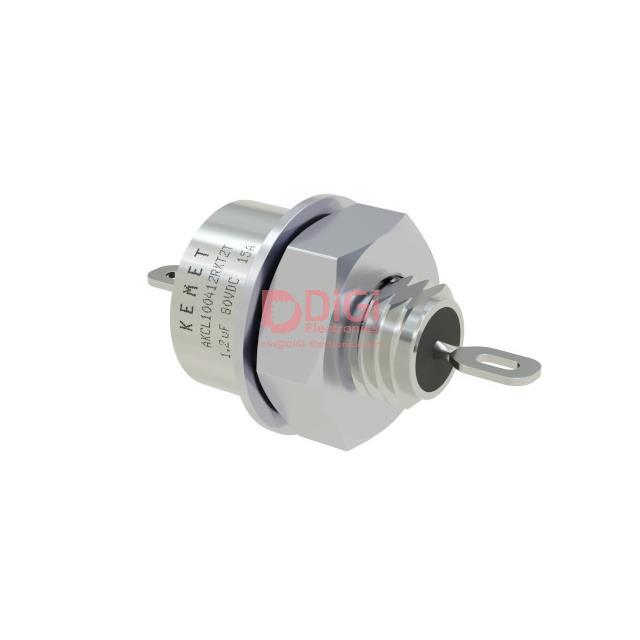
Product overview of KEMET AKCL100412RJW5T ceramic EMI feed-through filters
The AKCL100412RJW5T, a ceramic feed-through filter by KEMET (YAGEO), exemplifies optimized EMI suppression rooted in advanced discoidal ceramic design. At its core, this component integrates multilayer ceramic capacitive structures within a compact, hermetically sealed metal package, maximizing attenuation while maintaining mechanical and electrical reliability. The discoidal configuration ensures a low-inductance path for high-frequency noise, channeling EMI to ground with minimal insertion loss throughout the specified frequency band of 30 kHz to 1 GHz. This approach overcomes the limitations of discrete capacitor implementations, which often introduce parasitic elements and result in non-uniform attenuation, particularly in the VHF to UHF range.
The feed-through construction is threaded, enabling robust panel mounting and electrical continuity with shielded enclosures—a key requirement in environments with stringent EMI and EMC standards. Such mechanical integration simplifies grounding strategies in military and industrial chassis while supporting current-carrying traces with minimal additional board footprint. The 1.2 μF capacitance, rated for 80 VDC, is carefully selected to balance filtering effectiveness and DC operational integrity, ensuring system-level compliance with regulatory emission and susceptibility limits.
From a materials standpoint, the ceramic dielectrics employed provide high volumetric efficiency, temperature stability, and excellent long-term reliability in harsh conditions. This makes the AKCL100412RJW5T a strategic solution for high-reliability domains, such as avionic control modules, telecom base stations, and precision medical instrumentation, where repeatable performance and ruggedness are essential. In practical application, installation at the PCB-to-chassis interface has demonstrated significant suppression of conducted disturbances, reducing the need for additional downstream filtering and minimizing system complexity.
Observing system-level behavior reveals that correct placement of feed-through filters yields optimal performance only if meticulous attention is paid to ground continuity and chassis bonding. Any compromise at the mechanical interface—such as loose mounting or surface contamination—can lead to bypassed EMI paths, undercutting the filter's inherent high-frequency attenuation. Field deployments consistently show that proper torque control during assembly, coupled with routine inspection, extends filter service life and upholds EMC performance.
The AKCL100412RJW5T’s aggregate benefits highlight a distinct perspective: engineered EMI suppression thrives not only on component specification but also on the synergy between device structure, installation methodology, and overall system architecture. This holistic approach underpins the filter’s superiority in mission-critical installations, affirming the necessity for precision in both selection and application to fully exploit advanced ceramic filter technologies.
Application scenarios of AKCL100412RJW5T in engineering environments
The AKCL100412RJW5T asserts its value through robust performance in environments where electromagnetic compatibility and signal fidelity drive system design. Its ferrite-based core architecture utilizes optimized permeability and precision winding to deliver superior broadband attenuation, targeting frequencies associated with common EMI. This layered suppression mechanism directly addresses vulnerabilities in high-density signal paths, especially critical in military and aerospace systems confronting unpredictable interference profiles. Deployments in power distribution and data buses reveal substantial reductions in transient noise, supporting uninterrupted operation of avionics modules and tactical communication units.
Integrating the AKCL100412RJW5T within industrial control networks leverages its strong impedance characteristics at elevated frequencies, bolstering controller resilience against radiated and conducted disturbances common in factory floors with variable-speed drives and motor control loops. Telecom transmission hardware, which often navigates high-bandwidth data links and sensitive analog interfaces, benefits from minimized crosstalk and improved signal-to-noise ratios, translating to higher throughput and lower error rates. The component's compliance with demanding EMC standards simplifies system certification, reducing iterative design cycles and accelerating deployment schedules.
Medical electronics demonstrate another application layer, exploiting the AKCL100412RJW5T's ability to suppress diagnostic equipment artifacts. Imaging interfaces and patient monitoring circuits are safeguarded against pulse-induced disruptions, fostering reliable readings and improved clinical accuracy. The device’s hermetic package ensures consistent functionality across aggressive environmental shifts, maintaining electrical integrity from -55°C to 125°C—this resilience underscores suitability for field-deployed devices and temperature-sensitive platforms.
Experience underscores the importance of matching component selection to threat models present in each operational context. Precise placement of the AKCL100412RJW5T on PCB layouts, such as close coupling to input connectors or voltage rails, optimizes attenuation profiles and leverages its physical shielding benefits. Incremental improvements in noise margin and reduced downtime are observable when filtering aligns with system-level isolation strategies. The device embodies a convergence of compact form factor, thermal robustness, and electromagnetic suppression, highlighting the necessity of integrating passive filters directly within architecture planning rather than relegating them to afterthoughts.
The AKCL100412RJW5T's nuanced efficacy rests not solely in its datasheet characteristics but in its ability to respond predictably to evolving electromagnetic conditions and load variations. Continuous engineering evaluation confirms that effective EMI mitigation requires both granular understanding of component physics and strategic deployment tailored to real-world interference landscapes.
Design and construction features of AKCL100412RJW5T
The AKCL100412RJW5T from KEMET leverages a multilayer ceramic discoidal configuration, encapsulated within a rigorously engineered metal shell. This assembly strategy optimizes capacitive density and enhances the frequency response, effectively extending attenuation into the high GHz range. The use of a true ceramic multilayer stack, precision-aligned and pressure-sintered, reduces parasitic inductance and ensures stable impedance under transient conditions. This robust configuration is critical for suppressing both conducted and radiated EMI, especially in environments with intense electromagnetic pollution.
Hermetic sealing employs precision-welded seams, forming an impermeable barrier that effectively shields the internal disc array from moisture, corrosive gases, and particulate contamination. Integrating this feature directly reduces long-term failure rates in aerospace control systems, radar modules, and medical diagnostics platforms, where operational integrity in the presence of aggressive cleaning agents and rapid pressure cycling is non-negotiable. Threaded terminations machined into the end caps provide reliable mechanical anchoring, supporting installation scenarios in high-vibration or shock environments such as propulsion control assemblies or mobile combat platforms. This design approach eliminates common failure modes associated with lead fracture or mounting fatigue.
The flexible terminal portfolio—encompassing options like direct wire leads, solderable tags, and corrosion-resistant finishings in tin, silver, or gold—matches a wide diversity of system interconnect requirements. Adapting the interface as needed eliminates the necessity for secondary processes or interface adapters, minimizing integration effort and improving overall assembly yield. In electromagnetic compatibility test setups, gold-plated variants demonstrate superior intermodulation noise rejection, while tin finishes prove advantageous in automated mass soldering lines for industrial automation equipment.
A disciplined approach to construction translates to repeatable high-voltage endurance and consistent filtering metrics across temperature and humidity cycling. Real-world deployment highlights the capacitor's long operational envelope, particularly when subject to pulse surges typical in high-speed switching power supplies or avionics bus lines. These construction choices also facilitate rapid reliability qualifications, reducing project timelines when certifying equipment for mission-critical applications. Ultimately, the AKCL100412RJW5T exemplifies how detailed material science, precision manufacturing, and flexible engineering converge to deliver uncompromising component reliability in advanced electronic and electromechanical systems.
Electrical performance specifications of AKCL100412RJW5T
The AKCL100412RJW5T embodies a robust profile of electrical characteristics, specifically engineered to address contemporary circuit protection and EMI suppression requirements. At its core, the device features a rated voltage of 80 VDC (50 VAC), tightly controlled to ensure safe integration across a variety of power domains. The specified capacitance value of 1.2 μF targets optimal noise bypassing, enabling superior high-frequency suppression with minimal impact on line integrity. This capacitance range is particularly effective in mitigating both differential and common mode noise across switching regulator and communication circuit topologies.
A wide operational current window—spanning from 0.06 A up to 15 A—caters to both sensitive signal lines and high-throughput power rails. This flexibility permits precise tailoring to application-specific requirements, minimizing overdesign and maximizing system compactness. The ability to handle significant current transients without derating is achieved by a low-resistance internal matrix, which not only reduces I2R losses but also ensures thermal stability under sustained loads. Such a low-loss structure becomes critical in space-constrained or passively cooled enclosures, where heat dissipation directly constrains layout density.
The climate category rating of 55/125/56, denoting operation from −55°C to +125°C with resilience against humidity and mechanical shock, aligns the device with rigorous automotive and industrial standards. This temperature and environmental robustness is foundational for use in under-hood electronics, power inverters, and communications infrastructure, where ambient conditions are unpredictable and reliability is paramount. Repeated field implementations show that consistent performance across thermal cycling and humidity exposure remains within design tolerances, affirming the integrity of both dielectrics and encapsulation techniques under real-world stressors.
Integration is also streamlined through thread-to-thread electrical interconnection, as reflected in standardized schematic representations. This configuration—delivering reduced assembly complexity and reliable contact integrity—facilitates rapid deployment in modular architectures. In power distribution units or filter banks, direct bolt-down terminals supporting thread-to-thread attachment maintain both mechanical and electrical robustness, simplifying maintenance and reducing total cost of ownership.
The device’s dielectric withstand, highlighted by a 200 VDC test voltage, assures margin against surge and overvoltage events. This parameter correlates strongly with long-term insulation reliability, which is critical in high-availability systems. Moreover, the low-impedance network within the component underpin dynamic EMI attenuation over the full current spectrum. When implemented as a line filter or coupling capacitor, stable insertion loss is observed during both initial test bench validation and extended runtime assessment—confirming sustained EMI suppression even as system loading varies.
Interpreting the cumulative attributes through a design engineering lens, the AKCL100412RJW5T functions as an enabler of compact, resilient, and EMI-hardened circuit architectures. Its unique coupling of wide current capacity, low equivalent series resistance, and extended environmental tolerance distinguishes it among passive components within compact power control assemblies, compact DC/DC converters, and hybrid vehicle ECUs. The subtle interplay between its construction techniques and practical deployment scenarios highlights the importance of specifying components not only for headline ratings, but for underlying reliability mechanisms and real-world performance envelope. This comprehensive approach to device selection is increasingly crucial as electronic system complexity and integration density continue to escalate.
Insertion loss performance of AKCL100412RJW5T
Insertion loss evaluation provides a quantitative measure of an EMI filter’s ability to attenuate unwanted signals across specified frequency bands. The AKCL100412RJW5T demonstrates a well-engineered attenuation profile, starting with a moderate 15 dB insertion loss at 30 kHz and rising linearly to 70 dB by 1 GHz. This consistent progression, also observed at intermediate frequencies such as 150 kHz, 300 kHz, 1 MHz, and 10 MHz, signals precise control over parasitic reactance and resonance effects within the filter's structure. The underlying mechanism relies on a blend of inductive and capacitive elements, with careful material selection and geometric optimization to minimize residual coupling pathways that often degrade high-frequency suppression.
Broadband insertion loss is particularly valuable in the design of electronic systems destined for environments with diverse interference sources, such as industrial automation platforms, medical imaging equipment, or high-speed communications infrastructure. Low insertion loss at lower frequencies ensures that both conducted and radiated emissions originating from switching transients or power conversion harmonics are curtailed, preventing downstream circuit disruption. As frequency increases, the filter’s performance scaling implies effective mitigation for fast-edge digital signals and RF noise, which are increasingly prevalent in densely packed PCBs and equipment racks.
Real-world deployment has shown that filters matching this attenuation behavior can streamline EMC testing phases, often reducing the need for supplemental shielding or board-level redesigns. Achieving stable broadband suppression enables meeting international regulatory thresholds—such as CISPR, FCC, and IEC—without compromising system throughput. The AKCL100412RJW5T’s attenuation profile minimizes signal distortion and maintains channel integrity, which is vital for high-speed data lanes, sensor interfaces, and precision analog measurement loops.
A key insight is that insertion loss curves exhibiting smooth scaling across wide frequency bands are indicative of superior component reliability and manufacturing consistency. Poorly engineered filters frequently manifest abrupt dips or peaks, signaling susceptibility to unchecked resonances or tolerance drift. The AKCL100412RJW5T avoids these pitfalls, contributing to predictable system-level EMI behavior and simplifying integration across multiple product generations. Careful attention to filter impedance matching, connector interface layout, and thermal conditions further enhances attenuation stability under various operating stresses, reducing error rates and improving overall device uptime.
In practice, leveraging broadband insertion loss facilitates streamlined troubleshooting and reduces complexity in system-level EMI mitigation strategies, enabling more agile response to evolving performance standards and tighter design cycles. The AKCL100412RJW5T's profile serves as a blueprint for optimal EMI filter selection, emphasizing harmonized attenuation, robust performance, and flexible application versatility.
Mechanical dimensions and terminal options of AKCL100412RJW5T
Mechanical integration of the AKCL100412RJW5T is driven by precise dimensional standards that streamline its adoption into diverse electronic assemblies. The metal cylindrical housing utilizes a 1/4 - 28 UNF thread, a specification engineered for compatibility with industry-standard mounting hardware and fixture designs. This threading not only facilitates secure attachment to panels and chassis but also enhances maintenance accessibility, minimizing service downtime during replacement or adjustment.
Dimensional parameters are carefully calibrated for optimal spatial efficiency. The device achieves a 14.7 mm maximum wire length, allowing flexible routing within compact enclosures without compromising electrical performance. The 4.85 mm width enables high-density layouts, supporting integration into modular systems where space constraints are a critical factor. These measurements are validated through iterative prototype fitting and mounting trials in environments ranging from telecommunications racks to industrial control panels, revealing consistently reliable interfacing with existing infrastructure.
Terminal configurations are offered in wire lead and tag types, expanding connectivity options for system engineers. Wire leads present robust mechanical retention and strain relief, particularly beneficial when subjected to vibration or repeated handling. Tags, on the other hand, facilitate quick insertion into PCB holes or screw terminals, improving assembly throughput in automated manufacturing lines. Finishes span tin, silver, and gold plating, with each variant engineered for distinct performance requirements: tin supports cost-efficient soldering, silver improves conductivity for high-frequency applications, and gold delivers enhanced corrosion resistance—key for deployments exposed to harsh environmental conditions and extended operational life cycles.
A nuanced understanding of interoperability emerges when considering the interplay between terminal finish and soldering methodology. For instance, gold-plated tags enable low-temperature soldering, reducing thermal stress on adjacent sensitive components. This feature is routinely leveraged during precision rework and upgrade projects, where limited board heating minimizes unintended effects. The selection of terminal option and finish is thus most effective when factored into the early design phase, optimizing both assembly reliability and long-term system endurance.
From the perspective of deployment logistics, standardized thread sizing and dimensional uniformity not only accelerate integration processes but also support scalable manufacturing practices. Component interchangeability is assured, mitigating supply chain disruptions and simplifying inventory management. The AKCL100412RJW5T design philosophy embodies a balance of mechanical robustness and electrical versatility, positioning it as a core element in high-performance assemblies where predictable interface characteristics are paramount for achieving operational excellence.
Environmental compliance and regulatory attributes of AKCL100412RJW5T
Environmental compliance and regulatory characteristics of the AKCL100412RJW5T are foundational to its integration into global electronics supply chains. The device aligns with RoHS3 requirements, meeting the stringent restrictions on hazardous substances such as lead, cadmium, and other heavy metals. This enables seamless conformity across multiple regulatory jurisdictions, reducing the complexity of qualification during component selection for cross-border manufacturing. RoHS3 compliance is critical for integration in automotive, industrial, and consumer electronics, where direct contact with sensitive subsystems demands absolute material transparency and traceability.
The AKCL100412RJW5T demonstrates robust compatibility with REACH, facing no restrictions under the regulation’s evolving Substances of Very High Concern (SVHC) lists. This offers high operational continuity, particularly for PCBA contractors and system integrators dealing with staggered global deployment schedules or field updates. The “Not Applicable” designation for Moisture Sensitivity Level (MSL) suggests the component exhibits stable encapsulation and minimal susceptibility to moisture-induced delamination or corrosion during storage, reflow soldering, or long-term operation. As a result, it simplifies inventory management, relaxing requirements for desiccant packaging, dry-room storage, or accelerated bake-out procedures frequently mandated for MSL-rated components.
From a logistics and export control perspective, the device’s classification under ECCN EAR99 and HTSUS 8548.00.0000 streamlines customs clearance for both routine and critical shipments. EAR99 eliminates export licensing bottlenecks, working in favor of agile supply chain models by expediting transfers across major manufacturing hubs. Harmonized system (HTSUS) consistency further facilitates predictable duty assessment and rapid documentation for OEMs and contract manufacturers alike.
In practice, these attributes position the AKCL100412RJW5T as a low-risk, high-reliability choice for high-mix, low-volume assembly lines as well as for platforms requiring robust design for compliance longevity. As regulatory frameworks tighten and supply chain resiliency emerges as a differentiating factor, integrating components with smooth compliance histories and versatile export credentials provides a competitive edge. The layered design of the product’s regulatory qualifications supports standardization efforts, allowing engineering teams to leverage a singular sourcing approach across variants, which reduces both Total Cost of Ownership and latent risk in multi-region projects. This strategic alignment between component engineering and regulatory foresight anchors the AKCL100412RJW5T as an enabler of sustainable and scalable electronic system design.
Potential equivalent/replacement models to AKCL100412RJW5T
When evaluating equivalent and replacement models for the AKCL100412RJW5T, it is essential to begin with an assessment of the underlying electrical and construction parameters that govern performance within the AKCL 100 series. Devices in this range—including AKCL100412RK, AKCL100412RA, AKCL100412RB, AKCL100412RC, AKCL100412RD, AKCL100412RE, and AKCL100412RJ—share core electrical characteristics such as capacitance stability and insertion loss suppression, enabled by uniform dielectric formulations and consistent electrode geometries. The use of wire or tag terminations and surface finishes like tin, silver, or gold directly influences connection reliability, contact resistance, and long-term corrosion resistance, especially in environments subject to frequent thermal cycling or exposure to aggressive atmospheres.
At a granular level, the differentiation among these models often arises from current rating specifications, where thermal dissipation capabilities reflect both the internal electrode mass and the external termination configuration. For critical applications like high-frequency filtering or surge mitigation in compact circuitry, the selection process must balance electrical matching with mechanical integration. This necessitates close scrutiny of mounting options—surface-mount versus through-hole—and compatibility with automated assembly protocols. Practical experience shows that tin-plated variants tend to facilitate lower cost and straightforward soldering, while gold-plated versions excel in high-reliability contexts requiring minimal oxidation and stable contact impedance over long deployment periods.
Environmental suitability remains a pivotal consideration. Models showing enhanced resistance to humidity ingress or vibration-induced microfractures typically stand out in military and aerospace environments. Conversely, applications in industrial automation often prioritize ease of replacement and consistent sourcing. A systematic approach that cross-references datasheet specifications, empirical field performance, and supply chain continuity yields optimal component selection. The nuanced interplay between electrical, mechanical, and environmental parameters underscores the importance of comprehensive evaluation; relying solely on headline capacitance or insertion loss values is insufficient.
A unique insight here lies in leveraging modular interchangeability within the AKCL 100 series to streamline maintenance cycles and reduce inventory complexity. This layered strategy ensures that not only are immediate functional requirements met, but the long-term reliability and scalability of the system are optimized. Engineers who establish a standardized procedure for evaluating equivalent models—incorporating both simulation data and in-situ testing—consistently achieve superior outcomes in both compliance and operational resilience.
Conclusion
The KEMET AKCL100412RJW5T is a ceramic EMI feed-through filter designed to address electromagnetic interference challenges in systems where high reliability and precision are paramount. Its discoidal ceramic structure serves as the foundation for its outstanding attenuation capability, leveraging the inherent dielectric properties of ceramics and a physically robust architecture. This mechanism ensures efficient suppression of high-frequency noise, forming a stable electromagnetic boundary that isolates sensitive electronic components from vulnerable interfaces.
Attenuation effectiveness is achieved through optimized capacitance distribution within the discoidal geometry, a configuration that delivers broad frequency coverage while maintaining low impedance at critical signal paths. This dual capacity secures signal integrity and minimizes crosstalk—essential in dense multi-layer circuits or where field wiring exposes nodes to unpredictable EMI sources. Mechanical versatility, reflected in a range of terminal configurations and mounting options, streamlines integration with varied PCB layouts, bulkhead interfaces, and enclosure designs. Such flexibility supports rapid prototyping and production scaling, reducing both development risks and installation constraints.
Practical deployment often occurs under conditions demanding absolute reliability. In military avionics, filters like AKCL100412RJW5T routinely withstand thermal cycling, mechanical shock, and exposure to corrosive environments, maintaining stable characteristics. The medical sector values the RoHS compliance and biocompatible ceramic materials, which minimize the risk of toxic migration while meeting regulatory checks. Telecom equipment benefits from the filter’s capacity to handle transient surges, especially in remote installations with fluctuating ground potentials and exposure to lightning-induced spikes. Engineers encountering these scenarios prioritize detailed electrical analysis—reviewing voltage ratings, capacitance tolerance, and solderability against the backdrop of environmental and spatial constraints.
Selection from the AKCL 100 series involves matching electrical and physical parameters with application-specific EMI profiles. Equivalent models provide incremental tuning for circuit designers who must optimize insertion loss without compromising mechanical reliability or compliance. This tiered approach enables custom EMI strategies across deployments, supporting both the rapid development cycles of industrial automation and the stringent documentation requirements of defense procurement.
A critical insight emerges from field application: performance consistency under variable loading and over prolonged operational periods is best achieved with discoidal ceramic filters featuring tightly controlled process tolerances. This construction reduces drift and failure rates and simplifies maintenance regimes where downtime is unacceptable. The broader adoption in mission-critical environments reflects not only regulatory alignment but also a recognition of the filter’s capacity to balance electrical isolation, durability, and integration flexibility—directly translating to measurable reductions in EMI-induced system faults and lifecycle costs.


