 >
>


Product overview: Broadcom NET2280REV1A-LF PCI to USB 2.0 controller
The Broadcom NET2280REV1A-LF represents a targeted engineering solution for systems requiring reliable interfacing between PCI and USB 2.0 subsystems. At its core, the device leverages compliant PCI signaling to serve as an effective bridge, translating host-side PCI transactions into USB protocol operations with minimal latency. This direct protocol mapping streamlines the system architecture, eliminating the need for intermediary logic or excessive firmware intervention. Consequently, this controller supports deterministic data throughput, vital for applications where timing and transfer integrity are critical, such as industrial automation endpoints and real-time instrument control.
An analysis of its architecture reveals optimization for both legacy and emerging platforms. The controller supports 32-bit PCI interfaces at standard clock rates, allowing straightforward integration into established PCBs and legacy embedded systems. For practical deployment, engineers observe that the NET2280REV1A-LF accommodates popular form factors and voltage profiles, reducing board-level constraints during retrofit or initial design. Its integrated USB 2.0 PHY ensures compliance with full-speed and high-speed device requirements, a necessity in environments where host and peripheral variance may challenge uniform performance. Robust plug-and-play capability and programmable endpoint management further distinguish this device within resource-constrained system designs, where time-to-market and driver compatibility are critical.
In field deployments, the NET2280REV1A-LF demonstrates resilience across fluctuating workloads and diverse peripheral types. Consistent enumeration across a wide spectrum of USB devices affirms its compatibility, supporting reliable operation in printer subsystems, point-of-sale units, and mobile computing devices. Integrated support for USB bulk, interrupt, and control transfers permits tailored use-case implementations without sacrificing throughput or operational stability. Notably, system designers often leverage its flexible endpoint allocation to fine-tune communication channels, enhancing overall device responsiveness in concurrent I/O scenarios.
Technical reliability is matched with practical provisioning ease. Typical integration involves leveraging the device’s comprehensive reference designs and software stack, minimizing resource expenditure during development. Embedded system architects prioritize the NET2280REV1A-LF for its sustained compliance to USB 2.0 electrical and protocol standards, particularly when deployed in multi-vendor environments that demand robust interoperability. Performance benchmarks indicate that the controller maintains peak USB 2.0 bandwidth under continuous PCI bus activity, an essential trait for intensive data acquisition modules and streaming peripherals.
Reflecting on system scalability, the controller’s deployment unlocks incremental expansion across PCI-only installations, circumventing the need for wholesale platform upgrades. Such design flexibility harmonizes evolving I/O requirements with existing infrastructure. The device’s proven stability under varied electrical and thermal conditions further asserts its suitability for long-life, mission-critical installations.
When evaluating expansion strategies, the NET2280REV1A-LF’s predictable integration pathway and protocol fidelity deliver value beyond generic bridging logic. The architecture facilitates modular upgrades and smoother migrations, encouraging future-oriented design philosophies. The ability to localize peripheral management directly via PCI fosters distributed systems efficiency, addressing both immediate functional gaps and enabling scalable interface planning—an approach increasingly vital in adaptive embedded ecosystems.
Key features and architecture of NET2280REV1A-LF
The architecture of the NET2280REV1A-LF is engineered for responsive USB 2.0 bridging within PCI-based systems, centering on flexible integration and high-throughput data movement. The device’s direct support for PCI v3.0, operating at a 33 MHz 32-bit data path, provides seamless compatibility across both established and contemporary PCI host platforms. This ensures persistence in legacy system support while offering sufficient baseline bandwidth for modern designs, often critical in industrial and embedded environments where hardware longevity is paramount.
A Hi-Speed USB 2.0 peripheral logic, capable of continuous data rates up to 40 MB/s and burst transfers reaching 480 Mbps, forms the core of its connectivity provision. Such bandwidth supports the transfer of bulk multimedia blocks or streaming data typical of video acquisition peripherals and high-frequency sensor nodes. The presence of a fully integrated USB PHY eliminates external interfacing uncertainty, sharply reducing analog signal quality concerns and PCB routing effort while maintaining compliance with electrical requirements for both high-speed and full-speed operation.
Central to endpoint management is the integrated 8051 core, operating at 60 MHz. This microcontroller architecture allows local execution of endpoint-specific commands, data mart management, and on-the-fly protocol decisions. Direct programmability permits tailoring of endpoint behaviors to match application demands—such as implementing custom flow control, real-time re-arming of isochronous streams, or executing vendor-specific USB requests—without imposing excessive latency by involving host intervention. This arrangement is especially effective in scenarios where deterministic endpoint handling is non-negotiable, as seen in medical or measurement system interfaces.
The onboard 8 KB RAM is organized to buffer endpoint traffic and configuration data. This local store enables decoupling of data arrival on the USB interface from PCI bus access timing, smoothing out variability and supporting multi-packet transfer scheduling. The employment of four hardware DMA controllers, each descriptor-driven, reinforces this by automating block transfers between PCI memory space and the internal endpoint buffer pool. Descriptor tables allow for efficient scatter-gather operations, streamlining bulk data movements and minimizing the need for firmware-based buffer orchestration. This design approach directly addresses common bottlenecks in embedded USB designs, such as CPU overhead and arbitration latency, and results in reliably higher sustained throughput for devices with intensive or unpredictable transfer profiles.
Six fully programmable USB endpoints, supporting a mix of Interrupt, Isochronous, and Bulk transfer types, enable granular tailoring to diverse peripheral roles. This multiplexing is vital for devices that must concurrently handle, for example, periodic low-latency command data, high-volume streaming payloads, and transactional bulk operations. The flexible endpoint arrangement, complemented by endpoint-specific buffering and microcontroller control, enables robust operation under varying host demands and USB traffic compositions.
The device’s implementation using a low-power CMOS process aligns it with the requirements of mobile and bus-powered applications where thermal and power envelopes are strictly limited. Power demand is tightly coupled with traffic levels, allowing designs to dynamically balance performance and consumption.
Application-wise, the NET2280REV1A-LF’s combination of protocol flexibility and bandwidth makes it an optimal choice for USB-to-PCI adapters, high-resolution data acquisition peripherals, external storage bridges, and custom proprietary interconnects. Effective deployment leverages not only the DMA and microcontroller-driven architecture but also careful attention to firmware scheduling and interrupt prioritization to ensure lowest-latency and most deterministic behavior, especially under simultaneous multi-endpoint activity.
A unique consideration with this architecture is its capability for deterministic operation in environments where precise timing and high data reliability intersect. The combined use of hardware-driven DMA, programmable endpoint logic, and local processing forms a modular yet cohesive system capable of adapting to both evolving standards and persistent legacy requirements—an essential trait for long lifecycle industrial and instrumentation domains.
In summary, the NET2280REV1A-LF exemplifies a layered engineering approach—pairing hardware-accelerated data paths and endpoint handling with a programmable local control domain—delivering a robust, scalable bridge for high-performance embedded USB applications.
Interface and compatibility considerations of NET2280REV1A-LF
Interface compatibility in the NET2280REV1A-LF arises from a deliberate architectural synthesis of electrical, logical, and protocol-level features, tailoring the device for versatile system integration. The 3.3V PCI interface, coupled with 5V tolerance, leverages dual-rail design to accommodate voltage variations endemic to both legacy and contemporary PCI ecosystems. This enables direct insertion into PCI backplanes across a range of hardware generations, minimizing board-level modifications and reducing the risk profile in brownfield deployments—a particularly useful property when redesign cycles must be constrained.
Within the PCI hierarchy, the inclusion of standard target functionality in conjunction with the optional integrated arbiter negates the need for external glue logic. This streamlines signal path connectivity and clears potential contention bottlenecks in shared bus environments, fostering reliable data transfer even in dense multi-slot platforms. The device’s adherence to conventional PCI slot form factors, underpinned by the associated reference design kit, accelerates hardware prototyping and fast-tracks system level test cycles, conferring a decisive advantage when time-to-market is critical.
USB auto-enumeration mechanics are rooted in compliant device descriptor transactions, allowing the NET2280REV1A-LF to seamlessly present itself to host controllers as a generic USB peripheral. This abstraction obviates the need for custom driver stacks in typical end-use cases, such as USB printers or mass storage systems, facilitating rapid deployment in environments where engineering resources are focused elsewhere. Field experience consistently demonstrates that this auto-enumeration yields high plug-and-play reliability across a spectrum of operating systems, lowering integration effort and support overheads.
The retrofit potential of the device extends the functional lifespan of PCI-based infrastructure, bridging the gap between legacy industrial automation hardware and modern USB-centric workflow. It enables incremental system upgrades without wholesale platform replacement, preserving investments while aligning with evolving I/O requirements. Mixed-technology environments, where both old and new standards coexist, particularly benefit—cross-generation interoperability is achieved with minimal disruption, and interface translation complexities are absorbed by the device’s internal logic.
A nuanced observation: the interplay between the NET2280REV1A-LF’s interface tolerance and its protocol-level abstraction is foundational for backward compatible expansion. This design philosophy anticipates not only current deployment scenarios but also the long-tail requirements of embedded and industrial domains, where device heterogeneity persists. Practically, deployments leveraging this compatibility can rollback or advance host platforms with minimal friction, delivering robust migration strategies and facilitating long-term maintainability. Such architectural agility is a hallmark of hardware building blocks engineered for enduring relevance in dynamic technical landscapes.
Performance and integration aspects of NET2280REV1A-LF
With its robust architecture tailored for high-speed peripheral connectivity, the NET2280REV1A-LF demonstrates precise alignment between USB 2.0 port throughput and contemporary PCI bus capacities. This synchronization mitigates bottlenecks, enabling sustained data rates in scenarios that demand bulk transfers or continuous streaming, such as industrial imaging systems or network interface bridges. The device accommodates parallel USB pipes, efficiently balancing bandwidth distribution to maximize aggregate transfer rates without incurring latency penalties under load.
Central to its efficiency is the integrated multi-channel DMA controller, which decouples data movement from host processor intervention across both register-level and memory-addressed interactions. The DMA engine interfaces seamlessly with PCI address logic, orchestrating bidirectional transfers using descriptor-based transaction queues and burst modes. Real-world deployments reveal that this architecture not only enhances throughput but also stabilizes system performance under heavy traffic, evidenced by low interrupt frequency and minimal CPU load during sustained transfers. Implicit to the DMA subsystem’s design is its zero-copy pathway, eliminating superfluous buffer allocations and ensuring deterministic latency—essential in control, measurement, and data acquisition solutions often subject to stringent timing requirements.
The NET2280REV1A-LF addresses power management at multiple layers. Standby operation leverages an aggressive clock gating strategy, reducing dynamic power draw in inactive conditions to sub-microwatt levels. When active, the device’s granular power domain separation permits selective shutdown of USB and PCI blocks, vital for battery-operated or mobile form factors. Engineers commonly employ the controller in sensor gateways and portable interface modules where runtime energy efficiency is paramount. The ability to integrate with USB bus power or direct supply rails broadens its applicability to field-deployed or cost-sensitive designs, further lessening overall system power budgets.
Integration methodology centers on leveraging standards-compliant PCI configuration cycles and USB register maps, reducing friction across software, FPGA, and microcontroller platforms. The host’s PCI BIOS or low-level initialization routines encounter familiar resource enumeration processes, which streamline peripheral enabling, interrupt assignment, and bandwidth reservation tasks. In practice, this conformity accelerates porting and reuse of existing kernel-mode drivers, while diminishing project risk related to low-level interface anomalies or cross-compatibility issues. Cost modeling and lead-time analyses consistently reveal reductions in both non-recurring engineering effort and validation cycles, facilitating agile development timelines under resource constraints.
Holistically, this controller exhibits a modular, high-integrity approach that offers both granular control and scalable integration. Subtle facets—such as support for advanced endpoint configuration and error recovery—yield operational resilience in unpredictable deployment contexts. From a systems engineering standpoint, the NET2280REV1A-LF presents a repeatable pattern for bridging PCI and USB domains with minimal disruption, supporting not only performance-driven architectures but also adaptive, power-sensitive applications where design margins are tight and operational demands dynamic.
Application scenarios for NET2280REV1A-LF in modern embedded and PCI systems
NET2280REV1A-LF plays a strategic role in enhancing system-level USB 2.0 integration within embedded and PCI-based hardware architectures. At its core, the device combines a high-speed USB 2.0 controller with a PCI bridge, offering seamless connectivity and data throughput compatible with legacy and modern designs. The chip’s flexible endpoint design, programmable via descriptor configuration, supports granular control over USB transactions, which is vital for custom application requirements across diverse hardware platforms.
Examining traditional printer interfaces, the integration of NET2280REV1A-LF unlocks USB 2.0 speeds, transforming legacy devices with sluggish parallel or serial ports into responsive peripherals compatible with today’s computing environments. Direct embedding into print subsystems allows high-rate bidirectional data movement, bypassing the bandwidth bottlenecks of older protocols. Additionally, mature reference firmware and robust CDC and MTP class support reduce development cycles, enabling rapid transformation of classic hardware into smart peripherals without deep USB stack reimplementation.
In embedded and mobile PC contexts, adding high-speed USB ports addresses peripheral density requirements typical for modern consumer and industrial use cases. The NET2280REV1A-LF’s capability to act as a downstream port in PCI-expansion scenarios simplifies the attachment of mass storage, imaging devices, and custom endpoints with minimal board-space overhead. Its programmable DMA engines and buffer controls enable deterministic data handling—critical for real-time applications where sustained throughput and low-latency responses are demanded. Design iterations reveal that leveraging the chip’s flexible PCI address mapping and interrupt management streamlines multiprotocol system integration, especially for platforms constrained by PCI slot count or custom bus architectures.
USB Duet Technology enables direct, cable-based PC-to-PC bridging by emulating mass storage endpoints over USB. This scenario reduces dependency on network connectivity, which is particularly advantageous in secure environments or streamlined manufacturing lines where isolated data migration is prioritized. The descriptor-based endpoint setup fosters interoperability across various operating systems and device firmware, minimizing the friction of driver development and field deployment.
ExpressCard and PC Card upgrades represent another significant field of application, leveraging the NET2280REV1A-LF’s abstracted endpoint control and cross-OS driver support. In modernization projects for legacy laptops or industrial control panels, the device provides a migration path that supports both hot-plug mechanisms and high-speed USB connectivity, prolonging system relevancy without extensive PCB or chassis redesign.
A key differentiator in deployment is the device’s true plug-and-play capability paired with an extensive reference firmware suite. In practice, this combination accelerates both initial prototyping and volume manufacturing by abstracting protocol complexities and solidifying compliance with mainline USB class specifications. It mitigates common integration pitfalls such as endpoint starvation, synchronization errors, or resource contention on the PCI bus. Moreover, the modularity offered by firmware updates addresses variant requirements without hardware respins, optimizing project risk and long-term supportability.
Emerging engineering trends show increasing emphasis on deterministic USB latency, modular upgrade paths, and firmware-driven customization—all strengths inherent to the NET2280REV1A-LF approach. In summary, through tightly integrated PCI-USB bridging, high programmability, and reference design support, this device positions itself as a foundational solution in contemporary embedded, upgrade, and cross-platform migration applications where speed, flexibility, and reduced engineering timeframes are paramount.
Programming and software support for NET2280REV1A-LF
Programming support for the NET2280REV1A-LF demonstrates an integrative approach to USB device development, anchored by a reference firmware package that leverages the universal recognition of standard USB Printer and Mass Storage device classes. By implementing these well-established classes, the reference firmware bypasses the need for proprietary driver creation, allowing rapid prototyping and immediate interoperability with host systems across major desktop environments. Engineers find significant productivity gains in scenarios where device functionality must be reliably exposed to generic operating systems, such as embedded printers or external storage peripherals that demand plug-and-play capability for both industrial and consumer applications.
The abstraction layer provided by the firmware API standardizes USB transaction management, encapsulating complex protocol interactions within portable C interfaces. This design enables straightforward deployment on various operating systems, facilitating code reuse and minimizing platform-dependent debugging. Endpoint configuration, a process often fraught with timing and resource allocation pitfalls, is managed through peripheral-side firmware modules equipped with granular control mechanisms. The accompanying porting guide provides nuanced guidance for adapting endpoint logic to the unique requirements of bespoke hardware or application-level performance targets, a crucial factor in sectors where latency and throughput must be carefully balanced, such as real-time data acquisition systems.
Diagnostic and test applications on both host and peripheral sides extend the toolkit’s coverage to validation phases. Their inclusion supports systematic evaluation of compliance, stability, and throughput—pivotal when certifying devices for production deployment or regulatory audit. These tools readily integrate into automated test frameworks, offering a foundation for continuous integration workflows built around device firmware evolution and reliability assurance.
The architecture’s layered software support, in tandem with tailored porting resources, reflects a recognition of the shifting landscape of USB device engineering, where modularity, maintainability, and open integration interfaces increasingly dominate solution selection criteria. The approach encourages not only rapid initial implementation but also technical longevity, accommodating future OS or protocol updates without necessitating a wholesale redesign. Experience shows that the reduced engineering overhead during both initial development and subsequent adaptation yields marked reductions in overall lifecycle costs, positioning the NET2280REV1A-LF as an adaptable, forward-compatible choice for projects with stringent quality and deployment timelines.
This measured integration of standardized APIs, reference firmware, and comprehensive diagnostic suites exemplifies a design philosophy oriented toward the dual goals of immediate productivity and sustained flexibility. The strategic separation of core USB management from application-specific logic streamlines migration between device classes and operating systems, while the robust documentation and example-driven approach minimize onboarding times for development teams. In practice, this translates to markedly lower risk of integration bottlenecks—especially pertinent when interfacing with evolving host environments or responding to market-driven feature expansions. The framework sets a clear precedent for enterprise-grade USB system deployment, emphasizing both rapid realization and enduring adaptability.
Packaging, power, and environmental characteristics of NET2280REV1A-LF
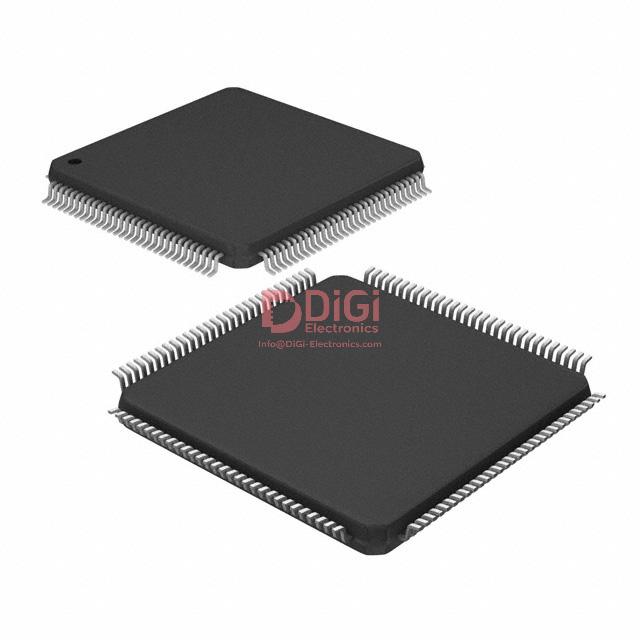
Packaging, power management, and environmental compliance are critical to the successful integration of the NET2280REV1A-LF within embedded system designs. The device’s 120-pin TQFP enclosure, occupying a 14x14 mm footprint, enables high-density placement on PCBs, facilitating compact system formulations without compromising signal routing clarity. Surface-mount technology (SMT) compatibility streamlines automated assembly, minimizing manual intervention while supporting scalable production volumes. The generous pin count offers flexibility for multifunctional designs but necessitates meticulous pin mapping, especially when interfacing with dense interconnect buses or when routing traces in multi-layered board stacks.
Low power CMOS operation anchors the device’s suitability for platforms where thermal budgets and power envelopes are tightly constrained. When deployed as a USB peripheral controller, its ability to function reliably within USB bus-powered environments enables peripheral designers to simplify power architectures and reduce bill-of-material complexity. In practice, explicit analysis of worst-case load profiles and USB host current characteristics is essential to ensure stable operation, particularly in aggregated USB hub deployments or portable appliances with sensitive supply rails.
Moisture Sensitivity Level (MSL) 4, allowing 72 hours floor life, balances manufacturability with moderate storage flexibility. Dry packing and controlled floor exposure must be rigorously observed, especially during high-mix, low-volume runs where batch processing times can fluctuate. Strict adherence to JEDEC handling standards prevents microcracking or latent delamination, especially significant in products destined for thermally or mechanically stressed environments. This calls for integration of moisture exposure timing into shopfloor MES systems and deployment of real-time monitoring tags in moisture-sensitive inventories.
The adoption of lead-free plating affirms compliance with RoHS and related environmental regulations, ensuring deployment in markets with stringent material content restrictions. During engineering validation, inspection must include solderability assessments to address any deviations in wetting behavior that sometimes arise with alternative metallurgies. Field data indicates that tuning reflow thermal profiles for consistent fillet formation remains an ongoing practical consideration, particularly for assemblies with variable copper balancing or thick ground pours.
Standard operating temperature and supply voltage ranges position the NET2280REV1A-LF well within the requirements of industrial applications, allowing its use in automation, instrumentation, and ruggedized field units. Special diligence should be applied during system-level derating and thermal profiling, as USB controllers often occupy micro-environments susceptible to transient thermal spikes from adjacent high-power components.
Obsolescence status introduces critical supply-chain risk. Proactive evaluation must encompass exhaustive lifecycle forecasting, engagement with authorized distributors for immediate stock availability, and qualification of second-source pin-compatible alternatives. Engineering risk registers should be updated to record dependency risks, and firmware abstraction layers developed to expedite future controller substitutions. For legacy equipment or extended support scenarios, last-time-buy strategies, coupled with die banking or contract manufacturing arrangements, have been effective in mitigating discontinuity impacts.
Navigating the integration of the NET2280REV1A-LF demands a holistic consideration of packaging density, power efficiency, process reliability, regulatory compliance, and lifecycle management. Aligning physical and environmental specifications with program constraints at the architectural level yields robust, sustainable hardware pathways even as market and supply fluctuates.
Potential equivalent/replacement models for NET2280REV1A-LF
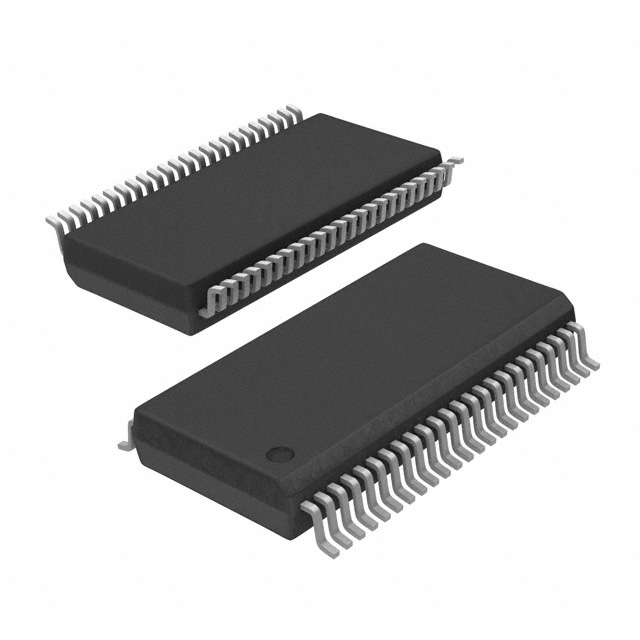
When the NET2280REV1A-LF is no longer available for procurement, a systematic approach to identifying suitable replacements becomes critical for sustaining hardware lifecycles and minimizing redesign risk. Focusing on pin-compatible or functionally analogous devices streamlines the migration path and reduces the overhead associated with PCB re-layout, firmware adaptation, and production validation. The NET2280REV1A-BC offers architectural parity with the original model, but its adoption requires careful assessment of package constraints—particularly the transition to a 121-ball FBGA (8x8 mm). This package, while enabling higher integration density and potentially improved signal integrity, might introduce mechanical challenges in terms of reflow soldering profiles, board stacking height, and thermal dissipation. Teams with prior experience in package migration often implement stencil and rework process optimization to maintain high assembly yield.
The NET2280EVB-LF reference kit provides a robust foundation for development and rapid evaluation, supplying configuration scripts and diagnostic utilities tailored for USB bridging scenarios. This accelerates prototyping cycles and facilitates firmware tuning before deploying in-system replacements. When leveraging evaluation boards, integrating custom device profiles or extending reference firmware to accommodate legacy interface protocols is a common and effective practice.
Exploring contemporary PCI-to-USB bridge devices from alternative suppliers can yield substantial advantages. Advancements in this sector have produced ICs supporting higher data rates, expanded endpoint maps, and enhanced compatibility with modern operating systems and power management schemes. In selection, two engineering priorities dominate: comparable endpoint support and robust DMA engines. Devices with flexible endpoint architectures minimize constraints on high-throughput peripherals, while low-latency, high-bandwidth DMA is essential for sustaining bulk transfers under sustained load. It is prudent to scrutinize datasheets for explicit support of legacy features—such as programmable interface timing or vendor-unique initialization sequences—to ensure seamless integration within established system architectures.
Practical deployment often uncovers subtle trade-offs: newer ICs may necessitate reworking low-level bootloader code or porting custom drivers, incurring non-trivial validation workloads. Some high-reliability applications leverage vendor reference designs as benchmarks for interoperability and performance. Compatibility matrices and cross-qualification testing emerge as decisive elements, particularly for maintaining certification or conforming to established regulatory requirements.
Technical support from vendors is invaluable during migration. Engaging with manufacturer field engineers and leveraging second-source qualification programs facilitates risk mitigation in both continuity planning and in-field upgrades. Comparative analysis using application-specific benchmarks, such as sustained throughput or multi-endpoint performance under OS abstraction layers, delivers actionable insight for final device selection. In dynamic project environments, the deployment of modular evaluation platforms that accommodate both legacy and new ICs provides a flexible framework for side-by-side validation, streamlining future migrations and limiting the impact of supply chain disruptions.
Ultimately, aligning device selection with board-level constraints, firmware requirements, and system-level verification protocols forms the foundation of a resilient migration strategy. Emphasizing architectural compatibility while remaining open to the incremental benefits of new silicon—such as refined power envelopes or deeper software ecosystems—enables both immediate replacement and longer-term scalability.
Conclusion
The Broadcom NET2280REV1A-LF stands out as a dedicated solution for enabling USB 2.0 peripheral functionality on PCI-based hardware, leveraging a register-level architecture optimized for low-latency data transfers and configurable endpoint control. At its core, the device integrates a sophisticated DMA engine and supports multiple USB endpoints, ensuring that high-throughput peripheral protocols can be efficiently bridged to the legacy PCI infrastructure. This hardware architecture, combined with a well-defined programming interface, simplifies host-side enumeration and accelerates device driver development cycles.
The robust hardware abstraction aligns with a broad range of USB class drivers, allowing for seamless compatibility with diverse system software stacks across mainstream operating systems. Extensive support for standard and vendor-specific USB requests further broadens the module’s applicability in scenarios such as embedded device upgrades, printer control boards, and mobile interface adapters. In actual deployment, rapid prototyping is facilitated by ready-to-use reference firmware, enabling early-stage validation without major investment in firmware design. The stability of its protocol handling, evidenced by extensive use in mature printer and industrial communication platforms, points to an architecture that remains instructive even as the device itself becomes obsolete.
Integration into legacy systems reveals some practical nuances. The physical PCI interface is tolerant of timing variances typical of older designs, reducing the risk of signal integrity issues during board layout and production. Careful attention to power sequencing and ESD protection, as demonstrated in numerous commercial deployments, ensures operational reliability. The device’s established presence in fielded products has generated a substantial base of peripheral compatibility data, reducing integration risk for new applications seeking to extend the life of PCI-centric hardware.
Moving toward future design cycles, the legacy status of the NET2280REV1A-LF raises procurement challenges. Engineers evaluating substitute solutions must scrutinize replacement parts for register compatibility, interrupt handling, and driver portability—critical factors that determine the true system cost of migration. Analyzing device abstraction layers and software API convergence is essential for minimizing transition friction; for instance, leveraging modular firmware architectures has proven effective when substituting new USB interface ICs on established PCI product lines.
The continued reference value of the NET2280REV1A-LF in documentation and legacy support scenarios reflects a broader industry insight: robust, transparent hardware platforms not only extend product life but also provide benchmarks for the evaluation and selection of replacement architectures. While ongoing advances in native USB integration may shift mainstream adoption toward newer standards, the modularity and documentation maturity of this platform offer clear, instructive patterns for embedded USB-to-PCI bridging designs—highlighting the sustained importance of compatibility, supply assurance, and incremental system evolution in managing technological obsolescence.