


 >
>


Product Overview: AD9980KSTZ-95 Analog Devices Inc. Interface IC
The AD9980KSTZ-95 from Analog Devices Inc. represents an advanced 8-bit, 95 MSPS analog interface IC engineered for precision digitization of YPbPr component video and RGB computer graphics signals. The architecture integrates a 200 MHz analog input bandwidth, enabling accurate acquisition of high-resolution, high-frequency video inputs, crucial for maintaining signal integrity at the front end of contemporary display pipeline designs. By leveraging multiple sync handling strategies—including support for both composite and separate syncs—the device accommodates a variety of video sources, ensuring compatibility across consumer and professional display environments.
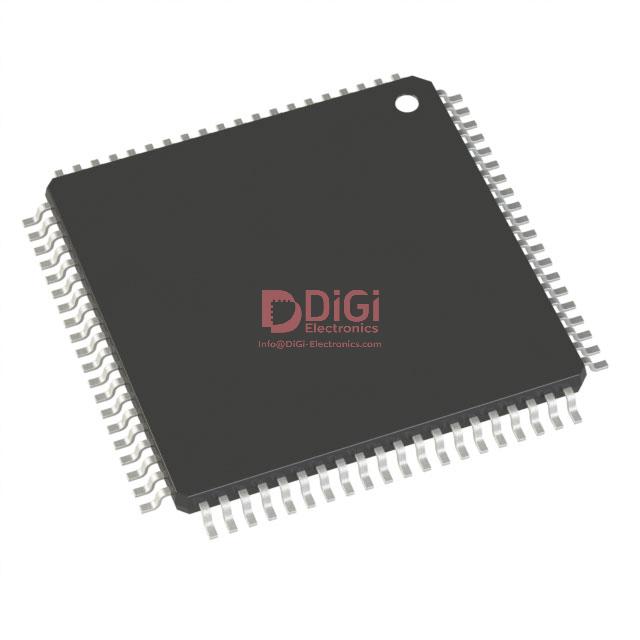
The compact 80-lead LQFP form factor streamlines physical integration within densely populated display subsystems, supporting high-density board layouts without sacrificing mechanical reliability. Programmable gain and offset adjustments allow engineers granular control over input signal scaling and normalization, a critical feature when interfacing with diverse analog outputs. This flexibility simplifies adaptive calibration routines, directly improving the uniformity and fidelity of displayed images in production contexts.
Key to system-level robustness is the AD9980KSTZ-95’s capacity for robust clocking and timing adaptation. Precision phase-locked loop (PLL) circuits synchronize data latching to various pixel rates, minimizing jitter and ensuring correct sampling even where source timing is non-standard or subject to drift. Practical deployment often reveals the importance of these synchronization features in real-world installations, such as multi-format input receivers and auto-adjusting display hubs, where source variation can exceed initial design parameters.
Layering these capabilities, the device’s control interfaces support dynamic reconfiguration via standard host controllers, aligning it with applications requiring rapid mode switching—such as KVM extenders, A/V switching equipment, and advanced projectors. This situational adaptability, combined with low-latency signal processing paths, addresses the growing demand for responsive, format-agnostic video front-end modules. The integration of these features minimizes the need for downstream correction and reduces overall system complexity.
From a design perspective, thermal management within the LQFP package has proven effective given typical power dissipation profiles in display electronics, alleviating concerns commonly associated with high-speed analog-digital ICs in compact form factors. This reliability under sustained load enables deployment in environments where elevated device temperatures are expected, providing additional freedom at the system architecture level.
Understanding interface ICs like the AD9980KSTZ-95 in the context of evolving display standards reveals an emerging trend: modularity and adaptive interfacing are increasingly critical as video sources and display capabilities diversify. An IC that delivers robust signal integrity, versatile format support, and comprehensive configurability establishes a scalable foundation for future-proofing advanced visual systems, ensuring long-term value beyond initial integration.
Key Features and Performance of the AD9980KSTZ-95
The AD9980KSTZ-95 stands out as a specialized solution for high-resolution RGB and digital video interfacing, structured to meet stringent requirements in precision imaging systems. At its core, the device implements three parallel 8-bit analog-to-digital converters, each tailored for one color channel and synchronized through an integrated on-chip phase-locked loop (PLL). The PLL delivers robust pixel clock synthesis, sustaining low-jitter operation even at the upper limit of 95 MSPS. By maintaining peak-to-peak jitter below 9% at full speed, the converter ensures high fidelity in time-critical digital video streams—essential for artifact-free capture in prosumer video capture cards, broadcast interface modules, and medical imaging displays.
Fine-grained programmability features underpin versatility across diverse operating scenarios. Calibrated gain and offset adjustments can be tuned on-the-fly within a 0.5 V to 1.0 V p-p dynamic input range, ensuring compatibility with multiple sources and formats. Practically, this allows seamless adaptation to varying output swings found in camera sensors, graphics processors, and legacy analog video signals, enabling designers to optimize SNR and minimize quantization error across installation-specific signal domains. The integrated input multiplexer, together with automated offset calibration, supports both multi-source applications and long-term drift compensation, reducing the maintenance cycle of deployed hardware and supporting hands-off operation in embedded installations.
Output formatting options further drive system-level flexibility. Full-rate 4:4:4 RGB output, video-optimized 4:2:2 subsampling, and double data rate (DDR) transmission are selectable, supporting straightforward interfacing to FPGAs, ASICs, or frame-buffer ICs in both bandwidth-limited and high-throughput contexts. For developers integrating the AD9980KSTZ-95 with high-speed video processors, this modularity enables tailored trade-offs between data integrity, system cost, and signal routing complexity.
Energy efficiency is realized through typical consumption below 900 mW, with granular control through advanced power-down logic. With this approach, the device aligns well with thermally constrained enclosures or mobile field units where reliable, low-power operation is paramount. Strategic deployment of power-down states—such as deactivating unused channels or synchronizing with external scan-blanking events—enables dynamic optimization in multi-source switching matrices or portable recording platforms.
Drawing from real-world deployment, robust PLL design and input calibration directly translate to enhanced system tolerance toward marginal clock sources and non-ideal analog front-ends. The converter’s resilience in marginal signal conditions reduces the need for external clamping or precision bias networks, streamlining PCB design and shaving both BOM costs and development risk. System architects can justify high initial integration effort with long-term gains in serviceability and reproducibility across diverse video signal environments.
The AD9980KSTZ-95’s architecture reveals a key insight: in complex video acquisition systems, tightly coupled signal conditioning with integrated digital conversion not only boosts performance but also catalyzes platform agility, opening avenues for adaptive, software-driven reconfiguration absent in more rigid solutions. This distinct focus on programmable analog and digital convergence makes the AD9980KSTZ-95 especially effective in environments where evolving industry standards or legacy compatibility demand enduring flexibility without sacrificing throughput or accuracy.
Applications and Target System Environments for the AD9980KSTZ-95
The AD9980KSTZ-95 functions as a robust analog-to-digital interface, engineered primarily for display pipelines requiring precise digitization of high-bandwidth analog video signals. At the heart of its architecture lies a high-speed triple-channel ADC optimized for simultaneous sampling of RGB or YPbPr signals. This configuration enables direct interfacing with analog video sources found in advanced LCD and plasma televisions, high-fidelity monitors, projectors, and scan conversion modules, where preservation of video fidelity and phase alignment is paramount.
Signal integrity during translation from analog PC graphics cards or component video sources is sustained by wide input bandwidth and sophisticated clamping circuitry, minimizing noise ingress and offset errors. In practical deployment, the device’s programmable gain and offset controls facilitate dynamic adaptation to a diverse array of source amplitudes without hardware modification. This adaptability is essential for interoperation in environments with differing RGB standards or variable YPbPr voltage levels, such as multi-format display walls or versatile conference room presentation systems.
The AD9980KSTZ-95’s advanced sync extraction engine warrants particular attention. Its ability to recover synchronization signals from composite, sync-on-green, or luminance (sync-on-Y) embeds renders it highly versatile, supporting legacy as well as contemporary video interfaces. This flexibility streamlines system board design—eliminating the need for external sync separation ICs and reducing PCB complexity. Direct field experience demonstrates that such integrated sync handling not only expedites board bring-up in prototype stages but also enhances reliability, as fewer discrete components introduce less variation during high-volume manufacturing runs.
Further, the low-jitter PLL and precision clock generation circuits facilitate clean pixel sampling across all major HDTV formats. The inherent flexibility to digitize 480i/p up to 1080p60 feeds, without synchronization loss, supports direct integration in premium HDTV-ready displays, digital signage, and real-time video processing appliances. Deployment in large-format control centers particularly benefits from the device’s deterministic latency and sharp clock/data alignment, ensuring seamless downstream processing and reduced risk of cross-domain artifacts.
A nuanced understanding reveals that moving from analog-dominant infrastructures to digital-centric workflows introduces calibration and signal margin challenges. The AD9980KSTZ-95 mitigates these through user-programmable sampling phase controls and robust input termination schemes. This engineering flexibility delivers resilience in systems exposed to cable length variability, connector wear, or cross-room signal routing—all common in educational campuses and collaborative workspaces leveraging mobile AV carts and matrix switchers.
In summary, the AD9980KSTZ-95 strengthens the engineering toolbox for video digitization, providing a comprehensive set of features tailored for scalable, high-performance display solutions. Its underlying mechanisms and adaptable system integration align with evolving AV requirements, enabling faster deployment and enduring operational stability across a breadth of application scenarios.
Detailed Functional Architecture of the AD9980KSTZ-95
The AD9980KSTZ-95 implements a robust, channelized architecture optimized for precision capture of analog video signals, integrating three matched high-speed ADCs specifically tailored for red, green, and blue—or equivalently, Y, Pb, and Pr—channels. Signal path integrity is maintained at the input stage by clamping circuits tasked with DC restoration, stabilizing black level references regardless of AC-coupled source variations. Building on this foundation, programmable gain amplifiers (PGAs) and fine-grained offset controls are allocated per channel, allowing dynamic optimization for distinct input ranges and system noise profiles. Such adjustability supports not only inherent variance in source amplitude but also enables adaptation during calibration or in real-time operational shifts, a necessity in broadcast and professional display environments where signal fidelity is critical.
Clock generation is orchestrated by an integrated phase-locked loop, which derives a precise pixel sampling clock from incoming synchronization signals, minimizing jitter across a spectrum of analog source frequencies. This design choice eliminates interdependency on external clocking modules and enhances temporal alignment of acquired data, facilitating seamless handoff to downstream digital domains. Sync processing is centralized within a dedicated logic block, intelligently parsing both analog and digital sync formats. The block provides versatile support for vertical and horizontal sync identification, odd/even field discrimination critical to interlaced content, and detection of non-standard sync events—such as Coast—integral in scenarios where timing temporarily diverges, for example, during source switching or video blanking intervals.
Data output is configured via a flexible formatter, presenting multiple pixel packing arrangements and selectable clocking paradigms to match the requirements of diverse FPGA or video processor interfaces. The formatter’s versatility ensures compatibility with emerging and legacy systems, reducing overall integration expense and engineering overhead. Access to operational parameters is provided over a two-wire I²C-compatible serial interface, enabling exhaustive real-time control of gain, offset, synchronization modes, and output formatting without invasive reconfiguration. This granularity empowers rapid prototype iteration and direct field-tuning, eliminating the need for hardware modifications when addressing marginal sources or custom timing schemes.
The architectural synergy of signal conditioning, tight clock management, and granular sync extraction converges to guarantee low-latency capture and faithful analog-to-digital conversion even in demanding application environments—such as multi-format video routers or adaptive video walls. Experience demonstrates the device’s ability to maintain sub-LSB error rates under frequent input type changes and noisy analog conditions, a result attributable to its programmable architecture and robust sync handling strategies. One subtle engineering insight is that the distributed gain/offset control combined with input clamping not only streamlines calibration routines but also allows for on-the-fly channel matching, minimizing color drift and simplifying downstream color correction pipelines. The device’s ability to abstract granular signal features while offering system-level flexibility is a distinctive advantage, positioning it as a preferred solution in applications demanding reproducible video digitization across varied and unpredictable content sources.
Analog and Digital Input Structure of the AD9980KSTZ-95
The AD9980KSTZ-95's input architecture is engineered for versatility and robust signal fidelity, addressing the demands of high-performance video processing systems. Its six high-impedance analog input pins accommodate both discrete color channels (R, G, B) and component formats (Y, Pb, Pr), operating effectively within the standardized 0.5–1.0 V p-p domain. This supports seamless integration with DVI-I, 15-pin D-sub, or RCA connectors—common across professional and consumer video hardware. Ensuring consistent analog performance, signal termination is specified at 75 Ω at the point of entry, preventing reflections and impedance mismatches. Capacitively coupling with 47 nF minimizes DC bias intrusion; the optional ferrite bead in series further attenuates high-frequency noise, crucial in environments with considerable electromagnetic interference or long transmission paths.
The digital sync channel implementation leverages CMOS-tolerant Schmitt trigger inputs. This design choice suppresses transient noise and accommodates gradual transitions in sync signals, preserving timing accuracy in varied operating conditions. By supporting 5 V logic, compatibility with legacy and modern sources is maintained without risking damage from voltage overshoots—a key requirement in adaptive display platforms.
Internal signal routing is facilitated by a 2:1 multiplexing stage, enabling dynamic selection between two signal sources. This architecture supports seamless transitions for systems switching between input standards or redundancy scenarios. Integration of dedicated sync extraction circuits for SOG and sync-on-Y modes eliminates the need for peripheral logic, streamlining board layouts in designs where analog sync is embedded within the video channel. Programmable clamp timing grants granular control over DC restoration, either synchronizing with core video intervals using an internal generator or offering external synchronization for complex timing schemes.
Offset calibration, provided in both automated and manual modes, grants fine control over black level referencing, directly compensating for systematic and source-derived biases. Subtle calibration logic embedded within the offset circuitry enables adaptive compensation across varying input signals and environmental conditions, ensuring consistent visual reproduction regardless of channel drift or source variability. Practical deployment indicates that careful optimization of clamp and offset parameters can resolve low-level artifacts and color cast issues, particularly when interfacing with diverse video generators or legacy equipment.
From a system perspective, the AD9980KSTZ-95's layered input management provides both electrical robustness and configurability. The buffer design absorbs variations in source signal quality, while multiplexing and sync handling offer streamlined support for complex routing and signal diversity in professional AV switching or multi-format input systems. This flexibility is critical in modular display walls or hybrid presentation environments, where rapid switching and uncompromised picture stability are operational necessities. The architecture implicitly positions the device as a reliable bridge between traditional analog systems and modern digital synchronization methods, minimizing integration overhead and accelerating time-to-market in engineering-driven display applications.
Clock Generation and Synchronization in the AD9980KSTZ-95
Clock generation and synchronization in the AD9980KSTZ-95 is architected around a tightly integrated phase-locked loop (PLL) that serves as the primary engine for low-jitter pixel sampling clock synthesis. This internal PLL is configurable over a broad frequency span, supporting pixel rates from 10 MHz to 95 MHz, and is designed to lock reliably onto reference signals derived from either standard Hsync pulses or three-level sync sources typical in YPbPr component video. At the circuit level, the device exposes programmable control for the VCO frequency range and charge pump current, allowing precise tuning to account for varying input reference quality or to optimize jitter and lock time in the presence of line or field-based interference.
Sampling accuracy is further enhanced by a granular 32-step phase adjustment feature, equating to 11.25° increments per step. This phase sampling mechanism enables precise alignment of the ADC’s sample window with the pixel plateau, a critical factor in achieving high-fidelity image capture especially in systems with variable source timing or where source phase relationships fluctuate. Practical deployment reveals that fine-tuning phase directly impacts edge stability of displayed video content, noticeably reducing color fringing and luminance errors along sharp transitions.
The device’s Auto Coast function offers a hardware-level safeguard for clock continuity. When upstream sync signals experience dropouts—such as during equalization bursts or loss-of-sync at cable transitions—the PLL enters coast mode, holding the output clock at a stable frequency. This mechanism mitigates visible disruptions or drastic artifacts due to clock instability, forming a robust layer against transmission impairment.
Hsync and Vsync processing logic is programmable and incorporates digital filtering and signal regeneration. This not only cleans up noisy sync sources but also supports adaptive mode detection across a wide range of video timings. For system designers, programmable filtering parameters allow the AD9980KSTZ-95 to handle both standard and nonstandard timings—such as those from graphics workstations or industrial cameras—by filtering transient noise while still maintaining fast lock for rapidly changing sources.
An external clock input further broadens the application scope, enabling coordination with advanced timing architectures or custom synchronizers in multi-ASIC systems where reference clock domains must be unified or run from high-stability oscillators. In practice, leveraging the external clock option supports scenarios requiring deterministic phase relations, such as multi-channel capture or pixel-accurate frame alignment for video stitching.
The composite of these features results in a clock subsystem highly resilient to sync noise, jitter, and source variability. The layered approach—from PLL customization and sampling phase control to advanced filtering and fallback clocking—demonstrates an architecture optimized for real-world signal impairments. A nuanced aspect lies in the interplay between phase adjustment and charge pump programming: optimized jointly, these settings enable not only baseline lock stability but prevent subtle image distortions that may only manifest under specific timing stress. This underpins an insight that, in demanding environments or with marginal video sources, meticulous clock configuration is as crucial as front-end analog integrity for mission-critical imaging pipelines.
Output Formatting and Interface Options in the AD9980KSTZ-95
The AD9980KSTZ-95 output subsystem is engineered to maximize signal fidelity and system integration flexibility, supporting a range of digital output interfaces tailored to both video quality and board-level constraints. At the lowest abstraction layer, its true 24-bit 4:4:4 RGB/YCbCr output ensures simultaneous transmission of all color channels, preserving chroma detail and dynamic range pertinent in applications demanding uncompromised image integrity, such as professional-grade displays or color-critical video processing pipelines. The parallel nature of this mode enables straightforward interfacing with FPGAs and high-performance video processors, minimizing latency and maximizing throughput.
For designs constrained by PCB routing complexity or device pin-count, the 16-bit 4:2:2 YCbCr mode reduces I/O requirements while selectively dropping chroma resolution. This tradeoff leverages the inherent perceptual redundancy in chrominance data, easing hardware resource allocation in broadcast encoders or compact embedded platforms where space and power budgets are critical. The 12-bit 4:4:4 DDR mode further compresses output bandwidth by doubling data transmission per clock edge, a technique rapidly gaining traction in modern multimedia appliances. DDR output facilitates high pixel rates without proportionally increasing trace count or total signal toggling, which can be essential for small form factor systems seeking elevated throughput without incurring severe EMI complications.
The secondary output channel introduces architectural versatility, supporting concurrent data streams for encoding or driving multi-panel display arrangements. This dual-output capability is vital in scenarios requiring parallel processing paths, such as simultaneous live preview and archival recording, or independent feeds for secure, multi-tier monitoring environments. The channel's configurability further complements dynamic system bus configurations, allowing seamless switching between sources and facilitating shared data lines among multiple devices.
Programmable output drive strength directly impacts electromagnetic compatibility and signal integrity. In tightly packed PCB landscapes, the ability to throttle output slew rates reduces cross-talk and radiated emissions, adhering to stringent compliance standards without compromising signal robustness. Fine-tuning output levels also mitigates overshoot and reflection in long-trace or impedance-mismatched environments, where optimal signal margin is a prerequisite for reliable high-frequency operation.
Data and clock outputs are synchronized using programmable phase controls and selectable clock inversion, essential for mitigating timing skew introduced by trace length mismatch or diverse receiver setups. These alignment mechanisms accommodate a range of timing topologies, enabling designers to achieve deterministic setup/hold times even under non-ideal physical layouts. Subtle phase and polarity adjustments are often leveraged to resolve marginal failures during system bring-up, transforming borderline signal paths into stable data links with minimal layout overhauls.
High-impedance output gating, independently controllable for primary and secondary channels, provides a foundation for advanced bus-sharing and rapid switching topologies. This feature supports multi-source environments, enabling seamless handover without risking bus contention or inducing spurious transitions. In matrixed switch gear and multi-layered video router designs, such independent tri-state capability enables soft reconfiguration and dynamic resource allocation, fostering scalable, low-latency architectures.
A holistic approach to output interface design, as manifested by the AD9980KSTZ-95, demonstrates that nuanced hardware configurability yields substantial gains in system reliability, EMI compliance, and application versatility. Leveraging dynamic output control and tailored mode selection accelerates debug cycles and simplifies design validation—integral for navigating the complex trade space of modern video systems, where simultaneous demands for bandwidth, robustness, and regulatory compliance converge.
Signal Integrity, Layout, and Power Management Considerations for the AD9980KSTZ-95
Optimizing signal integrity and power management for the AD9980KSTZ-95 requires a methodical approach to layout and interface design. The foundation lies in controlling analog input paths: minimizing trace lengths from the input connector to the device is essential. This not only reduces parasitic capacitance and inductance but also sharply diminishes susceptibility to radiated and conducted interference. Placing termination resistors as close as possible to the IC input pins ensures that impedance discontinuities are avoided, thus minimizing reflections and maintaining waveform fidelity at high frequencies.
Transmission line design for analog channels must adhere strictly to a 75 Ω impedance, demanding careful calibration of PCB trace width and spacing with respect to specific substrate dielectric properties. Layer stackup choices, such as controlled impedance microstrip or stripline routing, further reinforce signal integrity, especially when coupled with matched-length traces to preserve timing alignment across all channels.
Isolation of sensitive analog paths from digital signal traces is critical. Crosstalk and electromagnetic coupling can degrade performance, particularly in high-resolution video digitization scenarios. Strategic use of ground pours, spacing rules, and where necessary, ferrite bead filtering between domains effectively blocks high-frequency digital noise intrusion into analog circuitry. In practice, integrating beads at the power supply entry and directly on noisy digital lines has shown measurable improvements in SNR during bench-level characterization.
Power and reference management form the next tier of design focus. The PLL loop filter and analog reference pins are particularly vulnerable to voltage ripple; placing low-inductance 0.1 µF bypass capacitors within 5 mm of these supply pins creates a localized low-impedance reservoir, dampening transients induced by both switching activity and external disturbances. Reliable analog and clock supply rails require independent regulation schemes—using separate LDOs with noise rejection ratings tailored for sub-100 µV ripple—to ensure that phase noise in the PLL remains well below specification limits. Such segregation aligns with practical experiences in system debug, where shared rails have been directly linked to periodic dropouts and increased jitter.
The underlying board architecture is best served by a unified, uninterrupted ground plane beneath the IC. This facilitates tightly coupled current loops, minimizes ground bounce, and enables consistent low-impedance returns for both analog and digital domains. Ground partitioning, though sometimes proposed for mixed-signal designs, frequently introduces unintentional impedance steps; a contiguous plane, verified through electromagnetic simulation, mitigates these risks and supports repeatable EMC compliance.
Managing output integrity demands minimizing capacitive load—targeting less than 10 pF per output pin—by minimizing stub lengths and careful connector selection. Implementing series termination resistors between 50 and 200 Ω at output drivers absorbs reflections caused by any residual impedance mismatch, stabilizing edge rates and reducing overshoot. Empirical tuning of resistor values, based on eye diagram analysis, yields optimized signal quality across multiple production batches.
Flexible power-down mechanisms, whether via direct pin assertion or register control, enable granular command of quiescent state power, critical in applications where standby energy consumption shapes the overall efficiency envelope. Automatic detection of lost sync events and subsequent attenuation of bias rails reduce unnecessary draw, supporting designs where low energy budget is mandatory, such as battery-operated field equipment.
An overarching principle is the integration of system-level noise, thermal, and load considerations into layout decisions from the earliest design phase. Iterative prototype evaluation, combined with simulation-driven trace and plane optimization, consistently uncovers subtle layout-induced performance bottlenecks. Proactively addressing these, rather than relying solely on best-practice checklists, yields measurable gains in both functional stability and compliance robustness. This approach, rooted in empirical validation, distinguishes reliable mixed-signal designs from those prone to marginal field performance.
Serial Configuration and Control Registers in the AD9980KSTZ-95
Serial configuration and control in the AD9980KSTZ-95 leverage a robust I²C-compatible interface, foundational for deterministic management of all device parameters. The underlying two-wire protocol supports unique device addressing, allowing multi-device topologies with seamless bus arbitration and minimal signal routing. This architecture optimizes integration density in complex video front-end systems.
The comprehensive register map is stratified to encompass all functional domains: analog front-end control, clock and PLL configuration, sync extraction, output format specification, power management, and diagnostic test features. Each domain is accessible through consistent address mapping, enabling deterministic control sequences and simplifying embedded firmware architecture. The auto-increment capability refines both bulk register writes during system initialization and efficient parameter polling, which proves valuable in systems with stringent boot-time requirements or real-time calibration demands.
Register access sequences support both individual and burst operations, a crucial advantage for automated line and frame calibration routines. This flexibility facilitates dynamic parameter adaptation—such as real-time gain adjustment, offset trimming, and programmable sync thresholds—essential for coping with electrical drift, varying cable lengths, or input source diversity. Hardware and software reset controls ensure robust recovery from fault states or power cycling, minimizing downtime and reducing the need for manual intervention in field deployments.
System-level adaptation is enabled through programmable parameters that include gain, offset, phase, clamp timing, input/output polarity, and sync processing thresholds. Such granularity ensures precise alignment with a wide range of signaling standards without additional external conditioning circuitry, streamlining both layout and BOM. For instance, programmable phase and clamp controls greatly reduce artifacts when interfacing with legacy or substandard video sources, while polarity and sync threshold options accommodate differing output interfaces and noise environments.
Integration of typical programming sequences and timing diagrams is standardized in the device documentation, supporting rapid development of initialization scripts and self-test routines. This systematic approach underpins repeatable production tests and in-circuit calibration, accelerating validation cycles. Notably, the accessible I²C configuration also aligns with remote diagnostic requirements, enabling field-firmware upgrades and parameter tuning without physical access—an essential capability for distributed installations or constrained enclosures.
A pragmatic insight lies in exploiting the sequential register access and auto-increment mechanism for high-throughput parameter sweeps during system characterization. This approach can dramatically reduce the overall configuration time and improve yield tracking, especially during volume manufacturing or in adaptive systems that perform environment-driven reconfiguration.
The interplay of flexible configuration, robust fault management, and tightly-bounded timing control positions the AD9980KSTZ-95’s serial register interface as a central element for high-reliability, adaptable video signal processing platforms. This arrangement not only future-proofs system design but also affords substantial leverage for real-time system tuning and diagnostic access across diverse deployment scenarios.
Potential Equivalent/Replacement Models for the AD9980KSTZ-95
When selecting viable replacements for the AD9980KSTZ-95, the evaluation must start with a detailed breakdown of core architectural requirements. The AD9980KSTZ-95’s primary strengths are its high pixel rate support, robust sync signal processing, and advanced automation for gain and offset adjustments. Therefore, any substitute must be assessed first on its front-end bandwidth—the interface must reliably manage input video data rates relevant to the target application, particularly in scenarios with demanding real-time image acquisition.
Considering interface versatility, alternatives such as the Analog Devices AD9889A extend capability through embedded HDMI transmission, streamlining transitions to digital signal architectures while supporting legacy analog inputs via built-in video digitization. This design convergence can accelerate platform migration to modern standards, but still requires careful validation of color space handling, sync compatibility, and channel noise immunity, especially where emulation of the original analog interface is critical.
For applications emphasizing broad input format support and superior analog front-end performance, the ADV7842 distinguishes itself with comprehensive 12-bit video decoding and simultaneous accommodation of HDMI, YPbPr, and RGB analog signals. Its multiformat nature offers significant integration value in flexible display processing units, though attention to software initialization sequence updates is often necessary due to expanded configuration registers and more intricate I/O mapping.
In signal routing architectures needing precise sample alignment and low-jitter reference clocks, the Texas Instruments TVP7002 leverages a triple high-speed ADC array coupled with programmable PLL resources. This facilitates high-fidelity capture for progressive and interlaced video, but may require custom sync extraction algorithms in situations where the original device’s automated processing is integral to signal stability. Hardware teams often observe that, while the TVP7002 can match input rate requirements, greater design effort is directed toward PCB clock trace optimization and EMC mitigation strategies to preserve signal integrity.
The NXP SAA7115, though suitable for multi-standard decoding in cost-sensitive or legacy system refreshes, warrants scrutiny for its lower bandwidth and reduced channel scalability. It fits best where input signal variety overrides maximum pixel throughput, or in applications prioritizing decoder function over advanced video preprocessing. Firmware compatibility also diverges, often demanding tailored software abstraction to bridge device-specific register layouts and interrupt schemes.
Interoperability extends beyond the electrical and protocol layers. Pin compatibility—directly affecting whether hardware re-spins or major schematic modifications are required—remains a prime filter point in selection. Firmware adaption, including redefining I²C/SPI communication sequences and updating sync polarity configurations, frequently emerges as a hidden challenge, especially with replacement parts offering richer feature sets or more granular signal adjustment.
Differentiators such as the AD9980KSTZ-95’s automatic gain/offset calibration and robust sync extraction can be difficult to replicate exactly, often prompting use of companion devices or software layers. Engineers have observed system-level impacts where a lack of these integrated capabilities necessitated greater calibration effort post-assembly, affecting both manufacturing cycle time and field maintainability.
In conclusion, the transition to alternative video interface components demands layered verification: not only at the datasheet level, but also through empirical bench testing across all intended operating points. Trade-offs often exist between preserving legacy compatibility and integrating advanced features. A holistic approach, balancing signal quality, flexibility, and the total cost of adaptation, is essential. Using real-world performance metrics to validate shortlisted replacements leads to a smoother design migration and reduces project risk, especially where tight production deadlines are enforced by supply chain variances.
Conclusion
The AD9980KSTZ-95 from Analog Devices exemplifies the convergence of high-speed data throughput and robust analog-digital signal integration within a compact 100-lead LQFP footprint. At its core, the device incorporates a highly optimized analog front end with differential and single-ended inputs, supporting high-resolution RGB graphics and video signals up to 170 MHz. The architecture facilitates precise sampling with minimal jitter, directly contributing to superior image fidelity in multi-format display pipelines. Advanced sync processing—supporting both separate and composite sync—enables seamless interoperability with diverse video sources, while programmable PLLs ensure stable clock recovery even under complex timing conditions.
Automated calibration routines embedded in the chipset address channel-to-channel skew, input offset, and gain mismatches. By continuously aligning signal paths in real time, the device minimizes color misalignment and luminance error, which are typical concerns in high-frequency, high-resolution environments. Engineers benefit from register-level programmability, allowing dynamic adjustment of clamp, gain, and offset on a per-channel basis. This flexibility is particularly advantageous when dealing with nonstandard timing modes or interfacing with display panels exhibiting innate electrical variability. The integration of customizable input thresholds and programmable power-down modes further enhance energy efficiency and system-level thermal management.
From a PCB implementation perspective, careful attention must be given to differential trace length matching and impedance control near the input stages. Optimal decoupling, minimal loop areas, and thought-out ground separation between analog and digital domains are vital to suppressing crosstalk and ensuring the device operates within its specified signal-to-noise ratio. Observations from practical PCB layouts confirm that disciplined adherence to the manufacturer’s guidelines yield measurable improvements in eye pattern integrity and reduce susceptibility to EMI, particularly in electrically noisy enclosures.
Register programming can be efficiently managed through an I²C or parallel microcontroller interface. This approach permits rapid field updates—such as adapting to new video formats or remotely tuning signal parameters—without necessitating hardware redesigns. Real-world field applications have demonstrated the value of software-driven configuration, especially in modular or customer-configurable graphics subsystems found in digital signage, medical imaging, and industrial control systems.
The module’s architectural adaptability positions it as a forward-compatible solution as display protocols and resolutions continue to advance. Its combination of high analog bandwidth, signal processing precision, and programmability streamlines new product introductions while mitigating design risk. By abstracting complex analog behavior into controllable registers, the AD9980KSTZ-95 fundamentally accelerates integration and tuning cycles in video system engineering. This reduces time to market and fosters design reusability across iteration cycles, providing a cost-effective, future-ready platform for next-generation video and graphics interface challenges.


