 >
>


Product overview: AD9142ABCPZ series by Analog Devices
The AD9142ABCPZ series from Analog Devices integrates dual 16-bit digital-to-analog converters optimized for advanced transmit architectures. At its foundation, this DAC series employs a segmented current-steering architecture, delivering high linearity and low spurious spectral content across wide frequency ranges. The architecture supports sample rates up to 1600 MSPS, accommodating both direct RF synthesis and wideband IF applications without requiring complex frequency planning. The internal digital signal processing blocks enable flexible interpolation and digital gain control, minimizing external filtering requirements and simplifying the signal chain.
Signal integrity is preserved through ultra-low clock jitter sensitivity and high full-scale output current, which together yield excellent teamplay between noise performance and dynamic range. The series’ inherent synchronization features ensure precise phase alignment across multiple DACs, an essential requirement for MIMO and beamforming in wireless platforms. The on-chip FIFO buffers and JESD204B-compatible high-speed serial interface facilitate seamless data throughput, significantly reducing board-level routing congestion and easing electromagnetic interference management. In real deployment, these capabilities prove essential where spectral regrowth, clock-domain crossing, and layout density pose recurring design challenges.
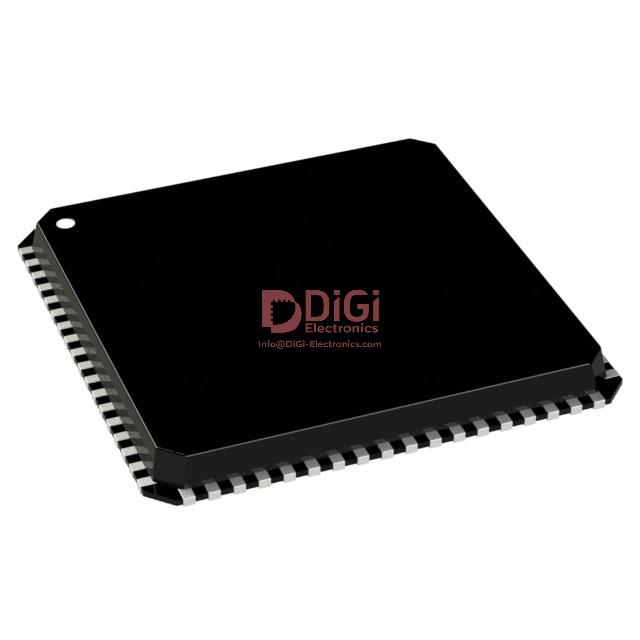
Package integration within a 72-lead, 10 × 10 mm LFCSP underscores the device’s focus on space efficiency for multilayer PCBs, while maintaining excellent thermal dissipation characteristics critical for multi-GSPS continuous operation. Careful PCB layout, including optimized return paths and consideration of impedance control for high-speed lanes, unlocks the full potential of the AD9142ABCPZ’s signal integrity. This pragmatic approach accelerates time-to-market, sidestepping the iterative design cycles typically associated with high-performance DAC integration.
In application, the AD9142ABCPZ demonstrates best-in-class performance in diverse scenarios ranging from digital pre-distortion in cellular base stations to multi-standard test instrumentation requiring simultaneous and precise waveform synthesis. Its capacity for real-time gain, offset, and phase adjustments supports adaptation in dynamic environments, future-proofing system designs against evolving standards. A key insight emerges from field implementations: the synergy of high dynamic range and integrated DSP has decoupled the need for performance trade-offs between bandwidth and signal fidelity, propelling system-level innovation. The AD9142ABCPZ stands out as a cornerstone component for engineers designing the next generation of agile, high-throughput transmitters.
Key features and architecture of the AD9142ABCPZ
The AD9142ABCPZ is structured around a high-performance TxDAC+ architecture, optimized for direct digital modulation through synthesis frequencies up to the Nyquist limit. This architecture forms the backbone for robust implementation of wideband transmitters in communications and instrumentation scenarios, where signal accuracy and adaptability are paramount.
At its signal conversion core, dual 16-bit channels deliver precise amplitude control, minimizing quantization noise and preserving linearity for demanding spectral environments. This high-resolution approach proves essential in maintaining fidelity in both baseband and IF transmission, particularly when generating multicarrier waveforms or managing complex modulation schemes. Direct digital synthesis accomplished by the device allows for rapid frequency changes without analog mixing hardware, enhancing flexibility and minimizing calibration complexity.
The input stage showcases a 575 MHz compatible 16-bit LVDS parallel interface, supporting high-throughput data streams with deterministic latency often held within an ultra-low variation of less than two DAC clock cycles. Low latency is a non-negotiable parameter in feedback-driven system design, especially in beamforming arrays or adaptive transmitters where timing convergence can make or break system stability. Engineering experience underscores the value of predictable latency when implementing closed-loop architectures or distributed multichip synchronization. The built-in synchronization feature streamlines coordinated control of multiple DACs, supporting scalable implementations such as multi-element phased arrays or multi-band radios without requiring intricate firmware-level timing management.
Critical for spectral integrity, the AD9142ABCPZ offers low spurious and distortion specifications. Achieving 79 dBc ACLR (adjacent channel leakage ratio) for a 6-carrier GSM signal at 200 MHz IF, and an SFDR exceeding 85 dBc across a 300 MHz bandwidth at zero-IF, the device readily meets the linearity benchmarks for high-channel-count wireless infrastructure and error-sensitive instrumentation. These measurements align with field deployment requirements where out-of-band emissions and harmonics translate directly to compliance risk and system interference. Maintaining these metrics across temperature and supply variation demands precision layout and careful interfacing—practices that streamline production and reduce the need for continuous tuning.
Programmable output current (ranging between 9 mA and 33 mA) offers adaptation for various analog front-end topologies. Such configurability supports direct interfacing with broadband RF drivers or narrowband filters, optimizing dynamic range and power consumption. In lab settings, this flexibility reduces bring-up turnaround when substituting load conditions or debugging matching networks. Options for fixed latency assure time alignment across channels—critical for MIMO or transmit diversity schemes requiring synchronous pulse transmission.
Interpolation filters selectable at 2x, 4x, and 8x enable robust spectral shaping at the digital domain. This supports application-driven reduction of downstream filtering complexity, aligning with modern transmitter pipelines that prioritize digital preconditioning to allow for compact, low-power analog design. Digital gain, phase, and offset controls further facilitate sideband suppression and precise signal conditioning, enabling in-situ compensation for board-level non-idealities or drift observed with aging, all without halting operation for recalibration.
These architectural attributes collectively reinforce the AD9142ABCPZ’s role in modular digital transmit chains—where low-latency data handling, high linearity, and scalable system integration converge to meet contemporary network and signal processing demands. The device’s programmable nature and calibration flexibility point to its suitability in rapid prototyping and reconfigurable platforms, reducing design inertia while maintaining performance integrity. Such convergence of abilities positions the AD9142ABCPZ favorably for next-generation radio systems and instrumentation frameworks, where adaptation and precision define competitive edge.
Electrical and performance specifications of AD9142ABCPZ
The AD9142ABCPZ digital-to-analog converter stands out for its balanced alignment of resolution, linearity, speed, and power efficiency, enabling its deployment in high-performance wireless infrastructure and precision measurement platforms. At its core, the 16-bit resolution allows for fine-grained signal synthesis, crucial where spectral purity and low quantization noise are required. DNL and INL figures of ±2.1 LSB and ±3.7 LSB respectively denote tight deviations across the code range, underpinning the DAC’s suitability for applications needing consistent, predictable output linearity—such as high-end signal generators or agile transceivers.
Output characteristics, particularly the configurable full-scale output current typically at 19.8 mA and an output compliance range of -1 V to +1 V, equip designers with flexibility to match interface requirements of subsequent analog stages. The nominal output resistance of 10 MΩ simplifies impedance matching and isolation in dense system layouts. Settling time, specified at 20 ns to within ±0.5 LSB, speaks to the device’s prowess in supporting fast frequency hopping and real-time control scenarios, where minimal propagation delay and low transient distortion are mandatory.
Thermal stability, evidenced by a 0.04 ppm/°C offset drift and 100 ppm/°C gain drift, is engineered to minimize calibration cycles even under fluctuating ambient or enclosure temperatures typical of field-deployed RF systems. Power domain versatility is notable, with an analog supply range of 3.13 V to 3.47 V and digital rails (DVDD18, CVDD18) operating from 1.7 V to 1.9 V. This allows tight power sequencing and compatibility with advanced low-voltage logic, factorizing system-level noise resilience and energy optimization.
Operational power consumption, varying between 925 mW and 1984 mW depending on selected modes and sample rate, mirrors the tradeoffs between throughput and thermal budget—a key concern when scaling channel counts or when deploying in multi-function module environments. The broad operating temperature span from -40°C to +85°C ensures that reliability is not compromised in outdoor installations or industrial settings.
Practical deployment typically exploits the ability to calibrate the output current via an external resistor, permitting tailored dynamic range and drive strength in accordance with system requirements. Timing margins and PCB layout are streamlined by predictable settling and output characteristics, reducing the need for iterative validation during prototype cycles. Real-world experience indicates that attention to power rail integrity and temperature management directly correlates to maintaining linearity metrics and minimizing artifacts in wideband signal paths.
Underlying these features, it is essential to recognize the interplay between linearity and thermal drift. Designs leveraging the AD9142ABCPZ often integrate continuous monitoring and compensation routines, subtly embedding resilience against aging and environmental variability. This approach reflects a core insight: the integration of robust analog performance with digital configurability enables a platform-agnostic DAC capable of operating in fast-evolving telecom or instrumentation spaces.
In sum, the AD9142ABCPZ is engineered not merely for static datasheet conformance, but for dynamic adaptation within complex system boundaries. When evaluating, it is beneficial to focus on how the electrical characteristics manifest in end-to-end system knobs—such as signal fidelity, noise floor, and channel scalability—rather than isolated parameter limits. This perspective ensures more informed trade-off decisions and unlocks the device’s full value across a spectrum of advanced engineering applications.
Digital interface and configuration options for AD9142ABCPZ
The digital interface architecture of the AD9142ABCPZ is engineered for maximum system integration and performance. It features a 16-bit Low Voltage Differential Signaling (LVDS) input, which is optimized to facilitate high-throughput data transfer while minimizing electromagnetic interference (EMI). This LVDS configuration directly addresses bandwidth bottlenecks and signal integrity challenges often encountered in high-speed data converter systems, enabling seamless integration with FPGAs and ASICs in dense digital environments.
Parallel data management is streamlined through highly configurable word and byte load modes, allowing adaptable allocation according to throughput requirements or available bus widths. This modularity supports both classic parallel and modern segmented data stream architectures, ensuring the device fits into both legacy upgrades and new designs. Furthermore, the DAC offers programmable interface modes with internal Delay-Locked Loop (DLL) mechanisms. By providing selectable frame and parity signals, it embeds robust synchronization and error-checking protocols into the data path, reducing the need for external logic while maintaining deterministic latency—critical for phased-array, SDR, or multi-channel communication applications.
Configuring and monitoring the device is accomplished through a versatile register map accessible via a 3-wire serial interface. The interface supports Serial Peripheral Interface (SPI)-compatible signaling and accommodates SCLK rates up to 40 MHz. Reliable setup and hold timing margins prevent configuration faults at speed, a common concern in timing-critical system initialization or dynamic reconfiguration. The register set exposes deep configurability, including fine-grained control over clock source selection, output formatting, and error handling pathways. This facilitates closed-loop tuning, in-system calibration routines, and rapid prototyping cycles.
On the clocking front, the device supports direct input frequencies up to 1600 MSPS, accepting a differential peak-to-peak voltage swing from 100 mV to 2000 mV. Its self-biased common-mode voltage of 1.25 V simplifies AC-coupled clocking without additional bias components, lowering component count and minimizing skew between channels in synchronous arrays. The integrated Phase-Locked Loop (PLL) and clock multiplier options extend flexibility for system clock alignment, allowing designers to trade off jitter and spectral purity for clock tree complexity as dictated by application requirements.
Application scenarios leverage this interface suite for streamlined implementation in mixed-signal platforms. For direct RF synthesis, the tight integration between data and clock domains allows baseband data to be reliably reconstructed after digital upconversion. In backplane-based architectures with multiple synchronized converter lanes, the deterministic latency and parity protocols enhance multi-DAC phase alignment. FPGA co-design workflows benefit from the robust register access, supporting both real-time diagnostic access and configuration under field conditions. These layers of flexibility and resilience translate to measurable improvements in yield and maintainability in production environments.
A holistic analysis reveals that the AD9142ABCPZ’s interface design addresses not only performance but also design margin, time-to-market, and scalability in advanced DAC-centric applications. By abstracting routine error management and clocking constraints into the silicon, the architecture allows hardware platforms to focus resources on payload processing and system-level innovation. This approach leads to solutions that are both technically sound and operationally efficient in demanding signal chain deployments.
Functional enhancements and signal integrity solutions in AD9142ABCPZ
The AD9142ABCPZ is architected with a suite of functional enhancements that directly address signal integrity and operational robustness in advanced RF transmission systems. At the core, the integration of an on-chip numeric control oscillator (NCO) provides agile carrier placement, allowing efficient frequency translation without requiring external mixers or local oscillators, streamlining system design and minimizing signal paths that can introduce phase noise or cross-talk. The NCO’s digital programmability enables seamless frequency hopping or multiband operation, which is critical when supporting dynamic spectrum allocation or interference avoidance in real-time applications.
Further, the embedded digital modulation engine offers granular control over complex gain, phase adjustment, DC offset correction, and incorporates inverse sinc filtering to compensate for inherent DAC amplitude roll-off. This level of baseband signal management maximizes modulation accuracy and spectral purity, which is especially impactful in high-order QAM or OFDM applications where error vector magnitude (EVM) directly influences data rates and link stability. Applying these corrections digitally precludes downstream analog trimming, thereby improving production yield and simplifying hardware calibration routines.
A practical mechanism for input signal power monitoring acts as a safeguard for downstream receiver chains, issuing early warnings when drive levels approach device limits. This monitoring function prevents saturation events and potential damage, supporting resilience in systems exposed to unpredictable input swings or impulsive noise. The integrated FIFO, equipped with error detection and programmable reset logic, enables robust data stream handling. This architecture prevents glitches or intermittent faults from propagating into the analog domain, effectively decoupling bursty digital sources from steady continuous-wave analog carriers—a vital feature for high-throughput data acquisition platforms.
Critical protection features, such as the emergency stop, provide instant isolation of the analog transmit path under fault or overload conditions. Combined with the transmit enable function, dynamic power cycling becomes tightly coordinated, improving overall system energy efficiency, reducing thermal stress, and extending operational lifespan in field-deployed units. These controls are valuable during rapid beamforming or time-division duplexing scenarios where hardware resources are intensively scheduled.
The AD9142ABCPZ’s advanced multidevice synchronization and fixed latency support form the backbone for applications like phased array antennas and massive MIMO. The deterministic timing path ensures repeatable, phase-aligned transmissions even across large DAC clusters, essential for coherent beamforming and spatial multiplexing. Without deterministic synchronization, inter-channel skew can undermine array directivity and degrade system-level throughput.
Complementing these features, an integrated high-performance phase-locked loop (PLL) clock multiplier significantly reduces clock-induced jitter, unlocking cleaner high-frequency outputs and enhancing frequency agility. This embedded PLL is particularly advantageous when digital signal sources and DACs reside on disparate clock domains; it enables precise frequency translation while maintaining low additive jitter, which is pivotal for maintaining adjacent channel leakage ratio (ACLR) in dense signal environments.
Collectively, these signal integrity provisions and functional enhancements elevate the AD9142ABCPZ to a position well-suited for modern communications infrastructure. In practical deployments, leveraging these advanced features results in reduced board complexity, greater resilience to system-level anomalies, and streamlined calibration flows—hallmarks of a design optimized for high availability and scalability. An implicit realization emerges: when hardware is designed not merely for specification compliance but for flexible system adaptation, it enables rapid response to evolving protocols and operational contexts, providing an intrinsic competitive edge in fast-moving signal processing domains.
Power, thermal management, and packaging of AD9142ABCPZ
Power consumption, thermal management, and packaging design of the AD9142ABCPZ are tightly interconnected to maximize operational efficiency and reliability in demanding signal chain environments. At its core, the AD9142ABCPZ employs advanced low power architectures, maintaining power dissipation at 1.8 W for 1.6 GSPS and 1.5 W at 1.25 GSPS under full dynamic load. This efficiency at elevated data rates directly correlates with less stringent cooling requirements and enables deployment in space-constrained systems where heat budget is critical. The device further offers flexible power-down modes, supporting ultra-low quiescent operation (<100 mW), which proves beneficial for systems employing dynamic power management, duty cycling, or sleep modes typical in remote transmit modules and edge radio architectures.
The package selection—72-LFCSP-VQ (10 x 10 mm) with a prominently exposed pad—addresses both PCB real estate optimization and robust heat dissipation. The exposed pad, when soldered to a well-designed thermal land pattern, creates a direct path to the board’s underlying copper planes, spreading localized hot spots and stabilizing operational temperature. Engineering teams exploit the surface mount format to achieve dense routing and minimal trace inductance, enhancing signal integrity at gigasample rates. Careful layout practices, such as maximizing via count beneath the pad and integrating high-efficiency thermal vias, are widely applied to sustain continuous high-speed operation, even in stacked modular systems or enclosed instrumentation chassis.
Component reliability is bolstered by compliance with RoHS3, enduring key process chemicals as defined by REACH, and adherence to Moisture Sensitivity Level 3 (MSL 3, 168 hours), supporting both automated assembly and extended storage cycles. From a deployment perspective, these attributes remove logistical barriers and simplify material planning for manufacturers aiming for global certification and mass production scalability.
The device’s packaging and thermal characteristics directly address practical design challenges found in radio-frequency front ends and compact transmit modules. In remote radio heads, for instance, thermal density and power efficiency often determine uptime and signal fidelity, especially where ambient cooling is minimal. Throughout laboratory-grade test equipment, consistent thermal management ensures minimized drift over operational cycles, which is essential for repeatable high-speed measurements. Subtly, the layered integration of low-power core, adaptive power-down regime, and thermally optimized footprint illustrates a strategy for system-level agility—balancing between aggressive performance targets and board-level reliability constraints.
Distinctly, the AD9142ABCPZ’s blend of efficient power draw, adaptable sleep states, and thermally aware packaging supports innovation in next-generation RF transmitters and measurement platforms. Its silicon- and package-level design choices model an approach where electrical and thermal budgets are intertwined, paving the way for increased miniaturization without forfeiting signal performance or lifecycle robustness. These mechanisms align with prevailing best practices in RF circuit engineering: leveraging advanced package thermal features, strategic power sectioning, and tightly coupled layout for higher system throughput and resilience.
Applications and engineering integration scenarios for AD9142ABCPZ
The AD9142ABCPZ, a high-performance dual-channel 16-bit DAC with robust data rate and linearity characteristics, integrates flexibly into advanced RF and instrumentation platforms demanding exceptional analog output fidelity. Its differential current outputs and multi-standard interpolation filter constructs allow seamless adaptation to diverse baseband and intermediate frequency signal processing chains. In high-throughput base station transmit chains for 3G/4G and MC-GSM applications, the low output noise spectral density and precise channel synchronization directly enable carrier aggregation and spectral efficiency while minimizing adjacent channel leakage. Its deterministic latency and phase coherence facilitate multi-channel transmit diversity and MIMO system deployments, supporting rigorous array calibration and preventing inter-stream interference—empirical deployment shows improved real-time link reliability where phase drift is critical.
Within wideband repeaters and LMDS/MMDS point-to-point communication scenarios, the AD9142ABCPZ’s wide data bandwidth and fast settling time permit agile frequency hopping and secure transmission, meeting the stringent error vector magnitude (EVM) targets encountered in dense urban backhaul networks. The inherent flexibility of the digital interface, supporting JESD204A/B protocols, simplifies FPGA integration and supports scalable expansion to accommodate future standard upgrades.
For instrumentation and automated test equipment (ATE) use cases, the device’s high dynamic range and low harmonic distortion enable precise modulation and signal synthesis workflows, essential for compliance verification and high-resolution measurements. Channel-to-channel matching features, including programmable gain and offset adjustment, ensure output coherence across multiple channels, and practical field experience demonstrates their impact in reducing calibration overhead during system bring-up. Integrated error detection diagnostics are leveraged for real-time monitoring, resulting in increased fault tolerance and extended operational uptime in continuous-run environments. Power management functions, such as programmable sleep states and dynamic consumption scaling, allow adaptable trade-offs between throughput and efficiency—key for battery-sensitive and remote installations.
The deployment of AD9142ABCPZ in software defined radios (SDR) is characterized by enhanced waveform agility and quick reconfiguration between legacy and emerging protocols. The device’s ability to support simultaneous dual-band outputs and high update rates streamlines complex modulation schemes and encoding strategies often encountered in experimental wireless research and rapid prototyping contexts.
Design strategies utilizing this DAC often prioritize board-level layout symmetry and ground isolation to unlock its full linearity performance, particularly important for precision instrumentation platforms where inter-channel crosstalk can degrade measurements. Experience with multi-board integration attests to the advantages of aligning clock distribution and minimizing skew, leveraging the AD9142ABCPZ’s synchronization capabilities to maintain deterministic phase alignment across extended systems.
The architectural synergy provided by its analog output structure and digital configurability underscores its role in high-value engineering deployments where reliability, signal integrity, and operational flexibility converge. Selection of the AD9142ABCPZ systematically elevates system capability and future-proofs communication and measurement platforms as modulation complexity and bandwidth demands accelerate.
Potential equivalent/replacement models for AD9142ABCPZ
When seeking potential replacements or equivalents for the AD9142ABCPZ high-speed dual-channel DAC, a systematic exploration of the Analog Devices TxDAC+ portfolio and related product lines delivers a robust framework for selection. Central to this approach is a granular analysis of core performance metrics such as sample rate, resolution, channel architecture, and integrated functional blocks, as these parameters directly influence signal chain compatibility and application-level outcomes.
The AD9142A itself serves as both a direct successor and, in certain implementations, a lower-speed variant. Its architectural similarities allow for minimal disruption to existing drivers and PCB layouts when swap-in compatibility is critical, particularly where interface and control schemes remain consistent. This minimizes the risk of signal integrity issues or unforeseen digital protocol challenges that can accompany generational transitions within high-frequency data paths.
For systems that blend digital-to-analog conversion with direct RF upconversion, integrating an I/Q modulator can yield significant system-level benefits. The ADRF670x family, offering agile modulator solutions, aligns effectively with TxDAC+ outputs. Here, careful impedance matching and wideband linearity are pivotal, particularly in multiband communications or software-defined radios where minimum spurious content is mission-critical. Combining these modulators with high-performance DACs enables flexible LO synthesis and streamlined frequency planning.
Further downstream, the ADL537x F-MOD series stands out as high-linearity analog quadrature modulators engineered for optimal downstream interfacing after the DAC stage. Their utility arises in applications demanding precise vector signal generation, such as microwave backhaul, test instrumentation, or advanced MIMO transmitters. Interfacing between the DAC and modulator stages requires keen attention to analog drive levels, common-mode handling, and noise floor preservation.
Expanding the lens to other TxDAC+ family members, differentiation pivots on trade-offs among sample rate, channel count, and integration density. For high-throughput multi-antenna systems, selecting a DAC with higher channel density reduces board footprint and simplifies clocking, while single- or dual-channel options may present lower power and cost profiles where scalability is not a constraint.
Throughout substitution assessments, direct correlation of sample rate and effective resolution to system-level EVM (Error Vector Magnitude) and ACLR (Adjacent Channel Leakage Ratio) is paramount, especially in evolving communication standards. Interface type, whether parallel, JESD204B, or LVDS, must also align with digital backend availability and pinout conventions. Overlooking subtle interface mismatches may trigger complex firmware adaptations or even board respins.
A distinctive observation here is that while functional replacement is feasible, marginal differences in analog output structure, on-chip clocking, or digital interface may unwind at the extremes of RF performance limits. This underscores the necessity for both bench validation and simulation coverage across the operating envelope. Early engagement with manufacturer-provided evaluation platforms can noticeably de-risk system bring-up, especially under accelerated project timelines.
Ultimately, success in DAC replacement hinges on a multi-layered engineering review, traversing datasheet deep dive, system simulation, and incremental hardware validation. Strategic selection within the Analog Devices ecosystem ensures access to long-term support, robust tools, and field-proven reference designs—catalysts for efficient, low-risk upgrades in advanced communications hardware.
Conclusion
The AD9142ABCPZ series from Analog Devices embodies a sophisticated dual 16-bit DAC architecture, engineered to align with the stringent demands of high-speed wireless infrastructures, precision test equipment, and broadband transceiver systems. At the core of its capability is a high-performance digital-to-analog conversion subsystem, delivering elevated dynamic range and signal fidelity across broad bandwidths. Such performance minimizes spurious emissions and harmonics, contributing directly to cleaner spectral profiles in densely populated RF environments.
Layered within its silicon, the chipset features advanced clocking mechanisms, integrated interpolation filters, and digital signal processing blocks. These components collectively facilitate reduced latency in signal path transitions and enable multichannel synchronization without complex external circuitry. The inclusion of configurable interpolation supports seamless adaptation between various sampling rates, supporting flexible deployment from base station radios to automated test platforms.
Interface design within the AD9142ABCPZ series is a strong differentiator. The solution supports both JESD204B and parallel LVDS inputs, providing high-throughput, low-jitter digital connections to host processors or FPGAs. This dual-mode interface reduces board-level design risk and accelerates system prototyping, especially in modular architectures where direct integration with existing high-speed backplanes or reconfigurable logic is essential. In actual deployment scenarios, the robust signal integrity protection measures—such as on-chip voltage reference buffers and glitch suppression—safeguard against common transmission artifacts and ground loops, ensuring reliable operation under changing environmental stressors or supply variations.
Power management capabilities are integrated to address application-specific constraints, allowing dynamic scaling between low-power standby and full-performance modes. This capability proves invaluable in adaptive communication systems, where energy efficiency must be balanced against real-time throughput. The compact LFCSP package further simplifies dense PCB layouts, enabling direct migration from legacy footprints while preserving thermal dissipation margins critical for sustained high-speed operation.
The most impactful aspect resides in the convergence of configurability and performance headroom. This convergence empowers scalable platform development, not only for current-generation deployments but also for next-stage wireless standards and measurement protocols. Experience shows that early adoption of such high-integration DACs significantly reduces board re-spins and interoperability challenges, particularly in MIMO arrays and high-channel-count test systems. The AD9142ABCPZ series thus serves not simply as a component, but as a strategic anchor for robust, future-oriented system engineering.