AOW296 >
AOW296
Alpha & Omega Semiconductor Inc.
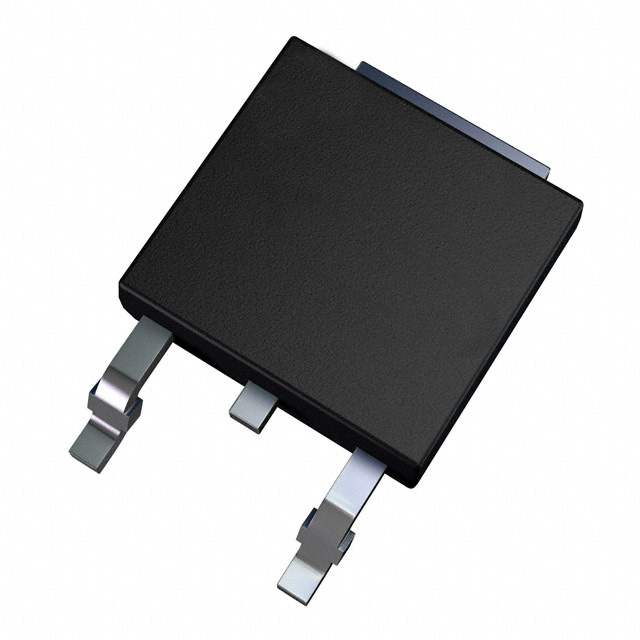
MOSFET N-CHANNEL 100V 70A TO262
1427 Pcs New Original In Stock
N-Channel 100 V 70A (Tc) 104W (Tc) Through Hole TO-262
Request Quote (Ships tomorrow)
*Quantity
Minimum 1
AOW296
5.0 / 5.0 - (384 Ratings)

AOW296

Product Overview

12845816

DiGi Electronics Part Number

AOW296-DG
AOW296

Description

MOSFET N-CHANNEL 100V 70A TO262

Inventory

1427 Pcs New Original In Stock
N-Channel 100 V 70A (Tc) 104W (Tc) Through Hole TO-262
Quantity
Minimum 1

Purchase and inquiry

Quality Assurance

365 - Day Quality Guarantee - Every part fully backed.

90 - Day Refund or Exchange - Defective parts? No hassle.

Limited Stock, Order Now - Get reliable parts without worry.

Global Shipping & Secure Packaging

Worldwide Delivery in 3-5 Business Days

100% ESD Anti-Static Packaging

Real-Time Tracking for Every Order

Secure & Flexible Payment

Credit Card, VISA, MasterCard, PayPal, Western Union, Telegraphic Transfer(T/T) and more

All payments encrypted for security

Request Quote (Ships tomorrow)
* Quantity
Minimum 1
(*) is mandatory
We'll get back to you within 24 hours

AOW296 Technical Specifications

Category Transistors, FETs, MOSFETs, Single FETs, MOSFETs

Packaging -

Series AlphaSGT™

Product Status Obsolete

FET Type N-Channel

Technology MOSFET (Metal Oxide)

Drain to Source Voltage (Vdss) 100 V

Current - Continuous Drain (Id) @ 25°C 70A (Tc)

Drive Voltage (Max Rds On, Min Rds On) 6V, 10V

Rds On (Max) @ Id, Vgs 9.7mOhm @ 20A, 10V

Vgs(th) (Max) @ Id 3.4V @ 250µA

Gate Charge (Qg) (Max) @ Vgs 52 nC @ 10 V

Vgs (Max) ±20V

Input Capacitance (Ciss) (Max) @ Vds 2785 pF @ 50 V

FET Feature -

Power Dissipation (Max) 104W (Tc)

Operating Temperature -55°C ~ 150°C (TJ)

Mounting Type Through Hole

Supplier Device Package TO-262

Package / Case TO-262-3 Long Leads, I2PAK, TO-262AA

Base Product Number AOW29

Datasheet & Documents

HTML Datasheet

AOW296-DG

Environmental & Export Classification

RoHS Status ROHS3 Compliant
Moisture Sensitivity Level (MSL) 1 (Unlimited)
REACH Status REACH Unaffected
ECCN EAR99
HTSUS 8541.29.0095

Additional Information

Other Names
5202-AOW296
Standard Package
1,000

Reviews

5.0/5.0-(Show up to 5 Ratings)
Rad***tSun
December 02, 2025
5.0
Thanks to their robust packaging, my items always arrive in pristine condition, regardless of distance.
Radi***Waves
December 02, 2025
5.0
I appreciate their proactive approach in providing solutions and support.
Joyfu***urney
December 02, 2025
5.0
Their proactive approach in troubleshooting has prevented many potential problems.
Publish Evalution
* Product Rating
(Normal/Preferably/Outstanding, default 5 stars)
* Evalution Message
Please enter your review message.
Please post honest comments and do not post ilegal comments.

Frequently Asked Questions (FAQ)

Can the AOW296 MOSFET be used as a drop-in replacement for the IRF2807 in a 100V motor drive application, and what design-in risks should I consider?

The AOW296 can serve as a functional replacement for the IRF2807 in 100V motor drive designs, but caution is required due to key differences. While both are N-channel TO-262 MOSFETs with similar Vdss and Id ratings, the AOW296 has a lower Rds(on) of 9.7mΩ @ 10V (vs. 11mΩ for IRF2807), which improves conduction efficiency. However, the AOW296 has a higher gate charge (52nC vs. ~36nC), increasing switching losses in high-frequency PWM drives. Ensure your gate driver can source/sink sufficient current to charge/discharge the gate quickly. Also verify thermal design margins, as AOW296 is rated at 104W (Tc) and requires solid heatsinking. Confirm PCB layout accommodates through-hole TO-262 mounting and provide adequate creepage for 100V operation to mitigate field failure risks.

Is the AOW296 suitable for parallel operation in a high-current DC-DC converter, and how can I mitigate uneven current sharing?

Yes, the AOW296 can be used in parallel in high-current DC-DC converters, but thermal and electrical imbalances must be addressed. Due to its positive temperature coefficient for Rds(on), the AOW296 supports natural current sharing when devices are thermally coupled. However, layout asymmetries can create imbalance. To mitigate risks: use symmetrical PCB traces for gate and source paths, include small source inductors or sense resistors for feedback equalization, and mount all AOW296 devices on the same heatsink for uniform temperature. Avoid fast-switching above 100kHz without simulation, as differences in gate charge (52nC max) and input capacitance (2785pF) can cause timing skew and shoot-through during turn-on.

Why is the AOW296 listed as obsolete, and what are the long-term reliability and sourcing risks for new designs?

The AOW296 is marked as obsolete by Alpha & Omega Semiconductor, meaning no new manufacturing runs are planned, and future availability is limited to existing stock (e.g., 1359 pcs). While currently in stock, using the AOW296 in new designs introduces significant supply chain risk for production scalability and long-term field support. For reliability, the AOW296 is rated for -55°C to 150°C TJ and is robust in industrial environments, but end-of-life status means no long-term qualification updates or failure rate monitoring. Consider evaluating active-pin-to-pin alternatives like the AON6260 or Infineon IPP60R099CPA (with appropriate derating) and secure last-time buy quantities if committing to AOW296 for legacy or short-run applications.

How does the AOW296 perform in hard-switching applications like H-bridge inverters, and what switching frequency limits should be enforced?

The AOW296 can perform in hard-switching H-bridge inverters up to 50kHz, but with thermal trade-offs. Its 52nC gate charge and 2785pF input capacitance demand strong gate drivers (e.g., 2A peak) to minimize switching transition times and reduce turn-on/turn-off losses. At higher frequencies, switching losses dominate due to frequent charging/discharging of Ciss. To prevent thermal runaway: derate the 104W (Tc) power dissipation by at least 30%, use forced-air cooling if above 25kHz, and implement dead-time control to avoid shoot-through. Monitor junction temperature with thermal vias under the mounting tab and ensure Vgs stays within ±20V, especially during gate ringback in inductive loads.

What are critical thermal design considerations when mounting the AOW296 in a TO-262 package on a standard FR4 PCB without a heatsink?

Mounting the AOW296 without a heatsink on FR4 is feasible only for low-duty-cycle or low-power applications (<10W dissipation). The TO-262 package relies heavily on the PCB for thermal dissipation via the drain tab. To avoid overheating: use at least 2oz copper on both top and bottom layers, connect the drain pad to large copper pours with multiple thermal vias (≥10 vias, 0.3mm diameter), and keep traces short to minimize thermal resistance. Expect junction-to-ambient (θJA) values over 40°C/W on FR4, limiting continuous Id to under 20A even at room temperature. For higher loads, a dedicated heatsink is mandatory. Always monitor TJ during burn-in testing, as the AOW296's 150°C max rating can be exceeded rapidly in enclosed environments.

Quality Assurance (QC)

DiGi ensures the quality and authenticity of every electronic component through professional inspections and batch sampling, guaranteeing reliable sourcing, stable performance, and compliance with technical specifications, helping customers reduce supply chain risks and confidently use components in production.

Quality Assurance
Counterfeit and defect prevention

Counterfeit and defect prevention

Comprehensive screening to identify counterfeit, refurbished, or defective components, ensuring only authentic and compliant parts are delivered.

Visual and packaging inspection

Visual and packaging inspection

Electrical performance verification

Verification of component appearance, markings, date codes, packaging integrity, and label consistency to ensure traceability and conformity.

Life and reliability evaluation

DiGi Certification
Blogs & Posts
AOW296 CAD Models
productDetail
Please log in first.
No account yet? Register