>
>


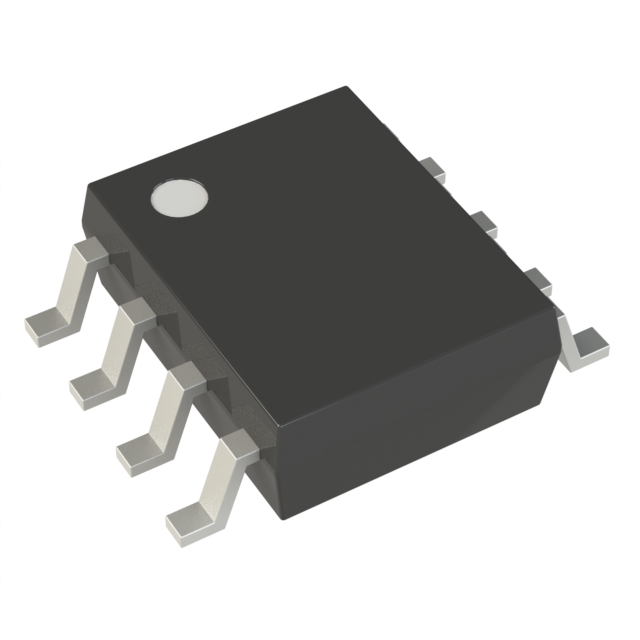
Product overview: VN7050ASTR-E by STMicroelectronics
The VN7050ASTR-E from STMicroelectronics represents a technologically advanced solution for high-side switching within automotive and industrial frameworks, encapsulating sophisticated design in an 8-SOIC package. Central to its architecture is the integration of VIPower M0-7 technology, which pairs an N-Channel MOSFET with advanced protection and diagnostic logic. This approach results in superior switching performance and stability under variable load conditions, a requirement increasingly prevalent in contemporary distributed control modules.
The device’s capability to deliver continuous output currents up to 21A provides ample headroom for demanding loads, whether resistive, inductive, or capacitive in nature. The high current operation is enabled by optimized silicon design and thermal management, ensuring low Rds(on) and effective heat dissipation in confined PCB layouts. Experience with board-level implementation reveals that the VN7050ASTR-E maintains operational integrity even in dense, harsh environments typical of engine compartments or compact machinery, validating its suitability where PCB space and thermal budgets are constrained.
Sophisticated diagnostic and protection features are embedded within the driver. Under-the-hood applications, where transient voltages and fault conditions are prevalent, benefit from integrated under-voltage lock-out, thermal shutdown, and overcurrent protection mechanisms. These circuits operate in real time and feedback to the microcontroller, supporting predictive maintenance and reducing troubleshooting time. In field deployments, such protection schemes have dramatically decreased failure rates and enhanced system predictability, especially in load cases involving actuators, solenoids, or lamp driving where inrush current profiles pose significant stress.
VIPower technology further imparts enhanced electromagnetic compatibility and minimized power losses, a core requirement as electronic content in vehicles proliferates. Controlled switching minimizes voltage overshoots and resultant EMI, reducing the need for external snubbing and simplifying overall system design. The driver’s fault reporting and diagnostic capabilities have proven invaluable for remote monitoring scenarios, where feedback integration with CAN/LIN networks enables real-time system status and swift response to abnormal conditions.
From a design for manufacturability perspective, the compact 8-SOIC footprint and integrated features reduce external component counts and streamline PCB routing, facilitating faster prototype turns and lower total BOM cost. This directly addresses the push towards modular, scalable electronic architectures, a key trend as system complexity increases.
A distinctive advantage is the device’s resilience when driving varied load types. For example, inductive loads such as motors and valves often induce voltage spikes upon deactivation; built-in active clamp and demagnetization circuits within VN7050ASTR-E absorb this energy efficiently, preserving downstream electronics and extending system longevity. Experience with capacitive load switching confirms that the device’s fast turn-on response, paired with precise impedances, prevents voltage droop and ensures reliable actuation even in power-sensitive applications.
In summary, the VN7050ASTR-E emerges as a robust solution, offering a balanced combination of high-current capability, comprehensive protection, and diagnostic intelligence. Its deployment in distributed automotive and industrial platforms directly supports reliability and miniaturization goals, while its integrated features contribute to streamlined development cycles and enhanced system-level safety. This blend of advanced MOSFET switching and real-time fault management positions the device at the forefront of modern electronic load-driving requirements.
Key features and functional highlights of the VN7050ASTR-E
The VN7050ASTR-E is engineered as a high-side driver optimized for integration efficiency and diagnostic accuracy, aligning tightly with modern automotive and industrial system demands. Its compact pinout and surface-mount package accelerate PCB layout while reducing spatial overhead, enabling dense component arrangements without compromising signal integrity. Full compatibility with both 3V and 5V CMOS logic directly addresses the prevalent voltage domains in contemporary microcontroller ecosystems, ensuring that migration between architectures or multi-voltage operation proceeds without level-shifting complexities.
The inclusion of a dedicated sense enable/disable pin transforms the device into a more adaptable node within distributed systems. This design choice allows dynamic control over the current sense signal pathway, supporting advanced diagnostics and the flexible sharing of external sense resistors among parallel drivers. Such capability is invaluable in modular designs, especially when the architecture mandates selective load monitoring or when implementing multi-channel software-defined diagnostic schemes. In practical deployment, leveraging the sense pin enables reduction of component count and board complexity—strategically linking feedback lines across several channels only when granular insight is needed.
Minimal external circuitry requirements mark another fundamental attribute. By embedding key protection and diagnostic circuits, such as thermal shutdown, overcurrent protection, and load current sense, the VN7050ASTR-E shortens development cycles and boosts system reliability. The analog current sense feature yields finely resolved, real-time feedback, proving central to applications where predictive maintenance, load profiling, or timely fault isolation are essential. This capacity for internal monitoring means design teams can implement adaptive control algorithms that adjust drive profiles on the fly, optimizing power distribution or pre-empting fault states before they escalate.
Experience has shown that, in precision load management scenarios such as multi-channel relay replacement or LED driving, the VN7050ASTR-E’s integrated diagnostic channel proves especially useful. For instance, the ability to deactivate the sense output in parallel driver configurations or during self-check routines avoids conflicts on the feedback line, preserving measurement integrity. Furthermore, the device supports direct implementation of system-level health monitoring protocols by providing developers with repeatable, low-latency diagnostic data for each load channel.
The device’s design philosophy enables a move toward distributed intelligence in power subsystems. Its feature set fits seamlessly within cost-sensitive, safety-focused domains—where robust self-protection and rich, actionable feedback are paramount. By concentrating advanced diagnostic and control functionality into a single chip, engineers gain the freedom to prioritize core application logic, confident that peripheral circuitry manages ancillary complexity. This strategic integration moves beyond simple component consolidation: it creates opportunity for scalable architectures where functional safety and flexible expansion coexist as design priorities.
Diagnostic and protection mechanisms within the VN7050ASTR-E
VN7050ASTR-E builds its diagnostic and protection framework on robust real-time current sensing, leveraging high-precision proportional load current feedback. This current sense channel empowers microcontrollers to directly interpret actual load conditions, not only monitoring nominal operation but also forming the basis for nuanced state assessment during system calibration and anomaly analysis. The proportional current feedback notably aids in early detection of degraded load behavior—such as incremental actuator binding or connector corrosion—before outright failure occurs, thus supporting predictive maintenance strategies.
Overload and short-to-ground detection are achieved through tightly integrated hardware comparators, monitoring the on-state voltage drop and instantaneous current draw. When thresholds are exceeded, the device triggers power limitation modes, automatically constraining current flow and informing the controller via diagnostic pins. Such mechanisms minimize risk of harness overheating or PCB track damage, a critical hardware safeguard in automotive and industrial switching matrices characterized by parallel-sourced loads and frequent environmental stress.
Thermal shutdown is more than a last-resort safeguard within the VN7050ASTR-E. The device monitors die temperature with embedded sensing, initiating rapid shutdown or current derating upon exceeding thermal limits. Thermal feedback is both signaled on the diagnostic interface and internally optimized, allowing dynamic adaptation to temporally varying load profiles such as lamp inrush or solenoid actuation. Deployments in harsh environments have shown that finely tuned thermal transient management, coupled with prompt diagnostic signaling, significantly extends field reliability, especially in duty-cycle-intensive applications.
For system integrity across all operational states, the device performs detailed line diagnostics, including OFF-state open-load detection and output short-to-Vcc identification. These diagnostics enable immediate localization of wiring faults or peripheral failures. When open load or short-to-battery events are detected, status lines provide prompt feedback to supervisory logic, supporting responsive fault logging and reconfiguration without manual intervention.
Voltage domain disturbances—undervoltage and overvoltage—are addressed through embedded shutdown logic and active clamp circuitry, ensuring controlled transitions and preventing erratic switching behavior. This voltage management capability is particularly valued in modular architectures where supply transients from other subsystems might propagate; clamp response time and threshold selection can markedly impact network-wide electromagnetic compatibility and recovery time after brown-out situations.
Electrostatic discharge resilience and reverse battery protection further anchor the VN7050ASTR-E’s suitability for mission-critical nodes. Advanced ESD structures absorb energy from indirect discharge events, reinforcing robustness during manufacturing, installation, or field servicing. While reverse battery protection relies on carefully dimensioned external components, application experience shows that correct external MOSFET and passive sizing avoids nuisance tripping and protects both the device and attached loads against inadvertent polarity reversal—a common field issue during maintenance or jump-start scenarios.
Notably, the current sense and diagnostic capabilities in the VN7050ASTR-E encourage migration from simple hardware fail-safe designs to intelligent, software-driven fault response ecosystems. This shift enables centralized fault analytics within ECUs or PLCs, with load health continuously profiled and historical fault data archived for trending and optimization. Practical implementations show that fault response times are reduced, system downtime declines, and root cause analysis is expedited thanks to the granularity and immediacy of the device’s feedback mechanisms.
A critical insight lies in the practical blending of real-time analog states with digital fault reporting. By tightly coupling hardware diagnostics to software supervisory routines, engineers can architect self-adaptive power distribution and actuator networks, where each node contributes actionable intelligence to the overall system. This architectural advance is particularly compelling as distributed control and predictive diagnostics become cornerstones of next-generation automotive and industrial design.
Application scenarios and system integration guidance for VN7050ASTR-E
VN7050ASTR-E supports a broad spectrum of automotive load-driving applications, leveraging a flexible high-side smart switch architecture capable of handling resistive, inductive, and capacitive elements. Its suitability extends to exterior and interior lighting, actuator control (such as engine or transmission solenoids), seat heaters, and advanced modules with transient-rich capacitive profiles. Compatibility with standard 3.3V and 5V logic simplifies interface requirements with mainstream automotive microcontrollers, reducing complexity at the system level. By integrating protection and diagnostic features on-chip, VN7050ASTR-E enables engineers to consolidate board real estate, streamline BOMs, and improve reliability across system nodes.
From an integration perspective, rapid lab deployment is facilitated through reference boards like the EV-VN7050AS, which provide optimized PCB layouts and minimal required passives. For initial characterization, MultiSense current feedback allows granular calibration through external sense resistors—offering a practical pathway to balance measurement resolution, thermal design, and physical constraints. Selection between SMD and through-hole resistors adapts easily to both prototyping and final assembly, supporting iterative design cycles and late-stage optimization without architectural overhaul.
In distributed architectures commonly found in body domain controllers or zonal gateways, each VN7050ASTR-E instance can be selectively managed for low-power operation. The sense enable pin allows system firmware to suppress OFF-state diagnostic routines, protecting against parasitic wakeups during sleep modes—especially significant in battery-conscious EV or start-stop systems. This flexibility holds particular value during over-the-air update sessions or when managing unpredictable accessory loads, where inadvertent diagnostics can impair functional safety and system uptime.
Through accumulated deployment insights, it becomes clear that using VN7050ASTR-E yields reduced EMI artifacts and enhanced immunity to transients, driven by robust internal clamping and adaptive fault management. When orchestrating multiple channels, careful PCB partitioning and shared thermal planes further unlock the device’s full current-carrying capabilities, minimizing derating, and ensuring long-term reliability under realistic load cycles. Intelligent use of integrated diagnostics can feed directly into vehicle health frameworks, fostering predictive maintenance strategies and minimizing unscheduled service events.
From an architectural vantage, embedding power stages like VN7050ASTR-E upstream of major load clusters not only decouples sensitive logic from harsh electrical domains but supports ongoing platform reuse. Modular harness design and test automation benefit from consistent diagnostic outputs and unified failure behavior across variants. Over time, this enables streamlined validation and compliance with emerging standards—key for future-proofing automotive electronics platforms.
Thermal management and board-level considerations for VN7050ASTR-E
Thermal management and board-level integration of the VN7050ASTR-E require precise interplay between device capabilities and PCB engineering principles. Delivering up to 21A continuous output, the device challenges system designs with significant heat dissipation demands. The SOIC-8 package incorporates a thermally efficient leadframe and exposed pad, enabling direct heat transfer to the PCB. Effective utilization of this mechanism depends on maximizing the copper footprint beneath and around the IC; thermal vias paired with contiguous ground planes can substantially enhance heat-spreading efficiency. Empirical data consistently show that exceeding the datasheet’s recommended copper area—particularly with multi-layer boards—provides additional headroom before critical junction temperatures are reached, directly impacting reliability in high-load or ambient-challenged environments.
Strategic resistor placement is another cornerstone. Sensing accuracy, especially for load diagnostics and current regulation feedback, is governed by trace length, pad symmetry, and proximity to the VN7050ASTR-E. Through-hole sense resistors offer superior power handling but require judicious via and pad design to avoid parasitic inductance and compromised heat transfer. Surface-mount alternatives, while space-efficient, demand careful alignment to high-current planes; layout simulations routinely reveal that even minor PCB geometry mismatches can introduce measurable error into fault response thresholds. Best practices dictate tight coupling of sense lines to the controller ADC, minimizing loop area to avoid EMI pickup that skews measurement, particularly in switching-rich automotive or industrial settings.
Power and ground architecture on the PCB orchestrates shutdown predictability and electromagnetic compatibility. Wide copper pours, direct low-impedance paths from supply to ground, and star-point routing for high-current nodes all contribute to stable operation. Transient events, whether from capacitive loads or external short circuits, can expose latent weaknesses in PCB layout more acutely than non-faulted operation. Iterative bench validation underscores the practical value of separating logic and load power returns at the board level, as this strategy markedly reduces false tripping and errant latch-off—crucial for dependable output channel control.
Application scenarios such as robust relay driving, high-side switching in automotive domains, and distributed industrial I/O panels benefit directly from these board-level refinements. Accelerated life testing in these contexts regularly highlights the trade-offs between spatial constraints, copper cost, and achievable thermal maxima. Optimizing all layers—basic thermal conduction, diagnostic signal integrity, and fault-resilient power topology—enables the VN7050ASTR-E to function reliably at rated currents, even in demanding mechanical and electrical environments. This layered approach not only safeguards device lifetime but also opens headroom for advanced application features such as proportional load control or advanced diagnostics, anchoring robust system architectures.
Potential equivalent/replacement models for VN7050ASTR-E
When selecting equivalent or replacement models for the VN7050ASTR-E high-side smart driver, engineers must analyze its core characteristics and systemic integration factors to ensure functional parity. The VN7050ASTR-E, defined primarily by its single-channel architecture and robust 21A output current capacity, occupies a niche in automotive and industrial load management where high power handling and integrated diagnostic capabilities are essential.
Replacement evaluation begins with detailed scrutiny of electrical parameters such as the rated output current, minimum and maximum operational voltages, and on-resistance values. Devices from the VIPower family, including variants with similar silicon design and protection schemes, frequently emerge as primary candidates. However, alternate solutions from other automotive-grade vendors, equipped with comparable switching characteristics and reliability standards, may satisfy application requirements when supply logistics or procurement strategies dictate flexibility.
Key selection criteria must extend beyond raw current and voltage ratings. Logic level compatibility is crucial, as mismatches in input threshold voltages can prompt control integration errors, potentially compromising system stability. Protection features warrant granular comparison—integrated thermal shutdown, overcurrent protection, and fault flagging mechanisms differ across manufacturers and even between revisions of ostensibly similar products. Analog diagnostic feedback, a hallmark of intelligent high-side switches, varies in output accuracy, timing response, and communication protocol; selecting devices with well-matched diagnostic profiles can streamline system-level error reporting and facilitate predictive maintenance.
In operational environments demanding elevated functional safety, robust electromagnetic compatibility and proven thermal resilience become non-negotiable requirements. Experience has shown that blind substitution based solely on datasheet parameters often fails to account for nuanced behavior under transient loads or within multiplexed line-ups—thorough bench validation under representative conditions mitigates latent incompatibilities. Subtle disparities in switching speed or leakage current can, over time, manifest as unexpected system responses, particularly in tightly synchronized multi-channel arrays.
Ultimately, effective model substitution mandates a layered approach: begin with baseline electrical and package equivalence, advance to integrated feature alignment, and conclude with application-specific performance verification. This tiered methodology enables engineers to maintain system integrity despite shifting component availability, aligning legacy design intent with evolving supply landscapes. Strategic portfolio diversification, leveraging standardized diagnostic frameworks and adaptive qualification testing, empowers sustained innovation while reducing risk throughout product lifecycles.
Conclusion
Leveraging the VN7050ASTR-E in high-side switching applications demands a clear understanding of both its internal architecture and its operational context. Built on STMicroelectronics’ proprietary VIPower M0-7 technology, the device integrates an N-channel power MOSFET with advanced protection logic, offering intrinsic robustness against overvoltage, overload, overtemperature, and short-circuit conditions. This consolidation not only ensures longevity under sustained electrical and thermal stress but also simplifies board-level design by mitigating the need for discrete protection components.
A key differentiation point lies in its on-chip diagnostic features, notably the current sense output and status feedback functionality. These diagnostics enable real-time load monitoring and fault identification, which streamlines predictive maintenance strategies and rapid fault isolation at the system level. In automotive ECUs, for instance, such functions allow the implementation of thorough limp-home modes and robust system self-checks, vastly improving overall safety margins. Industrial automation designs benefit similarly, leveraging these diagnostics for remote health-monitoring and active load management, crucial in distributed, high-uptime environments.
Integrating the VN7050ASTR-E requires attention to both PCB layout and signal interfacing. Careful routing of sense lines, minimizing parasitics, and employing sufficient power-ground planes are critical to ensuring low electromagnetic emissions and reliable fault signaling. When deploying multiple devices in parallel for busbar or multi-channel architectures, inherent current balancing and the device’s self-protective features provide resilience against asymmetric faults or load anomalies—this capability is proven in harsh operating conditions, such as off-road automotive power nodes or heavy machinery with sporadic large load transients.
System-level design also benefits from the device’s broad supply voltage range and logic-level compatibility, which facilitate seamless integration with 3.3V and 5V microcontrollers, accelerating time-to-market for scalable, modular control platforms. Additionally, the VN7050ASTR-E’s compliance with automotive AEC-Q100 reliability standards and immunity to electrostatic discharge anchor its suitability in mission-critical applications demanding high field reliability.
Selecting high-side drivers based on actual load profiles—resistive, inductive, or mixed—remains critical. The VN7050ASTR-E’s energy handling profile, coupled with its demagnetization management, supports robust actuation of solenoids, valves, and lamp clusters. Practical applications demonstrate that leveraging the integrated load-dump and thermal shutdown features reduces field returns and eases fault investigation, supporting both short design cycles and long-term maintainability.
Examining the device through the lens of supply chain continuity, STMicroelectronics’ longstanding roadmap for this product family and global distribution footprint addresses both lifecycle assurance and cost control, allowing procurement teams to standardize on a versatile, field-proven solution. This, combined with proven in-field performance across varied deployment environments, positions the VN7050ASTR-E not only as a technical fit but as a strategic choice in robust power control system architectures.