>
>


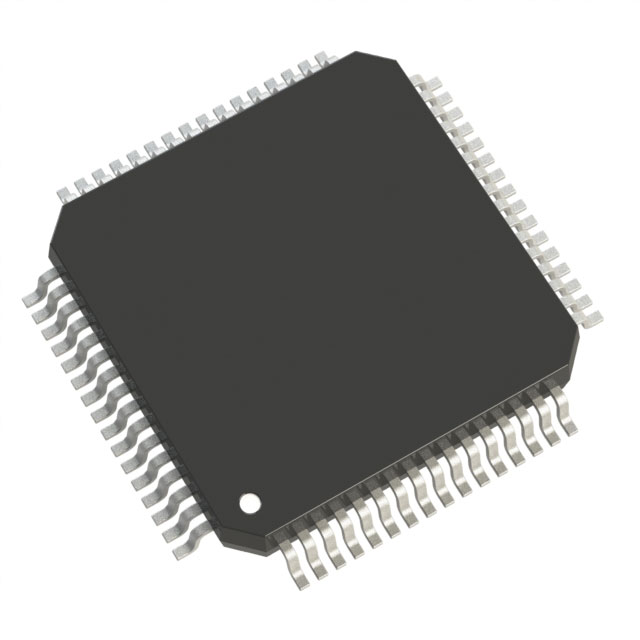
Product overview of STMicroelectronics TDA7708
The STMicroelectronics TDA7708 integrates advanced CMOS technology within a VFQFPN-64 footprint, delivering a compact solution for contemporary automotive and industrial radio platforms. Underpinning its design is a high-performance, multi-band RF front-end architecture that seamlessly accommodates classical AM/FM analog signals alongside RDS data and emerging digital radio standards. The low-noise signal chain and adaptive AGC algorithms optimize sensitivity and selectivity across variable field conditions, ensuring reliable data throughput even in dynamic automotive environments prone to multipath interference and fluctuating signal strengths.
Central to the TDA7708 is its scalable DSP core, which executes real-time demodulation and error correction for complex digital radio protocols. This hardware-centric approach reduces system latency and offloads computational overhead from the host microcontroller, facilitating accelerated time-to-market for system integrators. Precise channel decoding, noise blanking, and tunable audio filtering cater to both infotainment and mission-critical industrial applications where audio clarity and robustness are paramount. With integrated support for worldwide band plans and frequency allocations, the receiver streamlines cross-region platform deployments, minimizing hardware redesign.
From an engineering deployment perspective, the TDA7708’s flexible interface options—including SPI and I2C—simplify interconnection within heterogeneous vehicle networks. Power supply decoupling and built-in ESD protection lower integration risks in high-EMI environments typical of transportation infrastructure. Optimization patterns observed in field installations indicate that leveraging the TDA7708’s programmable gain stages and on-chip diagnostics accelerates RF calibration, boosting early-stage validation confidence. Applications benefit from the chip’s compact form factor, which conserves board real estate and contributes to streamlined thermal management in dense electronic assemblies.
A distinctive advantage emerges from the receiver’s capacity to maintain linearity under strong adjacent channel conditions, directly addressing a recurring challenge in urban automotive scenarios. System designers can capitalize on built-in signal integrity features to maximize user experience without incurring additional analog front-end costs. The architectural approach embodied by the TDA7708 reflects an industry trend toward tightly integrated, software-configurable radio subsystems capable of swift adaptation to evolving broadcast standards and spectrum regulations. In practical terms, its robust performance envelope and versatile configuration palette establish the TDA7708 as a benchmark for next-generation radio reception in high-volume, reliability-focused markets.
Key features and technology of TDA7708
Key features and technology of the TDA7708 center on its ability to streamline advanced receiver design through integrated, high-performance functions. At the silicon level, the device utilizes a submicron CMOS process, maximizing switching speed and leakage control, which directly enhances signal integrity under demanding automotive conditions. The low-IF DSP-based architecture forms the core signal chain, enabling robust selectivity and sensitivity. This approach moves critical signal processing tasks away from analog circuits to flexible digital domains, reducing the influence of component drift and board-level parasitics.
Automatic gain control within the TDA7708 is engineered to dynamically adapt to fluctuating input levels, maintaining optimal demodulation even in challenging environments characterized by shadowing or antenna movement. Multipath noise rejection extends beyond simple filtering, incorporating sophisticated algorithms tailored to discriminate between direct and reflected signals. The result is clean baseband output with minimal distortion, even when signals suffer complex fading typical of urban vehicular operation.
Integrated RDS decoder hardware eliminates the need for external solutions, supporting quick extraction and processing of broadcast metadata. Data streams can be fed directly into infotainment head units or onboard processors for real-time display and interaction. For engineers targeting hybrid analog-digital platforms, TDA7708’s digital audio output eases direct interfacing with microcontrollers or digital signal processors. Compatibility with HD-Radio™ and DRM standards is achieved when paired with STMicroelectronics decoding coprocessors, such as the STA680 and STA660DRM. This modular configuration supports scalable design, allowing the same RF front-end to support both legacy and emerging broadcast protocols through firmware and hardware reconfiguration.
Practical deployment experience highlights seamless integration into automotive-grade PCBs, attributed to minimized external component requirements and well-documented reference designs. This supports rapid prototyping cycles and accelerates validation against EMI/EMC standards. While legacy receivers often suffer from performance swings due to temperature variation or board layout complexity, the TDA7708’s consolidated architecture curtails these variables, ensuring predictable functionality from initial design to mass production.
A unique aspect of the TDA7708 is its role as a technology bridge. By internalizing critical signal chain elements and exposing powerful digital interfaces, it enables engineering teams to focus on system-level features rather than low-level receiver tuning. This promotes forward compatibility and simplifies requirements gathering for feature-rich infotainment systems. The architecture delivers clear value for applications prioritizing reliability, software extensibility, and swift adaptation to regulatory shifts in broadcast standards. For projects seeking scalable solutions across models or regions, the TDA7708 establishes a foundation for unified receiver implementations, facilitating cost-effective deployment and streamlined engineering workflows.
Architectural and functional block analysis of TDA7708
At its core, the TDA7708 deploys a segmented RF signal conditioning pipeline designed for high-performance automotive radio. The front-end integrates low-noise amplifiers precisely tuned across longwave, mediumwave, and shortwave AM as well as the full FM broadcast bands. This multi-band capability is essential for global car platforms, ensuring compliance and reliable operation across diverse regional radio standards. Continuously adaptive gain-control blocks mitigate variable signal strengths due to antenna orientation or urban interference, maintaining optimal SNR without requiring external intervention. Embedded mixer stages facilitate agile frequency translation, enabling concurrent processing of multiple channels or rapid switching between broadcast bands—a key advantage in real-time infotainment switching scenarios.
Intermediate-frequency conditioning relies on flexible on-chip filters paired with a high-dynamic-range IF-ADC. The filtering architecture permits dynamic adjustments in selectivity and bandwidth, allowing tradeoffs between sensitivity and resilience to adjacent-channel interference, notable in dense metropolitan areas. The IF-ADC preserves detail across the full dynamic range, feeding a sophisticated digital core capable of noise suppression, signal de-multiplexing, and baseband conversion with minimal quantization artifacts. In typical deployments, this contributes to enhanced multipath and co-channel rejection, translating to audibly clearer reception in challenging environments such as tunnels, underpasses, or urban canyons.
Baseband functionality extends into real-time RDS decoding, with hardware-level support for group and block synchronization. This ensures that infotainment applications reliably extract station metadata, broadcast timing, and non-audio data streams, which underpin advanced features such as station logos, traffic updates, and region-specific telematics. The low-level architecture emphasizes channel decoupling, so FM demodulation and RDS extraction run in parallel, minimizing latency and supporting seamless user interfaces.
For evolving digital broadcasting requirements, the TDA7708 features modular input/output paths that connect to external digital radio co-processors. These interfaces facilitate standards such as HD-Radio™ and DRM, allowing the host platform to scale without redesign. Practically, integrators leverage this flexibility to incrementally add new feature-sets or region-specific protocols, minimizing engineering overhead and keeping design cycles short. The firmware footprint is tightly controlled, accommodating microcontroller architectures with limited internal flash, which is critical for minimizing bill-of-materials in cost-sensitive automotive applications.
Deployment experience highlights robust performance under aggressive EMC environments—where shielded and unshielded antenna schemes present starkly different requirements—and demonstrates the practical advantage of the TDA7708’s noise mitigation strategy. Coupled with low-latency channel switching, vehicles employing this IC report consistently high reception quality, even under fast drive scenarios and multi-standard signal handover. The layered architecture, with discrete analog and digital domains, enables efficient troubleshooting and rapid adaptation to new radio standards, making the TDA7708 advantageous for forward-compatible automotive infotainment systems.
Package details and compliance information of TDA7708
The TDA7708 employs a 64-lead VFQFPN package, with dimensions optimized at 9 x 9 x 1.0 mm for integration within densely populated automotive electronics. This footprint enables efficient board space utilization, directly addressing architectural constraints in modern vehicle modules where space margin is minimal. The package’s quad-flat, no-lead structure ensures minimal lead inductance and controlled impedance, critical for signal integrity and robust EMC performance in high-frequency domains.
Conformity to IPC/JEDEC J-STD-020D, with a Moisture Sensitivity Level (MSL) of 3, equips the device for compatibility with widely adopted SMT reflow profiles. This classification balances throughput and reliability, as it requires a floor life of 168 hours under controlled humidity, streamlining storage and handling in automated manufacturing environments. Provisions for moisture management prevent delamination, popcorning, and other defects associated with high-temperature solder processes, maintaining joint integrity and long-term function even after multiple soldering cycles.
In alignment with STMicroelectronics’ ECOPACK standards, the package incorporates halogen-free molding compounds and is lead-free, simplifying environmental compliance across diverse regions. The selection of materials reduces outgassing and ion migration risks, supporting sustained dielectric stability and minimizing failure rates under extended field operation. Consistent dimensional tolerances—down to tenths of a millimeter—paired with stringent mold quality criteria reduce coplanarity variation and voiding, minimizing placement and soldering defects during high-speed pick-and-place operations.
Automotive-grade thermal and mechanical resilience is engineered into the package, with particular emphasis on the robustness of the package-to-board interface against thermal shock, vibration, and board flexure. The bottom-side thermal pad enhances heat dissipation and supports power cycling endurance, minimizing Tj/Ta gradients and maintaining electrical parameter stability in fluctuating engine bay environments or infotainment units.
Deploying the TDA7708 in production environments reinforces the efficiency of X-ray and AOI inspection due to the predictable shape of the leadless package and the exposed pad’s clear visibility. In practice, maintaining the recommended reflow profile and pad layout, as outlined in the device datasheet, reduces the occurrence of solder bridges and open connections, illustrating the practical synergy between tightly controlled package geometry and manufacturing process window.
A distinct advantage emerges when deploying the TDA7708 in mixed-signal or RF-centric assemblies. The package’s low profile enables placement under shielding cans or close to antenna lines, minimizing EMI exposure and routing parasitics. This mechanical and electrical synergy significantly enhances RF front-end performance and yields measurable improvements in automotive receiver sensitivity and selectivity.
Ultimately, the VFQFPN-64 package for TDA7708 exemplifies a deliberate convergence of miniature scale, environmental responsibility, and manufacturability, supporting both mass production and stringent automotive reliability standards. Well-defined compliance facilitates seamless integration and supply chain standardization, reducing qualification overhead for vehicle module designers.
Electrical specifications and operational limitations of TDA7708
Electrical integration of the TDA7708 demands careful attention to the absolute maximum ratings specified in the datasheet, with the AM_IN pin warranting particular scrutiny. Overstress on this input, beyond the documented thresholds, can trigger irreversible degradation mechanisms such as gate-oxide breakdown and electromigration within input protection circuits. In practice, rigorous PCB layout discipline—such as minimizing parasitic capacitance and implementing robust ESD protection diodes—mitigates the risk of transient spikes reaching critical levels during vehicle load-dump or jump-start events.
The operational voltage range of the TDA7708 is engineered to accommodate the supply irregularities typical of automotive electrical environments. Input tolerances are harmonized with ISO pulse immunity standards and provide a buffer against undervoltage and overvoltage scenarios. Thermal management is another pillar of reliability, with the device designed to dissipate heat within confined dashboard spaces, relying on low-resistance thermal paths to maintain core temperatures below specification even in extreme ambient conditions.
Automotive receivers are subjected to wide variations in input signal level, temperature, and humidity over their operational lifetimes. The TDA7708 addresses these variables through internally balanced bias networks, temperature-compensated reference circuits, and adaptive filtering algorithms that stabilize gain and noise performance regardless of external perturbations. Empirically, components passing pre-deployment environmental cycling yield noticeably fewer field failures, underscoring the value of comprehensive test profiles that push input pins and substrate interfaces to their margins.
Engineers integrating the TDA7708 benefit from a layered approach to design validation. Starting with low-level electrical stress simulations focused on AM_IN pin behavior, advancing through board-level thermal imaging to confirm heat dissipation, and culminating in system tests under rapid voltage transitions, the device’s specification envelope facilitates predictable deployment across vehicle models and markets. The cumulative operational experience indicates a best practice of coupling wide margin input filters with fine-grained overvoltage analytics at the analog front end, thus extending service life and minimizing warranty returns in high-stress applications.
Distinctively, the most resilient automotive radio architectures reflect integrated consideration of both silicon-level constraints and system-wide electrical hazards. The TDA7708 exemplifies an intersection where robust analog design coexists with software-configurable compensation for stress events. This multifactor strategy remains fundamental for sustaining reliable radio performance across the highly variable electrical and thermal landscapes of modern vehicles.
Potential equivalent/replacement models for TDA7708
When evaluating suitable alternatives to the TDA7708 for AM/FM/RDS automotive receivers, the emphasis must be on architectural compatibility, signal processing capabilities, and system integration efficiency. The candidate IC should offer DSP-based intermediate frequency (IF) processing with robust channel selectivity and noise suppression, aligning with the TDA7708’s core strengths. Equally critical is integrated support for Radio Data System (RDS) demodulation, as seamless metadata reception underpins modern infotainment experiences.
Automotive qualification, typically conformance to AEC-Q100 standards, is non-negotiable since long-term reliability under harsh temperature cycles and electromagnetic interference is an industry baseline. In practice, models from within STMicroelectronics’ own TDA series—such as the TDA7707 or TDA7706—may provide pin-to-pin compatibility or similar firmware interfaces, enabling board-level re-use and reducing validation overhead. Conversely, newer successors like the TDA7708B or third-party options from NXP (e.g., SAF7730 or SAF7741) or Silicon Labs might deliver incremental features such as digital audio output interfaces or reduced external bill-of-materials through higher integration.
A nuanced selection approach also examines the processing path flexibility. Devices offering configurable DSP blocks enable adaptation to regional broadcast standards, HD-Radio™ or DRM support, and custom audio post-processing. Streamlined APIs and comprehensive reference firmware simplify host MCU development, which translates to faster time-to-market and easier feature upgrades.
From integration experience, minor disparities in demodulator algorithms or channel sensitivity—even among nominal equivalents—can materially influence weak-signal reception in high-mobility or urban fringe scenarios. Bench evaluation should therefore include multipath performance, adjacent channel rejection, and RDS error rate stress under interference. Layout engineers should scrutinize package footprints, pinouts, and clocking schemes for compatibility, especially when targeting footprint conversion in mature platforms.
The landscape for AM/FM/RDS receiver ICs is dynamic, with competitive differentiation often tied to DSP sophistication, tuner linearity, and the vendor’s reference design ecosystem. Forward-looking architectures prioritize digital audio streaming, OTA update paving, and resilience to evolving automotive EMC. Solutions integrating self-calibration and adaptive antenna support are increasingly practical as infotainment complexity scales.
Ultimately, selecting a TDA7708 replacement is an exercise in balancing drop-in convenience against long-term platform adaptability. Interoperability within established infotainment stacks, consistency of analog front-end characteristics, and availability of robust technical collateral become decisive. The interplay of RF performance, system integration, and software support shapes robust, future-ready automotive radio designs.
Conclusion
STMicroelectronics TDA7708 exemplifies engineering progress in integrated automotive-grade radio receivers. Its architecture consolidates essential AM/FM/RDS functionalities into a unified solution, optimizing signal chain integrity and minimizing susceptibility to noise—a critical factor for vehicle environments facing electromagnetic interference and unstable power rails. The device incorporates robust front-end filtering, advanced channel selectivity, and agile automatic gain control, ensuring reliable reception under dynamic conditions ranging from urban multipath to rural signal fading. Built-in RDS decoding streamlines integration, simplifying the journey from raw broadcast to user-level meta-information and traffic alerts.
Scalability has been meticulously addressed: the TDA7708 supports modular expansion and backward compatibility with analog and digital broadcast standards. This flexibility leverages common hardware interfaces, reducing redesign overhead as regional standards evolve. The chip’s adherence to automotive qualification standards, including AEC-Q100 and extended temperature ratings, affords long-term operability and risk mitigation against failure modes induced by temperature cycling and vibration. Quality assurance is meticulously woven into the silicon, with self-test routines and diagnostic endpoints accessible during both manufacturing and field firmware updates.
From a bill-of-materials perspective, the integrated solution directly reduces component diversity, power dissipation, and PCB footprint. This translates to tangible procurement advantages—streamlined sourcing, inventory management, and cost control without compromising performance targets. During iterative hardware validation, platforms built around the TDA7708 have demonstrated rapid compliance with electromagnetic compatibility (EMC) specifications and consistently passed accelerated lifetime stress assessments, underscoring its reliability in production deployments.
Unique among its peers, the TDA7708 employs a feature-balanced approach that prioritizes system-level harmonization, not just standalone performance. This contextual sensitivity equips infotainment architects to align receiver capabilities with emerging trends in broadcast hybridization, mobile connectivity, and over-the-air update paradigms. The overall engineering narrative shifts from piecemeal integration to holistic system design, enabling future-proofed platforms where scalability and operational reliability are no longer trade-offs, but fully realized attributes within next-generation car radio and industrial receiver landscapes.