


 >
>


Product overview: STM32F412RGT6TR microcontroller
The STM32F412RGT6TR, anchored by the ARM Cortex-M4 core (with integrated Floating Point Unit), targets scenarios requiring a blend of computational efficiency and deterministic real-time response. The ARM Cortex-M4 architecture leverages a three-stage pipeline and Harvard design to minimize instruction fetch latency, while the FPU accelerates signal processing tasks and single-precision math, making the part well-suited for motor control, complex sensor fusion, and DSP-oriented routines.
The microcontroller contains 1 MB of embedded flash and 256 KB of SRAM, supporting multi-level firmware designs and resource-intensive algorithms. The partitioning of memory admits stable multitasking under RTOS and complex state management; tightly coupled RAM facilitates low-latency access for interrupt-driven tasks and buffering operations. Flash endurance and retention metrics align with requirements in industrial automation and medical instrumentation, where persistent configuration storage and firmware reliability are crucial.
Connectivity is engineered for high flexibility and integration: the rich peripheral portfolio includes multiple SPI, I2C, USART/UART, and advanced timers alongside a USB 2.0 OTG FS controller. The 64-pin LQFP format enables dense PCB layouts and streamlined routing, especially in systems with size and power management constraints, such as hand-held devices or low-profile modules in IoT mesh gateways. Pin multiplexing and remappable I/Os provide added layers of configurability, supporting peripheral expansion or redundancy strategies in fault-tolerant designs. The device’s clock-tree architecture, encompassing PLL-based frequency scaling, supports dynamic power-performance tuning and fine-grained control over peripheral clocks—key for optimizing active/standby cycles and thermal budgets.
Operating at up to 100 MHz, the STM32F412RGT6TR pursues high operational throughput while maintaining low active and standby power profiles. Integrated brown-out and power management features enhance reliability in battery-powered and energy-harvesting systems. Experience in high-noise environments shows the value of its programmable analog features, including fast ADCs, comparators, and DACs, which provide robust interfaces for sensors and transducers, avoiding external circuitry in many use cases and shortening development cycles for prototyping.
The device’s real-time capabilities are manifest in its nested vectored interrupt controller (NVIC) and DMA engine, both essential for minimizing deterministic response latency and maximizing throughput in concurrent process management. This facilitates application in control loops, industrial fieldbus gateways, and precision timing instruments, evident in deployments where jitter and latency are mission-critical.
Security primitives and embedded bootloader functions support secure firmware update schemes. This is particularly relevant for connected device fleets, enabling encrypted boot and seamless in-field maintenance without sacrificing productivity. The STM32 HAL and Cube ecosystem, coupled with mature CMSIS libraries, streamline both low-level driver development and rapid prototyping, contributing to reduced time-to-market and enhanced consistency across product variants.
A unique viewpoint emerges when exploiting the device’s balance of memory, DSP acceleration, and multi-protocol connectivity: it enables edge-of-network aggregation and pre-processing for distributed IoT nodes, efficiently handling local analytics before cloud relay. This capability unlocks value in predictive maintenance, context-adaptive monitoring, and on-premises real-time data synthesis—situations where latency and reliability outweigh raw processing power. The STM32F412RGT6TR thus sits at the intersection of scalability, integration, and performance, offering a robust platform for next-generation embedded applications demanding both flexibility and proven reliability.
Key features and differentiators of STM32F412RGT6TR
The STM32F412RGT6TR microcontroller exemplifies advanced integration in the STM32F4 family by embedding several mechanisms that collectively drive performance, efficiency, and connectivity. At the architectural core, dynamic efficiency is achieved through the coordination of Batch Acquisition Mode (BAM) and the Adaptive Real-Time (ART) accelerator. BAM enables efficient peripheral access with minimal CPU intervention, substantially reducing data latency during sensor data harvesting or real-time monitoring. Concurrently, ART accelerates flash memory fetches by intelligently prefetching and buffering instructions, thereby minimizing wait states and sustaining high-speed execution, particularly critical in timing-sensitive control loops or digital signal processing tasks.
The timer subsystem, comprising up to 17 timer units, extends configurability well beyond conventional timebase operations. Advanced-control timers enable precise pulse-width modulation, dead-time insertion, and synchronized multi-phase motor management. This timer diversity streamlines complex multi-axis motor drives, automated measurement systems, and industrial process controllers where deterministic timing and real-time event response are foundational.
Analog performance is underscored by a high-throughput 12-bit ADC, which balances conversion speed and resolution for nuanced signal capture, supporting closed-loop motor control, environmental monitoring, and multi-channel data acquisition. Robust data integrity is maintained through the dedicated hardware CRC unit, facilitating in-line error detection. This CRC hardware is invaluable in networked embedded designs, where swift, automatic verification must secure firmware updates, configuration storage, or critical payloads without taxing application bandwidth.
A broad array of connectivity options underscores system versatility. Integrated CAN, USB OTG FS, SDIO, multiple USARTs, SPI/I²S, and I²C peripherals collectively empower the device to interface effortlessly with external sensors, storage modules, communication stacks, and legacy industrial protocols. In modular designs, seamless handshaking between these interfaces is essential, and the STM32F412RGT6TR’s internal bus architecture allows concurrent operation without resource bottlenecks, enabling real multisystem integration and concurrent data flow.
Power management techniques embedded within the device result in a standby mode current as low as 2.4 μA, complemented by rapid state transitions. This granular power control supports extended battery lifetime in portable instrumentation, remote wireless nodes, and critical monitoring endpoints where mean time between maintenance remains paramount. Experience across various deployment scenarios confirms that dynamic switching between high-performance and low-power modes significantly optimizes both responsiveness and energy budget, mitigating the trade-offs traditionally observed in power-constrained designs.
The STM32F412RGT6TR’s synergy between real-time optimization, peripheral breadth, and power scalability distinguishes it in domains demanding reliable operation, rapid event handling, and efficient resource usage. Implicitly, this device’s internal subsystem interplay—from ART and BAM to the interaction between timers and communication blocks—reflects a holistic approach, enabling designers to maximize application throughput while maintaining robustness across diverse deployment environments.
Core architecture and processing capabilities of STM32F412RGT6TR
At its core, the STM32F412RGT6TR is driven by an ARM Cortex-M4 single-core processor, engineered for real-time embedded control. Operating at frequencies up to 100 MHz, it achieves a processing efficiency of 1.25 DMIPS per MHz according to the Dhrystone 2.1 benchmark. This architectural foundation ensures a balanced trade-off between computational throughput and power consumption, targeting applications that demand both responsiveness and energy awareness.
The inclusion of a hardware Floating Point Unit (FPU) extends the MCU’s capabilities for rapid execution of arithmetic-heavy computations, eliminating the latency associated with software-based floating point emulation. In parallel, the DSP instruction set augments processing bandwidth for advanced signal manipulation tasks. Such features are especially pertinent in fields like digital filtering, spectral analysis, and vector control for motor drives, where deterministic, low-latency operations underpin system performance. The real-world impact of these enhancements becomes evident in scenarios involving high-frequency sampling where signal integrity depends on minimum-cycle execution overhead.
Critical to the STM32F412RGT6TR’s throughput is the ART (Adaptive Real-Time) accelerator, an instruction prefetch and cache mechanism that enables zero-wait-state flash execution. By decoupling bus bottlenecks, the ART unit preserves pipeline efficiency, supporting sustained execution speeds even with sequential flash memory accesses. This translates to tangible advantages in data acquisition systems and closed-loop controllers, where instruction fetch latency directly constrains loop speed and overall determinism.
System-level reliability and security are intrinsic to the architecture. The integrated Memory Protection Unit (MPU) partitions address spaces and enforces access privileges, mitigating risks of errant code execution and safeguarding critical assets. For unpredictable event generation and cryptographic protocols, the hardware True Random Number Generator (RNG) supplies entropy from physical noise sources, bypassing software pseudo-random limitations. Watchdog timers, available in multiple configurations, further reinforce supervisory control by detecting and responding to software stalls or deadlocks, making the platform robust for safety-critical deployments.
This architecture invites multidimensional design approaches. The interplay between deterministic instruction flow, flexible resource control, and peripheral integration allows developers to address time-sensitive workloads such as high-bandwidth sensing, precision actuation, and secure communications without resorting to external coprocessors. In practical deployments, leveraging the ART accelerator and hardware FPU minimizes resource contention and firmware size, enabling streamlined codebases and consistent real-time behavior. Advanced memory protection strategies and entropy generation add operational resilience—an increasingly vital asset as embedded systems bridge toward connected, autonomous domains.
The STM32F412RGT6TR exemplifies a balanced integration of compute, security, and system management, supporting the synthesis of complex, reliable, and responsive embedded solutions. Its architecture underscores an important design insight: real-time processing efficacy emerges not from clock speed alone but from the synergistic optimization of core pipelines, memory hierarchies, and monitoring subsystems.
On-chip memory resources of STM32F412RGT6TR
The STM32F412RGT6TR integrates substantial on-chip memory, forming the backbone for robust embedded application deployment. Its 1 MB embedded flash memory provides sufficient space for sophisticated firmware architectures, including layered bootloaders and feature-rich application stacks. This generous flash capacity facilitates reliable OTA updating mechanisms by supporting dual firmware images and rollback protocols, ensuring resilience against interrupted or failed updates. Common strategies leverage memory partitions to simultaneously host factory firmware and user application, minimizing system downtime during maintenance.
The 256 KB SRAM provision elevates real-time performance by accommodating sizeable working buffers, computationally intensive algorithms, and the demands of preemptive RTOS kernels. This capacity is particularly valuable when executing complex digital signal processing routines, handling large communication payloads, or running resource-hungry middleware like file systems and network stacks. Memory allocation schemes typically distribute SRAM to segregate time-critical tasks, stack regions, and DMA-accessible buffers, enhancing both determinism and data integrity. Extensive SRAM also greatly reduces reliance on slower external memory for intermediate data storage, accelerating high-frequency context switches or multi-threaded workloads.
The memory subsystem design is further reinforced by flexible remapping capabilities. Developers can optimize the boot process by relocating interrupt vector tables or running critical routines from SRAM, taking advantage of its bandwidth and reduced latency. This flexibility mitigates the performance limitations traditionally associated with flash memory execution, enabling rapid response in latency-sensitive control loops or when supporting high-speed peripherals.
The FSMC interface enables seamless expansion with external static memories such as SRAM, PSRAM, or NOR flash. This feature is essential when on-chip resources become constrained by demanding use-cases. For instance, graphical user interfaces (GUI) benefit from external frame buffers, enabling smooth rendering and advanced HMI elements without compromising core computation. Large-scale data logging and local databases are efficiently offloaded to external memory, adhering to retention and endurance constraints. Practical system designs often map external memory transparently, allowing unified address spaces and simplified driver implementation.
A layered approach to memory utilization typically emerges in mature projects: critical real-time code and immediately accessed variables reside in on-chip regions, while bulk data, archives, or extensive UI assets are placed externally. Security features such as flash memory readout protection complement the storage architecture, protecting intellectual property and preventing unauthorized firmware extraction.
The overall memory architecture offered by the STM32F412RGT6TR demonstrates a balance between capacity, speed, and flexibility, directly addressing the needs of secure updating, responsive computation, and scalable data access in modern embedded engineering. This configuration supports a broad spectrum of application scenarios—ranging from IoT devices requiring reliable field upgrading, to interactive instrumentation where deterministic display and processing performance are paramount.
Peripheral interfaces and communication capabilities of STM32F412RGT6TR
Peripheral interfaces on the STM32F412RGT6TR offer a dense and versatile set of hardware resources engineered for complex embedded applications. The architecture incorporates up to 17 dedicated communication interfaces, each optimized for reliability and throughput in demanding real-time environments.
Fundamental to the microcontroller’s communication versatility are four I²C controllers, each supporting SMBus and PMBus protocols. These controllers ensure seamless integration with power management devices and expand compatibility across a spectrum of sensor modules and intelligent peripherals. Implementation of hardware support for clock stretching and multi-master arbitration increases reliability in noisy or multi-drop system environments.
The inclusion of four USART modules, supplemented by advanced modem controls, LIN bus support, and IrDA compatibility, allows for robust asynchronous communication. These features facilitate direct interfacing with legacy serial equipment, peer-to-peer or networked UART nodes, as well as long-distance wired communication via standardized industrial protocols. Real-world integration often leverages USART wakeup features and noise filtering, streamlining low-power operation in battery-operated systems without latency penalties.
SPI and I²S interfaces—up to five in total—bring both versatility and high data rate capabilities. The native full-duplex operation and support for both master and slave modes enable direct connection to a range of digital sensors, codecs, and memory modules. When interfacing with high-speed data streams, the hardware-managed NSS handling and dedicated DMA requests minimize core loading and ensure data integrity during concurrent transfers. The integrated Quad-SPI further extends external memory bandwidth, essential for fast firmware updates, large asset streaming (such as graphics), and executing program code in place (XIP) from external serial Flash or PSRAM.
CAN 2.0B active controller forms the backbone of robust industrial networking, reliably supporting deterministic, real-time communication models. Flexible message filters and error handling mechanisms are foundational for applications where predictability and immediate fault detection are mandatory, such as in automotive nodes or factory automation. Fine-tuning CAN timing parameters based on network topology and cable characteristics has proven critical for error-free operation in varied deployments.
USB 2.0 OTG full-speed controller transforms the MCU into a multi-role node within a broader ecosystem. Operation as host, device, or OTG peripheral assures compatibility with mass storage devices, HID controllers, and proprietary USB accessory protocols, expanding design possibilities. Enumerating composite devices or managing class-specific endpoints is efficiently handled with integrated hardware endpoints, freeing processing cycles for the application layer.
SDIO support for SD, MMC, and eMMC opens scalable storage options ideal for data logging, field firmware upgrades, and multimedia applications. The hardware block’s ability to perform high-speed, burst-oriented transfers directly to memory buffers maximizes throughput, which is particularly beneficial in file system-heavy scenarios where latency is critical.
Advanced sensor interfacing is addressed through the DFSDM peripheral—a dedicated digital filter block for sigma-delta modulators. This enables high-fidelity acquisition from multi-channel audio devices or precision delta-sigma sensors, with real-time digital filtering and decimation handled by configurable FIR and Sinc filters within the peripheral. The result is a tightly integrated acquisition path with minimal software overhead, especially suitable for multi-axis measurement systems.
The flexible GPIO matrix delivers up to 50 I/O lines, with the extended package supporting up to 109 pins, including numerous 5V-tolerant lines. This architecture accommodates both high-density signal mapping and robust interfacing with 5V legacy systems. In graphical and HMI applications, the embedded LCD parallel interface directly streams framebuffer data to displays, removing the need for external controllers and reducing system BOM.
Leveraging these serial and parallel interfaces, the STM32F412RGT6TR demonstrates optimal fit for data-concentrator roles, energy management nodes, and portable instruments. Real-world projects benefit from hardware-managed interface handshake, signal isolation strategies, and concurrent DMA-driven transfers, leading to designs with minimized CPU overhead, enhanced noise immunity, and deterministic timing. In embedded system design, careful pin allocation and peripheral resource mapping enable dense system functionality, distinguishing this MCU as a foundation for modern, interface-rich applications.
Power management, low-power modes, and electrical characteristics of STM32F412RGT6TR
Power management strategies in STM32F412RGT6TR are engineered for scenarios where minimizing energy consumption is crucial without compromising responsiveness. The microcontroller's architecture integrates several distinct low-power operating modes, each tailored for specific use cases: 'run' for full performance, 'stop' for rapid context retention, 'standby' for deep sleep with memory content preserved, and 'deep power-down' for the lowest quiescent current. Mode transitions are optimized to reduce latency, with standby current as low as 2.4 µA, which can be critical in battery-operated remote sensors, medical wearables, or always-on monitoring nodes. Selection of these modes and their parameters often depends on the application’s power budget and latency tolerance, requiring thorough profiling during design and validation phases.
At the core of power efficiency is supply voltage flexibility. Operating reliably within 1.7V to 3.6V enables direct integration with modern low-voltage supplies and energy harvesting circuits. Supply supervision mechanisms—POR (Power-On Reset), PDR (Power-Down Reset), and BOR (Brown-Out Reset)—guard against undervoltage events, enhancing operational resilience in noisy or unstable electrical environments. Experience indicates that properly configuring supply monitoring thresholds has a direct impact on long-term field reliability, especially for industrial deployments exposed to variable mains power or battery sources prone to discharge transients.
Clock subsystem versatility further bolsters both energy efficiency and timing precision. Multiple internal and external oscillators are supported, permitting dynamic balance between low-frequency operation for energy savings and high-frequency bursts for computation-intensive workloads. Factory-trimmed RC oscillators reduce the requirement for external calibration, accelerating development and reducing BOM complexity. This feature is especially valuable in production when device-to-device timing consistency is mandatory for synchronized data acquisition or time-sensitive control loops.
Wake-up mechanisms exhibit sub-millisecond response times, which is advantageous in event-driven applications where prompt state restoration is necessary after quiescent periods. Robust internal reset routines recover from edge conditions without manual intervention, minimizing maintenance cycles and system downtime. In field deployments, these automated recovery actions often resonate as a silent guarantee for mission-critical applications.
The device’s adherence to RoHS3, REACH, and ECOPACK2 standards, along with an MSL 3 moisture rating (168 hours), is directly relevant for compliant, environmentally sensitive manufacturing processes. SMT storage and reflow protocols must consider moisture-related risks, especially in high-throughput assembly lines. Experience with MSL 3-compliant handling reveals the necessity of strictly observed pre-bake cycles and sealed packaging to prevent latent failures.
Taken together, the STM32F412RGT6TR demonstrates a nuanced balance of low-power operation, hardware reliability, and compliance. Integration into energy-critical platforms is facilitated by these layered mechanisms, subtle yet significant in reducing field failure rates and extending operational lifespans while meeting stringent manufacturing standards—a combination that positions the device distinctly for sustainable embedded systems engineering.
Packaging, thermal considerations, and environmental compliance of STM32F412RGT6TR
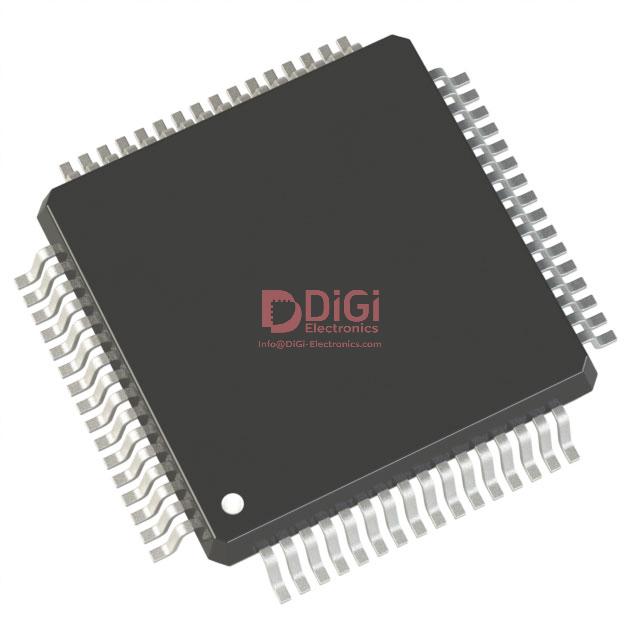
STM32F412RGT6TR leverages a 64-pin Low-Profile Quad Flat Package (LQFP) with a 10 × 10 mm footprint, balancing high I/O density with straightforward surface-mount compatibility. The mechanical design emphasizes coplanarity and lead integrity, critical for automated pick-and-place processes and minimizing soldering defects in reflow assembly lines. The LQFP format supports efficient heat transfer from the die to the PCB through the exposed leads, but thermal modeling must account for package thermal resistance (θJA and θJC) to prevent hot spots in high-power applications. Careful placement of thermal vias beneath the package, coupled with optimized copper pour areas on inner and bottom layers, substantially enhances heat dissipation, especially in densely populated control boards.
The device’s industrial temperature range (-40°C to +85°C) accommodates deployment in control, instrumentation, and edge computing environments characterized by wide ambient variations. Stability over temperature is bolstered by the package’s ability to limit mechanical stress during thermal cycling, reducing solder joint fatigue and mitigating risks of intermittent connectivity. Board designers typically integrate thermal simulation during the schematic phase, ensuring compliance with derating guidelines under worst-case thermal loads.
Electromagnetic compatibility (EMC) and electrostatic discharge (ESD) resilience are embedded at the package and silicon levels. The LQFP lead frame, along with perimeter I/O arrangement, streamlines ground referencing and signal return paths, minimizing emissions and susceptibility to transients. Standardized pinout simplifies adherence to EMC layout best practices, enabling compact ground fills and effective shielding strategies. The clear laser marking not only facilitates traceability across supply chain nodes but also aids in rapid optical inspection routines, enhancing quality assurance throughput.
In global manufacturing contexts, STM32F412RGT6TR’s adherence to RoHS 3 and ECOPACK2 standards eliminates hazardous substances like lead, cadmium, and brominated flame retardants. The commitment to green process chemistry ensures the device aligns with evolving OEM and regulatory mandates for low-toxicity electronics—a decisive advantage when scaling up production in automotive, medical, or industrial automation sectors. The eco-compliant packaging also reduces potential bottlenecks in cross-border logistics, streamlining homologation for multi-region product launches.
In practice, layout engineers have observed that consistent pad sizing and solder mask definition around the LQFP significantly improve solder joint reliability, especially under vibration and thermal cycling typical of industrial-grade deployments. Early-stage thermal profiling and EMC pre-compliance scanning, integrated into the design validation workflow, repeatedly decrease iteration cycles during board bring-up. The nuanced balance of packaging, thermal strategy, and environmental compliance embedded in the STM32F412RGT6TR package equips hardware platforms with robust field performance and regulatory resilience, simplifying the pathway toward high-reliability embedded design.
Typical application scenarios for STM32F412RGT6TR
The STM32F412RGT6TR, a member of STMicroelectronics’ mainstream ARM Cortex-M4F microcontroller series, offers a compelling feature set that addresses diverse embedded application demands. At the silicon level, its core architecture integrates a digital signal processing block and floating-point unit, providing efficient execution of complex control algorithms essential for motor control, automation, and real-time feedback mechanisms. The embedded flash and RAM densities support robust firmware implementations, while the integrated hardware blocks—such as multiple advanced timers, capacitive sensing channels, and high-speed communication interfaces (e.g., SPI, I2C, USART, USB OTG FS)—afford flexible configuration options for developers seeking both deterministic performance and peripheral versatility.
In industrial automation, the STM32F412RGT6TR fits seamlessly into programmable logic controllers and process instrumentation platforms. High-resolution timer peripherals enable precise pulse-width modulation for multi-phase motor drives and valve control, while the fast ADCs ensure accurate sensor acquisition in noisy environments. The device's hardware-backed CRC and memory protection features enhance reliability, satisfying safety and longevity requirements for manufacturing equipment and high-uptime field operations. Network stack support and low-power sleep states facilitate deployment in distributed nodes, where wired or wireless connectivity must coexist with energy-efficient duty cycles.
Consumer and medical embedded applications benefit from the device’s low power consumption modes and scalable analog front-end. Its hardware crypto and tamper detection offer added layers of security for patient monitoring systems and compact diagnostic tools. Integration of graphical LCD controllers and camera interfaces enables responsive, visually rich user interface designs critical for next-generation printers, video intercom systems, and smart appliances. Implementation often combines Direct Memory Access (DMA) support with Systick timers to maintain real-time UI responsiveness while offloading communication and sensor polling, minimizing processor intervention.
In connected IoT and wearable electronics, flexible clock management and dynamic voltage scaling allow designers to optimize quiescent and active power profiles. The microcontroller’s multiprotocol communication capabilities support application scenarios such as multi-sensor hubs and gateway nodes, where SPI and I2C buses aggregate data streams and interface with cloud-connected modules. Application firmware frequently utilizes the Cortex-M4F’s DSP instructions for on-node sensor fusion, analytics, or predictive maintenance calculations, enabling robust edge computing without overtaxing bandwidth or increasing system latency.
Practical design integration consistently demonstrates that the STM32F412RGT6TR’s peripheral richness and memory capacity enable single-chip realization of feature-complete applications, reducing bill of material complexity and board size. The deterministic interrupt structure and flexible remapping permit streamlined board layouts, while the ecosystem—encompassing STM32Cube tools, middleware libraries, and extensive hardware abstraction support—accelerates both prototyping and certification processes. Across industrial and consumer domains, the device’s balance of compute density, analog integration, and connectivity ensures adaptability, future-proofing designs as system requirements and user expectations evolve.
Potential equivalent/replacement models for STM32F412RGT6TR
When assessing replacement microcontrollers for the STM32F412RGT6TR, the foundational criteria revolve around device architecture, peripheral integration, and compatibility with the target hardware environment. The STM32F412xG and STM32F412xE series maintain close architectural alignment, sharing an ARM Cortex-M4 core, identical instruction sets, and comparable memory architectures. Variants such as STM32F412RG, STM32F412CG, and STM32F412ZE primarily diverge in flash capacity, RAM sizing, and packaging, introducing flexibility for matching diverse PCB layouts and cost envelopes.
A systematic equivalence analysis requires detailed comparison of pin multiplexing, peripheral count, and supported interface standards. Subtle distinctions often emerge at the level of I/O pin availability or hidden differences in power domains and oscillator options. For engineers targeting direct footprint replacement, the STM32F412RG typically presents the closest match in terms of package and functional parity, minimizing board rework and simplifying firmware porting. In contrast, shifts to models like STM32F412CG or STM32F412ZE necessitate careful evaluation of altered pin pitch and package outlines, as even small discrepancies can trigger broad system design adjustments.
Expanding consideration to closely related STM32F4 series devices—such as the STM32F405 or STM32F407—unlocks broader sourcing options and may mitigate supply chain volatility. These controllers implement the same ARM Cortex-M4 core and maintain a high degree of register-level compatibility. However, differences in the presence of advanced peripherals (e.g., cryptographic accelerators, audio-class I2S features) and variable memory configurations mean not every peripheral or bootrom path transfers seamlessly. Pin mapping diverges as the package transitions, calling for precise cross-referencing between candidate MCUs’ datasheets and existing hardware design documents.
In application-specific contexts, peripheral flexibility and memory scalability drive the replacement choice. For compute-bound tasks or designs leveraging DSP extensions, ensuring clock system congruence and SRAM allocation are decisive factors. Peripheral-critical systems, such as those dependent on multiple SPI or UART ports, demand scrutiny at the alternate function assignment level—overlooking such details has downstream impacts on software initialization and hardware routing. Integrating direct observations from firmware migration projects reveals that overlooked changes in oscillator startup behavior or subtle variations in analog performance can introduce elusive bugs; thus, comprehensive validation and test coverage must be factored into project timelines.
An often underestimated selection driver lies in software ecosystem continuity. While STM32F4 derivatives largely preserve software and middleware support via STM32Cube and CMSIS, edge-case differences—such as bootloader presence or part-specific errata—require explicit vetting, particularly where in-field firmware updates or advanced debug infrastructures are involved.
Ultimately, the pathway to an optimal replacement demands not just a specification-by-specification match but a nuanced analysis of embedded system constraints, unforeseen board layout consequences, and long-term maintainability. Attentive investigation at the intersection of hardware dependencies and software portability consistently outperforms naïve, datasheet-only equivalency checks. Recognizing the deep interdependence of MCU model selection with the total project lifecycle enables informed, robust decisions that minimize redesign risk and facilitate deployment continuity.
Conclusion
Careful selection of the STM32F412RGT6TR microcontroller begins with dissecting its architectural strengths. Built on the ARM Cortex-M4 core, it integrates a robust DSP instruction set and floating-point unit, providing deterministic execution even under demanding algorithmic loads. This capability underpins its consistent real-time performance, critical for motor control, signal processing, and data acquisition tasks where timing determinism is non-negotiable. Independent watchdogs, memory protection units, and a suite of cryptographic hardware accelerators establish a hardware-rooted security baseline that satisfies requirements in domains with heightened security and safety expectations.
Memory architecture design prioritizes both capacity and throughput. With up to 1 MB of Flash and 256 KB SRAM, coupled with advanced DMA controllers, the STM32F412RGT6TR supports high data throughput without CPU bottlenecks. This is particularly advantageous in applications implementing graphical interfaces, real-time connectivity, or on-the-fly firmware updates. Engineers have found that tailoring memory allocation through linker scripts and leveraging dual-bank Flash yield improved robustness during software rollouts, especially in mission-critical environments.
The device’s extensive peripheral set—encompassing high-speed USB OTG, SDIO, multiple USARTs, and high-resolution timers—delivers notable versatility within a reduced PCB footprint. Attention to power segmentation strategies and dynamic clock gating mechanisms further elevates efficiency, enabling selective activation of subcomponents and aggressive sleep modes. In smart sensing and portable instrumentation projects, exploiting analog features such as the precision ADCs and operational amplifiers enables direct interface to analog front ends, minimizing component count and PCB complexity.
Migrating to or scaling within the STM32F4 family is streamlined due to the consistent core architecture and peripheral register layouts. Pin compatibility and firmware portability reduce integration risks when switching between SKUs to address evolving throughput or cost targets. In practice, effective risk mitigation involves initial cross-referencing of STM32F412RGT6TR pinouts and electrical specs with adjacent STM32F4 variants, thus facilitating agile responses to shifts in production availability or market demands.
One critical insight emerges from successful deployment cycles: the intersection of hardware selection and middleware stack tuning is pivotal. Performance headroom is maximized not only by raw MCU specification, but also by aligning CMSIS-based drivers and real-time operating systems to the device’s unique features—such as overlapping DMA and computation or exploiting security enclaves for credential handling. Within IoT gateway applications and industrial control nodes, such a tailored approach enables long-term product scalability and lifecycle stability.
Integrating the STM32F412RGT6TR into next-generation embedded designs thus demands a holistic view—layering low-level hardware proficiency with system-oriented architectural choices. Through granular requirement decomposition and strategic utilization of the STM32 ecosystem, solutions achieve a synthesis of performance, connectivity, security, and supply reliability demanded by modern, high-mix embedded markets.


