 >
>


Product overview: STM32F412RGT6 microcontroller
The STM32F412RGT6 positions itself as a central element of the STM32F4 family, leveraging the ARM Cortex-M4 core with hardware floating-point for efficient signal processing tasks and advanced embedded control. At its foundation, the device’s architecture prioritizes real-time responsiveness, featuring a deterministic memory-access scheme and fast interrupt handling. This underpins precise timing critical for control loops, communication stacks, and sensor fusion algorithms.
Resource allocation within the STM32F412RGT6—specifically 1 MB flash and 256 KB RAM—enables sophisticated firmware designs that integrate multiple protocol stacks, runtime firmware upgrades, and layered security features. Developers frequently utilize this memory headroom to implement modular code bases that facilitate maintenance and scalability. The microcontroller's embedded memory protection units and flexible clock configuration allow safe multi-context execution and runtime frequency scaling, optimizing power efficiency without compromising throughput.
Peripheral integration is extensive, including high-speed SPI, I2C, USART, SDIO, and advanced timer blocks. The 12-bit ADC and DAC modules provide analog interfaces for measurement and actuation, supporting precision requirements typical of industrial and medical devices. Engineers often exploit the dual DMA controllers to offload memory transfers and reduce CPU load, maximizing performance in data acquisition and real-time communication scenarios. The low-power modes, accessible via granular control registers, suit applications where operational energy constraints dominate design decisions, such as battery-powered instrumentation.
Connectivity extends to USB OTG, making the STM32F412RGT6 a frequent choice for devices requiring field programmability or robust external data exchange. Its support for cryptographic acceleration, together with true random number generators, enables secure connectivity layers that conform to evolving standards for IoT endpoints and gateways. The 64-LQFP package achieves a balance between board space efficiency and ease of assembly, facilitating compact PCB designs compatible with automated manufacturing processes.
In practical deployment, the microcontroller’s robust error management, including integrated brownout detection and configurable watchdog timers, contributes to fault tolerance demanded by mission-critical applications. Experienced practitioners highlight the value of flexible pin multiplexing in optimizing board layouts as requirements evolve or expand. The extensive vendor ecosystem, with mature toolchains, software libraries, and continuous silicon revisions, streamlines development, long-term support, and risk mitigation.
A notable perspective lies in leveraging the STM32F412RGT6’s blend of computational capabilities and power management features: this combination supports the adoption of increasingly complex real-time analytics and edge AI techniques within embedded constraints. Pushes towards energy-aware intelligence and secure connectivity in distributed systems benefit from the microcontroller’s design philosophy, which aligns high performance with embedded practicality. As demands for adaptive and resilient edge solutions rise, architectures built upon such devices demonstrate a compelling convergence of capability, reliability, and scalable innovation.
Key features and architecture of STM32F412RGT6
The STM32F412RGT6 is anchored on a 32-bit ARM Cortex-M4 core, integrating a single-precision floating-point unit for efficient handling of complex numerical algorithms. Operating at up to 100 MHz, the microcontroller sustains a computational output of 125 DMIPS, a benchmark well-aligned with performance-critical embedded applications. The inclusion of digital signal processing (DSP) instructions directly within the core reduces execution latency for real-time control and filtering tasks, making the device suitable for motor control, audio processing, and advanced sensor interfacing.
At the architectural level, the STM32F412RGT6 incorporates the Adaptive Real-Time (ART) Accelerator, a flash memory controller enabling zero-wait-state code execution even at peak core frequencies. This mechanism leverages instruction prefetching and speculative memory access, minimizing the bottleneck often encountered when executing high-throughput code from non-volatile memory. The result is predictable real-time performance and improved system determinism, critical for time-sensitive embedded designs.
The microcontroller adopts several proprietary features to extend its capabilities in both data acquisition and power efficiency. Batch Acquisition Mode (BAM) represents an innovative approach for energy-optimized data harvesting: by supporting burst-mode peripherals and autonomous data buffering, BAM minimizes core wakeup events, directly reducing overall power consumption. This operational paradigm proves advantageous in edge sensor nodes and battery-powered measurement systems where minimizing energy draw is paramount.
Power management is further refined through distinct run, stop, and standby modes, supplemented by fast context-switching and selective peripheral gating. This multi-tiered scheme allows for granular energy allocation based on application state, ensuring that background acquisition or peripheral polling proceeds with minimal system overhead. Practical deployment confirms that careful engagement of these modes, combined with peripheral-centric wakeup strategies, can extend operational lifetimes in resource-constrained systems by a significant margin.
A closer examination of these mechanisms reveals a synergy between hardware acceleration and low-power operation. For instance, leveraging DSP extensions in tandem with ART Accelerator functionality allows autonomous, high-speed data processing with negligible flash access delays. The resultant architecture is thus positioned to support complex signal characterization or feature extraction, all while maintaining stringent power budgets.
Deployment considerations recommend early-stage architectural partitioning—allocating real-time tasks to hardware-accelerated blocks and using Batch Acquisition Mode where sustained, low-duty-cycle measurement is required. Such design patterns have been shown to simplify firmware complexity and yield robust, field-upgradeable systems. There is significant value in the STM32F412RGT6’s convergence of high compute density, advanced memory management, and power-aware peripheral orchestration—a unique intersection catering to both high-performance and energy-sensitive market segments, setting a versatile foundation for next-generation embedded solutions.
Integrated peripherals and connectivity options in STM32F412RGT6
Integrated peripherals and connectivity options in the STM32F412RGT6 represent a meticulously engineered blend of functional density and interface versatility, enabling robust system design. At the foundational level, the device incorporates a set of 17 timers comprising general-purpose, advanced-control, basic, and watchdog types. This granular segmentation allows for precise temporal management across multiple domains: advanced-control timers facilitate complex PWM schemes and multi-phase motor drives, general-purpose timers support event timestamping and periodic signaling, while watchdog timers underpin system resilience and reliability strategies. In motion control and synchronized multi-axis robotics, such diverse timing resources enable tight closed-loop control and interruption-free actuation.
The communication subsystem is architected for parallel multi-protocol operation, reducing software overhead and maximizing configuration flexibility. Four fully-featured I2C controllers with SMBus and PMBus support simplify integration with modern power management and environmental sensors, allowing low-latency polling and robust fault signaling in distributed architectures. The availability of four USARTs, enhanced with ISO 7816 for smartcard, LIN for automotive networking, IrDA for contactless communication, and hardware modem controls, accelerates protocol implementation and device interoperability. The microcontroller's five SPI/I2S interfaces permit concurrent connection of digital audio codecs, EEPROMs, and high-bandwidth sensors, augmented by native I2S capabilities empowering direct stereo data exchange and low-jitter audio bus design. SDIO and Quad-SPI interfaces address the need for scalable storage; SDIO links with SD/MMC/eMMC cards enhance embedded logging and portable applications, while Quad-SPI interfaces enable code execution-in-place and rapid flash access for graphics processing or real-time firmware updates.
For networking and distributed embedded systems, dual CAN 2.0B controllers support deterministic real-time messaging and fail-safe, multi-node communication, especially relevant in automotive and industrial automation contexts. USB OTG FS with integrated PHY allows seamless device/host transitions and direct peripheral attachment, thus facilitating firmware updates, device provisioning, or human-machine interface deployment without external transceivers.
High-throughput sensor integration is streamlined by the integrated 12-bit ADC, delivering up to 2.4 MSPS over 16 multiplexed channels. This capability underpins responsive analog acquisition, essential for advanced control loops or environmental monitoring at rapid sampling rates. Peripheral-to-memory and memory-to-memory data routes are handled by a capable DMA controller offering 16 independent streams; this architecture offloads repetitive data transfers from the CPU, allowing deterministic high-speed I/O with minimal latency. Practical experience shows that judicious allocation of DMA streams—especially for ADC, USART, and SPI interfaces—can dramatically reduce interrupt load, enabling the microcontroller to sustain demanding workloads without deadline violations or data loss.
The flexible static memory controller (FSMC) expands versatility by interfacing directly to external SRAM, PSRAM, and NOR Flash. This functionality supports memory-mapped displays, large buffer management, and application-specific expansion cards, which is vital in measurement equipment and custom data acquisition boards. Applications benefitting from direct graphics framebuffer access or large lookup tables realize substantial performance improvements via FSMC-enabled external memory.
In the signal processing domain, integrated digital audio capabilities such as I2S and digital filters for sigma-delta modulators (DFSDM) unlock high-fidelity, low-latency audio pipelines. This is pivotal in voice-controlled appliances or audio streaming solutions where precise filtering and noise tolerance are mandatory. Implementing soft decimation and flexible channel assignment within DFSDM also addresses challenges in multi-channel microphone arrays, offering hardware-level acceleration for sound localization and noise suppression algorithms.
A core insight is that the STM32F412RGT6 achieves a balanced synthesis of high integration and application-driven peripheral tailoring. Its architecture rewards designs that leverage concurrent, hardware-managed transactions, thereby reducing software complexity and increasing deterministic behavior. Drawing from direct integration scenarios, combining DMA-driven ADC sampling with real-time USART data framing and fault-tolerant CAN communication enables the construction of resilient, scalable nodes for industrial or consumer devices. Ultimately, the microcontroller’s peripheral suite is not just comprehensive but engineered for simultaneity and mutual reinforcement, providing a compelling platform for sophisticated, multi-interface embedded designs.
Memory, performance, and power management in STM32F412RGT6
The STM32F412RGT6 offers a robust memory architecture designed to handle demanding embedded workloads. With up to 1 MB of embedded flash and 256 KB of SRAM, the device accommodates intricate firmware designs, real-time operating system integration, and extensive data buffers. The flash is augmented by the ART Accelerator, which enables zero-wait-state execution at high system frequencies. By minimizing latency between the core and nonvolatile memory, the flash subsystem sustains deterministic code fetch rates—a key enabler for tight control loops and fast interrupt response in industrial or signal-processing applications.
System integrity benefits greatly from the integrated Memory Protection Unit (MPU). Fine-grained region delineation and programmable access policies shield critical memory sectors from errant or malicious code, reducing prospects of data corruption or privilege escalation. In firmware designs with task isolation or bootloader-update mechanisms, leveraging the MPU mitigates several classes of runtime failures through clear architectural separation, elevating both stability and security. Balancing memory region granularity with MPU table utilization becomes a practical consideration as application complexity scales.
Efficient power management in the STM32F412RGT6 is rooted in the device’s wide supply voltage range of 1.7 V to 3.6 V, catering to modern, low-voltage system designs without sacrificing interface compatibility. The microcontroller supports multiple low-power operating modes, with standby current as low as 2.4 μA. These features become critical in long-lifetime battery-powered systems such as remote sensors or wearable devices, where frequent transitions between run, sleep, and deep sleep states balance application responsiveness against energy footprint. In practice, leveraging clock gating at the peripheral and core level, along with SRAM retention or selective shutdown, optimizes runtime power consumption while maintaining wake-up latency within design targets.
On-chip voltage supervision is comprehensively addressed with integrated Power-On Reset (POR), Power-Down Reset (PDR), Programmable Voltage Detector (PVD), and Brown-Out Reset (BOR) circuits. These serve as foundational elements safeguarding system startup and operation under adverse voltage conditions. Experience confirms that fine-tuning PVD thresholds according to the system’s supply margins improves fault resilience, particularly in environments prone to transient dips or brownouts. System designers routinely configure these supervisors to align with the specific characteristics of energy sources—whether regulated Li-ion packs or coin cells—ensuring predictable recovery and minimizing erratic behavior at voltage thresholds.
Clock management subsystems blend versatility and precision with several internal and external oscillator options. The main clock tree supports scalable frequency domains via internal RC oscillators, external crystal drivers spanning 4–26 MHz, and real-time clock (RTC) operation through a precise 32 kHz crystal. The inclusion of Phase-Locked Loops (PLLs) allows dynamic frequency synthesis, letting engineers tailor the processing pipeline for either performance or economy. Application profiling often reveals substantial gains in both energy and computation by dynamically switching clock sources or adjusting PLL multipliers based on workload intensity. For example, a data logger configured to sample sensors at irregular intervals may operate most of the time in low-frequency, low-power modes, only ramping up the system clock for burst communications or DSP processing.
A distinctive advantage emerges in the careful coordination between memory, power, and clock subsystems. The STM32F412RGT6’s architecture permits fine-tuned tradeoffs: designers can optimize for throughput with ART-enabled flash execution and high-speed clocks, or prioritize autonomy by favoring low-power states and SRAM retention. Effective project outcomes stem from early, model-guided design choices that align these parameters to the demands of target scenarios, whether in high-reliability control equipment or ultra-low-power field deployments. Through deliberate use of these integrated capabilities, application robustness and energy efficiency can be simultaneously advanced.
Package variants and environmental compliance of STM32F412RGT6
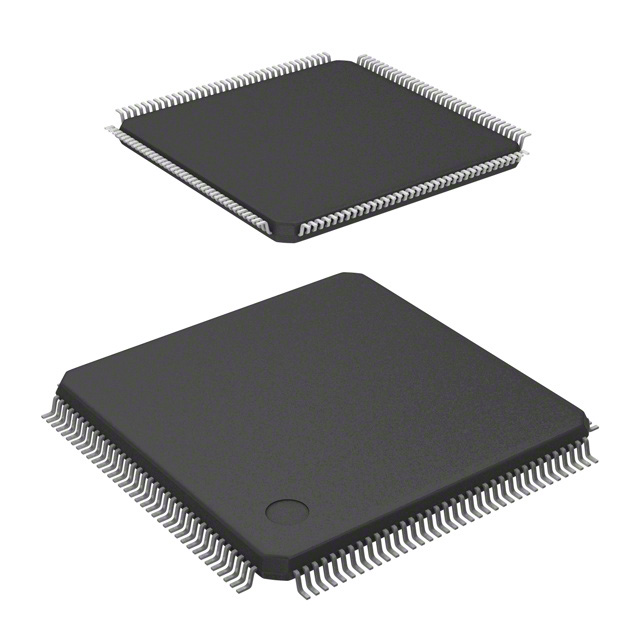
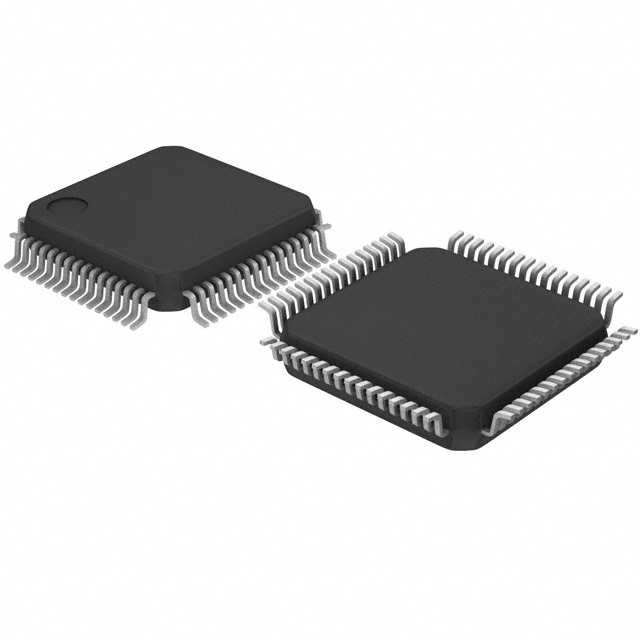
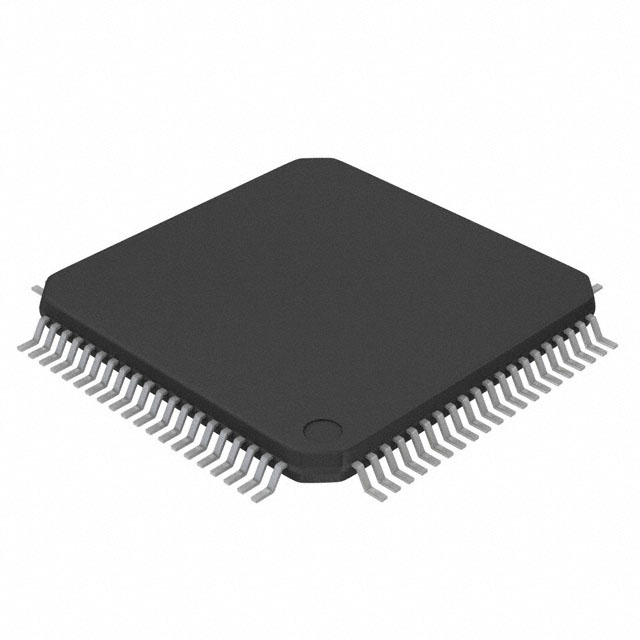
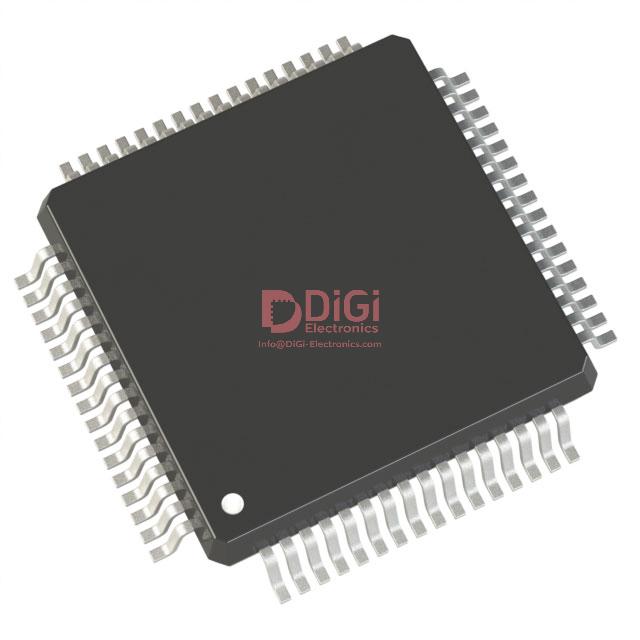
The STM32F412RGT6 microcontroller utilizes a 64-pin Low-Profile Quad Flat Package (LQFP) with a 10 x 10 mm footprint, optimizing space for densely populated PCBs while maintaining excellent solderability. The selected package supports efficient surface-mount assembly, streamlining integration in automated manufacturing lines. This configuration yields up to 50 general-purpose I/Os, allowing flexible pin assignment through multiplexed alternate functions and offering enhanced design versatility. The majority of these pins are 5V tolerant, broadening compatibility with mixed-voltage peripheral circuits and legacy interfaces, thus minimizing the need for external level-shifting hardware.
From a compliance perspective, the STM32F412RGT6 addresses multiple environmental directives critical to global product deployment. Full RoHS 3 conformity ensures exclusion of hazardous substances, while REACH compliance verifies minimal use of concerning chemicals across the component's lifecycle. These credentials expedite qualification in worldwide regulatory audits, eliminating administrative bottlenecks often encountered in export-oriented projects. Equally pertinent is the device’s Moisture Sensitivity Level (MSL) 3 rating, which prescribes a safe exposure window of 168 hours prior to IR reflow soldering under controlled humidity. This precaution mitigates risks of internal delamination or popcorning, especially in high-reliability assemblies. Adherence to MSL management best practices—such as vacuum-sealed storage and adherence to bake-out procedures when moisture exposure limits are exceeded—proves vital in maintaining yield and field robustness.
Additionally, all STM32F412 packages, including the RGT6 variant, feature ECOPACK2 certification, which confirms that the device construction supports lead-free processing and reduced environmental impact during manufacturing and disposal phases. ECOPACK2 compliance aligns with the rising demand for sustainable electronics, providing manufacturers a pathway to market products that conform to eco-label requirements without extensive redesign.
Integrating the STM32F412RGT6 into product designs leverages the combined advantages of robust electrical interface flexibility and an environmentally attuned supply chain. Pragmatic experience underlines the importance of early awareness of package-level compliance—as selecting non-conforming variants can lead to costly redesigns late in the development cycle. Accounting for MSL and lead-free processability during pre-production planning consistently correlates with fewer manufacturing defects and higher first-pass yields, especially in geographically distributed production frameworks that encounter variable humidity and transportation conditions. This microcontroller’s package and compliance feature set directly addresses real-world demands for reliability and rapid global market entry, serving as an implicit framework for future-proofing embedded system deployments.
Applications and engineering considerations for STM32F412RGT6
Leveraging the STM32F412RGT6 in embedded design projects requires a nuanced understanding of its architectural strengths and their impact on diverse application scenarios. Centered on an ARM Cortex-M4 core with floating-point unit, this 32-bit microcontroller delivers a balanced trade-off between computational throughput and energy efficiency, positioning it as a highly suitable solution for control-oriented environments with real-time constraints.
The STM32F412RGT6’s high-frequency operation paired with the extensive suite of peripherals enables efficient execution of deterministic tasks in industrial control systems such as PLCs, variable-frequency drives, and circuit protection. Direct memory access (DMA) channels optimize data transfer between modules, reducing latency and offloading the CPU during high-frequency sampling—critical in applications like motor control or digital signal processing. The rich set of analog front ends, including multiple 12-bit ADCs, integrated op-amps, DACs, and comparators, provides granular measurement and actuation capabilities desired in process automation and instrumentation. When routing high-speed signals across crowded PCBs, careful attention to pin multiplexing and power domain separation minimizes signal integrity issues and cross-talk, supporting consistent field operation.
In building automation and consumer applications—alarm systems, HVAC controllers, smart intercoms—the device’s ultra-low-power sleep modes, fast wake-up capability, and dynamic voltage scaling allow for aggressive power budget optimization without sacrificing responsiveness. The flexible peripheral bus matrix and abundant I/O expandability facilitate concurrent communication with sensors, actuators, or wireless modules, essential for context-aware systems and ambient intelligence. Key design strategies include efficient use of the independent watchdog and low-power timers, which enhance system robustness against fault conditions or brownouts in complex distributed networks.
Connected medical devices and high-reliability wearables benefit from the STM32F412RGT6’s robust clock management, secure boot features, and true random number generator. The unique device ID streamlines device provisioning and traceability, critical for security-centric workflows and regulatory compliance. Integrated crypto hardware accelerates AES operations and key storage, providing a practical advantage in safeguarding sensitive health data or securing over-the-air firmware updates, with marginal impact on processing throughput.
Application as a mobile sensor hub or within IoT edge platforms leverages sensor aggregation capabilities, flexible SPI/I2C/UART interfaces, and the sophisticated event system for timely sensor fusion and local decision-making. Multi-protocol support allows seamless interfacing with BLE, ZigBee, or proprietary sub-GHz radios, while the power optimized architecture extends mission cycles in battery-powered endpoints. The broad ambient temperature range and ESD-protected I/O strengthen resilience for deployment in both controlled and harsh field conditions, translating into reduced maintenance and improved long-term TCO.
In practical terms, maximizing the potential of the STM32F412RGT6 involves tightly coupling hardware selection with firmware architecture—factoring in pin assignment constraints, unused peripheral deactivation for leakage minimization, and early-stage considerations of voltage rail sequencing to mitigate latencies on boot. Circuit layout best practices, such as ground plane segmentation beneath high-speed analog and critical digital sections, yield tangible improvements in EMC, as evidenced by smoother compliance testing cycles.
The adoption of the STM32F412RGT6 extends beyond mere functional integration; its ecosystem support (HAL/LL drivers, CubeMX configuration, rich middleware) accelerates time-to-market, but differentiation emerges from an intimate knowledge of hardware-accelerated features and a judicious mix of safety, performance, and cost priorities tailored for each application domain.
Potential equivalent/replacement models for STM32F412RGT6
Selecting equivalent or replacement microcontrollers for the STM32F412RGT6 centers on compatibility in footprint, functionality, and long-term supply assurance. Within the STM32F412 family, adjacent variants—including STM32F412CG, STM32F412RG, STM32F412VG, and STM32F412ZG—share significant pin and peripheral commonality, differing primarily in memory density and package dimensions. Choosing among these options requires attention to the precise flash and RAM requirements of the target application, as well as layout constraints in hardware design. Upgrading to a larger variant, for instance, often entails zero modifications at both schematic and firmware levels, provided the peripheral mapping remains consistent and unused I/O is managed properly.
Expanding the comparison to other STM32F4 series members, such as the STM32F411 or STM32F413, introduces further dimensions to the selection process. The STM32F411, while also Cortex-M4 based, exhibits a pared-down peripheral set and potentially reduced maximum clock frequency, positioning it as a cost-optimized drop-in for applications with modest requirements. The STM32F413, conversely, augments connectivity interfaces and cryptographic acceleration, suiting security-sensitive designs or projects anticipating interface expansion. In both cases, attention must be paid to subtle differences in ADC accuracy, timer input capture modes, and power domain options, as these details can quietly impact performance at scale. Silent pitfalls often emerge from overlooked boot configuration pins or alternate function mapping, which affect firmware portability and PCB routing.
Cross-vendor alternatives—though available from manufacturers such as NXP, Renesas, or Texas Instruments—demand rigorous architectural scrutiny. Matching the Cortex-M4 core is only the initial filter. Peripheral granularity, such as precise DMA engine behavior or clock system stability under voltage fluctuations, can diverge substantially. Migration also implicates revision of low-level drivers and peripheral initialization routines, stemming from differing register maps and initialization sequences. The supply chain landscape adds extra risk: Vendor-specific shortages or end-of-life policies can necessitate agile redesigns and buffer inventories.
In practice, successful migration strategies engage layered validation. Initially, assess functional compatibility using reference manuals and errata; model peripheral access patterns to reveal timing edge cases or signal routing conflicts. Prototype critical interfaces early, leveraging manufacturer evaluation boards to verify software stack compatibility. Make use of abstraction layers in firmware to isolate hardware changes and minimize code rewrites—a technique proven to shorten validation cycles and reduce regression errors.
A nuanced viewpoint considers not only immediate technical fit but also architectural “future-proofing.” Selectors should weigh ecosystem strength, toolchain maturity, and community knowledge base. Architectures well-supported by robust middleware and RTOS ports are inherently less risky when porting legacy designs or developing on tight schedules. In scenarios where deployment longevity is paramount, preference should be given to microcontroller lines with strong manufacturer commitment to supply continuity and thorough product documentation updates. Ultimately, a disciplined, multi-factor analysis, accompanied by targeted prototyping, forms the backbone of smooth and sustainable microcontroller substitution in embedded products.
Conclusion
The STM32F412RGT6 microcontroller integrates an ARM Cortex-M4 core supplemented by a floating-point unit and DSP instructions, positioned to efficiently execute complex signal-processing tasks and real-time control algorithms. Its on-chip memory—comprising 1 MB Flash and 256 KB RAM—creates a foundation for sophisticated program execution and large-buffer handling, crucial for data logging, firmware-over-the-air updates, and advanced state machines. The internal direct memory access (DMA) controllers and flexible clock tree architecture augment bandwidth and timing precision, streamlining peripheral interaction and reducing core CPU load under intensive I/O.
Peripheral diversity is a defining characteristic of the STM32F412RGT6. High-speed USB OTG, SPI, I2C, USART, and I2S channels enable rapid interfacing with sensors, displays, and communication modules. Integrated ADCs and DACs afford high-fidelity analog signal conversion for sensor fusion and control-loop feedback. The embedded cryptographic acceleration modules ensure hardware-level data security, allowing developers to implement authenticated bootloaders and encrypted wireless protocols with minimal performance overhead. Practical deployment in industrial data acquisition, medical instrumentation, and connected gateways has highlighted the efficiency gains possible when utilizing the microcontroller's advanced power management features, which support multiple sleep states and dynamic frequency scaling. These mechanisms extend operating lifetime in battery-constrained designs, and facilitate predictable thermal profiles in continuous-operation environments.
Design workflows benefit from the STM32F412RGT6’s robust ecosystem. The standardized LQFP package simplifies multi-layer PCB routing and offers proven resilience in vibration-prone installations. Tight integration with the STM32Cube framework accelerates prototyping, with peripheral drivers and middleware abstracting low-level configuration complexities. Real-world integration scenarios demonstrate reliable fault tolerance under noisy power conditions, and flexible bootloader support pushes the boundaries of remote device maintenance.
A unique advantage emerges from the microcontroller’s capacity for balancing peripheral concurrency and single-cycle processing latency. This equilibrium permits deterministic real-time behavior alongside asynchronous event handling, streamlining design for both time-sensitive and throughput-centric applications. Optimizing resource allocation at the register level—particularly in concurrency-heavy contexts—dramatically enhances system throughput while maintaining predictable performance. The microcontroller’s scalable architecture supports iterative expansion, promoting future-proofing as design requirements evolve.
Selecting the STM32F412RGT6 in constrained embedded systems delivers versatility without excessive silicon overhead. When engineering cost-effective solutions for high-reliability or low-power needs, its feature set and operational consistency provide clear advantages over competing platforms. This positions the device as an optimal platform for prototyping and volume deployment across diverse sectors where integration density, field-serviceability, and lifecycle management remain critical.