 >
>


Product overview: STDRIVE601 by STMicroelectronics
The STDRIVE601 from STMicroelectronics represents a tailored solution for evolving motor control and inverter architectures, integrating essential high-voltage gate-driving functionality within a compact 28-pin SO package. Designed as a triple half-bridge gate driver, it directly addresses the requirements of modern three-phase motor drives, where footprint constraints, power density, and operational reliability drive both design principles and procurement decisions.
Fundamentally, the device supports high-side and low-side driving of external N-channel power MOSFETs and IGBTs, leveraging integrated bootstrap diodes to simplify external circuitry and minimize component count. This architecture enables robust operation for DC bus voltages up to 600 V, supporting a seamless interface between logic-level PWMs and the high-voltage switching domain. The use of advanced level-shifting technology allows for efficient and rapid switching at high frequencies, reducing losses and optimizing system efficiency—critical for applications such as robotics actuators, HVAC compressors, and servo drives where thermal margins and switching noise must be tightly controlled.
Fault protection mechanisms are built into the driver, with dedicated input and output pins supporting comprehensive diagnosis and automated recovery protocols. Key protections include undervoltage lockout on both high- and low-side supplies and a programmable fault reset structure, thus enhancing system-level reliability. These measures allow for differentiated fault management strategies in safety-certified environments, reducing downtime and enabling compliance with industrial safety standards, particularly in IEC 61800-5-1-compliant drives.
Matched propagation delays across the three channels ensure symmetric phase switching, minimizing timing skew and reducing the risk of circulating currents or shoot-through conditions that can degrade inverter efficiency. This symmetry is critical in vector-controlled motor drives, where multi-phase current alignment directly impacts torque response and position accuracy.
From a layout and integration perspective, the STDRIVE601’s package and pinout—aligned for ease of routing—enable more compact multi-layer PCBs and facilitate straightforward mechanical integration in both standalone inverters and embedded drive modules. Reduced PCB area and lower parasitic inductance offer tangible improvements in conducted and radiated EMI, amplifying its appeal for applications with stringent compliance requirements.
In practical deployment, the integrated bootstrap structure has proven especially advantageous during both prototyping and series production. It eliminates discrepancies in bootstrap capacitor placement and value selection that traditionally lead to channel mismatches or undervoltage events. This streamlining not only accelerates time-to-market but also enhances reproducibility in mass manufacturing, as consistent gate drive performance is readily achieved without iterative board adjustments or calibration.
As industrial automation moves toward higher power densities and greater modularity, devices like the STDRIVE601 become enablers for the next generation of intelligent drive platforms. The driver’s comprehensive feature set positions it as a reference in the transition from discrete component solutions toward integrated gate drive architectures, underpinning progress in energy efficiency, diagnostic capability, and system resilience. This trend toward integration is poised to fundamentally reshape inverter system design, as scalable and software-defined control strategies increasingly depend on hardware that can guarantee both electrical robustness and real-time response accuracy.
Architecture and pin configuration of the STDRIVE601
The architecture of the STDRIVE601 is engineered around three fully independent half-bridge channels, tailored for three-phase gate driving in power conversion or motor control applications. Each channel includes dedicated high-side and low-side drivers with complementary outputs, optimized for fast, accurate switching of both N-channel MOSFETs and IGBTs rated up to 600 V. This topology enables robust isolation between phases while supporting efficient modulation strategies necessary in high-performance drives.
Key to functional reliability and design flexibility are the discrete logic-level control inputs—EN (enable), LIN, and HIN—which afford deterministic gating of switches via standard direct connections to 3.3 V or 5 V CMOS/TTL logic. By integrating open-drain outputs for real-time fault monitoring and overdiagnostic signaling (FAULT, OD), the architecture ensures prompt feedback and protection response in abnormal conditions, streamlining system-level diagnostics and enhancing safety. Logic-level compatibility eliminates the need for extensive interface circuitry, minimizing propagation delays and enhancing time-domain response.
Critical to high-side drive implementation is the incorporation of robust, on-chip bootstrap diodes per channel. These facilitate straightforward creation of floating gate supply rails for the high-side transistors, obviating external bootstrap components and reducing the risk of supply anomalies during high-frequency operation. The advanced deadtime and interlocking logic within the silicon core guarantees non-overlap of high- and low-side drive signals in each half-bridge, fully at the hardware level. This shoot-through protection is mandatory in high-voltage bridge topologies; empirical measurements under PWM switching conditions confirm that deadtime precision directly influences switching losses and device longevity.
The pin configuration further manifests thoughtful engineering toward practical integration. All power and logic grounds are explicitly separated, mitigating switching noise coupling into control domains—a prevalent concern in compact inverter layouts. The device’s pin assignment naturally accommodates short, direct gate drive traces and segregates high-current paths from sensitive logic nodes. This arrangement, together with minimized package inductance, supports clean switching edges and suppresses common PCB-related EMI issues.
A notable aspect in real-world deployment is the elimination of external gate “bleeder” resistors—achieved by internal circuits that ensure the gate terminal is held low when the corresponding switch is off. This feature not only declutters the PCB, but also guarantees well-defined gate discharge and avoids residual turn-on due to miller capacitance or leakage currents, a subtle yet recurrent challenge in high-frequency inverter designs.
Collectively, the STDRIVE601’s architectural choices exhibit a high level of integration targeting not just switching performance but overall application reliability and design simplicity. The device’s interconnectivity, protection, and pinout scheme reduce engineering overhead and PCB footprint, directly translating to faster time-to-market for dense, safety-critical motor or inverter platforms. This balance of hardware-level innovation and system-oriented detail demonstrates a mature approach to high-voltage gate driver engineering.
Performance characteristics: ratings, operating conditions, and electrical behavior
Performance characteristics of gate drivers are defined by a combination of electrical ratings, operational tolerances, and the ability to consistently deliver under real-world switching environments. Device selection therefore hinges on an in-depth appraisal of these parameters. The STDRIVE601 is engineered for high-voltage environments, supporting rails up to 600 V. Source and sink drive strengths—200 mA and 350 mA respectively—enable robust switching control for a range of power transistors, while accommodating both resistive and capacitive loads under dynamic thermal conditions.
The device’s input threshold flexibility, accepting both 3.3 V and 5 V logic levels, streamlines interface design with modern microcontrollers and DSPs. This dual compatibility simplifies PCB layout and enhances logic integrity in mixed-signal systems where voltage mismatches often introduce reliability concerns. Adjustable gate drive voltage, spanning 9 to 20 V, allows precise tuning for optimal MOSFET or IGBT operation. By matching the drive voltage to the turn-on requirements of the external switches, designers can strike a balance between conduction losses and switching speed, thus optimizing overall converter efficiency and minimizing EMI.
Transient immunity is paramount for gate drivers deployed in environments with rapid voltage swings or where parasitic inductances can induce hazardous conditions. The STDRIVE601’s high dV/dt immunity (±50 V/ns) ensures signal integrity is maintained even during aggressive switching events—an essential characteristic for applications such as motor drives and high-frequency inverters. In practice, this results in clean switching transitions and mitigates the risk of inadvertent turn-on due to voltage transients, which is a critical safeguard in high-reliability designs with fast-switching wide bandgap devices.
Propagation delay, frequently overlooked, is crucial for precise timing control in multi-phase or synchronized power systems. The STDRIVE601 achieves an 85 ns propagation delay, with tight channel-to-channel matching. Such minimized and predictable delays are instrumental in avoiding cycle slip or cross-conduction, particularly in topologies such as three-phase bridges or synchronous rectifiers. Through systematic bench validation, observed timing uniformity directly translates into improved power stage synchrony and reduced switching stress across devices.
Architectural integration of bootstrap diodes and a dedicated enable pin enhances operational reliability and safety. The inclusion of on-chip bootstrap circuitry streamlines PCB real estate and increases gate drive headroom, which is particularly advantageous in space-constrained layouts or where external diodes would limit system compactness. Enable control adds a critical measure for fault tolerance and system-level sequencing, further supporting safe power-up and real-time device protection strategies.
Reliable thermal performance and absolute maximum electrical specifications broaden the application envelope to include harsh ambient scenarios—industrial automation, automotive traction, and solar inverters, among others. Verified by stress screening under elevated temperature and voltage, the device's stability across these conditions enables its adoption in systems demanding both endurance and precise drive behavior.
Optimized gate drivers such as the STDRIVE601 exemplify the intersection of electrical robustness, intelligent integration, and timing precision. Selecting and deploying such devices ultimately centers on harmonizing drive capability and system-level resilience, ensuring both application-specific efficiency and longevity even as switching speeds and voltage demands continue to escalate.
Core functional features of the STDRIVE601
Core functional blocks within the STDRIVE601 converge to address critical motor and inverter design requirements, providing a modular signal-flow architecture for advanced drive topologies. Each input channel features granular control, enabling independently mapped logic states for high- and low-side drivers. This structure supports flexible modulation schemes, whether in six-step, sinusoidal, or field-oriented control, facilitating seamless integration with various microcontroller families. Bridge legs can be dynamically activated or parked, ensuring that hardware-level switching aligns with real-time control objectives, and permitting adaptive fault-response under changing load conditions.
Robust interlocking mechanisms ensure that cross-conduction events are prevented at both internal logic and output stage levels. Programmable deadtime is assigned between complementary switches, reducing shoot-through risk even when controller timing jitter is present. By abstracting deadtime configuration to device registers, designers gain deterministic control over high-frequency switching, and can tightly coordinate gate-drive events with PWM signal resolution. This intrinsic hardware feature negates timing inconsistencies arising from software-implemented delays, vital in high-power inverter systems where output-stage synchrony dictates both efficiency and device longevity.
Fault handling is multilayered and responsive. Integrated comparator architecture samples load current and temperature feedback lines with microsecond-level latency, enabling the SmartSD circuit to intervene before incipient damage escalation. The comparator’s tuning accommodates both threshold precision for fast-acting faults and filtering to minimize nuisance trips under transient loads. When a fault is triggered, dedicated FAULT and OD pins propagate event status outside the device, streamlining diagnostic handshaking with supervisory logic or external data loggers. Designers have the flexibility to configure OD timing using RC networks, finely calibrating disable intervals for scenarios ranging from thermal derating cycles to short-circuit recovery, independent of the shutdown’s immediate hardware response time. This modularity in post-fault behavior, when dialed in through iterative bench validation, yields optimized restart logic tailored to real-world operational patterns.
Practical deployment consistently shows that leveraging both hardware-level input control and advanced protection infrastructure within the STDRIVE601 delivers tangible improvements in system reliability and tuning agility. The synergy between granular input mapping, deterministic deadtime enforcement, and configurable post-fault management presents a robust solution set that reduces boardspace, simplifies software, and enables swift adaptation to application-specific performance and safety metrics. The device’s architecture inherently supports iterative optimization—whether targeting industrial inverters with stringent protection mandates, or BLDC motor drive circuits where switching finesse and fault recovery intervals are central to commercial viability. Subtle refinements, such as calibrating deadtime to mosfet package delays or matching post-fault disable to cooling rates, further illustrate the device’s capacity to serve as the backbone of high-integrity motor and inverter platforms.
Protection mechanisms: UVLO, interlocking, and smart shutdown functions in STDRIVE601
Protection mechanisms in power gate drivers such as the STDRIVE601 establish the vital baseline for robust system behavior under electrical stress. At a foundational level, UVLO (Under Voltage Lockout) on both the low-side VCC and each high-side bootstrap supply acts as a vigilant safeguard against inadequate supply voltages. When either supply sources dip below calibrated thresholds, all relevant output channels are disabled with deterministic response, effectively mitigating scenarios that might prompt cross-conduction or erratic switching in the primary MOSFETs or IGBTs. This mechanism does not merely prevent unpredictable states; it preserves device integrity by operating strictly within validated voltage domains, ensuring gate drive signals are delivered only when margin for reliable switching is available. Design patterns in industrial drive applications confirm that UVLO, when consistently tuned to device specifications, can significantly reduce occurrence rates of latent gate oxide degradation and subsequent field failure.
Moving beyond basic undervoltage protection, interlocking logic and deadtime enforcement serve as hardware-level arbitration to preclude simultaneous conduction in half-bridge structures. The STDRIVE601 internalizes a fixed deadtime parameter, introducing a mandatory pause between the deactivation of one channel and activation of its complementary side. Yet, the architecture remains receptive to external deadtime programming through the controller, empowering design flexibility to optimize for switching losses or electromagnetic interference across varied load and speed profiles. This dual-strategy accommodates both out-of-the-box safety and nuanced system calibration. In real-world motor drives, such programmable deadtime is exploited to adaptively tune for device aging or atypical commutation conditions, extending useful lifetime without compromising on shoot-through immunity.
Delving into fast-acting protection, the SmartSD functionality integrates a high-speed comparator tasked with real-time surveillance of current shunt feedback. Upon detecting an overcurrent event, the device asserts global shutdown of gate drives, regardless of the external shutdown loop’s intrinsic delay, ensuring the transient fault is addressed within microseconds. The system reports the fault and maintains disablement based on an externally configurable timing network, separating fast detection from flexible recovery. This approach—rapid autonomous tripping coupled with designer-tailored reset or latch behavior—balances immediate risk abatement with system uptime priorities, exemplified in servo inverter deployments where nuisance trips must be minimized yet catastrophic faults instantly suppressed.
Such multilayered protection protocols enable the STDRIVE601 to support advanced safety goals across diverse topologies. The interaction of UVLO, interlocking, and SmartSD provides a granular staircase of failsafes, each adding a discrete, deterministic constraint against unsafe operation. By aligning threshold settings, deadtime strategies, and shutdown recovery with specific power stage characteristics, nuanced reliability improvements are achieved—especially in high-availability or safety-critical platforms. One implicit takeaway is that no single mechanism suffices; instead, layered defenses collaborating at both hardware and system levels define resilience. This paradigm, evident in deployments where drives cycle through aggressive transients and regeneration, positions the STDRIVE601 as a reference model for scalable, field-proven protection in complex power-conversion environments.
Application scenarios and configuration guidance for STDRIVE601
STDRIVE601 is engineered for robust and efficient high-voltage three-phase gate driving, making it the preferred solution in demanding applications such as industrial inverters, high-performance motor drives, and advanced automation equipment. Its architecture accommodates conventional and wide bandgap power switches, underpinning versatility across a spectrum of three-phase motor topologies. The core function revolves around driving three half-bridge legs, supporting motor windings or inverter arms with precise and balanced command signals. By integrating bootstrap diodes and ensuring minimal propagation delay mismatch, the device enables synchronized turn-on and turn-off events, which is paramount for minimizing switching losses and avoiding shoot-through in high-speed operations.
The device’s diagnostic and protection suite demonstrates particular resilience in hostile electrical environments. True, high transient immunity (above ±100 V/ns) guards against false triggering during high dV/dt events—a persistent challenge in compact drives where power and logic sections are densely packed. The advanced shutdown logic and fault reporting mechanisms, including desaturation and under-voltage lockout, act instantaneously to isolate the load in response to overcurrent, supply disruptions, or ground faults. This approach not only enhances system safety but also minimizes downtime, an imperative in continuous process industries.
Practical experience shows that leveraging integrated features such as compact bootstrap management and rail-to-rail input stages significantly shortens PCB trace lengths. This minimizes noise pickup while streamlining system assembly. For instance, designers often exploit the STDRIVE601’s flexibility by directly interfacing it with 3.3 V or 5 V logic from a digital controller, without level shifters or external glue logic—a substantial advantage in modular drive architectures. Employing careful layout practices—such as keeping the gate driver close to the power switches, optimizing return current paths, and ensuring robust decoupling at the supply rails—maximizes switching fidelity and immunity to erratic EMI, which aligns with stringent industrial reliability standards.
Application-rich contexts include BLDC and PMSM drives in robotics, VFDs in HVAC compressors, and digitally controlled servo amplifiers. In these use cases, the STDRIVE601’s phase-to-phase voltage withstand and high-output current drive simplify reliable operation at switching frequencies exceeding 20 kHz, allowing engineers to push system efficiency and dynamic response. Sophisticated speed and torque control algorithms achieve tighter regulation thanks to the gate driver’s predictable delay and stable operation across a wide temperature range.
One often-overlooked aspect is the subtle yet critical influence of matched propagation and thermal balancing during sustained high-frequency cycling. By providing inherently symmetrical switching, the device preempts phase imbalances that can degrade motor performance or stress inverter legs. In embedded multi-axis motion systems, careful attention to the STDRIVE601’s configuration—setting appropriate dead times, choosing bootstrap capacitance relative to switching frequency, and fine-tuning the shutdown threshold—unlocks both compactness and fault-tolerant operation.
The strategic integration of diagnostic, protection, and timing circuits within the gate driver simplifies both hardware design and functional safety certification. This approach streamlines validation tasks and expedites iterations during prototype and production stages, thereby enabling rapid deployment in evolving automation and motion control landscapes. The device’s concerted focus on functional density and ruggedness thus marks it as a foundational component in scalable, high-reliability inverter platforms.
Physical package details for STDRIVE601
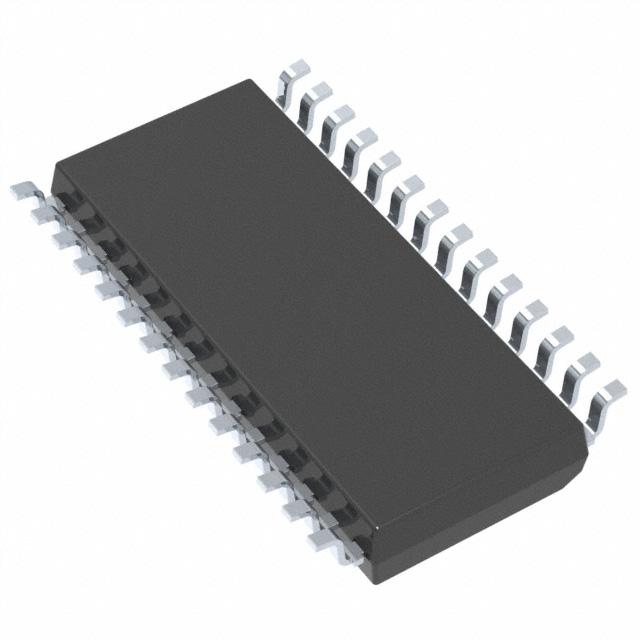
The STDRIVE601 leverages a 28-pin SO package designed for high-density PCB integration, enabling compact power stage layouts in industrial motion control and inverter applications. The form factor, adhering to JEDEC standards and ECOPACK guidelines, minimizes environmental impact without sacrificing mechanical robustness. ECOPACK compliance guarantees the absence of hazardous substances and ensures compatibility with RoHS requirements, supporting eco-conscious designs that meet global regulatory mandates. The device’s mechanical dimensions, including precise pin pitch and lead coplanarity, streamline automated assembly processes and reduce risks of placement errors during high-throughput manufacturing.
Thermal performance is a critical driver of lifetime reliability in gate driver ICs subjected to variable loading and ambient conditions. The SO package optimizes heat transfer pathways through a balanced thermal pad design, enabling effective dissipation via well-defined PCB copper areas. Published junction-to-ambient and junction-to-case values allow engineers to accurately model temperature margins under realistic power cycling and ensure that gate driver performance remains stable over extended operating periods. This characteristic is especially pertinent when the device is implemented in densely populated power modules or confined enclosures, where derating for ambient temperature is mandatory.
Comprehensive land pattern recommendations from STMicroelectronics simplify the PCB layout phase, ensuring minimal impedance in signal and power traces while keeping clearances conformant to safety insulation standards. The package leads offer sufficient mechanical resilience to withstand thermal expansion and board flex common in field deployments. In applications where repeated thermal cycling and vibration are present, such as robotic drives and HVAC inverters, this robustness translates directly to lower failure rates and consistent performance.
The 28-pin SO outline also facilitates versatile pin mapping for various application needs, offering layout flexibility without compromising electromagnetic compatibility. Proper PCB stack-up and pad design, coupled with attention to solder paste coverage as guided by ST's documentation, further enhance assembly yield and long-term device reliability. Addressing these physical package strategies at the early stages of design has repeatedly enabled swift prototyping cycles and a measurable reduction in board rework events during validation.
In analyzing package-level trade-offs, the STDRIVE601’s combination of physical characteristics, thermal management, and compliance infrastructure positions it strongly for deployment in demanding environments. Careful alignment of land patterns, thermal vias, and soldering profiles as per manufacturer recommendations is crucial to unlocking the full operational envelope of the driver, resulting in optimized system efficiency and lifecycle performance.
Potential equivalent/replacement models for STDRIVE601
Identifying potential substitutes for the STDRIVE601 demands a precise evaluation of technical capabilities within high-voltage gate drivers. At the core, the STDRIVE601 delivers triple half-bridge configuration, supporting up to 600 V operation and targeting both MOSFET and IGBT switching topologies. Selecting replacement models involves dissecting fundamental mechanisms such as the integration of bootstrap diodes, calibration of propagation delays, and implementation of advanced programmable protection circuits.
Alternate devices must provide equivalent or superior drive strengths, with robust current source and sink profiles. This ensures reliable turn-on and turn-off events under heavy load or fast switching conditions. Integrated bootstrap features within the gate driver minimize external component count and reduce design complexity, particularly for multi-phase inverter topologies. When reviewing alternative models—like STDRIVE101, which caters to single or dual-bridge schemes—a careful mapping of features is advised, especially pertaining to voltage thresholds, output current ratings, and logic input compatibility. Some competitor products also embed diagnostic or fault reporting functions; scrutinizing these in tandem with the application’s risk profile can decisively impact suitability.
Propagation delay characteristics remain pivotal for synchronization, especially in motor control, industrial inverters, or power conversion applications where switching times directly affect efficiency and thermal management. Variability in delay across channels can degrade performance in precision-controlled systems, so models exhibiting tightly matched propagation figures should be prioritized. UVLO (Undervoltage Lockout) parameters must align with circuit protection needs and operational safety margins, minimizing false triggering or damage during transients.
Smart shutdown features prove advantageous in fault containment scenarios; thus, evaluating the nature and programmability of shutdown protocols, as well as their reaction times, is critical for maintaining the intended protection envelope established by the STDRIVE601. Additionally, package compatibility heavily influences PCB layout reuse and manufacturing constraints, where pin-to-pin replacements or drop-in upgrades can streamline development cycles.
Experience reveals that thorough datasheet analysis, combined with bench validation under worst-case loads, uncovers subtle performance disparities—often missed in theoretical comparisons. For instance, real-world applications may expose limitations in peak gate drive currents or unanticipated thermal derating, which only surface through hands-on circuit operation. Design flexibility increases when models offer comprehensive programmability or modular pinouts, enabling adaptability to evolving system requirements.
An implicit preference emerges for devices with multi-source component availability and proven reliability in field deployments. Balancing innovative protection features with standardized interface logic often yields optimal long-term maintainability and interoperability across evolving power system architectures. Ultimately, a rigorous cross-examination of technical specifications, combined with iterative prototyping, achieves functional equivalence or superior performance relative to the STDRIVE601.
Conclusion
The STDRIVE601 triple half-bridge gate driver from STMicroelectronics exemplifies integration in power electronics through its high-voltage switching capabilities and embedded protection features. At its foundation, the IC employs advanced MOSFET and IGBT driving technology optimized for rapid charge delivery, supporting gate voltages up to 600V. This high transient immunity is achieved through precise internal layout and reinforced isolation barriers, minimizing susceptibility to voltage spikes and electromagnetic interference prevalent in switching environments. Low propagation delay characteristics allow for tight timing margins in control loops, directly impacting the accuracy and dynamic response of motor control or inverter systems, especially when employed in vector drive topologies or high-frequency PWM schemes.
A distinctive aspect of the STDRIVE601 is its smart shutdown feature, which leverages current and temperature sensing circuitry to pre-emptively deactivate outputs under fault conditions such as overcurrent, undervoltage, or thermal overload. This built-in intelligence reduces external component count, streamlines the PCB design process, and enhances system robustness. Real-world deployment demonstrates that these integrated safeguards not only prevent catastrophic device failure but also contribute to long-term system reliability by facilitating quick recovery and self-diagnosis routines. Flexible input logic and programmability further permit adaptation to various voltage domains and switching speeds, supporting seamless migration across different hardware platforms.
The compact package design enables higher power density and board space savings, a critical requirement in modern decentralized motor drives and distributed inverter architectures, where enclosure constraints and thermal management are primary engineering concerns. Procurement specialists and system designers benefit from the minimized bill of materials and reduced design iterations due to the all-in-one nature of the STDRIVE601. When benchmarked against comparable gate drivers, its combination of safety, performance, and configurability consistently positions it as a strategic component in applications ranging from industrial automation to precision robotics.
A layered approach to device selection underscores the necessity of matching driver capabilities with system requirements—focusing not only on electrical parameters but also on diagnostic integration, ease of design migration, and long-term support. Early prototyping experiences highlight the value of parameter tunability and diagnostic outputs, enabling rapid troubleshooting and iterative optimization during development stages. The STDRIVE601 stands out not merely for its feature list but for the coherence with which those features support high-reliability, compact, and adaptable power switching designs. The strategic value of leveraging such a gate driver extends to improved lifecycle cost management and enhanced system maintainability, driving continued adoption in forward-looking electrical engineering projects.