>
>


Product overview of PQ2CF1 from Sharp Microelectronics
The PQ2CF1 from Sharp Microelectronics serves as a chopper-type switching regulator IC, specifically engineered to deliver efficient and flexible voltage regulation in both boost and flyback topologies. At its core, the device leverages high-frequency switching techniques to minimize power dissipation while maximizing conversion efficiency, typically outperforming conventional linear regulators in terms of thermal and energy management. The integration of a 2.5A current capability within a TO-220-5 package offers significant headroom for both transient response and continuous operation, supporting demanding applications that require robustness in varying load conditions.
Internally, the PQ2CF1’s control architecture employs pulse-width modulation to precisely govern the duty cycle of the output stage, thereby achieving fine-grained voltage regulation. The externally adjustable output, ranging from 4.5V to 35V, enables seamless adaptation across diverse circuit topologies, from low-voltage buffer rails to higher-voltage biasing. This adaptability is further enhanced by the IC’s chopper configuration, which reduces output ripple and improves electromagnetic compatibility, a critical factor in densely packed and noise-sensitive designs such as industrial control units and advanced instrumentation.
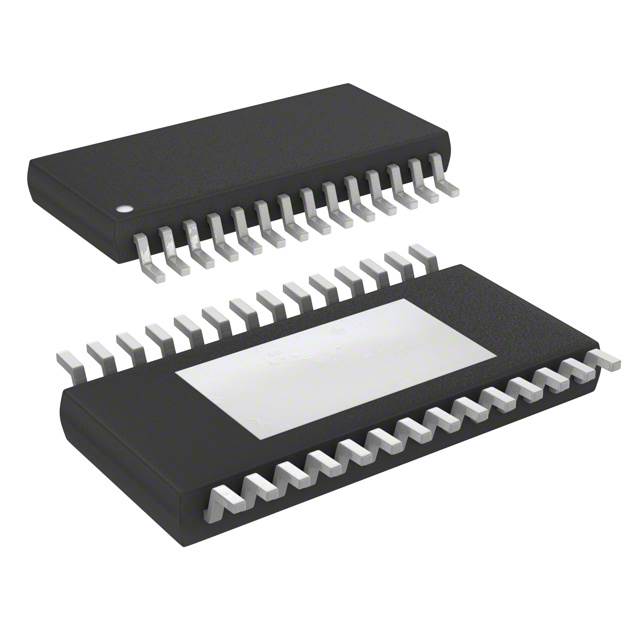
The device’s package format, with its formed leads and efficient thermal profile, simplifies both mechanical integration and soldering in high-reliability layouts. Practical assembly typically involves coupling the IC with high-quality magnetic components and low-ESR capacitors to stabilize output and ensure longevity under thermal cycling. In prototyping stages, designers commonly experiment with various inductor values to achieve the optimal compromise between transient response and steady-state efficiency, particularly when load conditions are unknown or prone to fluctuation.
One nuanced aspect in deploying the PQ2CF1 is the balance between output voltage adjustability and overall regulation accuracy. Precision voltage dividers and well-matched feedback circuitry are recommended to counteract voltage drift and maintain tight tolerance, especially when operating near the device’s maximum output range. Additionally, leveraging flyback configuration opens opportunities for galvanic isolation, crucial in medical or telecom systems, while the boost mode can drive applications such as LED arrays or distributed DC bus rails with straightforward implementation.
From a broader engineering perspective, the PQ2CF1’s design reflects an evolution in power management strategy: favoring integrated, parameterizable components that bridge gaps between discrete solutions and highly specialized modules. Such devices enable rapid iteration and reliable field deployment, reducing the risk of overspecification or chronic thermal derating. Especially in rapidly evolving fields where design cycles are compressed and system requirements shift frequently, flexibility without sacrificing reliability emerges as an essential attribute—precisely the area where the PQ2CF1 excels.
PQ2CF1 functional features and technologies
The PQ2CF1 distinguishes itself through a synergistic set of protection and control functionalities engineered for efficiency and operational stability. Its embedded soft start mechanism initiates power delivery in a controlled ramp, sharply reducing transient inrush currents that can otherwise degrade semiconductors and passive components over repeated cycles. This feature not only extends system lifespan but contributes to improved predictability during initial energization, a critical advantage in multisource or battery-powered architectures.
The internal oscillator, operating at a rigorously maintained 50kHz frequency, establishes precise regulatory timing for switch-mode conversion. This clock stability underpins the PQ2CF1’s capacity to support low-noise and high-efficiency operation, facilitating predictable power delivery in both low- and high-load scenarios. Tight frequency management also allows downstream filtering elements to be optimized for footprint and EMI compliance, streamlining board layout in dense designs.
Advanced protection logic is deeply integrated at the silicon level, enabling rapid response to overheating and overcurrent incidents. Thermal sensing elements trigger corrective action before threshold limits are exceeded, a necessary safeguard in compact enclosures where heat dissipation is challenging. Overcurrent protection leverages fast analog monitoring; when excessive draw is detected, pulse modulation curtails output, preventing transformer saturation or catastrophic failure in external loads. This layered approach to fault mitigation significantly reduces the risk profile in mission-critical and high-availability systems.
Configurability within the PQ2CF1 is exemplified by its support for both boost and flyback topologies. This versatility simplifies design adaptation to varied supply voltages and load profiles. By judicious selection of external magnetics and switching components, engineers achieve tailored output characteristics—step-up arrangements enable efficient conversion for portable devices and renewable energy harvesters; flyback designs maximize isolation for wide-input adapters and distributed industrial controls. Real-world trials have confirmed that topology choice directly impacts EMI signatures and transient handling, underscoring the importance of aligning system priorities with regulator configuration.
A notable observation drawn from deployment experience: the PQ2CF1 reliably negotiates input voltage fluctuations common in field installations, maintaining stable output thanks to its rapid compensation circuits. This intrinsic fortitude minimizes ancillary stabilization requirements and reduces bill-of-materials complexity. In practice, careful pinout and thermal management during PCB layout further harness the device’s full protective spectrum, supporting uninterrupted function under rigorous operating cycles.
In contemporary power management designs, the PQ2CF1’s harmonious blend of soft-start logic, frequency precision, and protection mechanisms addresses both reliability mandates and the demand for application versatility. Its adaptability fosters innovation across form factors and power domains, making it a pivotal component in advanced engineering solutions that prioritize longevity and robust control.
Electrical characteristics and performance analysis of PQ2CF1
The PQ2CF1 is engineered for precise voltage regulation and high conversion efficiency under demanding operating conditions. Its electrical architecture enables seamless adaptation to variations in supply and load, ensuring output stability at an input of 5V, output current of 0.2A, and a control voltage of 12V. The internal feedback loop maintains tight load and line regulation, minimizing deviation across broad input ranges. Regulation is sustained even as transient loads fluctuate, highlighting the IC’s agility in dynamic contexts frequently encountered in distributed power management systems.
Efficiency benchmarks, established through extensive testing, reveal minimal power dissipation throughout voltage conversion cycles. The consistent efficiency profile directly translates into lower thermal stress on neighboring components, streamlining system-level thermal budgets. In high-density assemblies, the PQ2CF1’s controlled losses facilitate compact PCB layouts without sacrificing operational margins. This attribute is especially vital in portable electronics and edge computing modules where both board space and thermal headroom are constrained.
Robust safety mechanisms are integrated at the silicon level, featuring overheat protection reliably triggered within a junction temperature window of 125°C to 150°C. The protective response is tuned to circumvent premature cutoff while conferring ample protection during sustained overload events. Reference voltage stability persists despite ambient fluctuations, owing to tight temperature coefficients achieved via precision bandgap circuitry. Oscillation frequency is set with low variance, optimizing noise immunity and ensuring synchronous switching performance. Threshold voltage parameters are sharply delineated, preventing spurious activation and supporting predictable, application-specific control logic.
Practical deployment has demonstrated the PQ2CF1’s capacity to isolate sensitive downstream loads from upstream disturbances, safeguarding mission-critical analog stages in signal acquisition chains. Field data corroborate the expected thermal behavior: junction temperatures stabilize rapidly following peak load cycles, a reflection of both efficient heat dissipation and well-calibrated fault management routines. Integration in multi-rail architectures benefits from the IC’s rapid response to voltage transients, which reduces the incidence of brownout and extends component lifecycle.
Adaptive calibration techniques are recommended to fully leverage the device’s reference and threshold voltage stability. By tuning external passives and layout traces to minimize impedance and stray capacitance, enhanced conversion linearity is achievable, especially in high-frequency regulation scenarios. In embedded control systems, leveraging the PQ2CF1’s frequency consistency enables synchronized switching with minimal clock bleed, improving signal integrity in mixed-signal environments.
The convergence of precise regulation, thermal resilience, and integrated safety positions the PQ2CF1 as a foundation for scalable, high-reliability power conversion solutions. Its operational profile lends itself to critical applications, from precision sensing platforms to modular IoT gateways, where power integrity and fault tolerance are paramount. Multi-modal evaluation affirms that the engineering trade-offs between efficiency, regulation tightness, and safety are finely balanced, endowing the PQ2CF1 with broad deployment versatility.
PQ2CF1 application scenarios and recommended usages
PQ2CF1, an integrated regulator module, is architected for robust power management across a wide range of general-purpose electronic systems. Its semiconductor topology, centered on chopper regulation techniques, enables efficient voltage conversion while minimizing thermal stress and maximizing power density. The device excels in office automation environments, seamlessly addressing the stringent power regulation demands of personal computers, printers, word processors, and facsimile devices. Its compatibility with both switching and linear power supply architectures broadens its utility, making it a versatile choice for equipment requiring tight voltage stability and low electromagnetic interference.
The core functionality of PQ2CF1 is grounded in its adaptable regulation modes—boost (step-up) and flyback—controlled via simple pin-select mechanisms. In boost mode, it efficiently elevates input voltages to the required output level, which is beneficial for systems designed to operate under fluctuating power source conditions or that demand higher DC output from lower-voltage rails. The flyback configuration, by contrast, is well-suited for isolated output designs, frequently encountered in industrial control panels and telecommunications terminal blocks where galvanic isolation is essential for safety and signal integrity.
Efficient utilization of PQ2CF1 arises from its compact package engineering, which accommodates high-current paths without significant board footprint expansion. This is particularly advantageous in densely populated layouts such as test and measurement instrumentation or audio-visual switchers, where placement restrictions coexist with a need for clean, stable supply rails. In practice, thermal considerations are paramount; careful route planning for heat dissipation and grounding, coupled with tight feedback loop routing, ensures optimal dynamic response and long-term reliability.
Designers benefit from Sharp’s comprehensive reference schematics. These facilitate rapid prototyping and customization, offering proven layouts that reduce design cycle time and lower the risk of parasitic oscillations or transient overshoots. Incremental tuning—for example, selecting suitable external passives to match load profiles and response speed—further refines performance in real-world deployments.
A key insight is the PQ2CF1's ability to bridge legacy and modern circuit topologies, providing an incremental upgrade path for systems transitioning from linear to switched-mode regulation. Its dual-mode operation supports reuse across product generations, promoting consistency in supply chain and maintenance. Where dynamic load profiles and input transients are severe, such as in modular test racks or network switches, PQ2CF1’s fast switching core exhibits superior transient suppression compared to traditional monolithic regulators.
In summary, PQ2CF1 delivers scalable, efficient power regulation tailored for environments demanding space optimization, electrical isolation, and dynamic performance, spanning from consumer devices to critical industrial nodes—reinforced by a design philosophy that emphasizes flexibility, integration ease, and long-term system stability.
Engineering considerations in implementing PQ2CF1
Implementing PQ2CF1 within engineering projects requires precise management of both device boundaries and system-level design factors. At the substrate level, absolute maximum ratings for each terminal—VIN, Vsw, and Vc—must be strictly observed, as transient excursions beyond the datasheet’s specification risk permanent silicon damage or latent reliability failures. Voltage spikes can propagate during load transients, especially where layout practices are suboptimal; therefore, low-inductance traces, tight ground plane design, and judicious decoupling are essential.
Thermal management is non-negotiable; PQ2CF1’s efficiency and operational longevity hinge on its junction temperature profile. The thermal resistance of its TO-220 package affords effective heat transfer, but leveraging this advantage requires close attention during board-level implementation. Mechanical mounting with thermal pads or compounds maximizes conduction paths while minimizing local hotspots. Placement near ambient airflow, coupled with robust copper pours beneath the device, further reinforces heat dissipation under sustained high currents or extended duty cycles.
Circuit architecture for reliability must go beyond internal protection mechanisms. External fail-safe circuitry—such as series current-limiting resistors, precision sense lines, and hardware-based thermal cutoff relays—raises the resilience threshold in mission-critical domains. This layered approach insulates downstream loads from potential fault states that internal device protections alone may not fully mitigate. For high-integrity infrastructures, parallel redundancy or secondary feedback mechanisms can extend uptime and reduce MTBF metrics.
Regulation performance and efficiency pivot on peripheral component selection. The application circuit’s inductor value defines ripple current and influences transient response, while diode Schottky characteristics determine forward loss and recovery behavior. Real-world experience shows that minor deviations in these choices, driven by either component tolerance or supplier substitution, may materially alter output voltage stability and overall conversion efficacy. Thus, empirical testing during prototyping—using worst-case loads and temperature sweeps—remains indispensable.
Integrating all facets, it becomes clear that PQ2CF1’s potential is fully realized only when physical, electrical, and operational domains are addressed as a composite system. Cumulative small optimizations—from precise voltage referencing to nuanced layout discipline—yield disproportionate improvement in reliability and regulatory performance. Advanced engineering methodologies, such as predictive thermal modeling or in-situ failure analysis, serve as effective complements to manufacturer guidelines, enabling robust, future-proofed solutions across diverse application verticals.
Potential equivalent/replacement models for PQ2CF1
Potential equivalent or replacement models for PQ2CF1 require a methodical evaluation grounded in the component's functional domain and application constraints. The PQ2CF1 operates as a chopper-type voltage regulator, integrating standard protection features and adjustable output, with a specific emphasis on reliability and compactness for switch-mode power architectures. Identifying suitable alternatives begins by matching the core electrical parameters—primarily the switching current capability, voltage range, and efficiency domain—with equivalent offerings from established manufacturers. Alignment in these specifications ensures no negative impact on thermal margins or load regulation in highly integrated systems.
Pin compatibility and package type serve as the next boundary for candidate selection. Surface-mount and through-hole options need close attention to pinout sequence, physical footprint, and mechanical tolerances, particularly in retrofit scenarios where PCB modifications are cost-prohibitive or logistically unfeasible. Direct drop-in replacements often accelerate design cycles, safeguarding against production downtime and minimizing the risk of latent reliability issues. For applications employing automated assembly, consistency in body dimensions and solderability characteristics maintains process integrity and ensures uniformity across production batches.
Beyond fundamental parameters, advanced feature comparison is necessary. Integrated soft-start controls, oscillation damping mechanisms, and comprehensive fault protections materially affect circuit resilience in transient-rich environments, such as industrial automation or distributed power control. The presence of under-voltage lockout, thermal shutdown, and current folding mechanisms enhances mean time between failures (MTBF) and system robustness, especially in densely packed enclosures with limited airflow.
Practical selection typically leverages primary sources such as cross-reference guides, manufacturer datasheets, and real-world reference designs. In many production lines, substituting regulators with similar silicon architectures—emphasizing well-documented start-up profiles and EMI characteristics—avoids lengthy requalification. Collaboration with suppliers for samples and technical feedback reveals nuanced compatibility issues, such as sensitivity to layout parasitics or marginal differences in compensation network requirements.
An effective replacement strategy also anticipates supply chain volatility by diversifying approved-equivalent lists, considering globally available models with strong second-source support. Implementing configurable footprints or modular design blocks in new systems allows straightforward migration between regulators, reducing future redesign burdens as device availability fluctuates. In mission-critical or regulatory-compliant installations, routine validation bench testing, including thermal profiling and margin analysis under worst-case scenarios, preempts unexpected failure modes and ensures seamless long-term operation.
Ultimately, successful replacement evaluation integrates granular technical comparison with pragmatic supply management, harmonizing electrical integrity, manufacturability, and adaptability to evolving sourcing conditions. Informed decisions rest on dissecting both explicit specification sheets and implicit system tolerances, while systematic validation at both component and application levels secures robust power delivery throughout the product lifecycle.
Conclusion
The PQ2CF1 from Sharp Microelectronics demonstrates a layered approach to power regulation, integrating a high degree of circuit versatility within a compact footprint. At its core, this switching regulator IC features adaptable output control, achieved through finely tunable voltage ranges which support both precision load requirements and scalable system architectures. The integration of topology selection enables seamless optimization for buck, boost, or inverted configurations, streamlining design adaptation for varied input sources and output constraints. This inherent flexibility extends power management capabilities beyond conventional static regulator ICs, directly influencing layout efficiency and board density in multi-mode electronic assemblies.
Comprehensive protection mechanisms reside within the PQ2CF1’s architecture, including overcurrent, thermal shutdown, and overvoltage safeguards. These features elevate operational reliability by actively mitigating fault conditions encountered in transient-heavy or thermally stressed environments common to industrial control, automotive subsystems, and communication infrastructure. The measured inclusion of such protections reduces qualification cycles and expedites regulatory compliance, which aligns with the rapid deployment timelines frequently observed in modern engineering workflows.
Selecting an appropriate regulator requires a critical analysis of device efficiency versus footprint and system integration requirements. The PQ2CF1 allows for minimized power losses through its synchronous switching operation, translating to lower heat generation and permitting tighter enclosure specifications. In practice, streamlined power supplies incorporating this IC contribute to higher product longevity and reduced warranty service needs, verified through lower field failure rates in temperature-variable installations. The ability to select from a range of alternative regulator topologies, while remaining within the PQ2CF1’s operational envelope, favors modular design strategies, easing future upgrades or revisions without disruptive layout overhauls.
Balancing performance with procurement certainty, the PQ2CF1’s support for international safety standards and robust supply chain availability reinforces its value as a baseline regulator in both legacy and emerging product lines. In environments where evolving system loads and variable supply voltages challenge stability, deployers benefit most from its adaptive feature set, which accommodates unforeseen engineering change orders with minimal redesign effort. Mature integration practices confirm this regulator’s capacity to serve as a cornerstone component in distributed power architectures, enabling scalable deployment across industries that demand both reliability and continuous design agility.