>
>


Introduction to the Sharp PC815 Optoisolator
The Sharp PC815 optoisolator constitutes a foundational element for achieving galvanic isolation in modern electronic circuits, bridging disparate voltage domains while safeguarding sensitive logic and control systems from electrical surges and ground loop disruptions. Its operational architecture integrates an internal infrared LED coupled to a phototransistor within a compact, hermetically sealed package, ensuring signal transfer without direct electrical contact.
Key performance characteristics of the PC815 arise from its careful optoelectronic design: typical input forward voltages range from 1.2V to 1.4V, with forward currents tailored to maintain long-term reliability at recommended values below 50mA. The phototransistor responds swiftly to light emissions, offering switching speeds suitable for signal frequencies up to several tens of kilohertz. The isolation voltage, rated at 5kV RMS, makes this device ideal for high-voltage power systems and robust industrial automation controls, where segregation of low-level logic from noisy, high-energy circuits is a prime consideration.
Effective implementation centers around understanding the device's current transfer ratio (CTR), generally specified between 50% and 600% depending on sub-model and operating conditions. This CTR, a function of both LED input current and phototransistor response, must be matched with application requirements to mitigate signal attenuation or amplification issues. In noisy environments, the significant isolation impedance of the PC815 stabilizes signal channels, reducing susceptibility to transient voltages and providing a predictable pathway for logic states. Such stability is critical during interfacing microcontrollers with high-voltage switching elements, or when bridging analog sensors with digital acquisition hardware.
Thermal management and circuit layout influence real-world performance. Incorrect biasing leads to premature degradation of LED emission efficiency or phototransistor leakage, diminishing reliability. Positioning the optoisolator away from heat sources and employing appropriate input resistors prevents excessive forward current, while output side pull-downs enhance noise rejection. Empirical failure rate data supports sub-ppm incident rates when deployed within datasheet guidelines, affirming the device’s reputation in mission-critical control systems.
Selection methodologies extend beyond simple package and CTR sorting. Engineering teams factor in input threshold current, output linearity, environmental durability, and compliance with regulatory isolation standards. Applications ranging from switched-mode power supply feedback loops to automotive high-side drivers capitalize on the PC815’s consistent transfer ratios and high breakdown voltages. Interfacing low-level communication protocols such as UART or I²C across isolation barriers also demonstrates the component’s versatility, provided switch timing and propagation delay constraints are accommodated.
From an integration standpoint, the PC815’s compatibility with automated placement processes and reflow soldering streamlines procurement and mechanical design, reducing total system cost and assembly time. The component’s sustained market availability, broad supplier support, and diverse package styles enable standardized inventory management and progressive design scaling. Observations show that modularizing isolated blocks with such optoisolators fosters design reuse, minimizes cross-domain debugging overhead, and accelerates system validation cycles.
Future circuit topologies increasingly leverage isolation not only for safety but also for distinct functional partitioning, with trends in power electronics and signal acquisition favoring optoisolator-based architectures. In precision analog front-ends, the PC815’s predictable leakage currents and tight coupling ratio tolerances become instrumental in minimizing error budgets. Establishing robust electrical boundaries with this device forms a keystone for scalable and maintainable electronics, supporting rapid iteration and dependable field operation across diverse markets.
Key Features and Technical Specifications of the PC815
The PC815 is engineered as a single-channel optocoupler integrating a phototransistor Darlington pair within a compact 4-pin DIP package. This structural choice maximizes board space efficiency while simplifying PCB layout for densely populated control systems. Internally, the device employs a high-efficiency infrared LED optically coupled to the Darlington output stage, enabling reliable signal transfer across an insulation barrier without direct electrical connection. The core mechanism achieves galvanic isolation, with a robust isolation voltage rating of 5000Vrms. This high dielectric withstand strength provides a critical safeguard in systems exposed to high common-mode voltages, transient surges, or ground loop differentials.
From an electrical characteristics perspective, the Darlington transistor output delivers substantial current gain, typically in the range needed for direct drive of logic circuits or relay interfacing without requiring additional amplification. This configuration supports low-power operation with input forward currents in the 5-20mA range, aligning with standard MCU or PLC output capabilities. The device operates effectively at collector-emitter voltages up to 80V, and collector currents up to 50mA, ensuring compatibility with a variety of load profiles. The CTR (Current Transfer Ratio) stability over a range of input currents permits flexible design for both linear analog conditioning and digital level switching.
In application, the PC815 excels in signal galvanic isolation for industrial automation, motor control boards, and power monitoring modules where noise immunity and safety boundaries are paramount. It facilitates microcontroller-driven control paths inside switch-mode power supplies, discrete sensor interfaces, and triac triggering circuits. The optoisolator’s response time balances the needs of both relatively fast digital communication and analog feedback, minimizing propagation delay without introducing excessive phase shift—crucial when designing feedback loops.
Empirically, circuit implementations benefit from the PC815’s low leakage currents in the off-state and confined switching noise, which mitigate parasitic signal injection back into sensitive domains. The physically compact 4-DIP form factor reduces interconnect parasitics and enhances structural reliability under vibration or thermal cycling—key considerations in industrial deployments. The high isolation voltage rating maintains long-term reliability even under repetitive overvoltage conditions, reflecting real-world endurance against voltage transients and insulation aging.
An insightful observation involves leveraging the two-stage Darlington output for cascaded interfacing, particularly when bridging severe logic voltage mismatches, such as connecting low-voltage microcontrollers to higher-voltage relay or input circuits. With careful external bias management, output switching thresholds can be tightly controlled, optimizing for noise margins without sacrificing speed—a design flexibility not universally present in single-transistor output couplers.
In essence, the PC815’s combination of high isolation, current drive, and package miniaturization demonstrates a considered balance between versatility, reliability, and integration density, positioning it as a foundational component in embedded system signal isolation.
Operational Principles and Application Scenarios for the PC815
The PC815 optocoupler utilizes an internal configuration where an infrared LED is optically aligned with a phototransistor contained within the same package. When the input circuit applies a sufficient forward bias to the LED, it emits photons received by the phototransistor base, inducing a collector current proportional to the LED drive. This principle exploits the physical separation of two circuits—input and output—with only optical coupling as the communication channel. As a result, galvanic isolation between the domains is maintained, effectively blocking common-mode transients and ground-loop currents, thereby safeguarding sensitive control elements from disruptive high-voltage spikes and EMI.
At the electronic component level, the PC815 is characterized by consistent CTR (Current Transfer Ratio), typically ranging from 50% to 600%, depending on bin selection and operating parameters. The temporal response is adequate for most control and feedback purposes, with propagation delay only becoming a limiting factor in high-frequency switching applications. Pin assignment facilitates flexible integration on both through-hole and SMT layouts, streamlining PCB routing for bidirectional isolation.
Within embedded control architectures, microcontrollers frequently interface with external drivers, actuators, and relays through the PC815. Isolating logic-level GPIOs from main AC lines—often carrying unpredictable surges—helps preserve silicon integrity and expands system longevity. In automation panels, PC815 modules serve as gatekeepers between distributed sensing units and central PLCs, allowing reliable, low-noise communication over rugged industrial bus networks. For signal interfacing, the optocoupler permits seamless translation between different voltage domains, such as TTL-to-24V industrial logic, eliminating voltage mismatch hazards.
Feedback loops in switch-mode power supplies reinforce isolation via the PC815, especially in error amplifiers transmitting correction signals from secondary to primary regulation blocks. Here, maintaining isolation prevents cross-coupling of faults and ensures accurate, stable closed-loop operation. Opto-isolated detection circuits provide robust error reporting back to supervisory controllers, facilitating timely intervention without risk to control paths.
Field usage has shown that the PC815’s isolation remains reliable even when subjected to sustained high common-mode voltages, provided PCB creepage distances align with regulatory directives and proper decoupling is employed at both the LED and output side. Special consideration is given to thermal loading; excessive input currents can degrade LED lifetime, so derating curves must be observed in high-density designs.
A key insight in deploying optocouplers such as the PC815 is leveraging their inherent noise immunity to partition system functions. Instead of treating isolation as a mere protective measure, it is effective to architect circuits so that potentially noisy blocks—like motor drivers or large switched loads—are always relegated behind opto-isolated boundaries. Integrating optocouplers early in a design’s signal path reduces the propagation of disturbances and simplifies later compliance testing.
Ultimately, the operational principles of the PC815 not only deliver foundational isolation but also enable modular, resilient system architectures capable of handling elevated voltages, differential grounds, and signal fidelity requirements across a diverse range of control and feedback applications. The combination of robust electrical isolation and responsive signal transmission positions the PC815 as a cornerstone in both legacy and modern industrial designs.
Mechanical and Packaging Details of the PC815
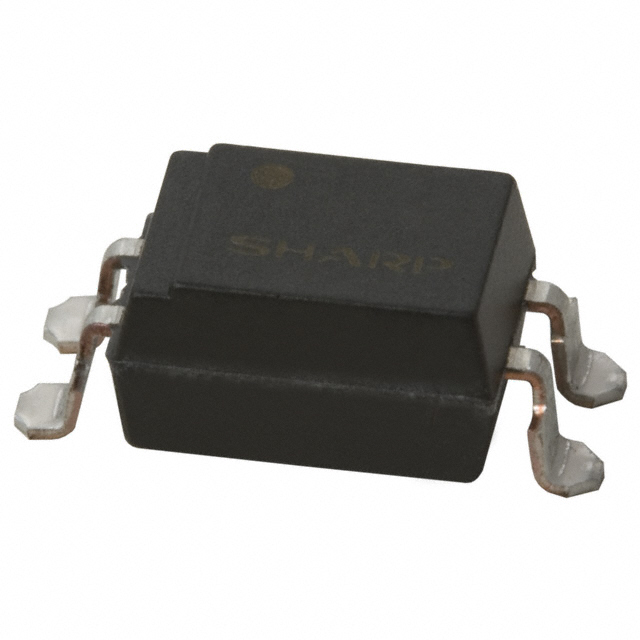
Mechanical integration of the PC815 is governed by its standardized 4-pin dual in-line package (DIP), which offers straightforward compatibility with through-hole PCB layouts and simplifies assembly in mixed-technology environments. The package dimensions are optimized for minimizing board real estate without compromising on necessary electrical isolation. This is evident in the calculated spacing between pins and the mold design, which aligns with industrial requirements for creepage and clearance—parameters critical to preventing arc-over during high-voltage applications. The molded epoxy encapsulation not only shields sensitive optoisolator internals from mechanical stress, but also protects against environmental contaminants that frequently challenge reliability in industrial settings.
A notable characteristic of the PC815 is its ability to maintain insulation integrity across a range of mounting tolerances, even when subjected to automated soldering processes such as wave or reflow. These processes impose transient thermal loads, and the package exhibits sufficient thermal mass and lead integrity to resist warping or cold-solder joints when proper preheating and temperature profiles are respected. Optimized soldering profiles and adherence to storage guidelines—particularly moisture barrier packaging and controlled humidity—play a pivotal role in preventing internal dendrite growth or surface oxidation, both of which are latent failure mechanisms in optoisolators.
From a design engineering perspective, the physical layout enabled by this DIP form factor unlocks flexibility in signal routing, especially when balancing the conflicting demands of line density and isolation. The predictable mechanical envelope facilitates precise component placement in automated assembly lines and supports effective post-solder inspection, directly influencing defect rates in scaled production runs. The 4-pin arrangement streamlines connection logic, reducing potential for assembly errors, and guarantees alignment with legacy system upgrades where form factor compatibility is mandatory.
The PC815’s packaging stands as a model of how thoughtful mechanical and materials decisions directly enhance electrical performance, manufacturability, and long-term device stability. Engineering analysis reveals that maximizing reliability requires a holistic approach where mechanical robustness is as essential as electrical characteristics, notably in optoisolators deployed in demanding control environments. Long-term deployment feedback confirms the value of strict adherence to recommended handling and mounting procedures, solidifying the link between packaging quality and operational dependability.
Regulatory and Environmental Compliance for the PC815
Regulatory and environmental compliance is foundational to the reliable and broad adoption of the PC815. This optocoupler is engineered to align with pivotal international safety and quality directives, including UL and VDE standards, ensuring isolation performance that meets or exceeds mandated voltage withstand criteria. The device features a minimum isolation voltage that supports robust galvanic isolation in line with IEC and other relevant standards, mitigating risks in circuits handling high voltages or sensitive signal interfaces.
Material selection and production processes for the PC815 adhere not only to functional requirements but also to rigorous assessment against hazardous substances—fulfilling RoHS and similar eco-directives. This attention to material traceability and batch consistency supports predictable field performance and facilitates regulatory audits during certification or cross-border commerce. The ability to demonstrate conformity with environmentally driven regulations such as REACH or China RoHS minimizes delay in international procurement and accelerates approval for global deployment.
In the context of industrial automation and commercial systems, the PC815’s certified safety barrier enables straightforward integration into power supplies, PLC inputs, and medical-grade devices, where adherence to isolation requirements is non-negotiable for system certification. Practical deployment often leverages this compliance for streamlined bill-of-material management, as engineering teams can select pre-certified parts to reduce documentation efforts for end-product approvals.
Experience shows that failures in field applications traceable to substandard insulation or non-compliant plastics are effectively precluded by the PC815’s reliance on vetted materials and consistent factory quality controls. The device’s documented lifecycle and traceability records, essential for critical infrastructure or healthcare applications, further demonstrate the importance of robust compliance in risk management and liability reduction.
The intersection of regulatory rigor and environmental stewardship manifests not as a burdensome requirement, but as a strategic advantage in the design process. By incorporating components like the PC815, which harmonize with both safety standards and environmental mandates, systems achieve greater market agility and operational assurance. This convergence of compliance and functionality forms a template for scalable, future-ready electronic design.
Potential Equivalent/Replacement Models for the PC815
Potential equivalents or replacements for the Sharp PC815 must be evaluated through a structured, parameter-driven analysis. The primary screening begins with the device's core function as a phototransistor optocoupler, emphasizing the necessity for robust galvanic isolation between input and output circuits. The minimum isolation voltage serves as a non-negotiable baseline, with industry standards typically requiring at least 3.75 kV (rms) for comparable models. Regulatory compliance—such as UL, VDE, or IEC certifications—must be explicitly matched, since deviations here could compromise system-level safety or fail qualification in critical infrastructure.
Output configuration is another key axis; the PC815 features a standard phototransistor output, necessitating that replacement candidates avoid Darlington outputs unless the target circuit is explicitly tolerant of higher saturation voltages and slower turn-off times. Subtle distinctions in switching speed and current transfer ratio (CTR) must also align closely with application thresholds. In power supply feedback circuits, for example, a mismatch in CTR can directly disrupt regulation accuracy, accentuating the importance of matching typical and minimum transfer metrics under rated conditions. Notably, mismatched output configurations can lead to unintended biasing changes, so direct circuit A/B comparison under operating load is best practice.
Mechanical compatibility extends beyond DIP-4 package conformity. Pinout specificity prevents functional errors—mismatch between input diode polarity or output collector/emitter assignment can result in silent failures under test. Package height and standoff distance should also be checked where high-density PCB layouts or automated insertion machinery are used, as some equivalents have differing molding profiles that impact board assembly yields.
Major optoisolator suppliers such as Toshiba, Lite-On, Everlight, and Vishay offer models like the TLP785, LTV-817, and 4N35, which generally fulfill the PC815’s main operational envelope. However, subtle disparities can emerge in LED forward voltage or maximum permissible input currents, influencing drive circuitry, particularly in designs near thermal limits. Substitution exercises should include real-world validation under transient conditions, as optoisolator margin is often consumed by noise coupling in switching applications.
A critical insight surfaces in cross-referencing exercises: the assumption that datasheet minimums guarantee true equivalence under all operational stresses is unreliable. The interplay between CTR degradation over lifecycle and insulation breakdown under repeated surges often determines end-of-line robustness, underscoring the value of both empirical burn-in testing and accelerated life benchmarks. In regulatory-class power modules, sourcing alternatives with extended certifications—such as reinforced insulation rating—provides additional system resilience and futureproofs the design against tightening standards.
Ultimately, the process of selecting a valid replacement necessitates a layered verification approach, progressing from electrical equivalence, through mechanical fit, to validated application results. This ensures operational integrity is maintained and that regulatory and reliability requirements are never compromised, even under evolving supply-chain or market constraints.
Conclusion
The Sharp PC815 optoisolator defines a strong standard in galvanic isolation for modern electronic systems, integrating an IR LED and phototransistor in a compact, DIP-4 dual-in-line package. At the core, optical coupling provides robust isolation between input and output domains, effectively mitigating risks of ground loops or voltage transients that routinely disrupt unprotected circuits. The device’s input-to-output isolation voltage of 5 kV ensures a high margin of safety, which aligns with stringent international standards such as UL and VDE. This characteristic simplifies regulatory approval processes within designs intended for mass production or export, minimizing potential redesign cycles caused by nonconformity.
Mechanical and electrical reliability are achieved through its encapsulation technique and consistent CTR (Current Transfer Ratio) performance over a broad ambient temperature range. CTR, a parameter critical to application stability, typically holds within ±50% tolerance from -30°C to 100°C, enabling the PC815 to deliver predictable switching behavior in ambient-varying environments such as factory floors or outdoor equipment. Experience with repetitive line voltage spike testing and prolonged thermal cycling underscores the device’s endurance even after exposure to aggressive transient events or continuous operation at upper temperature thresholds.
Integration into control logic and feedback loops is straightforward due to low input current requirements, allowing seamless interfacing with TTL or microcontroller-driven outputs. The PC815 supports both AC and DC input drive configurations, facilitating its deployment in switching power supplies, relay drivers, and digital signal isolation tasks. Its propagation delay metrics, while moderate, remain consistent, ensuring reliable timing synchronization across isolated domains—a critical consideration in synchronized motor control or multi-axis system coordination.
A nuanced assessment reveals that while higher CTR variants exist, the PC815’s balance of transfer efficiency and noise immunity defines a practical sweet spot for most automation and appliance control tasks. In low-voltage or signal-level isolation scenarios, careful PCB layout minimizes stray capacitance and optimizes EMI resilience; placement strategies informed by decoupling and groundplane segmentation further elevate performance reliability. Lifecycle studies point to long-term parametric stability and negligible aging drift when operated within recommended limits, supporting deployment in systems requiring years of maintenance-free operation.
Overall, the PC815 remains more than just a default choice. Its proven field record, supported by repeatable manufacturing quality, positions it as a foundational element in both legacy upgrades and new designs where isolation integrity cannot be compromised. Selecting the PC815 enables efficient design cycles with known performance boundaries, reducing unknowns in both development and field operation.