PC451 >
PC451
Sharp Microelectronics
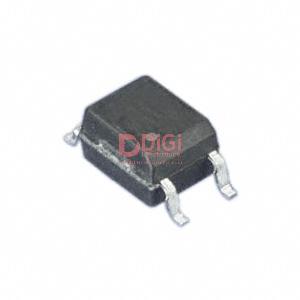
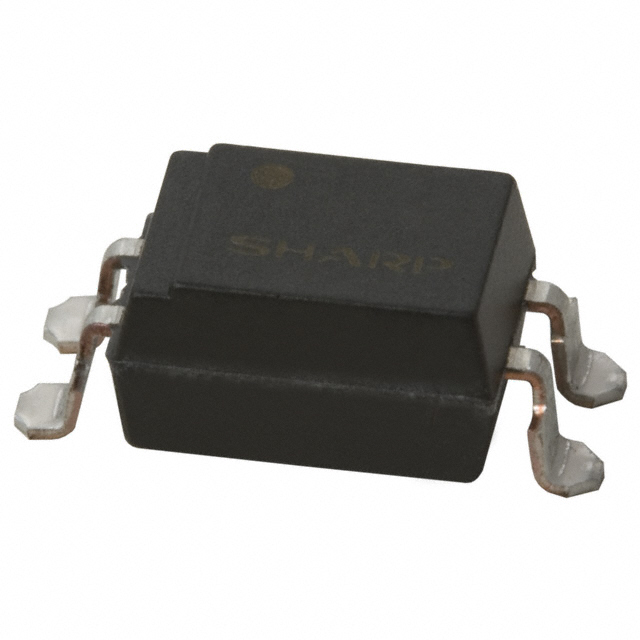
OPTOISOLATOR 3.75KV TRANS 4SMD
7977 Pcs New Original In Stock
Optoisolator Transistor Output 3750Vrms 1 Channel 4-SMD
Request Quote (Ships tomorrow)
*Quantity
Minimum 1
PC451 Sharp Microelectronics
5.0 / 5.0 - (273 Ratings)

PC451

Product Overview

7929626

DiGi Electronics Part Number

PC451-DG
PC451

Description

OPTOISOLATOR 3.75KV TRANS 4SMD

Inventory

7977 Pcs New Original In Stock
Optoisolator Transistor Output 3750Vrms 1 Channel 4-SMD
Quantity
Minimum 1

Purchase and inquiry

Quality Assurance

365 - Day Quality Guarantee - Every part fully backed.

90 - Day Refund or Exchange - Defective parts? No hassle.

Limited Stock, Order Now - Get reliable parts without worry.

Global Shipping & Secure Packaging

Worldwide Delivery in 3-5 Business Days

100% ESD Anti-Static Packaging

Real-Time Tracking for Every Order

Secure & Flexible Payment

Credit Card, VISA, MasterCard, PayPal, Western Union, Telegraphic Transfer(T/T) and more

All payments encrypted for security

In Stock (All prices are in USD)
  • QTY Target Price Total Price
  • 1 0.3288 0.3288
Better Price by Online RFQ.
Request Quote (Ships tomorrow)
* Quantity
Minimum 1
(*) is mandatory
We'll get back to you within 24 hours

PC451 Technical Specifications

Category Optoisolators, Transistor, Photovoltaic Output Optoisolators

Manufacturer Sharp Microelectronics

Packaging -

Series -

Product Status Obsolete

Number of Channels 1

Voltage - Isolation 3750Vrms

Current Transfer Ratio (Min) 40% @ 5mA

Current Transfer Ratio (Max) -

Turn On / Turn Off Time (Typ) -

Rise / Fall Time (Typ) 4µs, 5µs

Input Type DC

Output Type Transistor

Voltage - Output (Max) 350V

Current - Output / Channel 50mA

Voltage - Forward (Vf) (Typ) 1.2V

Current - DC Forward (If) (Max) 50 mA

Vce Saturation (Max) 300mV

Operating Temperature -25°C ~ 100°C

Mounting Type Surface Mount

Package / Case 4-SMD, Gull Wing

Supplier Device Package 4-SMD

Datasheet & Documents

HTML Datasheet

PC451-DG

Environmental & Export Classification

RoHS Status RoHS non-compliant
Moisture Sensitivity Level (MSL) 1 (Unlimited)
ECCN EAR99
HTSUS 8541.49.8000

Additional Information

Other Names
425-1525-2
425-1525-1
Standard Package
3,000

Alternative Parts

PART NUMBER
MANUFACTURER
QUANTITY AVAILABLE
DiGi PART NUMBER
UNIT PRICE
SUBSTITUTE TYPE
HCPL-181-00CE
Broadcom Limited
1265
HCPL-181-00CE-DG
0.0037
Similar
LTV-358T
Lite-On Inc.
20148
LTV-358T-DG
0.0399
Similar
FODM2701R2
onsemi
1753
FODM2701R2-DG
0.0002
Similar
FODM121R2V
onsemi
23407
FODM121R2V-DG
0.1983
Similar
FODM121
onsemi
18005
FODM121-DG
0.0021
Similar

Reviews

5.0/5.0-(Show up to 5 Ratings)
구름***야기
December 02, 2025
5.0
끊임없이 발전하는 서비스 덕분에 고객으로서 매우 만족하고 있습니다.
Tra***ier
December 02, 2025
5.0
Die Qualität der Artikel ist erstklassig, und das Team bei DiGi Electronics ist äußerst kompetent und freundlich.
Nigh***eeze
December 02, 2025
5.0
Their dedication to sustainable practices sets them apart in the industry.
Mor***gDew
December 02, 2025
5.0
Affordable and supported by great after-sales service, Di Digi Electronics is my go-to brand.
Pure***lPath
December 02, 2025
5.0
This purchase impressed me with its durable construction and sturdy packaging.
SkySc***erSoul
December 02, 2025
5.0
Their after-sales team was patient and thorough when I needed technical assistance.
Lun***loom
December 02, 2025
5.0
Safe packaging and speedy delivery make shopping here a pleasure.
Publish Evalution
* Product Rating
(Normal/Preferably/Outstanding, default 5 stars)
* Evalution Message
Please enter your review message.
Please post honest comments and do not post ilegal comments.

Frequently Asked Questions (FAQ)

Can I use the PC451 optoisolator as a drop-in replacement for the HCPL-181-00CE in a 24V industrial control circuit, and what are the key reliability risks I should evaluate?

While the PC451 and HCPL-181-00CE both offer 3.75kVrms isolation and similar package footprints (4-SMD), the PC451 is obsolete and RoHS non-compliant, which introduces long-term supply chain and regulatory risks. Additionally, the PC451 has a lower minimum current transfer ratio (40% @ 5mA) compared to the HCPL-181-00CE (typically 50–600%), meaning it may require higher input current to achieve reliable output switching—especially under temperature drift or aging. In a 24V control loop with marginal drive capability, this could lead to intermittent failures. We recommend validating CTR stability over the full operating temperature range (-25°C to 100°C) and considering active pull-down on the output to mitigate leakage-induced false triggering. For new designs, prefer the active HCPL-181-00CE or a modern RoHS-compliant alternative like the FODM2701R2.

What are the critical layout and creepage considerations when designing a PCB with the PC451 in a high-voltage mains monitoring application, given its 3.75kVrms isolation rating?

Although the PC451 is rated for 3.75kVrms isolation, achieving this in practice depends heavily on PCB layout. The 4-SMD gull-wing package provides limited internal creepage, so you must maintain at least 8mm of clearance between primary (input) and secondary (output) traces on the PCB surface—especially since the device is surface-mount and lacks conformal coating by default. Avoid routing high-voltage traces under the component body, and use slotting or isolation barriers in the PCB if space is constrained. Also, note that moisture sensitivity level (MSL) 1 means no baking is required, but in humid environments, surface contamination can degrade effective isolation over time. Always perform hipot testing (e.g., 3.75kV AC for 60s) on production units to verify real-world isolation integrity.

How does the output saturation voltage (Vce(sat)) of the PC451 compare to the FODM121R2V when driving a relay coil, and could this impact system power efficiency or heat dissipation?

The PC451 has a maximum Vce(sat) of 300mV at 50mA, while the FODM121R2V specifies a lower typical Vce(sat) of 0.4V max but at a reduced 30mA output current. When driving a 50mA relay coil, the PC451 will dissipate up to 15mW (0.3V × 50mA), whereas the FODM121R2V isn’t rated for that load and would overheat. However, if your relay draws only 20–30mA, the FODM121R2V may offer slightly better efficiency. The key trade-off is current capability vs. saturation loss: the PC451 supports higher output current but with marginally higher voltage drop. For low-duty-cycle relays, this difference is negligible, but in continuously energized safety relays, even 15mW can contribute to thermal buildup in dense layouts—consider adding a small heatsink pad or switching to a Darlington-output optoisolator like the LTV-358T if thermal margins are tight.

Is it safe to operate the PC451 near its maximum forward current (50mA) in a 24/7 industrial environment, given its obsolete status and lack of recent reliability data?

Operating the PC451 at its maximum forward current (If = 50mA) continuously significantly reduces its operational lifespan due to LED degradation, especially since the device is obsolete and lacks recent qualification data from Sharp. At 50mA and elevated temperatures (e.g., >85°C), the LED’s quantum efficiency drops, causing CTR to decay over time—potentially falling below the 40% minimum and leading to output failure. For 24/7 applications, derate the forward current to ≤30mA and ensure adequate thermal management (e.g., copper pour under the package). Monitor input current over time if possible, or implement periodic self-test routines. Given the obsolescence, we strongly recommend migrating to a supported part like the FODM2701R2, which includes improved LED materials and full reliability reporting for industrial use.

Can the PC451 be used to isolate a 24V digital signal from a PLC output, and what precautions are needed to avoid false triggering due to leakage current or slow switching?

Yes, the PC451 can isolate a 24V PLC signal, but its transistor output has inherent leakage (typically a few µA) that may cause false triggering in high-impedance input circuits. Additionally, its rise/fall times (4µs/5µs) are slower than logic-family optoisolators, which can cause glitches in fast-switching applications. To mitigate this, add a pull-down resistor (e.g., 10kΩ) on the output side to ensure a solid low state, and verify that the receiving circuit’s input threshold is compatible with the PC451’s output swing (0.3V to ~350V). Also, ensure the PLC’s sourcing capability can drive the PC451’s LED at sufficient current (recommend ≥10mA for margin). Because the PC451 is obsolete and lacks modern noise immunity features, consider using a logic-output optoisolator like the FODM121R2V for cleaner digital interfacing in noisy industrial environments.

Quality Assurance (QC)

DiGi ensures the quality and authenticity of every electronic component through professional inspections and batch sampling, guaranteeing reliable sourcing, stable performance, and compliance with technical specifications, helping customers reduce supply chain risks and confidently use components in production.

Quality Assurance
Counterfeit and defect prevention

Counterfeit and defect prevention

Comprehensive screening to identify counterfeit, refurbished, or defective components, ensuring only authentic and compliant parts are delivered.

Visual and packaging inspection

Visual and packaging inspection

Electrical performance verification

Verification of component appearance, markings, date codes, packaging integrity, and label consistency to ensure traceability and conformity.

Life and reliability evaluation

DiGi Certification
Blogs & Posts
PC451 CAD Models
productDetail
Please log in first.
No account yet? Register