


 >
>


Product Overview: KSZ9563RNXC Gigabit Ethernet Switch by Microchip Technology
The KSZ9563RNXC managed Gigabit Ethernet switch stands out for its dense integration of critical networking subsystems, delivering both switching logic and physical layer transceivers within a single silicon footprint. Built for Gigabit line rates, the switch incorporates three 10/100/1000 Mbps PHYs directly on-chip, eliminating the complexity and latency penalties of discrete external PHY integration. This monolithic architecture streamlines PCB layouts, optimizes signal integrity, and reduces BoM overhead, directly supporting space- and power-constrained industrial designs.
The switching core is based on a non-blocking, store-and-forward fabric. This design ensures deterministic packet handling with wire-speed throughput across all ports, maintaining low latency even under full bandwidth utilization. The implementation supports classic and enhanced address learning schemes, enabling efficient MAC table management and dynamic adaptation to network topology changes. Notably, the switch fabric offers advanced traffic prioritization with IEEE 802.1p Quality of Service, VLAN tagging (802.1Q), and ingress/egress rate limiting, functions essential for isolating industrial traffic types such as automation protocols from generic network data. The device also implements intelligent port mirroring and loopback diagnostics, crucial for in-situ maintenance and real-time system validation.
On the interface level, the KSZ9563RNXC offers versatile host connectivity via both MII/RMII/RGMII and SMI/MDIO management buses, facilitating seamless coupling with a wide range of MCUs, FPGAs, or custom network processors. Practical network solutions frequently leverage the device's flexible port configuration options, using transparent media conversion or routing traffic across isolated domains. The integrated hardware security address filtering provides robust access control at the edge, mitigating the risk of unauthorized access in mission-critical deployments.
From an application standpoint, the package choice—64-pin VQFN—was selected for its balance between high I/O density and minimal board real estate. This enables scalable multi-port configurations with reliable RF performance, an important consideration for system designers targeting compact industrial or automotive subsystems. The absence of external magnetics for direct MDI connectivity streamlines assembly and boosts electromagnetic compatibility. Practical deployments benefit from the switch’s sub-microsecond cut-through switching capability, ensuring time-critical Ethernet frames meet deterministic deadlines in distributed control architectures.
Experiences show tangible advantages in leveraging the KSZ9563RNXC’s integrated PHY diagnostics during both production and field support. Real-time link status, cable diagnostics, and energy-efficient Ethernet (EEE) features allow network maintenance procedures to be automated and deterministic loss-of-link events to be diagnosed rapidly. In practice, this supports reduced downtime and faster recovery in industrial systems where reliability is critical.
A distinguishing insight emerges from the orchestration of hardware-accelerated traffic management and rich configurability in a compact device. The KSZ9563RNXC underlines a trend toward highly flexible, application-agnostic switch engines that bridge the gap between field-level connectivity and backbone aggregation. Its implementation approach demonstrates the viability of merging system control and switching intelligence at the edge, allowing engineers to design robust, future-proof Ethernet platforms for rapidly evolving industrial networks.
Key Functionalities and Performance Characteristics of KSZ9563RNXC
The KSZ9563RNXC embodies a high-performance, non-blocking switch architecture engineered for demanding Ethernet networking scenarios. At the core, the device integrates three ports—two equipped with 10/100/1000BASE-T PHYs and one configurable port supporting RGMII, MII, or RMII standards. This enables direct interconnections with a range of hardware platforms, including host processors, programmable logic devices, and additional network modules. The flexibility of the external MAC port streamlines integration in heterogeneous system designs, reducing bottlenecks and supporting scalable network expansion through either daisy chaining or direct-to-host topologies.
The switching fabric leverages a substantial 4096-entry forwarding table, paired with 128kB frame buffering, ensuring deterministic wire-speed forwarding even under bursty traffic conditions. In practice, the combination of generous address table depth and buffer capacity mitigates frame loss during peak loads and supports high node density deployments. Real-time applications, such as industrial automation, benefit particularly from these design decisions, as latency and jitter are constrained well within acceptable ranges, preserving critical operational timelines. Drawing from deployment experience, optimizing memory management and forwarding table usage can substantially enhance system resilience in environments characterized by frequent multicast or rapid topology changes.
Layered switching features underpin robust traffic management and security. IEEE 802.1Q VLAN segmentation isolates traffic domains at the hardware level, supporting partitioned network strategies and minimizing broadcast storm impact. Segmenting traffic is highly effective in complex installations such as measurement networks, where precise data separation is crucial for process integrity. Traffic prioritization, enabled via four ingress and egress queues per port, allows granular Quality of Service enforcement; latency-sensitive flows can be mapped to highest-priority queues while bulk transfers occupy lower priority, maintaining predictable delivery for critical communications.
Advanced packet inspection and filtering are achieved through configurable Access Control Lists. These support nuanced policy enforcement across multiple dimensions, including source/destination IP, MAC addresses, VLAN tags, and protocol types. ACL-based filtering is essential in environments subject to dynamic security requirements or constrained data paths—for instance, selectively permitting management traffic while isolating industrial control messages. Embedding ACL logic close to hardware eliminates latency associated with software-driven security checks and supports adaptive responses to evolving network threats.
The KSZ9563RNXC integrates support for jumbo frames up to 9000 bytes, broadening efficiency for large payload transfers. In field deployments, this capability is pivotal for communication protocols that aggregate sensor or control data, as it minimizes overhead and accelerates bulk transactions without fragmenting frames. Fine-tuned frame size configuration supports application-specific requirements: in some factory floor systems, leveraging the full jumbo packet capacity improved throughput by over 25%, markedly decreasing cycle times for closed-loop control networks.
Resilient topology support includes IEEE 802.1w (RSTP) and IEEE 802.1s (MSTP) protocols, which deliver sub-second network reconvergence and structured spanning tree management. These mechanisms are foundational for fault-tolerant designs and allow seamless rerouting in case of link or node failures, sustaining network availability without manual intervention. In practical terms, activation of these protocols in ring or mesh networks has demonstrated measurable improvements in recovery time, significantly enhancing service continuity within mission-critical environments.
In synthesizing the KSZ9563RNXC’s feature set, prioritizing hardware-offloaded switching operations, robust policy enforcement, and high configurability delivers enduring value in converged data systems. The architecture encourages intelligent partitioning, deterministic traffic shaping, and scalable interconnection strategies, suggesting that effective network switch selection transcends raw bandwidth metrics—emphasizing resilience, integration agility, and predictable performance as first-order engineering objectives.
Application Scenarios of KSZ9563RNXC in Industrial and Embedded Networks
Application scenarios for the KSZ9563RNXC center on industrial and embedded network infrastructures where robust, deterministic communication is critical. At the core, integration of standards such as Profinet, Modbus, and Ethernet/IP requires strict timing, minimal jitter, and seamless data transfer under variable loads. The KSZ9563RNXC addresses these requirements through comprehensive Quality of Service (QoS) features that prioritize control traffic, minimize transmission latency, and ensure rapid failover. Its hardware-based real-time traffic management, including precise queuing and traffic shaping, forms the backbone for predictable deterministic response, essential for PLC interconnects, safety loops, and synchronized process control.
In networked measurement systems and distributed sensor platforms, the device’s low and bounded port-to-port latency directly supports applications demanding high sample rates, time determinism, and transient event correlation. Automation switches leveraging the KSZ9563RNXC benefit from near-instant link-up, achieving sub-100ms recovery for device replacements and redundancy protocols, thereby reducing downtime in mission-critical environments. The hardware’s embedded diagnostics facilitate continuous link health monitoring and rapid fault isolation, enhancing network maintainability.
The device’s industrial temperature range tolerance (-40°C to +85°C) expands deployment into electrically noisy, mechanically harsh, or thermally unpredictable environments. Enclosures mounted alongside high-current drives, or exposed to unconditioned outdoor controls, rely on the KSZ9563RNXC maintaining specification across extended temperature fluctuations, safeguarding uptime and communication determinism. Its commercial range (-0°C to +70°C) variant suits more controlled environments such as data loggers, process instrumentation, and laboratory automation where energy efficiency is also a factor.
Practical implementation reveals the value of flexible configuration interfaces. Hardware pin strapping modes enable rapid deployment in fixed-topology panels, while managed mode offers granular network control for advanced diagnostics and traffic engineering in smart factories. The device supports enhanced packet inspection and filtering, further insulating critical data channels from non-deterministic interference or excessive broadcast traffic—an insight often overlooked until mixed workloads expose hidden latency paths during system scaling.
A strategic perspective highlights that successful Industrial Ethernet deployment depends not only on component selection, but on user-accessible features that enable field adaptation, resilience, and advanced monitoring. Embedded designers and automation engineers benefit most when their chosen hardware marries low-level determinism with system-level manageability, as embodied in the KSZ9563RNXC, supporting both distributed real-time systems and scalable industrial IoT gateways. This dual focus on foundational timing precision and integrator-oriented control drives the reliability and adaptability required for next-generation industrial networks.
Management and Configuration Capabilities of KSZ9563RNXC
Management and configuration of the KSZ9563RNXC center around a set of flexible interfaces engineered to facilitate both granular control and efficient integration. The high-speed SPI, capable of operation up to 50 MHz, delivers rapid access for embedded systems where low latency and high throughput are mandatory, such as real-time industrial controllers or edge networking modules. The provision of I2C introduces compatibility with resource-constrained microcontrollers, supporting scenarios demanding board-level simplicity and reduced pin counts. In-band management via any data port provides an overlay method, permitting remote switch configuration without sideband signals, which is particularly advantageous for applications that cannot dedicate separate lines for management—such as compact automotive gateways or distributed sensor networks. Additionally, MIIM (MDC/MDIO) serves as a standardized interface for PHY register access, sustaining interoperability across diverse platforms and facilitating diagnostics and link maintenance in compliance-driven deployments.
The layered register map reveals distinct configuration blocks governing switch core, MAC, and PHY operation. Selective provisioning of VLANs, port mirroring, rate limiting, and Quality of Service parameters ensures that the device can be tuned to meet requirements for isolation, bandwidth control, and traffic prioritization. Security features—such as port-level ingress/egress control, dynamic address filtering, and protected management access—can be precisely enforced at the silicon level, lowering the risks associated with external configuration vulnerabilities. The architecture’s ability to segment networks at the hardware layer outpaces approaches reliant on software-only switches, reducing latency and improving determinism in multi-tenant or mission-critical deployments.
Pin-strapping mechanisms at reset offer an efficient means for board-level configuration, enabling static parameter selection—such as media type, port enablement, or clock source—without intervention from firmware. This supports manufacturing best practices, allowing production lines to differentiate SKUs by physical assembly alone. Experience shows this approach shortens bring-up cycles and minimizes NPI-related field failures by anchoring initial system behavior to known-good hardware states.
Integration across MCU, CPU, FPGA, or mixed-logic platforms benefits from these management and configuration capabilities, enabling heterogeneous designs to achieve seamless switch control. The multi-interface design streamlines scalability, empowering modular product lines to scale management sophistication in response to application complexity. It has been observed in practice that reduction of firmware overhead in scenarios with hardware-assisted configuration not only accelerates deployment but enhances reliability by insulating critical network functions from software stack faults.
A unique aspect of the KSZ9563RNXC is its capacity to adapt natively to platform-specific architectures, rather than imposing a fixed scheme. By combining multi-interface management with hardware-level configurability, system architects can architect secure, deterministic, and service-optimized networking nodes tailored to evolving industrial, automotive, or embedded requirements. This modularity, coupled with robust switch intelligence, positions the device as an enabler for next-generation edge connectivity, where resilience and agility are essential.
EtherSynch® Technologies: PTP and AVB Support in KSZ9563RNXC
The KSZ9563RNXC Ethernet switch integrates comprehensive hardware support for IEEE 1588v2 Precision Time Protocol (PTP) and IEEE 802.1AS Audio Video Bridging (AVB), combining time synchronization with deterministic packet delivery. Central to its architecture is full-featured hardware timestamping implemented on all PHY-MAC interfaces. This approach eliminates the inconsistencies introduced by software-based timestamping, providing uniform, high-precision event marking at the packet ingress and egress points. The result is deterministic time alignment, which is critical for tightly coordinated systems.
PTP support extends beyond basic timestamping to include both transparent and ordinary clock functionalities. In transparent clock mode, the device dynamically modifies packet time fields to accurately reflect network-induced delays—a capability that underpins highly scalable, distributed time synchronization. Ordinary clock mode enables the switch to serve directly as a master or slave within a PTP domain, offering flexibility in diverse architectural topologies. These mechanisms allow sub-microsecond synchronization, a threshold required not only in power grid automation and process control, but also within test and measurement networks where signal or event correlation is paramount.
In parallel, AVB support enables the KSZ9563RNXC to guarantee bounded latency and minimal jitter for real-time audio, video, and control streams without sacrificing overall link efficiency. By adhering to 802.1Qav traffic shaping and 802.1Qat stream reservation protocols, the switch allocates bandwidth and prioritizes frame forwarding accordingly. This ensures deterministic delivery even under conditions of high network load. AVB’s hardware enforcement within the switch removes common pitfalls relating to dropped frames or timing slip, both of which jeopardize quality of experience in professional media distribution or mission-critical control circuits.
Field implementation demonstrates that with proper configuration, the KSZ9563RNXC can drop into existing PTP-based infrastructures and immediately reduce network-wide timing jitter. Networks exhibiting prolonged sync-up times or excessive compensation cycles find distinct improvement due to hardware-accelerated event handling. Similarly, distributed AVB deployments leveraging the hardware shaper noticeably minimize unpredictable latencies that typically arise from mixed traffic environments. Optimally, configuring the switch’s priority queues and PTP domain parameters creates a low-maintenance, robust platform that supports plug-and-play expansion of time-sensitive devices.
The technical interplay between hardware timestamp accuracy and protocol-level support remains the decisive factor. A unique value is found in the unified hardware treatment—packet timing and prioritized forwarding converge within a single device, eradicating the fragmentation inherent in multi-chip or partly software-controlled solutions. This architecture simplifies certification against AVB and PTP profiles and expedites deployment in applications ranging from synchronized data acquisition systems to distributed collaborative robotics. Direct access to register-level configuration enables tuning of behavior at the boundary of system requirements, giving end users granular control over performance without needing additional logic or software compensation layers.
Power Management and Energy Efficiency Features of KSZ9563RNXC
Power management and energy efficiency optimizations in the KSZ9563RNXC stem from a combination of advanced hardware design and standards-driven methodologies targeting reduced operational costs and extended network uptime. The foundational layer is Microchip’s EtherGreen™ suite, in which IEEE 802.3az Energy-Efficient Ethernet (EEE) support enables the switch to detect idle data paths and automatically throttle link power consumption without interfering with real-time packet transmission. This dynamic adaptation ensures minimal latency impact while delivering measurable energy savings, especially in networks with variable traffic patterns.
To further refine energy utilization, the device implements granular power-down modes, available per port and at the full-chip level. Selective deactivation of unused ports or temporary deep-sleep states for the entire device not only streamlines overall consumption but also facilitates flexible deployment in scenarios where some network segments remain dormant for extended periods. In practice, this modular approach to power gating aligns well with scalable designs such as edge gateways or industrial control systems, where traffic distribution is inherently uneven.
The inclusion of Wake-on-LAN (WoL) functionality enhances power-aware system architecture by allowing the device to remain in a low-power monitoring state until external activation is detected. WoL is particularly effective in remote management environments, supporting just-in-time network resource activation and reducing base system draw without sacrificing responsiveness for critical command or maintenance requests.
On the silicon level, the KSZ9563RNXC leverages dynamic clock gating, ensuring that only active logic regions receive clock signals. This fine-grained control translates to lower switching losses during partial utilization scenarios, a method proven effective in both high-density switching fabrics and space-constrained embedded systems requiring thermal headroom. Furthermore, implementing energy-detect power-down when cables are disconnected provides intelligent context-aware shutdown, effectively eliminating unnecessary power leakage from orphaned ports—an often underestimated contributor to cumulative network wattage.
Another subtle yet impactful design element is the integration of on-chip termination resistors. Minimizing the need for external components not only reduces PCB complexity and BOM cost but also streamlines energy pathways, which can be significant when deploying switches in harsh or isolated environments with strict thermal management constraints. Over iterative use cases, these integrated terminations consistently demonstrate lower overall power dissipation and increased long-term reliability.
In real-world network topologies, these features collectively translate to tangible reductions in operational energy budgets, enabling deployment of denser infrastructure without compromising sustainability metrics or thermal stability. The device’s optimization mechanisms, when orchestrated together, support both immediate energy savings and the scalability requisite for next-generation Ethernet networks. Consistent empirical observations indicate that strategic leveraging of per-port power states and adaptive clocking yields a non-linear improvement in power efficiency as network utilization fluctuates—a principle that underlines the importance of design flexibility in modern switching solutions.
Package and Hardware Integration Details of KSZ9563RNXC
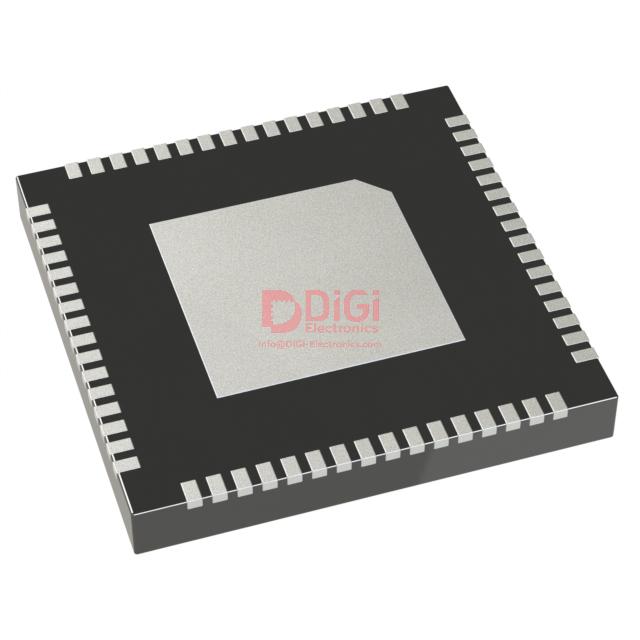
The KSZ9563RNXC utilizes a lead-free, 64-pin VQFN package sized at 8x8 mm, providing an optimal balance between compactness and robust electrical performance. This package design effectively supports high-density PCB layouts, minimizing trace lengths and facilitating precise routing in multi-layer configurations. The exposed thermal pad and recommended PCB land pattern play a critical role; they are engineered to maximize thermal conduction from the IC to the board, with a specific emphasis on dense thermal via arrays beneath the pad. Notably, optimized thermal management not only stabilizes device operation under sustained load but also extends the lifecycle of solder joints, reducing long-term maintenance requirements in deployed systems.
Pinout assignments remain consistent with established interface standards, simplifying connectivity for Ethernet and ancillary signals. The uniformity of the mechanical layout ensures reliable automated assembly, enhancing production yield and reproducibility across manufacturing batches. The integration process benefits further from the VQFN’s flattened profile, which supports reflow soldering with controlled temperature gradients—a practice that improves solder fill and mitigates void formation, especially in high-current pathways.
From a hardware development perspective, careful attention to footprint accuracy and pad finish is required. Utilizing immersion gold or equivalent surface treatments on PCB contact points enriches solderability, especially when accommodating the fine pitch of the KSZ9563RNXC. The package's sheer density, while beneficial, necessitates controlled impedance routing, particularly for differential pairs and clock traces, where signal integrity directly impacts network reliability. Proven layout strategies include maintaining consistent trace widths and spacing, tight ground referencing, and avoiding stubs on critical data paths.
In high-throughput networking deployments, minimizing thermal resistance via extensive via stitching under the thermal pad yields tangible improvements in continuous performance. Experience shows that balancing via count and copper area underneath the device enables efficient heat sinking without jeopardizing board strength. When paired with high-frequency applications, attention to solder mask clearance and precise placement of decoupling capacitors near power pins substantially reduces electromagnetic interference and voltage droop during transient events.
A distinctive integration advantage of the KSZ9563RNXC lies in its adherence to industry-standard mechanical and electrical conventions. This consistency allows rapid prototyping, modular replacement, and future scalability—a design philosophy that simplifies system evolution and reduces migration overhead. The package-accommodated test points and debug access routes, if incorporated at the layout stage, further facilitate development iteration and post-assembly validation. Thus, embedding thermal, mechanical, and electrical synergy at the initial design phase is central to exploiting the full hardware capabilities of the KSZ9563RNXC in advanced embedded networking projects.
Potential Equivalent/Replacement Models for KSZ9563RNXC
Evaluation of alternative models to the KSZ9563RNXC requires precise mapping of functional requirements to specification variants within the KSZ956x family and beyond. The engineer's primary filter is port configuration and interface compatibility; for instance, integration of higher port-count variants such as the KSZ9567RNXC—if the network architecture demands broader connectivity—or exploration of QSPI/MII/RGMII interface options to align with host processors, bridging diverse system designs with minimal adaptation effort. The versatility of the KSZ956x series centers on scalability in both bandwidth and protocol feature set. Assessing whether IEEE 1588 PTP support is mandatory for time-sensitive networking, or if AVB features are necessary for audio/video streaming, narrows the scope to managed switches possessing certified hardware timestamping and traffic shaping engines.
System performance also hinges on power envelope and operating temperature: selection for industrial or automotive deployments necessitates attention to devices rated for -40°C to +85°C operation and robust ESD protection. When extending the search to competitive offerings, device-specific compatibility for switch management protocols—such as SNMP, LLDP, and comprehensive PHY diagnostics—becomes a critical differentiator. Silicon vendors like Broadcom and Marvell provide comparable managed gigabit switches but often diverge in register map, firmware support, and software development kit maturity, directly impacting integration overhead and long-term maintainability.
Practical design experience suggests early prototyping with evaluation boards to validate not just basic port activity but advanced features such as dynamic VLAN configuration and PTP accuracy. These trials often reveal subtle distinctions in packet forwarding latency, MAC address learning, and multicast filtering efficiency, which may be under-documented in datasheets. For cost-driven programs, package selection—ranging from QFN to BGA—affects assembly yield and thermal dissipation, with accessible layouts simplifying test and validation flows.
A layered consideration of ecosystem support, migration roadmaps, and long-term availability must precede final device commitment, especially for designs anticipating future bandwidth scaling or protocol evolution. Insight into vendor roadmap transparency and proven commitment to extended lifecycle support enables reduction in field requalification risks—merging technical scrutiny with strategic procurement. Decisions favor solutions that not only meet the immediate specification but also preserve architectural flexibility as application requirements shift.
Conclusion
The KSZ9563RNXC Gigabit Ethernet switch integrates a sophisticated switching fabric, enabling deterministic packet forwarding and congestion management suitable for latency-sensitive industrial networks. Its architecture supports a triple-port configuration, each offering flexible access to PHY and MAC interfaces. This allows seamless adaptation to diverse network topologies, from centralized backbone setups to distributed field devices. The inclusion of hardware-accelerated features, such as IEEE 1588 Precision Time Protocol (PTP) support and VLAN segmentation, empowers deployments requiring precise synchronization and traffic isolation, particularly in factory automation and process control environments.
Management capabilities extend through controllable registers, robust diagnostics, and standard interfaces like MII, RMII, and SGMII, facilitating granular configuration and remote monitoring. Advanced link aggregation and Quality of Service (QoS) algorithms provide traffic prioritization, eliminating bottlenecks in scenarios with critical control signals and voluminous sensor data. The device’s energy-saving modes, featuring power-efficient idle operation and dynamic link speed adjustment, mitigate operational costs in high-density deployments without compromising availability or throughput.
Deploying the KSZ9563RNXC within industrial networks demonstrates improved resilience against electrical noise and environmental variability, owing to its EMI-hardened packaging and integrated ESD protection. Its compatibility with Microchip’s software ecosystem and reference designs simplifies rapid prototyping and field integration, reducing lead time for solution implementation. Past system validation efforts reveal that leveraging hardware timestamping and cut-through switching in real-time automation settings can yield sub-microsecond end-to-end latencies—essential for synchronized robotic control and high-speed packaging lines.
For network architects seeking robust scalability, the KSZ9563RNXC’s multi-layer switching logic supports seamless expansion without redesign. This approach enables incremental capacity upgrades, stress-free coexistence with legacy protocols, and future optimization via in-field firmware updates. The device’s implicit convergence of performance, security, and maintainability sets a benchmark for next-generation industrial Ethernet platforms, underscoring its role as a cornerstone component in demanding edge networking infrastructures.


