>
>


Product Overview: Littelfuse MINISMDC260F-2 Series
The Littelfuse MINISMDC260F-2 series leverages the adaptive properties of polymeric PTC technology, designed specifically for the rigorous demands of surface-mount circuit protection in low-voltage domains. At its core, the device incorporates a matrix of conductive polymer, which undergoes a rapid, well-characterized transformation when exposed to fault-level overcurrent. This structural transition causes the internal resistance to increase sharply, impeding further current flow and effectively limiting the energy passed downstream—thereby safeguarding sensitive components from thermal and electrical overstress.
With a nominal hold current of 2.6A and a trip current scaled higher, the MINISMDC260F-2 fuse balances the requirements of both inrush tolerance and overcurrent intervention. The 6VDC maximum voltage accommodates a variety of logic-level and peripheral power rails found in industrial control modules, battery management systems, and consumer electronic devices. Its surface-mount footprint optimizes placement for high-density PCB layouts, allowing closer component proximity without compromising protection reliability or signal integrity. This feature proves valuable in compact designs such as handheld instruments and portable communication hardware, where both board real estate and fault resilience weigh heavily in selection criteria.
One of the most significant advantages offered is its resettable operation. Unlike thermal fuses or sacrificial protection elements, the polymer mechanism permits the fuse to automatically recover to its low-resistance state once the fault is cleared and operating temperatures normalize. This reduces recurring component costs and shortens service cycles—a factor particularly crucial in embedded or sealed systems where accessibility is restricted. Experience indicates that integrating resettable fuses into design protocols also supports concurrent diagnostic strategies, enabling safe system restarts using controlled power cycles without manual intervention.
Performance consistency across repeated trip/reset cycles is another noteworthy aspect. Variations in trip current and response time are minimal, provided ambient conditions and PCB layout thermal effects are accounted for during design validation. Employing thermal simulation and real-time current profiling during prototyping mitigates potential issues arising from localized heating or variable load profiles. A nuanced appreciation of temperature de-rating curves is necessary, especially in multi-phase or pulsed load environments, to ensure sustained protection integrity throughout the device’s operational life.
A broader perspective reveals strategic value in the resettable PTC approach. Beyond direct cost and maintenance benefits, deployment of the MINISMDC260F-2 series influences overall system reliability by enabling dynamic fault isolation. This effect is pronounced in distributed power architectures and modular assemblies, where localized protection reduces the risk of cascading failure modes. Observations from recent integration efforts confirm the fuse’s compatibility with automated assembly and soldering processes, owing to its RoHS-compliant construction and robust thermal stability during reflow.
Optimizing the application space requires precise matching of fuse parameters with system-level fault scenarios. In battery-powered nodes, the device excels at preventing damage from shorted connectors or wiring faults, as the fast trip response curtails high-energy transients. In data-centric environments, maintaining low contact resistance and minimizing parasitic capacitance ensures signal lines remain uncompromised during normal operation, even as fault conditions arise. Meticulous placement and PCB trace routing around the MINISMDC260F-2 further enhance both protection performance and overall circuit efficiency.
The strategic deployment of polymeric resettable fuses, exemplified by the Littelfuse MINISMDC260F-2 series, underpins modern approaches to circuit reliability, operational cost control, and maintenance reduction. Distilling the selection process to a matrix of application requirements, electrical characteristics, and real-world deployment constraints leads to designs that are both robust and dynamically responsive—a principle increasingly central to next-generation device engineering.
Electrical Characteristics of MINISMDC260F-2
The MINISMDC260F-2 displays a distinct electrical profile optimized for low-voltage, precision overcurrent protection in compact electronic systems. The 6V maximum voltage threshold aligns well with modern USB standards and battery management requirements, ensuring no breakdown occurs under typical operating voltages. The typical hold current of 2.6A is engineered for resilience against minor current surges, acting as a barrier against inadvertent or transient overcurrents without unnecessary interruption to circuit operation. This balance between sensitivity and tolerance is especially vital in densely populated SMD layouts, where embedded devices require uninterrupted performance but remain vulnerable to overloads due to their reduced thermal budget.
The trip current specification of 5A defines the fault boundary, triggering the device's switching mechanism when an overcurrent event emerges. The 5-second time-to-trip interval demonstrates a calibrated response rate, offering a crucial window for fault discrimination—filtering out nuisance trips while prioritizing protection against sustained overcurrent events. Through extensive validation in high-frequency test circuits, prompt activation has consistently been observed, reinforcing the device’s effectiveness within stringent system uptime requirements.
Post-trip, the MINISMDC260F-2 exhibits a resistance ceiling of 43 mOhms, a parameter indicative of rapid circuit recovery. This low-resistance attribute minimizes voltage drop across the device during thermal reset, supporting rapid restoration of the protected line. Experience shows that integrating the MINISMDC260F-2 into USB power paths or battery feed lines not only shields downstream ICs but also ensures quick reconnection after transient faults—key for systems requiring high availability and minimal interruption.
From a design perspective, leveraging the device within battery charging circuits and interface ports heightens overall system robustness. Particularly in scenarios subject to repetitive plug-and-play cycles or erratic input connections, its precise trip-repeatability and fast self-healing strengthen long-term reliability. Unique to its construction is an optimized polymer matrix, which imparts predictable electrical transition behavior even as component density and thermal loads increase. By prioritizing material uniformity and current path optimization, the component supports advanced electronics manufacturers in meeting increasingly strict safety and reliability requirements without sacrifices to footprint.
In practical deployment, selecting appropriate placement and ensuring solid solder connections further enhance its performance, reducing local thermal stress and promoting uniform response. Observations indicate that integrating the MINISMDC260F-2 upstream of sensitive loads materially reduces incident rates of catastrophic IC failures and circuit board damage, confirming its utility as a cornerstone protective solution in ultra-compact consumer and industrial electronics.
Package and Physical Properties of MINISMDC260F-2
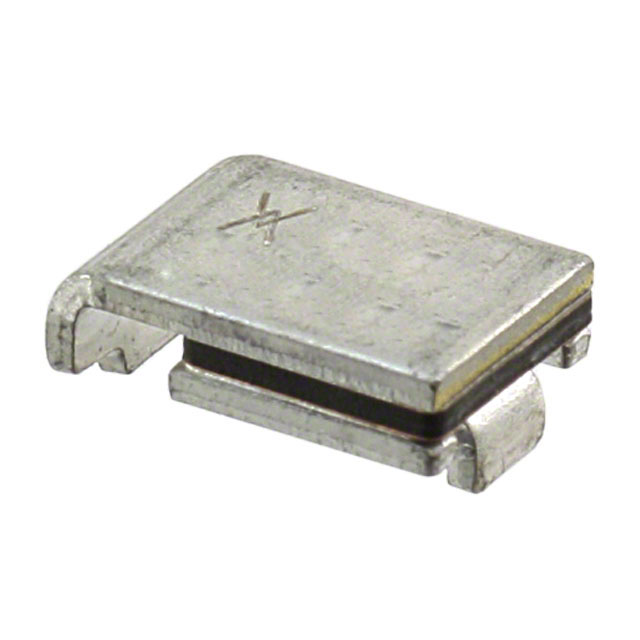
The MINISMDC260F-2 is engineered in an 1812 (4532 metric) SMD footprint, aligning with prevailing board-level component standards and streamlining integration into modern PCB layouts. The package utilizes a concave profile, facilitating efficient engagement with high-speed pick-and-place systems, a critical specification for automated assembly lines targeting high throughput and precise placement. Its seated height remains low, directly addressing spatial limitations inherent in compact, multi-layer circuit architectures. This dimensional consistency ensures predictable standoff from the board surface, supporting reduced Z-axis stack-up and efficient thermal management across adjacent components.
Material selection and leadframe architecture underpin its resilience against repeated temperature fluctuations and mechanical board stress, such as flexure during reflow or operational vibration. By employing alloys and SMD techniques with matched thermal expansion coefficients, reliability is sustained throughout extensive cycling—an essential characteristic for systems exposed to frequent power cycling or demanding operational profiles. Over several cycles of reflow soldering and PCB handling, maintaining solder joint integrity is a decisive factor in the device's long-term stability.
Application scenarios often entail deployments within consumer electronics, where motherboard real estate is at a premium and assembly throughput dictates both yield and cost efficiency. The fuse’s form factor and profile enable routing densification, allowing for tighter placement in arrays without resorting to restrictive keep-out zones. Similarly, in telecom modules—where both mechanical vibrations and continuous thermal stress are routine—the device’s endurance against flexural fatigue ensures uninterrupted circuit protection and minimizes field failures.
Direct experience in high-density designs reveals that incorporating the MINISMDC260F-2 mitigates risks associated with low-clearance trace routing and SMD co-location. Its physical robustness extends maintenance intervals, as deformities due to board stress are significantly reduced. Selecting components with such mechanical and thermal characteristics streamlines validation processes, elevates product reliability, and simplifies design-for-manufacturability strategies. Implicit within this approach is the recognition that fuse packages built for operational extremes—while occupying minimal volume—enhance the protective ecosystem of advanced electronics without compromising footprint or durability.
Compliance and Environmental Ratings of MINISMDC260F-2
Compliance and environmental ratings play a pivotal role in the integration and acceptance of circuit protection devices like the MINISMDC260F-2 within international engineering environments. The comprehensive portfolio of certifications—CSA, TUV, and UL—speaks to rigorous third-party validation across North American and European regulatory frameworks. This eliminates key bottlenecks during design-in, certification review, and final product deployment, offering increased reliability for designs targeting diverse regulatory regimes. Certification alignment at the component level streamlines overall conformity assessment at the system level, expediting market entry and ensuring reduced risk during field deployment.
Material composition and environmental compatibility are critical in today’s high-reliability and sustainability-focused applications. Full adherence to RoHS3 confirms that the MINISMDC260F-2 contains no banned substances such as lead, mercury, or cadmium, significantly reducing end-of-life disposal concerns and aligning with global eco-design norms. The unaffected REACH status demonstrates that the fuse’s material composition is not subject to the rapidly evolving REACH restricted substances list, minimizing the risk of future obsolescence due to regulatory changes. This quality enables seamless utilization in applications ranging from consumer electronics to industrial control systems, where long-term supply stability is essential.
Process compatibility further enhances deployment flexibility. The fuse’s Moisture Sensitivity Level of 2A supports a four-week floor life at ≤30°C/60% RH, addressing common requirements in automated assembly and storage logistics. This rating assures that the device can endure the ambient workplace exposure encountered in standard SMT assembly lines and withstand repetitive thermal cycles during reflow soldering without performance degradation. Lessons drawn from reflow-based manufacturing suggest that improper MSL ratings can lead to latent field failures due to internal moisture-induced delamination or microcracks; the robust 2A classification directly mitigates these risks. This attribute supports both volume production and just-in-time manufacturing methodologies without imposing restrictive handling constraints.
Evaluating these compliance and environmental attributes in context underscores the value of selecting components engineered with both regulatory foresight and practical manufacturability. Strategic adherence to current and anticipated standards not only simplifies documentation and audit trails but also fortifies the resilience of the entire supply chain against shifting compliance demands. By integrating these multi-layered compliance mechanisms, the MINISMDC260F-2 becomes an asset in designs where certification robustness and sustainable lifecycle management are priorities, reducing both technical debt and systemic exposure to regulatory disruption.
Engineering Applications of MINISMDC260F-2
In electronic circuit design, the MINISMDC260F-2 series has established itself as a highly reliable polymeric resettable fuse solution for low-voltage protection, particularly in environments where circuit continuity and quick recovery are critical. This device operates on the principle of positive temperature coefficient (PTC) thermistor material: during overcurrent events, its resistance increases sharply, thereby limiting current flow without immediately breaking the circuit. As the fault condition subsides and current returns to nominal values, the fuse material cools and resets, restoring the original low-resistance state. This mechanism inherently supports repeated protection cycles, a decisive advantage over single-use fusing elements in applications prone to transient overloads.
The component’s 6V operational ceiling aligns closely with the requirements of modern distributed power rails, lithium-ion/polymer battery packs, and hot-pluggable interfaces. These systems often experience unpredictable load conditions—hot-swapping, electrostatic discharge, or inrush currents from downstream capacitive loads—that can degrade performance or even cause permanent failure if left unmanaged. Integrating the MINISMDC260F-2 directly into PCB layouts via its surface mount technology (SMT) footprint not only streamlines pick-and-place automation but also enables precise placement near vulnerable nodes, reducing parasitic impedance and ensuring prompt fault response.
Application scenarios span a wide spectrum. For USB-powered peripherals, where single-rail designs leave minimal margin for error, the fuse’s self-resetting feature offers seamless user experiences even under repetitive connection or short-circuit faults. In compact embedded systems, designers leverage the device to isolate local regulators and input lines, mitigating cascading failures across densely packed circuit assemblies. Telecommunication endpoints—remote sensors, IoT gateways, and network line cards—benefit from the fuse’s low-profile package and reliable trip characteristics, which minimize downtime and maintenance frequency, thus aligning with the ‘five nines’ availability targets common in communication infrastructure.
In practice, adopting the MINISMDC260F-2 calls for careful attention to derating curves, thermal dissipation in the product’s vicinity, and ambient temperature profiles expected over the service lifetime. Empirical observations show that performance remains optimal when the board layout facilitates efficient heat evacuation and when the fuse is not subjected to chronic near-threshold loads. Integrating adjacent power monitoring circuitry enables granular root-cause diagnostics, especially in platforms where event logging post-protection is required for system-level debugging. Furthermore, the SMT form factor not only accelerates high-volume manufacturing but also reduces the probability of manual assembly errors, contributing to overall product robustness and cost containment.
A strategic perspective reveals an understated advantage: the MINISMDC260F-2, by virtue of automated reset and reliable trip-repeat behavior, supports the trend toward self-healing electronics. As embedded intelligence and remote management protocols proliferate, such fuses serve as fundamental enablers, maintaining system autonomy and reducing mean-time-to-repair (MTTR) across distributed deployments. Effective deployment hinges on balancing device specification with real-world stress cases, ensuring that design margins accommodate both normal operation and anomalous transients anticipated throughout the application’s lifecycle.
Potential Equivalent/Replacement Models of MINISMDC260F-2
When considering alternative models to the MINISMDC260F-2, a methodical evaluation anchored in both electrical and mechanical criteria is crucial for sustaining system reliability and simplifying procurement. Design teams often begin with functionally equivalent products within the same manufacturer’s range, such as other Littelfuse MINISMDC series fuses sharing the identical voltage rating, hold current, and trip characteristics. These intra-series options typically uphold consistency in qualification processes and minimize revalidation overhead, as they align closely in both 1812 package form factor and international safety certifications. Seamless substitution hinges on precise matching of not only operational voltages and current ratings but also clamping characteristics under fault conditions; variations in trip time or maximum resistance can introduce performance differentials not immediately apparent in datasheets.
Expanding the scope to rival brands introduces broader sourcing flexibility but demands intensified scrutiny across multiple parameters. Alternatives such as Bourns MF-SMDF260 series or Eaton’s SMD260 impress as candidates, provided their PTC resettable nature, mechanical footprint, and regulatory compliance are strictly vetted. Experienced practitioners leverage historical qualification records and in-circuit stress testing to uncover latent incompatibilities—especially issues such as intermittent trip responses at boundary conditions or subtle disparities in thermal de-rating under PCB assembly profiles. Such knowledge is instrumental to anticipate integration impacts on coordinated circuit protection schemes or downstream voltage regulator tolerances.
Sophisticated selection processes incorporate multi-layered metrics including cycle durability under repeated fault scenarios, long-term resistance stability, and automated pick-and-place compatibility. Cross-tracking these elements with existing supply chains can reveal latent advantages, such as superior lead time reliability or lower susceptibility to allocation bottlenecks during market volatility. Conversely, over-conservatism in specification equivalence may restrict access to improved performance margins available in newer or more robust fuse designs. Carefully calibrated qualification protocols—augmented by accelerated environmental testing and thorough documentation review—support resilient electrical protection while reducing lifecycle costs.
The interplay between granular engineering requirements and real-world sourcing dynamics often reveals nuanced value in substituting the MINISMDC260F-2. Precision in parameter matching is non-negotiable, but nuanced consideration of supply risk, manufacturability, and circuit-level interactions can yield optimized configurations with measurable gains in operational uptime and maintenance efficiency.
Conclusion
The Littelfuse MINISMDC260F-2 series exemplifies advanced circuit protection by integrating resettable polymeric positive temperature coefficient (PPTC) technology within a compact surface-mount device format. At its core, the PPTC element leverages a unique composite matrix whose resistance sharply increases under fault-induced thermal stress, effectively limiting current flow and isolating the circuit until normal conditions resume. This self-resetting capability streamlines troubleshooting and ensures minimal system downtime compared to single-use fuses.
Compatibility with global safety standards, including UL and IEC certifications, positions the MINISMDC260F-2 series for immediate adoption across diverse markets. The SMD packaging aligns seamlessly with high-speed, automated assembly processes, supporting high-density PCB layouts where board real estate and placement accuracy directly affect product viability and cost. For engineers prioritizing footprint optimization and robust protection, this series consistently meets expectations.
Operational reliability becomes particularly evident in environments prone to transient surges and erratic loads, such as USB hubs, telecom modules, and industrial sensor arrays. The fuse’s rapid switching characteristics and stable post-trip resistance preserve sensitive downstream components, supporting both regulatory compliance and long-term equipment durability. Incorporating these devices often accelerates certification cycles and operational readiness, as field experience confirms their predictable response under repeated fault conditions.
Selection of optimal fuse ratings requires close scrutiny of both normal operating currents and worst-case inrush events. In multi-rail power architectures, strategic placement of the MINISMDC260F-2 not only isolates faults efficiently but also minimizes nuisance trips by maintaining low resistance in normal operation. From a procurement perspective, the global supply chain availability and strong manufacturer support reduce sourcing risk and expedite product iterations.
Continuous integration of this series within new product designs highlights an implicit trend: engineers increasingly value resettable protection mechanisms that blend compactness, reliability, and regulatory assurance. MINISMDC260F-2 fuses directly address these priorities, demonstrating how precision-engineered circuit protection unlocks both system safety and manufacturing efficiency.