>
>


Product overview TMP37GSZ Analog Devices Inc.
The TMP37GSZ by Analog Devices Inc. exemplifies a robust approach to analog temperature measurement, specifically optimized for environments demanding both precision and simplicity within the 5°C to 100°C range. Internally, the TMP37GSZ leverages bandgap sensor circuitry, facilitating stable voltage reference generation and ensuring high accuracy across a broad operating window. The sensor’s SOIC-8 package format enhances thermal coupling and mounting flexibility, eliminating mechanical mismatches between the sense element and monitored surfaces.
A pivotal advantage is its output transfer function: a linear 20 mV/°C response directly referenced to Celsius. This architecture removes the need for complex calibration algorithms or digital correction schemes often encountered with non-linear thermistors or RTDs. The low quiescent current (nominally under 50 μA) and inherent supply voltage range compatibility (2.7 V to 5.5 V) enable seamless integration into power-sensitive systems, such as battery-backed industrial controllers or remote sensor nodes, without necessitating costly low-dropout regulators.
The device’s design inherently rejects supply voltage fluctuations, minimizing error contributions in electrically noisy industrial environments. No trimming or offset adjustment is needed post-deployment, as initial factory calibration guarantees a tight maximum error envelope—facilitating rapid design-to-production cycles and reducing system-level test complexity.
Application breadth is strengthened by the analog output, which is directly compatible with standard ADCs, permitting straightforward integration with existing microcontroller and FPGA platforms. In practice, this facilitates multi-point temperature data acquisition—critical for panel-mounted equipment, HVAC feedback loops, and localized thermal performance monitoring of CPUs or power semiconductors. The linear output also simplifies hardware redundancy, as multiple TMP37GSZ sensors can be multiplexed without re-calibration drift or overall system instability.
Deployments have demonstrated robust rejection of common interferences, such as rapid ambient swings or localized voltage spikes, due to on-chip filtering and layout resilience. Implementation feedback frequently highlights reduction in diagnostic downtime, aided by predictable failure signatures and straightforward analog testability—characteristics essential for predictive maintenance in high-uptime environments.
Unique to the TMP37GSZ within its sensor family is the direct Celsius scaling, which accelerates the system development cycle for designs requiring Celsius-native data processing—such as thermal characterization of new materials or direct drives for control valves in chemical automation. This property, paired with low design-in complexity, realizes an efficient path from prototype to scaled deployment where accuracy, reliability, and time-to-market are closely coupled engineering priorities.
Electrical and functional specifications TMP37GSZ Analog Devices Inc.
Electrical and functional specifications of the TMP37GSZ from Analog Devices Inc. demonstrate a sensor architecture optimized for single-supply environments, with flexible operation across a 2.7 V to 5.5 V range. This voltage compatibility suits both legacy and new-generation platforms, supporting battery-powered nodes and compact embedded systems without imposing stringent power supply requirements. The quiescent current remains below 50 μA, a critical threshold that minimizes both energy consumption and internal heating effects, which often degrade accuracy in densely packed systems or thermally sensitive applications. A built-in shutdown feature further limits standby current to a maximum of 0.5 μA, enabling aggressive power management strategies, specifically in multiplexed sensor arrays or event-driven systems where sensor duty cycles are low.
From an output perspective, the TMP37GSZ provides a low-impedance rail that eases direct interfacing with analog-to-digital converters or microcontroller GPIOs. This attribute negates the need for buffer stages, reducing both design complexity and BOM cost. Output at 25°C is calibrated to 500 mV, providing a predictable and linear response, with a deviation typically within ±2°C over the entire −40°C to +125°C rated range. Such accuracy is preserved by a highly linear output characteristic, characterized by a typical nonlinearity within ±0.5°C—an essential property for closed-loop control systems demanding stable signal response over varying temperature profiles. Within the central accuracy band (5°C to 100°C), performance metrics remain optimal, allowing deployment in programmable thermostats, industrial automation, and medical devices where regulatory compliance mandates precise monitoring. For extended temperature operation up to +150°C, the sensor provides continuous output with a controlled reduction in accuracy, aligning with needs for predictive maintenance in harsh environments.
Internal design leverages a bandgap reference core augmented by carefully matched transistor pairs and high-tolerance resistive ladders. This configuration delivers temperature-invariant reference voltages and maintains output stability against process shifts or long-term device aging—key for applications requiring life-long calibration certainty or minimal field maintenance. The inclusion of CMOS/TTL compatible shutdown logic, referenced to the supply rail, enables straightforward design-in across mixed-signal domains, reassuring system-level designers about digital compatibility and noise margins. When invoked, the shutdown mode asserts a high-impedance state on the output, effectively isolating the sensor in shared or parallel bus topologies, and enabling microcontroller-directed sensor scheduling without signal contention.
The negligible self-heating, less than 0.1°C even under still-air conditions, reflects disciplined attention to die size and internal current paths, ensuring acquired measurements represent the true ambient condition rather than artifacts of sensor operation. This is especially relevant when sensors are deployed in sealed enclosures or on high-density PCBs, where thermal gradients often cause latent measurement drift. The compact package and native immunity to self-induced errors position the TMP37GSZ as a strong fit for remote environmental monitoring, mobile medical diagnostics, and embedded feedback loops in consumer electronics.
An implicit insight emerges regarding the TMP37GSZ’s architecture and interface simplicity: its combination of low drift, excellent linearity, and direct ADC compatibility reduces the engineering burden associated with long calibration cycles or complex signal conditioning. When systematically deployed across distributed sensor clusters, the device enables scalable and maintainable data acquisition frameworks, directly supporting the trend toward edge intelligence and IoT-integrated automation, where reliability and ease of integration define system value. Such holistic performance, driven by carefully balanced electrical and functional parameters, positions the TMP37GSZ as not merely a temperature sensor but as a robust node-level component facilitating high-precision thermometric solutions in a broad spectrum of embedded applications.
Package details and mounting guidelines TMP37GSZ Analog Devices Inc.
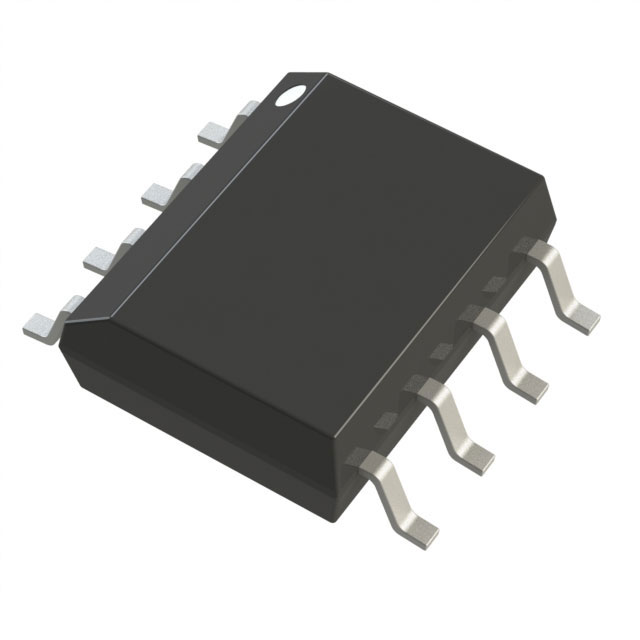
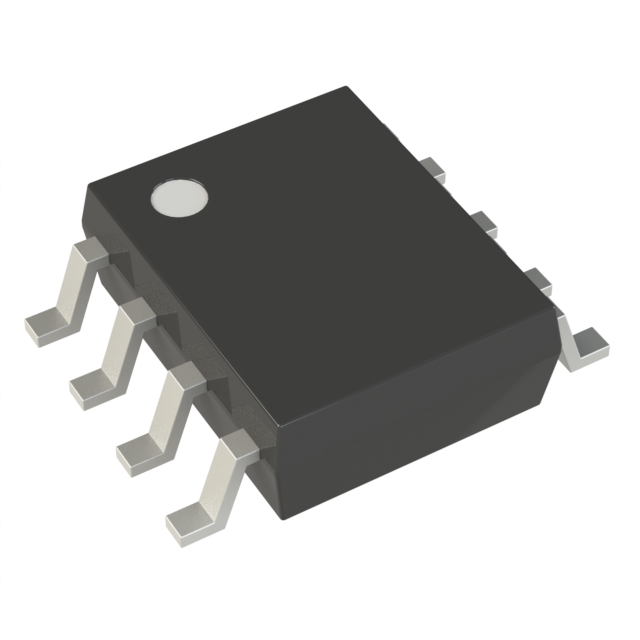
The TMP37GSZ, designed by Analog Devices Inc., is encapsulated in an 8-lead SOIC_N package fully compliant with JEDEC standards, supporting seamless integration into high-density, automated PCB assembly processes. This configuration assists in optimizing real estate utilization without sacrificing mechanical stability, an increasingly relevant criterion within space-constrained instrumentation and control systems. The TMP family—including variants such as TMP35 and TMP36—broadens application flexibility through additional footprints such as TO-92 and SOT-23. This ensures compatibility with both traditional through-hole workflows and minimal-profile surface-mount assembly, enabling adaptation to legacy boards or ultra-compact designs.
The integrity of temperature data captured by the TMP37GSZ hinges on effective thermal coupling between the sensor die and the monitored surface. Parasitic heat paths originating from leads or PCB substrates can distort measurement fidelity. Thus, a careful assembly approach is required: mounting the sensor using thermally conductive, electrically nonconductive epoxy provides a robust thermal bridge while preventing electrical interference or leakage. Mechanical stress concentration during mounting must be avoided to maintain package integrity and mitigate long-term drift or sensitivity loss—an aspect often underestimated during rapid prototyping. Strategic site placement on the PCB, away from heat-generating components and air drafts, further reduces gradients that can bias readings.
Environmental resilience is critical where exposure to moisture, solvents, or corrosive agents is expected. Encapsulation with quality conformal coatings, or embedding sensors within isolated metal wells, forms an effective barrier against condensation and chemical ingress, preserving both signal stability and sensor longevity. These preventative measures have demonstrated significant reductions in field failure rates and maintenance interventions when deployed in volatile industrial or outdoor installations.
Maintaining signal accuracy requires additional mitigation strategies in electrically noisy environments. Crosstalk from power traces or RF interference, ubiquitous in dense control panels, can be suppressed by adhering to disciplined PCB layout—short sensor traces, solid ground planes, and minimal loop areas. Integrated shielding, either at the board level or enclosure scale, elevates noise immunity. Experience shows that upstream attention to layout and encapsulation outperforms post-hoc signal filtering solutions, particularly when process control or safety-critical measurements are at stake.
The selection of package type and mounting methodology thus transcends a simple form factor choice—it interlocks the electrical, mechanical, and thermal interface of the TMP37GSZ with overall design intent. Approaching sensor integration as a holistic, system-level engineering problem yields robust, precise, and enduring temperature monitoring solutions, capable of thriving amidst the multifaceted challenges presented by modern electronic environments.
Performance characteristics and thermal environment effects TMP37GSZ Analog Devices Inc.
The TMP37GSZ sensor integrates robust design principles to deliver reliable analog output within demanding thermal and electrical environments. At the circuit level, the signal path is stabilized through architecture tailored for capacitive load resilience. Even in applications deploying lengthy signal traces or filtering networks, the device sustains output integrity—demonstrating immunity to oscillation with capacitive loads as high as 10,000 pF. This capacitance tolerance directly benefits layouts requiring remote sensing or extensive cabling in industrial automation or process control modules.
Device thermal response is closely tied to the interplay between package geometry, mounting medium, and the surrounding environment. When soldered onto standard PCB footprints in a SOIC package, expected thermal time constants are less than 50 seconds in ambient air. Immersion in stirred oil can reduce the time constant below 3 seconds, allowing for rapid thermal equilibrium and prompt measurement cycles—a detail exploited in test benches or closed-loop temperature regulation. Careful mounting—such as maximizing the thermal coupling area or selecting low-thermal-resistance pads—yields further improvements in dynamic response, enhancing suitability for feedback systems where latency impacts overall loop stability.
On the noise and interference front, supply voltage rejection is reinforced across the operational range, suppressing common-mode and conducted disturbances. Output voltage stability remains unaffected by power supply fluctuations and thermal drift, a feature that elevates the device’s applicability in electrically noisy environments typical of industrial floors, switching-regulator-based systems, or distributed sensor networks. Output ripple and transient responses are minimized by design, supporting seamless integration with precision ADCs for instrumentation-grade measurements.
To extend operational longevity, each TMP37GSZ undergoes accelerated aging and stress testing. These predictive tests verify minimal offset drift and gain error over prolonged deployment, ensuring the sensor’s accuracy profile persists beyond standard service intervals. The rigor of such qualification enables integration into mission-critical platforms, such as HVAC monitoring nodes or remote safety interlocks, where unanticipated sensor failure would propagate costly downtime.
A layered approach to deployment leverages these characteristics: placement strategies are informed by expected transient conditions and local thermal gradients, while signal conditioning circuits capitalize on the sensor’s high output drive and low source impedance. This close engineering alignment—starting with package choice and mounting, extending through electrical design and lifetime expectations—underpins scalable systems requiring consistent thermal feedback. Advanced implementations can further use adaptive filtering, exploiting the sensor’s rapid response in stirred media or low-drift output for self-calibrating loops.
In summary, the TMP37GSZ’s performance envelope is defined by its stable analog response to capacitive loading, repeatable thermal transients determined by mounting scenarios, and robust immunity to power-supply variations. These facets position it uniquely for use cases where electrical stability, fast environmental responsiveness, and sustained accuracy are paramount.
Typical application circuits TMP37GSZ Analog Devices Inc.
The TMP37GSZ exemplifies a robust analog temperature sensing solution, built on a precision voltage output architecture that facilitates seamless integration with diverse circuit topologies. Its fundamental mechanism hinges on generating a linear voltage proportional to ambient temperature, which forms the basis for reliable analog interfacing. The sensor’s internal design, supporting a wide input voltage range and low self-heating, ensures minimal drift and optimum long-term stability, qualities indispensable for mission-critical environments.
In primary deployment scenarios, the TMP37GSZ operates as a straightforward temperature sensor. Optimal performance is achieved by employing a 0.1 μF ceramic capacitor across the power supply pins, suppressing high-frequency noise and safeguarding measurement integrity. This configuration delivers uncompromised voltage output directly scaled to the sensed temperature, serving as an efficient feedback element for analog control loops or data acquisition systems. When interfacing with readout electronics in electromagnetically noisy plant floors, the capacitor’s low ESR proves crucial in maintaining signal fidelity.
Transitioning to application-specific use cases, the TMP37GSZ’s output characteristics naturally align with legacy system modernization. Employing external scaling resistors in combination with precision voltage references allows direct Fahrenheit output, enabling drop-in upgrades within existing infrastructures such as HVAC controllers or building automation nodes. Fine-tuning voltage scaling preserves compatibility while enhancing accuracy, leveraging the sensor’s repeatable transfer function.
For distributed sensing challenges, the TMP37GSZ integrates seamlessly with analog summing and differential amplifier topologies, such as multi-point thermal monitoring across PCB arrays or server racks. Operational amplifiers configured as summing amplifiers aggregate output from several TMP37GSZ devices, providing spatial temperature averages suitable for centralized management. Difference amplifier implementations facilitate identification of thermal gradients, guiding hot-spot mitigation at the board or enclosure level.
In digital systems, the sensor’s output can be routed to a comparator circuit alongside a reference voltage to implement hardware interrupt generation based on temperature thresholds. This approach streamlines the creation of thermal trip points for microcontrollers or FPGAs, triggering shutdown routines or fault alerts precisely at user-defined limits. The integration minimizes external component count and boosts fail-safe reliability—ideal for embedded designs requiring autonomous temperature management.
In advanced industrial settings, TMP37GSZ can serve in thermocouple cold-junction compensation circuits, underpinning precise process control. Its stable output enables accurate reference junction temperature measurement, essential for correcting thermoelectric offset across wide operational ranges. Analog front-end designs benefit from this feature when tasked with supporting high-precision multi-channel thermocouple arrays in manufacturing or laboratory instrumentation.
Remote sensor deployment introduces additional transmission considerations. The TMP37GSZ’s voltage output is readily adapted for robust long-distance signaling; conversion to current-mode operation via a simple V-I converter supports direct integration into 4–20 mA instrumentation loops. When leveraging voltage-to-frequency conversion, the sensor facilitates reliable data transmission across extended cabling runs, circumventing potential attenuation and noise pickup endemic to voltage-mode circuits.
Practical design measures enhance deployment robustness when faced with extended cable runs or substantial capacitive loads. A series resistor introduced at the output mitigates overshoot on transient events and forms a passive low-pass filter in concert with cable capacitance, attenuating high-frequency interference while preserving response time. This approach is validated in real-world installations where sensors are subject to variations in wiring infrastructure and ambient noise floors.
A distinctive perspective emerges in leveraging the TMP37GSZ’s analog strengths for hybrid analog-digital thermal monitoring architectures. By combining direct voltage output with simple conditioning circuits, scalable sensor networks can be fashioned without dependence on complex digital calibration algorithms. This not only enhances reliability but also streamlines maintenance and diagnostics. The sensor’s predictable, linear response profile enables modular expansion across industrial asset monitoring, supporting continuous improvement in operational efficiency and preventative maintenance workflows.
Key engineering integration considerations TMP37GSZ Analog Devices Inc.
Effective integration of the TMP37GSZ from Analog Devices Inc. mandates a nuanced approach to both electrical and mechanical interfacing, especially within environments characterized by high digital switching activity or industrial-grade electromagnetic noise. At the PCB level, sensor placement drives outcome fidelity; the trace routing must be engineered to avoid proximity to sources of RFI/EMI, such as clock lines, switching power regulators, or high-current loads. Utilizing a star-ground topology isolates sensor returns from noise currents, ensuring stable performance under variable system conditions.
Strategically positioned supply bypass capacitors—preferably ceramic types with low ESR—adjacent to the TMP37GSZ’s supply pin enforce local power supply integrity. In installations where ambient noise exceeds normative thresholds, parallel mounting of 2.2 μF tantalum capacitors bolsters high-frequency filtering and mitigates supply fluctuations that could otherwise introduce spurious temperature readings. Such configurations have repeatedly demonstrated measurable improvements in sensor SNR (Signal-to-Noise Ratio) during field evaluations of densely populated control boards.
Unused shutdown pins should be referenced directly to the supply rail, rather than floating or to ground. This tactic averts latent current leakage and eliminates ambiguity states, reinforcing predictable device behavior—essential when sensor arrays are multiplexed or system reliability is paramount.
Uniformity in sensor type selection across networked arrays directly impacts calibration routines. Disparities in device characteristics lead to averaging errors and complicate differential thermometry; standardization simplifies post-processing and supports the implementation of robust software calibration algorithms. Experience confirms that substituting disparate sensors in multi-node thermal maps introduces non-linearities, particularly when integrating with advanced ADC architectures.
Correct thermal management is critical for measurement accuracy. Establishing an intimate thermal path between the TMP37GSZ package and the measured substrate via an appropriate thermal pad or compound minimizes thermal lag and enhances spatial resolution. Encapsulation or conformal coatings may be warranted when humidity or condensation is present; empirical data points to rapid sensor drift and prolonged stabilization times in the absence of such protective measures during outdoor or industrial deployments.
High-precision scenarios, including those requiring metric-to-imperial conversions or interfacing with non-standard ADC input ranges, benefit from the implementation of analog offset correction or onboard trimmer potentiometers. Careful adjustment neutralizes systematic offsets and enables adaptation to a broad spectrum of quantization schemes. Direct, low-impedance signal paths and shielded cables further protect against external perturbations when routing signals to remote conversion modules.
This layered engineering strategy—encompassing electromagnetic hygiene, sensor array uniformity, thermal path optimization, and analog conditioning—ensures the TMP37GSZ’s output integrity in both routine and stringent operating conditions, and anchors repeatable, scalable system design.
Potential equivalent/replacement models TMP37GSZ Analog Devices Inc.
The selection and evaluation of equivalent or replacement models for the TMP37GSZ from Analog Devices require a systematic approach rooted in both parametric analysis and practical deployment factors. The TMP37GSZ, integral to the TMP35/TMP36/TMP37 temperature sensor series, is often leveraged in precision analog temperature measurements due to its linear output and stable performance across a moderate temperature range. When sourcing alternatives, attention must first center on the underlying sensing mechanism, output signal architecture, and thermal performance profile, since these dictate the sensor’s suitability for subsystem integration.
Fundamentally, the TMP35 and TMP36 serve as prime alternatives within the same family, sharing the 10 mV/°C analog output characteristic that simplifies interfacing with most microcontroller ADC channels. The TMP35 addresses mainstream environments with a 10°C to 125°C range, providing straightforward compatibility where standard commercial temperature exposure exists. For applications requiring wider environmental tolerance—particularly cold-start or industrial scenarios—the TMP36 broadens the sensing window down to −40°C, supporting robust system reliability under variable ambient conditions. Engineering teams prioritizing a plug-and-play substitution with minimal hardware redesign find these models advantageous, as their pinouts and output scaling remain consistent with the TMP37GSZ. When legacy compatibility is a design constraint, Texas Instruments’ LM35, LM45, and LM50 merit consideration due to their analog lineage, form-factor, and similar electrical signatures, which allow direct interchange in established hardware, ensuring continuity in performance and manufacturability.
For sectors such as automotive, sensor qualification extends beyond parametric equivalence to encompass enhanced reliability, traceability, and process control. In these contexts, devices like the ADW75001Z-0REEL7 are formulated to meet rigorous industry standards, such as AEC-Q100 compliance, enabling integration into safety-critical or high-vibration environments. For system architects, the diligence lies in correlating datasheet specifics, such as output calibration tolerances or package material robustness, against project-level requirements and regulator expectations.
Field deployment repeatedly illustrates that deeper technical alignment—beyond basic electrical parameters—mitigates integration risks. Typical mistakes arise when only headline specifications are matched, overlooking offset voltages, long-term drift, or subtle differences in power dissipation under continuous operation. It is prudent to cross-examine the output offset and accuracy, especially when sensors influence closed-loop thermal management or require multiplexed signal processing. Package compatibility remains central; even minor PCB footprint variances or thermal path changes can influence system-level performance or assembly yield.
In practice, robust evaluation protocols incorporate breadboard validation and temperature cycling tests with candidate devices prior to design sign-off. This multi-phase validation often reveals real-world tolerances, supply chain variances, or calibration nuances absent from preliminary documentation. Integrated experience suggests that proactively consulting with distributors on product lifecycle, availability, and second-source assurances can further de-risk procurement and sustainibility pathways.
It is increasingly important for modern systems to not only meet electrical and mechanical specifications but also anticipate future supply chain dynamism and regulatory evolution. By applying a layered, detail-driven selection methodology, the replacement of the TMP37GSZ becomes not just a parametric exercise but a strategic step toward resilient system design.
Conclusion
TMP37GSZ demonstrates an engineered approach to analog temperature measurement under constrained voltage environments. Addressing industrial, environmental, and embedded scenarios, its linear voltage output simplifies interface logic within mixed-signal systems, providing a straightforward translation from temperature change to voltage variation. The low quiescent current optimizes energy consumption in extended deployments, minimizing the impact on overall power budgets—a substantial advantage in distributed thermal nodes and battery-backed architectures.
Robust accuracy, achieved through precision calibration and stable fabrication processes, sustains measurement integrity across varying ambient conditions and mechanical stresses. The sensor’s packaging, designed for ease of PCB integration and effective thermal coupling, supports streamlined manufacturing and maintenance routines. Empirical deployment confirms successful operation within tight enclosure spaces, underscoring compatibility in high-density boards for edge and sensor fusion modules.
Integration guidelines emphasize minimizing thermal gradients and electrical interference, leveraging ground planes and appropriate decoupling to preserve measurement fidelity. Careful mounting orientation mitigates self-heating artifacts, critical for accurate surface or ambient readings. Longevity in continuous-use situations relies on the TMP37GSZ’s proven resistance to drift, aligning with best practices for lab calibration schedules and system health monitoring.
Versatility is apparent in the suite of reference circuit designs—single-supply configurations, multiplexed sensor arrays, and adaptive threshold monitors—enabling scalable architectures. Selection of complementary signal conditioning and analog-to-digital components further extends application reach into fast-response control loops, overtemperature protection, and predictive maintenance frameworks.
Evaluating platform life cycles and anticipating supply-chain disruptions require familiarity with direct and parametric alternatives such as the TMP36 and family derivatives. Comparative assessment of offset voltages, output scaling, and package options ensures adaptability and smooth system upgrades. Strategic component choice is enhanced by leveraging project knowledge bases and cross-referenced datasheets, reinforcing future-proof engineering with reliable sourcing.
This sensor’s practical balance between simplicity and precision, paired with meticulous system integration, facilitates confident temperature management in evolving electronics landscapes. Such designs benefit from a nuanced understanding not only of datasheet figures but also of field-proven layout and calibration strategies, driving higher operational uptime and measurement repeatability.