


Request Quote
(Ships tomorrow)
UP4B-330-R Equivalent & Substitute Parts
Part Overview
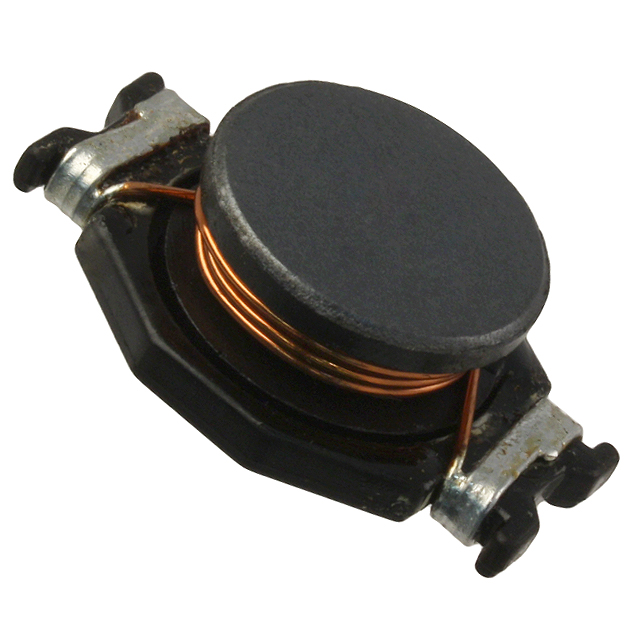
The UP4B-330-R is a 33 µH unshielded drum core wirewound inductor manufactured by Eaton - Electronics Division, part of the UNI-PAC™ series. This surface mount component is rated for 3.7 A continuous current with a maximum DC resistance of 52 mOhm and operates across the temperature range of -40°C to 85°C. The part maintains Active product status and is RoHS Compliant, making it suitable for modern electronic applications requiring fixed inductance in compact form factors.
Substitute parts are identified when equivalent inductance values, core materials, mounting types, and electrical performance parameters align within acceptable tolerances for the application, while accounting for differences in current ratings, DC resistance, and operating temperature ranges.
Substiute Parts
Key Parameters
| Parameter | Value | Unit |
|---|---|---|
| Inductance | 33 | µH |
| Current Rating | 3.7 | A |
| DC Resistance (Max) | 52 | mOhm |
| Core Material | Ferrite | — |
| Shielding | Unshielded | — |
| Mounting Type | Surface Mount | — |
| Operating Temperature | -40°C to 85°C | — |
| RoHS Status | RoHS Compliant | — |
Substitute Part Grouping Explanation
Substitution eligibility for the UP4B-330-R is determined by the following criteria:
Primary Matching Parameters:
- Inductance value: 33 µH (exact match required)
- Core type: Drum core, wirewound, ferrite material
- Shielding configuration: Unshielded
- Mounting technology: Surface mount
Secondary Compatibility Parameters:
- Current rating: Substitute must support the application's required current without exceeding saturation limits
- DC resistance: Substitute DCR must be acceptable for the circuit's thermal and efficiency requirements
- Operating temperature range: Substitute must cover or exceed the application's temperature operating window
- Tolerance: Inductance tolerance of ±15% to ±20% is acceptable for general applications
- Package dimensions: Physical footprint must accommodate the PCB layout constraints
The SDR2207-330YL from Bourns Inc. qualifies as a direct substitute based on matching inductance, core construction, and mounting type, with documented differences in current handling and DC resistance that must be evaluated against specific application requirements.
Parameter Comparison
| Parameter | UP4B-330-R (Eaton) | SDR2207-330YL (Bourns) | Notes |
|---|---|---|---|
| Inductance | 33 µH | 33 µH | Exact match |
| Inductance Tolerance | ±20% | ±15% | Bourns part has tighter tolerance |
| Current Rating (Amps) | 3.7 A | 3.4 A | Eaton part rated 0.3 A higher |
| Current - Saturation (Isat) | 6.1 A | 5.5 A | Eaton part has higher saturation point |
| DC Resistance (Max) | 52 mOhm | 58.4 mOhm | Bourns part has 6.4 mOhm higher resistance |
| Core Material | Ferrite | Ferrite | Identical |
| Shielding | Unshielded | Unshielded | Identical |
| Operating Temperature | -40°C to 85°C | -40°C to 125°C | Bourns part rated 40°C higher maximum |
| Mounting Type | Surface Mount | Surface Mount | Identical |
| Q @ Frequency | Not specified | 27 @ 3MHz | Bourns part provides Q specification |
| Frequency - Self Resonant | Not specified | 11 MHz | Bourns part provides SRF specification |
| Size / Dimension (L x W) | 22.10 mm x 15.00 mm | 22.00 mm x 15.00 mm | Negligible difference (0.10 mm length) |
| Height - Seated (Max) | 7.87 mm | 7.80 mm | Negligible difference (0.07 mm) |
| RoHS Status | RoHS Compliant | ROHS3 Compliant | Both compliant; Bourns meets ROHS3 |
| Moisture Sensitivity Level | 1 (Unlimited) | 1 (Unlimited) | Identical |
| Product Status | Active | Active | Both actively manufactured |
Engineering Selection Recommendations
Selection Criteria Based on Application Requirements:
Use UP4B-330-R (Eaton) when:
- Application requires current levels between 3.4 A and 3.7 A
- Lower DC resistance is critical for thermal management or efficiency
- Operating temperature does not exceed 85°C
- Saturation current margin above 6.1 A is required
- RoHS Compliant certification is the primary compliance requirement
Use SDR2207-330YL (Bourns) when:
- Operating temperature range extends to 125°C
- Tighter inductance tolerance (±15%) is required for circuit performance
- DC resistance of 58.4 mOhm is acceptable for the application
- Current requirements are 3.4 A or below
- ROHS3 Compliant certification is required
- Q factor specification at 3 MHz or self-resonant frequency at 11 MHz is relevant to circuit design
Compatibility Assessment: Both parts are Active products with unlimited moisture sensitivity (MSL 1), ensuring long-term availability and storage compatibility. Physical dimensions are virtually identical, with negligible differences in length (0.10 mm) and height (0.07 mm) that do not impact PCB layout. Both employ identical ferrite drum core construction and unshielded configuration, confirming functional equivalence for inductance delivery.
The primary trade-off between these parts centers on current handling capacity and operating temperature range. The Eaton UP4B-330-R provides superior current performance, while the Bourns SDR2207-330YL extends the upper temperature limit and offers enhanced tolerance specification.
Frequently Asked Questions (FAQ)
Q: Can SDR2207-330YL replace UP4B-330-R in all applications?
A: Substitution is valid only when the application's maximum current requirement does not exceed 3.4 A and the operating temperature does not exceed 85°C. If the circuit requires current above 3.4 A or operates above 85°C, the SDR2207-330YL is not suitable. Verify saturation current margins for your specific application.
Q: What is the significance of the 6.4 mOhm difference in DC resistance?
A: The higher DC resistance of the SDR2207-330YL (58.4 mOhm vs. 52 mOhm) results in increased power dissipation at rated current. At 3.4 A, the Bourns part dissipates approximately 0.675 W compared to 0.599 W for the Eaton part. This difference is significant in thermally constrained designs and must be evaluated against thermal budget limits.
Q: Are the physical dimensions interchangeable?
A: Yes. The parts differ by only 0.10 mm in length and 0.07 mm in height, which are negligible for PCB layout purposes. Both parts fit the same footprint and mounting pattern.
Q: What does the ±20% tolerance on the UP4B-330-R mean for circuit design?
A: The inductance value can vary between 26.4 µH and 39.6 µH across the manufacturing range. The SDR2207-330YL's tighter ±15% tolerance (28.05 µH to 37.95 µH) provides better consistency. For applications sensitive to inductance variation, the Bourns part offers improved performance.
Q: Can I use the SDR2207-330YL in a circuit designed for 3.7 A continuous operation?
A: No. The SDR2207-330YL is rated for 3.4 A maximum continuous current. Operating at 3.7 A will exceed the part's design limits and may cause premature failure or saturation effects. The UP4B-330-R must be used for this requirement.
Q: What is the difference between RoHS Compliant and ROHS3 Compliant?
A: Both certifications indicate lead-free and hazardous substance compliance. ROHS3 represents the current revision of the RoHS Directive and includes additional restricted substances. Both parts meet modern environmental and regulatory standards. Selection between them depends on your specific compliance documentation requirements.
Q: How do I determine which part is suitable for my application?
A: Verify three critical parameters: (1) maximum continuous current requirement, (2) operating temperature range, and (3) required inductance tolerance. Cross-reference these against the parameter comparison table. If your application exceeds the SDR2207-330YL's current or temperature limits, the UP4B-330-R is required.
Alternative Parts

SJ6012L2TP
Littelfuse Inc.
6 Alternative Parts

JMK107BBJ476MA-RE
Taiyo Yuden
10 Alternative Parts

GMK107BBJ475MA-T
Taiyo Yuden
5 Alternative Parts
SJ6020N2ARP
Littelfuse Inc.
3 Alternative Parts
SJ6025R2ATP
Littelfuse Inc.
4 Alternative Parts

2474-05L
API Delevan Inc.
1 Alternative Parts

4590R-684K
API Delevan Inc.
1 Alternative Parts

CM6560R-334
API Delevan Inc.
1 Alternative Parts

CM6460-104
API Delevan Inc.
1 Alternative Parts

5526-12
API Delevan Inc.
1 Alternative Parts