



Request Quote
(Ships tomorrow)
TR8000 RF Transceiver Module - Equivalent & Substitute Parts
Part Overview
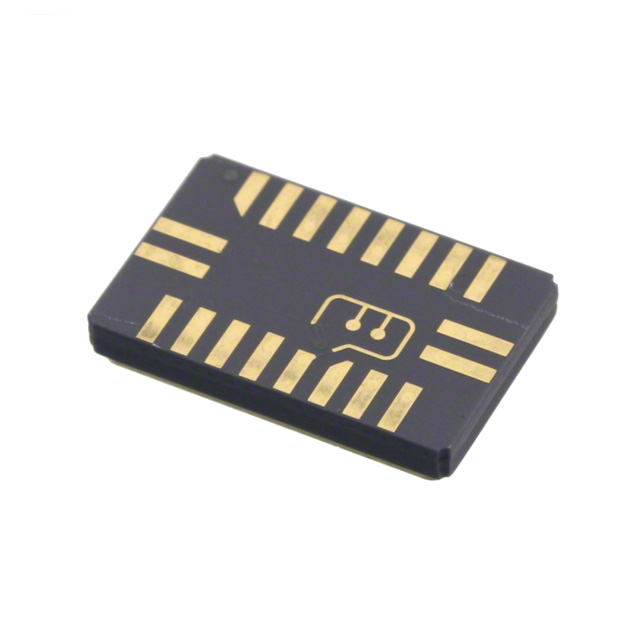
The TR8000 is an RF transceiver module manufactured by Murata Electronics, designed for ISM band applications below 1GHz, specifically operating at 916MHz. This module provides integrated transmit and receive functionality with ASK/OOK modulation support. The TR8000 is classified as obsolete, making identification of functionally equivalent alternatives necessary for ongoing system support and new design implementations. The module operates across a wide temperature range (-40°C to 85°C) and is packaged in a 20-SMD surface mount configuration.
Substiute Parts
Key Parameters
| Parameter | TR8000 Specification |
|---|---|
| Manufacturer | Murata Electronics |
| Product Status | Obsolete |
| RF Family/Standard | General ISM < 1GHz |
| Frequency | 916MHz |
| Modulation | ASK, OOK |
| Data Rate (Max) | 115.2kbps |
| Power - Output | 10dBm |
| Sensitivity | -108dBm |
| Voltage - Supply | 2.2V ~ 3.7V |
| Current - Receiving | 4.2mA ~ 4.3mA |
| Current - Transmitting | 32mA |
| Operating Temperature | -40°C ~ 85°C |
| Mounting Type | Surface Mount |
| Package / Case | 20-SMD Module |
| Moisture Sensitivity Level (MSL) | 1 (Unlimited) |
| REACH Status | REACH Unaffected |
Substitute Part Grouping Explanation
The MRF24J40MD-I/RM from Microchip Technology is identified as a manufacturer-recommended substitute for the TR8000. Substitution logic is based on the following criteria:
Functional Equivalence Parameters:
- Both modules provide integrated RF transceiver functionality
- Both support surface mount installation
- Both operate across the -40°C to 85°C temperature range
- Both feature MSL 1 (Unlimited) moisture sensitivity classification
- Both maintain REACH Unaffected compliance status
Operational Differences: The MRF24J40MD-I/RM operates in the 2.4GHz frequency band using 802.15.4/Zigbee protocol with 250kbps data rate, whereas the TR8000 operates at 916MHz with ASK/OOK modulation at 115.2kbps. These represent distinct frequency and protocol implementations suitable for different application requirements.
Parameter Comparison
| Parameter | TR8000 | MRF24J40MD-I/RM |
|---|---|---|
| Manufacturer | Murata Electronics | Microchip Technology |
| Product Status | Obsolete | Active |
| Frequency | 916MHz | 2.4GHz |
| Modulation | ASK, OOK | Not specified |
| Data Rate | 115.2kbps | 250kbps |
| Power - Output | 10dBm | 19dBm |
| Sensitivity | -108dBm | -104dBm |
| Voltage - Supply | 2.2V ~ 3.7V | 3V ~ 3.6V |
| Current - Receiving | 4.2mA ~ 4.3mA | 32mA |
| Current - Transmitting | 32mA | 140mA |
| Operating Temperature | -40°C ~ 85°C | -40°C ~ 85°C |
| Mounting Type | Surface Mount | Surface Mount |
| Package Type | 20-SMD Module | Module |
| Moisture Sensitivity Level (MSL) | 1 (Unlimited) | 1 (Unlimited) |
| REACH Status | REACH Unaffected | REACH Unaffected |
Engineering Selection Recommendations
Selection between the TR8000 and MRF24J40MD-I/RM must account for the following factors:
Product Availability: The TR8000 is obsolete. The MRF24J40MD-I/RM maintains active product status with current manufacturing support from Microchip Technology.
Compliance & Certification: Both modules maintain REACH Unaffected status and MSL 1 classification. The MRF24J40MD-I/RM carries RoHS3 compliance certification.
Frequency Band & Protocol: The TR8000 operates at 916MHz with ASK/OOK modulation, while the MRF24J40MD-I/RM operates at 2.4GHz with 802.15.4/Zigbee protocol. Selection depends on regulatory requirements and existing system architecture for the target frequency band.
Power Consumption: The TR8000 exhibits significantly lower current draw during receive operation (4.2-4.3mA vs. 32mA) and transmit operation (32mA vs. 140mA). Applications with battery-powered or power-constrained requirements must account for this difference.
Supply Voltage: The TR8000 accepts 2.2V minimum supply voltage, while the MRF24J40MD-I/RM requires minimum 3V. Systems operating below 3V cannot use the MRF24J40MD-I/RM without voltage regulation modifications.
Frequently Asked Questions (FAQ)
Q: Can the MRF24J40MD-I/RM directly replace the TR8000 in existing designs?
A: Direct replacement is not possible without system redesign. The MRF24J40MD-I/RM operates at 2.4GHz with 802.15.4 protocol, whereas the TR8000 operates at 916MHz with ASK/OOK modulation. Antenna design, RF matching networks, and protocol stack implementations differ between these frequency bands and standards.
Q: What are the key substitution criteria for these modules?
A: Substitution is based on integrated RF transceiver functionality, surface mount packaging, identical operating temperature range (-40°C to 85°C), and equivalent moisture sensitivity classification (MSL 1). Frequency band, modulation scheme, and protocol implementation are distinct parameters that define application suitability rather than substitution compatibility.
Q: How do power consumption differences affect system design?
A: The MRF24J40MD-I/RM draws significantly higher current during both receive (32mA vs. 4.2-4.3mA) and transmit (140mA vs. 32mA) operations. Battery-powered applications or systems with strict power budgets must account for approximately 7.6x higher receive current and 4.4x higher transmit current when transitioning to the MRF24J40MD-I/RM.
Q: Are there supply voltage compatibility issues?
A: Yes. The TR8000 operates from 2.2V minimum, while the MRF24J40MD-I/RM requires 3V minimum. Systems designed for 2.2V to 3V operation cannot use the MRF24J40MD-I/RM without additional voltage regulation or power supply modifications.
Q: What compliance certifications apply to each module?
A: Both modules maintain REACH Unaffected status and MSL 1 (Unlimited) moisture sensitivity classification. The MRF24J40MD-I/RM additionally carries RoHS3 compliance certification. The TR8000 is obsolete and no longer receives compliance updates.
Alternative Parts

SJ6012L2TP
Littelfuse Inc.
6 Alternative Parts

JMK107BBJ476MA-RE
Taiyo Yuden
10 Alternative Parts

GMK107BBJ475MA-T
Taiyo Yuden
5 Alternative Parts
SJ6020N2ARP
Littelfuse Inc.
3 Alternative Parts
SJ6025R2ATP
Littelfuse Inc.
4 Alternative Parts

2474-05L
API Delevan Inc.
1 Alternative Parts

4590R-684K
API Delevan Inc.
1 Alternative Parts

CM6560R-334
API Delevan Inc.
1 Alternative Parts

CM6460-104
API Delevan Inc.
1 Alternative Parts

5526-12
API Delevan Inc.
1 Alternative Parts