



Request Quote
(Ships tomorrow)
TLC271BID Equivalent & Substitute Parts
Part Overview
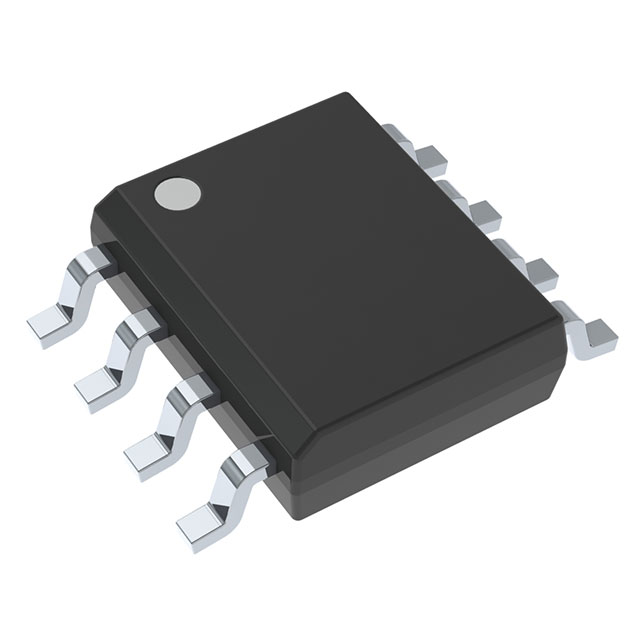
The TLC271BID is a general-purpose operational amplifier manufactured by Texas Instruments, housed in an 8-SOIC surface mount package. This device is classified as a Last Time Buy product, indicating limited future availability. The TLC271BID operates across a wide supply voltage range of 4V to 16V and is designed for applications requiring low input bias current and moderate bandwidth performance. Due to its Last Time Buy status, identifying functionally equivalent substitute components is essential for design continuity and long-term supply chain planning.
Substiute Parts
Key Parameters
| Parameter | Value | Unit |
|---|---|---|
| Amplifier Type | General Purpose | - |
| Number of Circuits | 1 | - |
| Slew Rate | 5.3 | V/µs |
| Gain Bandwidth Product | 2.2 | MHz |
| Current - Input Bias | 0.7 | pA |
| Voltage - Input Offset | 390 | µV |
| Current - Supply | 950 | µA |
| Current - Output / Channel | 30 | mA |
| Voltage - Supply Span (Min) | 4 | V |
| Voltage - Supply Span (Max) | 16 | V |
| Operating Temperature Range | -40 to 85 | °C |
| Package / Case | 8-SOIC (0.154", 3.90mm Width) | - |
| Mounting Type | Surface Mount | - |
| RoHS Status | ROHS3 Compliant | - |
| Moisture Sensitivity Level | 1 (Unlimited) | - |
Substitute Part Grouping Explanation
Substitute parts for the TLC271BID are identified based on strict electrical and mechanical compatibility criteria. The primary substitution parameters are:
Mechanical Compatibility:
- Package type: 8-SOIC surface mount configuration
- Pin count: 8 pins
- Physical dimensions: 0.154" width (3.90mm)
Electrical Compatibility:
- Single operational amplifier circuit (1 circuit)
- Supply voltage range: minimum 4V, maximum 16V
- Output current capability: 30 mA per channel
- Input bias current: 0.7 pA
- Input offset voltage: 390 µV
- Slew rate: 5.3 V/µs
- Gain bandwidth product: 2.2 MHz
- Operating temperature range: -40°C to 85°C
Regulatory Compliance:
- RoHS3 compliance
- MSL Level 1 (Unlimited moisture sensitivity)
Substitute parts must maintain identical or superior performance across these parameters while preserving the 8-SOIC package footprint for direct board-level replacement.
Parameter Comparison
| Parameter | TLC271BID (Main) | TLC271BIDR (Substitute) | TLC27L1CS-13 (Substitute) |
|---|---|---|---|
| Manufacturer | Texas Instruments | Texas Instruments | Diodes Incorporated |
| Amplifier Type | General Purpose | General Purpose | CMOS |
| Number of Circuits | 1 | 1 | 1 |
| Slew Rate (V/µs) | 5.3 | 5.3 | 0.04 |
| Gain Bandwidth Product (MHz) | 2.2 | 2.2 | 0.11 |
| Current - Input Bias (pA) | 0.7 | 0.7 | 0.7 |
| Voltage - Input Offset (µV) | 390 | 390 | 10000 |
| Current - Supply (µA) | 950 | 950 | 14 |
| Current - Output / Channel (mA) | 30 | 30 | 30 |
| Voltage - Supply Span Min (V) | 4 | 4 | 3 |
| Voltage - Supply Span Max (V) | 16 | 16 | 16 |
| Operating Temperature (°C) | -40 to 85 | -40 to 85 | 0 to 70 |
| Package / Case | 8-SOIC | 8-SOIC | 8-SOIC |
| Mounting Type | Surface Mount | Surface Mount | Surface Mount |
| Packaging Format | Tube | Tape & Reel | Tape & Reel |
| Product Status | Last Time Buy | Last Time Buy | Active |
| RoHS Status | ROHS3 Compliant | ROHS3 Compliant | ROHS3 Compliant |
| Moisture Sensitivity Level | 1 (Unlimited) | 1 (Unlimited) | 1 (Unlimited) |
Engineering Selection Recommendations
TLC271BIDR (Primary Substitute):
The TLC271BIDR is the manufacturer-recommended substitute for the TLC271BID. Both devices are produced by Texas Instruments and share identical electrical specifications across all critical parameters: slew rate (5.3 V/µs), gain bandwidth product (2.2 MHz), input bias current (0.7 pA), input offset voltage (390 µV), and supply current (950 µA). The only difference is packaging format: TLC271BIDR is supplied in Tape & Reel format versus the Tube packaging of the TLC271BID. Both maintain the same 8-SOIC surface mount package footprint, enabling direct PCB-level substitution. Both devices carry Last Time Buy status and ROHS3 compliance. The TLC271BIDR offers higher inventory availability (11,656 pcs versus 2,260 pcs), making it the preferred choice for immediate procurement and long-term supply security.
TLC27L1CS-13 (Alternative Substitute):
The TLC27L1CS-13, manufactured by Diodes Incorporated, provides an alternative substitute with important trade-offs. This device maintains mechanical compatibility through the 8-SOIC package and shares identical input bias current (0.7 pA) and output current capability (30 mA). However, significant electrical differences exist: the TLC27L1CS-13 exhibits substantially lower slew rate (0.04 V/µs versus 5.3 V/µs) and gain bandwidth product (110 kHz versus 2.2 MHz), along with higher input offset voltage (10 mV versus 390 µV) and dramatically reduced supply current (14 µA versus 950 µA). The operating temperature range is narrower (0°C to 70°C versus -40°C to 85°C), and minimum supply voltage is lower (3V versus 4V). The TLC27L1CS-13 carries Active product status, ensuring continued availability. This substitute is suitable only for applications where reduced bandwidth, lower speed performance, and narrower temperature range are acceptable trade-offs for significantly lower power consumption.
Frequently Asked Questions (FAQ)
Q: Can TLC271BIDR be used as a direct replacement for TLC271BID?
A: Yes. The TLC271BIDR is electrically and mechanically identical to the TLC271BID. Both share the same 8-SOIC package footprint, identical pin configuration, and all electrical specifications. The only difference is packaging format (Tape & Reel versus Tube). Direct PCB substitution is possible without circuit modification.
Q: What are the key differences between TLC271BIDR and TLC27L1CS-13?
A: The TLC271BIDR maintains full electrical equivalence to the TLC271BID with identical slew rate (5.3 V/µs) and bandwidth (2.2 MHz). The TLC27L1CS-13 is a lower-performance alternative with 98% reduction in slew rate and 95% reduction in bandwidth, but consumes 98.5% less supply current. Both use the 8-SOIC package. Selection depends on application speed requirements versus power consumption priorities.
Q: Is the TLC27L1CS-13 suitable for high-speed signal processing applications?
A: No. The TLC27L1CS-13 slew rate of 0.04 V/µs and gain bandwidth product of 110 kHz are insufficient for applications requiring fast signal response. The TLC271BIDR or TLC271BID are required for applications demanding the 5.3 V/µs slew rate and 2.2 MHz bandwidth performance.
Q: What is the temperature operating range difference between substitutes?
A: The TLC271BID and TLC271BIDR both operate from -40°C to 85°C. The TLC27L1CS-13 operates from 0°C to 70°C, a narrower range. Applications requiring operation below 0°C or above 70°C must use the TLC271BID or TLC271BIDR.
Q: Are all three parts RoHS3 compliant?
A: Yes. The TLC271BID, TLC271BIDR, and TLC27L1CS-13 are all ROHS3 compliant with MSL Level 1 (Unlimited) moisture sensitivity rating.
Q: What is the inventory status of each substitute?
A: TLC271BID (Tube): 2,260 pcs. TLC271BIDR (Tape & Reel): 11,656 pcs. TLC27L1CS-13 (Tape & Reel): 3,600 pcs. The TLC271BIDR offers the highest inventory availability.
Q: Can the TLC27L1CS-13 be used in applications designed for the TLC271BID?
A: Only if the application specifications permit operation with 98% lower slew rate, 95% lower bandwidth, 25x higher input offset voltage, and narrower temperature range (0°C to 70°C). Most applications designed for TLC271BID performance will not tolerate these reductions. Verification of application requirements is necessary before substitution.
Q: What is the supply voltage compatibility across all three parts?
A: TLC271BID and TLC271BIDR: 4V to 16V. TLC27L1CS-13: 3V to 16V. The TLC27L1CS-13 supports lower minimum voltage (3V), but all three support the standard 4V to 16V range.
Alternative Parts

SJ6012L2TP
Littelfuse Inc.
6 Alternative Parts

JMK107BBJ476MA-RE
Taiyo Yuden
10 Alternative Parts

GMK107BBJ475MA-T
Taiyo Yuden
5 Alternative Parts
SJ6020N2ARP
Littelfuse Inc.
3 Alternative Parts
SJ6025R2ATP
Littelfuse Inc.
4 Alternative Parts

2474-05L
API Delevan Inc.
1 Alternative Parts

4590R-684K
API Delevan Inc.
1 Alternative Parts

CM6560R-334
API Delevan Inc.
1 Alternative Parts

CM6460-104
API Delevan Inc.
1 Alternative Parts

5526-12
API Delevan Inc.
1 Alternative Parts