



Request Quote
(Ships tomorrow)
TL071ID Equivalent & Substitute Parts
Part Overview
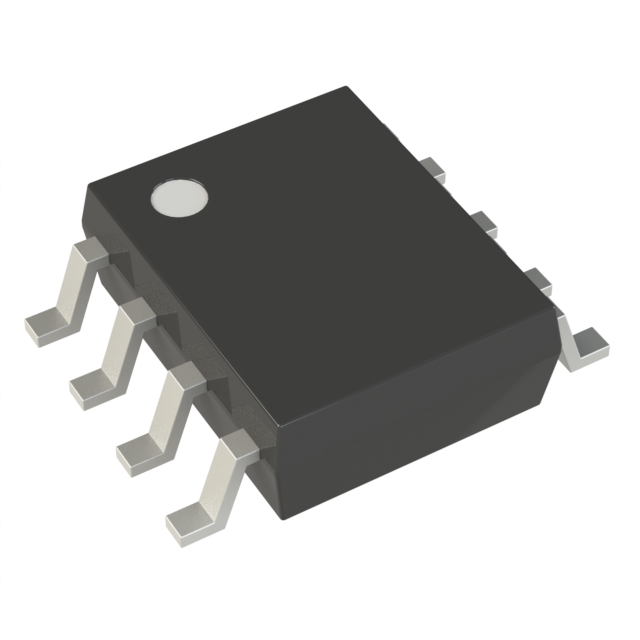
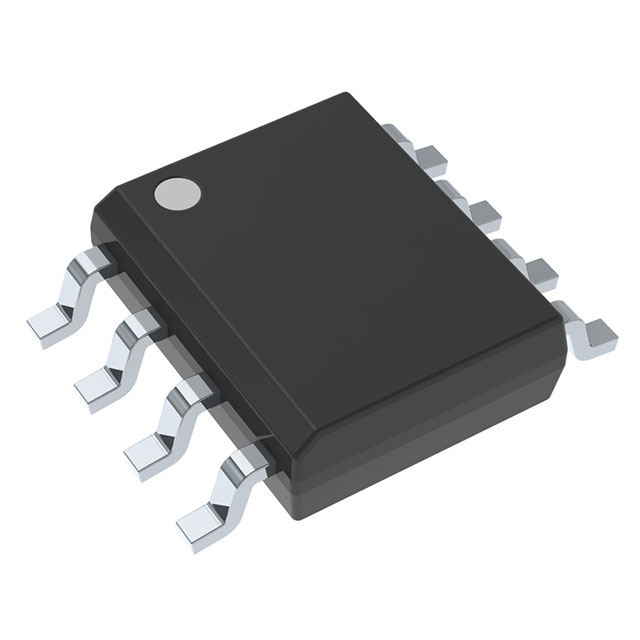
The TL071ID is a J-FET input operational amplifier manufactured by STMicroelectronics in an 8-SOIC surface mount package. This device is classified as obsolete, indicating discontinued production and limited availability. The TL071ID serves as a general-purpose JFET amplifier suitable for applications requiring low input bias current and wide supply voltage range. Due to its obsolete status, identification of equivalent and substitute parts is necessary for design continuity, procurement alternatives, and long-term product support.
Substiute Parts
Key Parameters
| Parameter | Value | Unit |
|---|---|---|
| Amplifier Type | J-FET | — |
| Number of Circuits | 1 | — |
| Slew Rate | 16 | V/µs |
| Gain Bandwidth Product | 4 | MHz |
| Current - Input Bias | 20 | pA |
| Voltage - Input Offset | 3 | mV |
| Current - Supply | 1.4 | mA |
| Current - Output / Channel | 40 | mA |
| Voltage - Supply Span (Min) | 6 | V |
| Voltage - Supply Span (Max) | 36 | V |
| Operating Temperature Range | -40 to 105 | °C |
| Package / Case | 8-SOIC (0.154", 3.90mm Width) | — |
| Mounting Type | Surface Mount | — |
| RoHS Status | ROHS3 Compliant | — |
| Moisture Sensitivity Level | 1 (Unlimited) | — |
Substitute Part Grouping Explanation
Substitution of the TL071ID is determined by compatibility across the following critical parameters: amplifier type (J-FET), number of circuits (1), package type (8-SOIC), and mounting method (surface mount). Additional substitution criteria include electrical performance parameters such as slew rate, gain bandwidth product, input bias current, input offset voltage, supply current, output current capability, and supply voltage range. Operating temperature range and product status (active versus obsolete) are secondary considerations that influence suitability for new designs versus legacy system maintenance.
Substitute parts are grouped into two categories: direct equivalents that maintain identical or near-identical electrical specifications, and functional alternatives that meet the core application requirements within acceptable parameter tolerances.
Parameter Comparison
| Part Number | Manufacturer | Product Status | Slew Rate (V/µs) | GBW (MHz) | Input Bias (pA) | Input Offset (mV) | Supply Current (mA) | Output Current (mA) | Supply Min (V) | Supply Max (V) | Temp Range (°C) | RoHS |
|---|---|---|---|---|---|---|---|---|---|---|---|---|
| TL071ID | STMicroelectronics | Obsolete | 16 | 4 | 20 | 3 | 1.4 | 40 | 6 | 36 | -40 to 105 | ROHS3 |
| TL071CD | onsemi | Obsolete | 16 | 5.25 | 20 | 3 | 1.4 | 40 | 6 | 36 | 0 to 70 | Non-compliant |
| TL071ACD | STMicroelectronics | Obsolete | 16 | 4 | 20 | 3 | 1.4 | 40 | 6 | 36 | 0 to 70 | ROHS3 |
| TL071ACDR | Texas Instruments | Active | 13 | 5.25 | 65 | 3 | 1.4 | — | 10 | 30 | 0 to 70 | ROHS3 |
| TL071BCD | Texas Instruments | Obsolete | 13 | 5.25 | 65 | 2 | 1.4 | — | 10 | 30 | 0 to 70 | ROHS3 |
| TL071BCDR | Texas Instruments | Active | 13 | 5.25 | 65 | 2 | 1.4 | — | 10 | 30 | 0 to 70 | ROHS3 |
| TL071CDR | Texas Instruments | Active | 13 | 5.25 | 65 | 3 | 1.4 | — | 10 | 30 | 0 to 70 | ROHS3 |
| TL071IDR | Texas Instruments | Active | 13 | 5.25 | 65 | 3 | 1.4 | — | 10 | 30 | -40 to 85 | ROHS3 |
| LF356M/NOPB | Texas Instruments | Active | 12 | 5 | 30 | 3 | 5 | — | 30 | 30 | 0 to 70 | ROHS3 |
| LF356MX/NOPB | Texas Instruments | Active | 12 | 5 | 30 | 3 | 5 | — | 30 | 30 | 0 to 70 | ROHS3 |
Engineering Selection Recommendations
For Direct Replacement (Obsolete System Maintenance):
The TL071ACD (STMicroelectronics) provides the closest electrical match to the TL071ID, maintaining identical slew rate (16 V/µs), gain bandwidth product (4 MHz), input bias current (20 pA), and supply current (1.4 mA). Both devices are ROHS3 compliant. The primary difference is the reduced operating temperature range (0°C to 70°C versus -40°C to 105°C), which is acceptable for standard industrial applications but not for extended temperature environments.
For Active Production Designs:
The TL071IDR (Texas Instruments) is recommended as the primary substitute for new designs. This device carries active product status, ensuring long-term availability and supply chain stability. It maintains ROHS3 compliance, identical supply current (1.4 mA), and compatible package specifications. The TL071IDR operates across -40°C to 85°C, supporting extended temperature applications. Electrical parameters show increased gain bandwidth product (5.25 MHz) and input bias current (65 pA) compared to the TL071ID, representing improved performance characteristics suitable for modern applications.
For Wide Supply Voltage Applications:
The TL071CD (onsemi) maintains the TL071ID's wide supply voltage range (6 V to 36 V) and identical slew rate (16 V/µs). However, this device is RoHS non-compliant and carries obsolete status, limiting its use to legacy system repairs where compliance requirements are not applicable.
For Dual-Supply Restricted Designs:
The TL071BCDR (Texas Instruments) and TL071CDR (Texas Instruments) are suitable alternatives when supply voltage is constrained to 10 V to 30 V. Both devices are active, ROHS3 compliant, and offer improved gain bandwidth product (5.25 MHz). The TL071BCDR provides superior input offset voltage specification (2 mV versus 3 mV).
For Low-Supply-Current Constraints:
All TL071 variants maintain 1.4 mA supply current. The LF356M/NOPB and LF356MX/NOPB (Texas Instruments) are not recommended as direct replacements due to higher supply current (5 mA), though they remain functionally compatible J-FET amplifiers in the same package.
Frequently Asked Questions (FAQ)
Q: Can the TL071IDR directly replace the TL071ID without circuit modification?
A: The TL071IDR is pin-compatible and functionally compatible with the TL071ID in the 8-SOIC package. Both devices are J-FET amplifiers with identical supply current (1.4 mA) and output current (40 mA). The TL071IDR exhibits higher gain bandwidth product (5.25 MHz versus 4 MHz) and increased input bias current (65 pA versus 20 pA). These differences are within acceptable tolerances for most general-purpose amplifier applications and do not require circuit redesign.
Q: What is the key difference between TL071ACD and TL071ACDR?
A: The TL071ACD and TL071ACDR are electrically identical J-FET amplifiers with matching specifications across all critical parameters. The primary distinction is packaging: TL071ACD is supplied in tube packaging, while TL071ACDR is supplied in cut tape and Digi-Reel format. Both are ROHS3 compliant and obsolete. Selection depends on procurement and assembly requirements rather than electrical performance.
Q: Is the LF356MX/NOPB suitable as a substitute for the TL071ID?
A: The LF356MX/NOPB is a J-FET amplifier in the same 8-SOIC package and is ROHS3 compliant with active product status. However, it exhibits higher supply current (5 mA versus 1.4 mA) and restricted supply voltage range (fixed 30 V versus 6 V to 36 V). The LF356MX/NOPB is functionally compatible but not recommended as a direct replacement when power consumption or supply voltage flexibility is critical to the application.
Q: Why does the TL071IDR show different electrical specifications than the TL071ID?
A: The TL071IDR represents a later generation of the TL071 family with improved performance characteristics. The increased gain bandwidth product (5.25 MHz versus 4 MHz) and higher input bias current (65 pA versus 20 pA) reflect manufacturing process improvements and tighter performance binning. These changes are backward-compatible for most applications and do not prevent direct substitution.
Q: Can the TL071CD be used in new designs requiring RoHS compliance?
A: No. The TL071CD is RoHS non-compliant and carries obsolete product status. It is suitable only for legacy system repairs where compliance requirements do not apply. For new designs, select from active, ROHS3-compliant alternatives such as TL071IDR, TL071BCDR, or TL071CDR.
Q: What is the impact of the reduced operating temperature range in TL071ACD compared to TL071ID?
A: The TL071ACD operates from 0°C to 70°C, while the TL071ID operates from -40°C to 105°C. This 65°C reduction in upper temperature limit and 40°C reduction in lower temperature limit restricts the TL071ACD to standard industrial and commercial temperature environments. Applications requiring extended temperature operation (automotive, aerospace, or industrial control systems) must use the TL071ID or TL071IDR.
Q: Are all substitute parts available in the same 8-SOIC package?
A: Yes. All substitute parts listed are supplied in 8-SOIC (0.154", 3.90mm width) surface mount packages. Package compatibility is confirmed across all alternatives, enabling direct PCB footprint compatibility without layout modifications.
Q: What is the significance of "Active" versus "Obsolete" product status?
A: Active products are in current production with guaranteed long-term availability and supply chain support. Obsolete products are discontinued and available only from existing inventory. For new designs, active products (TL071IDR, TL071BCDR, TL071CDR, LF356M/NOPB, LF356MX/NOPB) are recommended. Obsolete products are acceptable for legacy system maintenance when inventory is available.
Alternative Parts

SJ6012L2TP
Littelfuse Inc.
6 Alternative Parts

JMK107BBJ476MA-RE
Taiyo Yuden
10 Alternative Parts

GMK107BBJ475MA-T
Taiyo Yuden
5 Alternative Parts
SJ6020N2ARP
Littelfuse Inc.
3 Alternative Parts
SJ6025R2ATP
Littelfuse Inc.
4 Alternative Parts

2474-05L
API Delevan Inc.
1 Alternative Parts

4590R-684K
API Delevan Inc.
1 Alternative Parts

CM6560R-334
API Delevan Inc.
1 Alternative Parts

CM6460-104
API Delevan Inc.
1 Alternative Parts

5526-12
API Delevan Inc.
1 Alternative Parts