


Request Quote
(Ships tomorrow)
RT9218BPS Equivalent & Substitute Parts
Part Overview
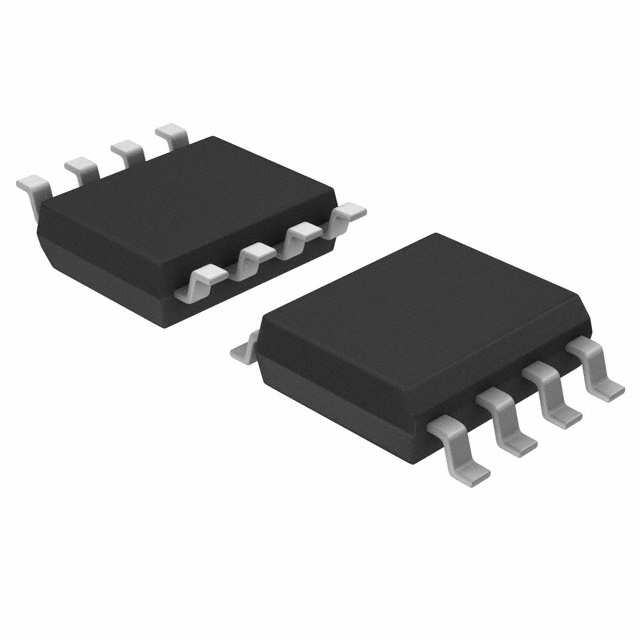
The RT9218BPS is a dual-output power management IC (PMIC) from Richtek USA Inc. designed for applications requiring synchronized step-down buck conversion and linear LDO regulation. This device integrates one synchronous buck converter and one linear regulator in a 14-SOIC package, operating at 300kHz switching frequency with a supply voltage range of 5V to 12V.
The RT9218BPS is classified as obsolete. Identifying suitable substitute components is necessary for design continuity, procurement planning, and system redesign where this part is no longer available through standard distribution channels.
Substiute Parts
Key Parameters
| Parameter | Value |
|---|---|
| Manufacturer | Richtek USA Inc. |
| Product Category | Power Management (PMIC) |
| Topology | Step-Down (Buck) Synchronous (1), Linear (LDO) (1) |
| Number of Outputs | 2 |
| Switching Frequency | 300kHz |
| Supply Voltage Range | 5V ~ 12V |
| Operating Temperature | -40°C ~ 85°C (TA) |
| Package Type | 14-SOIC (0.154", 3.90mm Width) |
| RoHS Status | ROHS3 Compliant |
| Moisture Sensitivity Level | 3 (168 Hours) |
Substitute Part Grouping Explanation
Substitution of the RT9218BPS requires evaluation based on the following critical parameters:
Topology Compatibility: The RT9218BPS provides dual-output regulation (one synchronous buck, one linear LDO). Substitute parts must support equivalent output configurations or provide functional alternatives through external component integration.
Switching Frequency: The 300kHz operating frequency is a defining characteristic for EMI performance and component selection. Substitute controllers must operate at the same or compatible frequency.
Supply Voltage Range: The 5V to 12V input specification constrains substitute selection to devices supporting this voltage window.
Package and Thermal Characteristics: The 14-SOIC package and MSL-3 rating define mechanical and environmental compatibility requirements.
Product Status and Compliance: Active product status and ROHS3 compliance ensure long-term availability and regulatory alignment.
The RT8120FGS is identified as a substitute controller for the buck conversion function of the RT9218BPS. However, this substitution represents a functional redesign: the RT8120FGS is a single-output buck controller requiring external driver implementation, whereas the RT9218BPS integrates dual outputs. System-level modifications are required to replicate the complete functionality of the original design.
Parameter Comparison
| Parameter | RT9218BPS (Main Part) | RT8120FGS (Substitute) |
|---|---|---|
| Manufacturer | Richtek USA Inc. | Richtek USA Inc. |
| Product Category | Power Management (PMIC) | Power Management (PMIC) |
| Function | Dual-Output Regulator (Buck + LDO) | Buck Regulator Controller |
| Topology | Step-Down (Buck) Synchronous, Linear (LDO) | Step-Down (Buck) |
| Number of Outputs | 2 | 1 |
| Switching Frequency | 300kHz | 300kHz |
| Supply Voltage Range | 5V ~ 12V | 3V ~ 13.2V |
| Operating Temperature | -40°C ~ 85°C (TA) | -40°C ~ 85°C (TA) |
| Package Type | 14-SOIC (0.154", 3.90mm Width) | 8-SOIC (0.154", 3.90mm Width) |
| Product Status | Obsolete | Active |
| RoHS Status | ROHS3 Compliant | ROHS3 Compliant |
| Moisture Sensitivity Level | 3 (168 Hours) | 3 (168 Hours) |
Engineering Selection Recommendations
For Direct Replacement: No direct pin-compatible substitute exists. The RT9218BPS integrates dual-output regulation in a single 14-pin package; the RT8120FGS provides only buck controller functionality in an 8-pin package.
For Functional Redesign: The RT8120FGS is suitable as a replacement for the buck conversion stage of the RT9218BPS. This substitution requires:
- External power stage implementation (MOSFETs, inductors, capacitors)
- Separate linear regulator IC for LDO functionality
- PCB layout redesign to accommodate additional components
- Verification of control signal compatibility and timing
Compliance Considerations: Both parts maintain ROHS3 compliance and identical MSL-3 ratings, ensuring regulatory and environmental compatibility. The RT8120FGS active product status provides superior long-term availability compared to the obsolete RT9218BPS.
Supply Voltage Advantage: The RT8120FGS supports a wider input range (3V to 13.2V) compared to the RT9218BPS (5V to 12V), offering greater design flexibility for applications with variable input sources.
Frequently Asked Questions (FAQ)
Q: Can the RT8120FGS replace the RT9218BPS in an existing design without modifications?
A: No. The RT8120FGS is a buck controller only, whereas the RT9218BPS integrates both buck and LDO outputs. Direct substitution is not possible. A redesigned power stage with external components and a separate LDO regulator is required.
Q: What is the primary reason for substituting the RT9218BPS?
A: The RT9218BPS is classified as obsolete. Substitution is necessary to ensure component availability and support for new production runs or design revisions.
Q: Are the package dimensions compatible between these parts?
A: Both parts use SOIC packages with 0.154" width and 3.90mm body width. However, the RT9218BPS is 14-pin while the RT8120FGS is 8-pin. PCB footprints are not interchangeable.
Q: Do both parts operate at the same switching frequency?
A: Yes. Both the RT9218BPS and RT8120FGS operate at 300kHz, ensuring compatible EMI characteristics and component selection for external filtering networks.
Q: What is the supply voltage compatibility between these parts?
A: The RT9218BPS operates from 5V to 12V, while the RT8120FGS operates from 3V to 13.2V. The RT8120FGS supports a wider input range, making it suitable for applications with variable supply voltages within this extended window.
Q: Are moisture sensitivity levels equivalent?
A: Yes. Both parts carry MSL-3 (168 Hours) ratings, indicating identical moisture sensitivity and handling requirements during assembly and storage.
Q: What additional components are required to replicate RT9218BPS functionality using the RT8120FGS?
A: A separate linear regulator IC, external power MOSFETs, inductors, and filtering capacitors are required. The exact component selection depends on the output voltage and current specifications of the original design.
Alternative Parts

SJ6012L2TP
Littelfuse Inc.
6 Alternative Parts

JMK107BBJ476MA-RE
Taiyo Yuden
10 Alternative Parts

GMK107BBJ475MA-T
Taiyo Yuden
5 Alternative Parts
SJ6020N2ARP
Littelfuse Inc.
3 Alternative Parts
SJ6025R2ATP
Littelfuse Inc.
4 Alternative Parts

2474-05L
API Delevan Inc.
1 Alternative Parts

4590R-684K
API Delevan Inc.
1 Alternative Parts

CM6560R-334
API Delevan Inc.
1 Alternative Parts

CM6460-104
API Delevan Inc.
1 Alternative Parts

5526-12
API Delevan Inc.
1 Alternative Parts