


Request Quote
(Ships tomorrow)
PIC17LC44-08I/L Equivalent & Substitute Parts
Part Overview
The PIC17LC44-08I/L is an 8-bit microcontroller from Microchip Technology's PIC® 17C series, featuring 16KB OTP program memory and operating at 8MHz. This device is classified as Active product status and is currently in stock with 2125 units available. The PIC17LC44-08I/L is housed in a 44-PLCC package suitable for surface mount applications.
Finding equivalent and substitute parts becomes necessary when the original component reaches end-of-life status, when supply constraints occur, or when design requirements necessitate enhanced capabilities such as increased processing speed, expanded memory, or improved peripheral integration while maintaining core functional compatibility.
Substiute Parts
Key Parameters
| Parameter | Value |
|---|---|
| Manufacturer Part Number | PIC17LC44-08I/L |
| Manufacturer | Microchip Technology |
| Series | PIC® 17C |
| Core Size | 8-Bit |
| Program Memory Size | 16KB (8K x 16) |
| Program Memory Type | OTP |
| Speed | 8MHz |
| Number of I/O | 33 |
| Voltage Supply (Vcc/Vdd) | 2.5V ~ 6V |
| Operating Temperature | -40°C ~ 85°C (TA) |
| Package / Case | 44-LCC (J-Lead) |
| Mounting Type | Surface Mount |
| RoHS Status | ROHS3 Compliant |
Substitute Part Grouping Explanation
Substitution of the PIC17LC44-08I/L is based on the following critical parameters:
- Core Architecture: Both main and substitute parts must be 8-bit PIC microcontrollers from Microchip Technology
- Program Memory Capacity: Minimum 16KB (8K x 16) to maintain code compatibility
- I/O Pin Count: Minimum 33 I/O pins to support existing circuit designs
- Operating Temperature Range: Must support -40°C ~ 85°C (TA)
- Supply Voltage Compatibility: Operating voltage range must overlap or encompass the original specification
- Package Compatibility: Surface mount packages with equivalent pin configurations
- RoHS Compliance: ROHS3 compliant status for regulatory alignment
The PIC18F4420-I/ML qualifies as a manufacturer-recommended substitute based on these parameters. While it represents an advancement within the PIC family (PIC® 18F series), it maintains core compatibility through equivalent memory capacity, expanded I/O capability, and enhanced peripheral integration.
Parameter Comparison
| Parameter | PIC17LC44-08I/L | PIC18F4420-I/ML |
|---|---|---|
| Manufacturer | Microchip Technology | Microchip Technology |
| Core Size | 8-Bit | 8-Bit |
| Series | PIC® 17C | PIC® 18F |
| Program Memory Size | 16KB (8K x 16) | 16KB (8K x 16) |
| Program Memory Type | OTP | FLASH |
| Speed | 8MHz | 40MHz |
| Number of I/O | 33 | 36 |
| RAM Size | 454 x 8 | 768 x 8 |
| Voltage Supply (Vcc/Vdd) | 2.5V ~ 6V | 4.2V ~ 5.5V |
| Operating Temperature | -40°C ~ 85°C (TA) | -40°C ~ 85°C (TA) |
| Mounting Type | Surface Mount | Surface Mount |
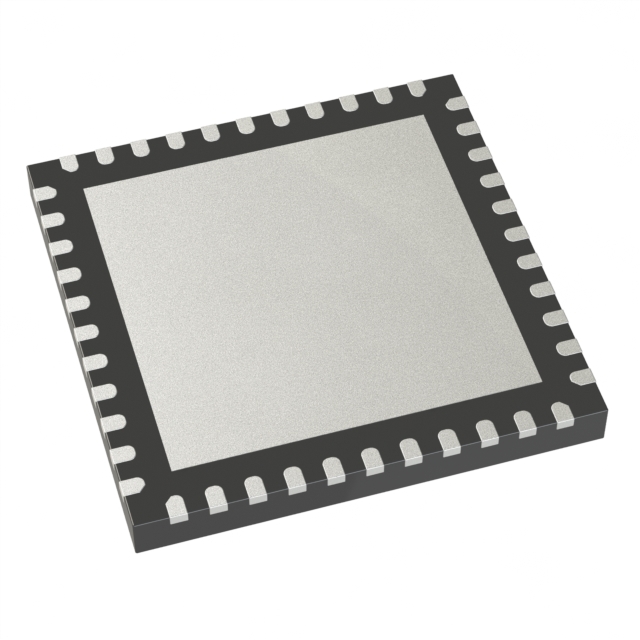
| Package Type | 44-LCC (J-Lead) | 44-VQFN Exposed Pad |
| RoHS Status | ROHS3 Compliant | ROHS3 Compliant |
Engineering Selection Recommendations
The PIC18F4420-I/ML is designated as the manufacturer-recommended substitute for the PIC17LC44-08I/L. Selection of this substitute is supported by the following engineering criteria:
- Product Status: Both devices maintain Active status, ensuring continued manufacturer support and availability
- Regulatory Compliance: Both parts are ROHS3 compliant and REACH unaffected, meeting current environmental and regulatory requirements
- Memory Equivalence: Identical program memory capacity (16KB) ensures existing firmware can be accommodated
- I/O Capability: The substitute provides 36 I/O pins compared to 33 on the original, offering enhanced design flexibility without reducing functionality
- Temperature Range: Identical operating temperature specification (-40°C ~ 85°C) maintains thermal performance requirements
- Manufacturer Continuity: Both devices are from Microchip Technology, ensuring consistent architecture and development tool compatibility
The PIC18F4420-I/ML introduces enhanced capabilities including FLASH memory (versus OTP), increased processing speed (40MHz versus 8MHz), expanded RAM (768 x 8 versus 454 x 8), and integrated analog-to-digital conversion (13x10-bit). These enhancements support more complex applications while maintaining backward compatibility with the core 8-bit PIC architecture.
Frequently Asked Questions (FAQ)
Q: Can the PIC18F4420-I/ML directly replace the PIC17LC44-08I/L in existing designs?
A: Direct pin-for-pin replacement requires verification of package compatibility. The PIC17LC44-08I/L uses a 44-LCC (J-Lead) package, while the PIC18F4420-I/ML uses a 44-VQFN Exposed Pad package. PCB layout modifications are necessary to accommodate the different package footprints. Firmware compatibility depends on code architecture; PIC 18F series devices use an enhanced instruction set that is generally backward compatible with PIC 17C code.
Q: What are the voltage supply differences between these devices?
A: The PIC17LC44-08I/L operates across 2.5V ~ 6V, while the PIC18F4420-I/ML operates across 4.2V ~ 5.5V. Designs operating below 4.2V require additional voltage regulation or alternative substitutes to maintain compatibility.
Q: How do the memory types differ?
A: The PIC17LC44-08I/L uses OTP (One-Time Programmable) memory, while the PIC18F4420-I/ML uses FLASH memory. FLASH memory allows multiple reprogramming cycles, providing advantages in development, testing, and field updates. OTP memory is permanent after programming and cannot be erased.
Q: Are there differences in peripheral connectivity?
A: The PIC17LC44-08I/L provides UART/USART connectivity with peripherals including POR, PWM, and WDT. The PIC18F4420-I/ML expands connectivity to include I2C, SPI, and UART/USART, with additional peripherals including Brown-out Detect/Reset, HLVD, POR, PWM, and WDT. Existing UART/USART designs are compatible; additional peripherals on the substitute provide enhanced functionality.
Q: What is the impact of the speed difference?
A: The PIC18F4420-I/ML operates at 40MHz compared to 8MHz on the PIC17LC44-08I/L. This five-fold increase in processing speed enables faster instruction execution and improved real-time performance. Existing firmware will execute faster; timing-critical code may require adjustment to maintain intended delays or timing relationships.
Q: Are both devices suitable for industrial temperature applications?
A: Both devices support the identical operating temperature range of -40°C ~ 85°C (TA), making them suitable for industrial applications within this specification.
Alternative Parts

SJ6012L2TP
Littelfuse Inc.
6 Alternative Parts

JMK107BBJ476MA-RE
Taiyo Yuden
10 Alternative Parts

GMK107BBJ475MA-T
Taiyo Yuden
5 Alternative Parts
SJ6020N2ARP
Littelfuse Inc.
3 Alternative Parts
SJ6025R2ATP
Littelfuse Inc.
4 Alternative Parts

2474-05L
API Delevan Inc.
1 Alternative Parts

4590R-684K
API Delevan Inc.
1 Alternative Parts

CM6560R-334
API Delevan Inc.
1 Alternative Parts

CM6460-104
API Delevan Inc.
1 Alternative Parts

5526-12
API Delevan Inc.
1 Alternative Parts