


Request Quote
(Ships tomorrow)
MPX2100DP Equivalent & Substitute Parts
Part Overview
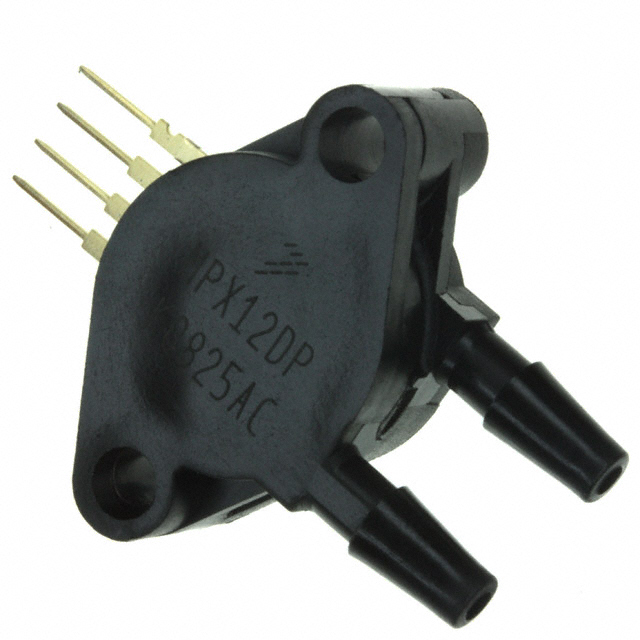
The MPX2100DP is a differential pressure sensor manufactured by NXP USA Inc., designed for board mount applications with a 14.5PSI (100kPa) operating pressure range. The device features a Wheatstone Bridge output with 0 mV to 40 mV signal range at 10V supply, barbed male tube connection (0.19" / 4.93mm dual), and through-hole 4-SIP module packaging. This product is classified as obsolete, making equivalent or substitute parts necessary for new designs or component replacement in legacy systems.
Substiute Parts
Key Parameters
| Parameter | Value |
|---|---|
| Manufacturer | NXP USA Inc. |
| Series | MPX2100 |
| Product Status | Obsolete |
| Pressure Type | Differential |
| Operating Pressure | 14.5PSI (100kPa) |
| Maximum Pressure | 58.02PSI (400kPa) |
| Output Type | Wheatstone Bridge |
| Output Range | 0 mV ~ 40 mV (10V) |
| Supply Voltage | 10V ~ 16V |
| Port Size | Male - 0.19" (4.93mm) Tube, Dual |
| Port Style | Barbed |
| Mounting Type | Through Hole |
| Package | 4-SIP Module |
| Operating Temperature | -40°C ~ 125°C |
| Features | Temperature Compensated |
| RoHS Status | ROHS3 Compliant |
Substitute Part Grouping Explanation
Substitution of the MPX2100DP is constrained by the following critical parameters:
Pressure Measurement Characteristics: The MPX2100DP operates as a differential pressure sensor with 14.5PSI nominal range and 58.02PSI maximum pressure rating. Substitute parts must maintain compatible pressure measurement type and range to preserve system functionality.
Electrical Interface: Output type (Wheatstone Bridge), output range (0 mV ~ 40 mV at 10V), and supply voltage range (10V ~ 16V) must remain consistent to ensure signal conditioning compatibility without circuit redesign.
Mechanical Interface: Port configuration (male barbed tube, 0.19" dual connection) and mounting methodology (through-hole vs. surface mount) determine physical integration feasibility.
Environmental Compliance: Operating temperature range (-40°C ~ 125°C), temperature compensation, and regulatory certifications (ROHS3, REACH Unaffected) must be maintained.
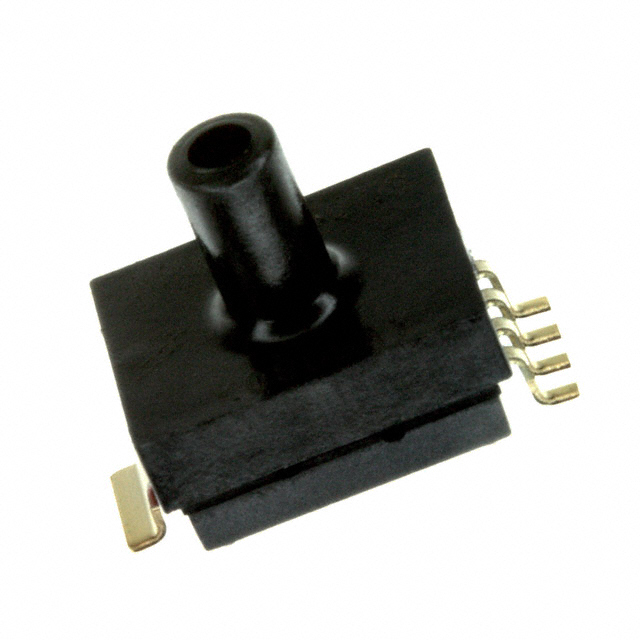
The MPXM2053GS is identified as a manufacturer-recommended substitute. However, this part exhibits significant parameter deviations that require engineering evaluation for specific applications.
Parameter Comparison
| Parameter | MPX2100DP | MPXM2053GS | Compatibility Notes |
|---|---|---|---|
| Manufacturer | NXP USA Inc. | NXP USA Inc. | Same manufacturer |
| Pressure Type | Differential | Vented Gauge | Different measurement type |
| Operating Pressure | 14.5PSI (100kPa) | 7.25PSI (50kPa) | MPXM2053GS rated at 50% of MPX2100DP |
| Maximum Pressure | 58.02PSI (400kPa) | 29.01PSI (200kPa) | MPXM2053GS rated at 50% of MPX2100DP |
| Output Type | Wheatstone Bridge | Wheatstone Bridge | Compatible |
| Output Range | 0 mV ~ 40 mV (10V) | 0 mV ~ 40 mV (10V) | Compatible |
| Supply Voltage | 10V ~ 16V | 10V ~ 16V | Compatible |
| Port Size | Male - 0.19" (4.93mm) Tube, Dual | Male - 0.12" (2.97mm) Tube | Different port diameter and configuration |
| Port Style | Barbed | Barbless | Different connection type |
| Mounting Type | Through Hole | Surface Mount | Different PCB integration method |
| Package | 4-SIP Module | 5-SMD Module, Top Port | Different package form factor |
| Operating Temperature | -40°C ~ 125°C | -40°C ~ 125°C | Compatible |
| Features | Temperature Compensated | Temperature Compensated | Compatible |
| Product Status | Obsolete | Active | MPXM2053GS actively manufactured |
| RoHS Status | ROHS3 Compliant | ROHS3 Compliant | Compatible |
Engineering Selection Recommendations
The MPXM2053GS is manufacturer-designated as a substitute for the MPX2100DP. Selection of this part requires evaluation of the following deviations:
Pressure Range Mismatch: The MPXM2053GS operates at 7.25PSI (50kPa) nominal with 29.01PSI (200kPa) maximum pressure, representing a 50% reduction from the MPX2100DP specifications. Applications requiring the full 14.5PSI operating range or 58.02PSI maximum pressure capability cannot use this substitute without system redesign.
Measurement Type Change: The MPX2100DP measures differential pressure, while the MPXM2053GS measures vented gauge pressure. These measurement types are functionally distinct and require different application contexts.
Mechanical Interface Incompatibility: Port diameter reduction (0.19" to 0.12"), port style change (barbed to barbless), and mounting transition (through-hole to surface mount) necessitate mechanical redesign of pneumatic connections and PCB layout.
Electrical Compatibility: Output type, output range, supply voltage, operating temperature, and temperature compensation features remain compatible, eliminating signal conditioning circuit modifications.
Regulatory Compliance: Both parts maintain ROHS3 compliance and REACH unaffected status. The MPXM2053GS active product status ensures long-term availability compared to the obsolete MPX2100DP.
Frequently Asked Questions (FAQ)
Q: Can the MPXM2053GS directly replace the MPX2100DP in existing designs?
A: Direct replacement is not feasible without design modifications. The MPXM2053GS differs in pressure type (vented gauge vs. differential), pressure range (50% lower), port configuration (0.12" barbless vs. 0.19" barbed dual), and mounting method (surface mount vs. through-hole). Mechanical pneumatic connections and PCB layout require redesign.
Q: What are the key electrical compatibility factors between these parts?
A: Both parts share identical Wheatstone Bridge output type, 0 mV to 40 mV output range at 10V supply, 10V to 16V supply voltage range, -40°C to 125°C operating temperature, and temperature compensation features. Signal conditioning circuits designed for the MPX2100DP remain compatible with the MPXM2053GS without modification.
Q: Why does the MPXM2053GS have a lower pressure rating?
A: The MPXM2053GS is designed for lower-pressure vented gauge applications (7.25PSI nominal, 29.01PSI maximum). The MPX2100DP differential sensor supports higher pressures (14.5PSI nominal, 58.02PSI maximum). These represent different product lines optimized for distinct pressure measurement ranges.
Q: What packaging differences exist between these sensors?
A: The MPX2100DP uses a 4-SIP through-hole module for traditional PCB mounting. The MPXM2053GS uses a 5-SMD surface-mount module with top port configuration. Through-hole and surface-mount technologies require different PCB design, assembly processes, and soldering methods.
Q: Are both parts compliant with current regulatory standards?
A: Yes. Both the MPX2100DP and MPXM2053GS are ROHS3 compliant and REACH unaffected. The MPXM2053GS maintains active product status, ensuring continued manufacturing and regulatory support, while the MPX2100DP is obsolete.
Q: What is the port size difference and its impact?
A: The MPX2100DP uses 0.19" (4.93mm) dual barbed male tubes, while the MPXM2053GS uses 0.12" (2.97mm) barbless male tube. Barbed connections provide mechanical retention through tubing deformation, while barbless connections rely on friction fit. The diameter reduction requires different tubing specifications and connection hardware.
Alternative Parts

SJ6012L2TP
Littelfuse Inc.
6 Alternative Parts

JMK107BBJ476MA-RE
Taiyo Yuden
10 Alternative Parts

GMK107BBJ475MA-T
Taiyo Yuden
5 Alternative Parts
SJ6020N2ARP
Littelfuse Inc.
3 Alternative Parts
SJ6025R2ATP
Littelfuse Inc.
4 Alternative Parts

2474-05L
API Delevan Inc.
1 Alternative Parts

4590R-684K
API Delevan Inc.
1 Alternative Parts

CM6560R-334
API Delevan Inc.
1 Alternative Parts

CM6460-104
API Delevan Inc.
1 Alternative Parts

5526-12
API Delevan Inc.
1 Alternative Parts