


Request Quote
(Ships tomorrow)
MM3Z10VT1 Zener Diode Equivalent & Substitute Parts
Part Overview
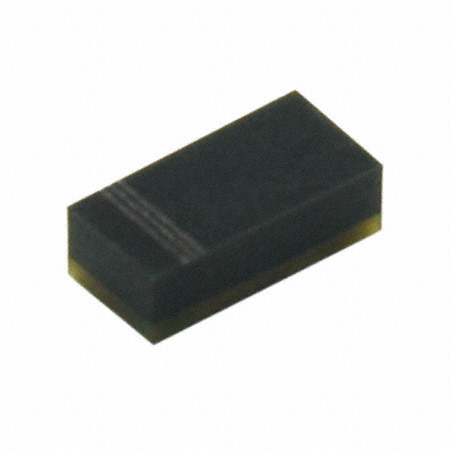
The MM3Z10VT1 is a 10 V Zener diode rated for 200 mW power dissipation in a surface mount SOD-323 package. This component is classified as obsolete, which necessitates identification of equivalent and substitute parts for ongoing design requirements and production continuity. Active alternatives with identical or enhanced electrical characteristics are available from multiple manufacturers, providing direct replacement options with improved availability and compliance status.
Substiute Parts
Key Parameters
| Parameter | Value |
|---|---|
| Voltage - Zener (Nom) | 10 V |
| Power - Max | 200 mW |
| Tolerance | ±5% |
| Impedance (Max) | 20 Ohms |
| Current - Reverse Leakage @ Vr | 100 nA @ 8 V |
| Voltage - Forward (Vf) (Max) @ If | 900 mV @ 10 mA |
| Operating Temperature Range | -65°C ~ 150°C |
| Mounting Type | Surface Mount |
| Package / Case | SC-76, SOD-323 |
| RoHS Status | RoHS non-compliant |
Substitute Part Grouping Explanation
Substitution of the MM3Z10VT1 is determined by the following critical parameters:
Primary Substitution Criteria:
- Zener voltage: 10 V nominal
- Package type: SOD-323 surface mount
- Operating temperature range: -65°C to 150°C minimum
- Impedance (Max): 20 Ohms or lower
- Reverse leakage current: 100 nA or lower at specified voltage
Secondary Compatibility Factors:
- Power rating: 200 mW minimum (higher ratings acceptable for uprating applications)
- Tolerance: ±5% or tighter
- Forward voltage: 900 mV @ 10 mA or lower
- RoHS compliance status (for new designs)
Substitute parts are grouped into two categories: direct equivalents with identical electrical specifications and enhanced alternatives with higher power ratings or improved compliance certifications. All listed substitutes maintain the 10 V zener voltage and SOD-323 package form factor required for direct PCB replacement.
Parameter Comparison
| Part Number | Manufacturer | Vz (Nom) | Power (Max) | Tolerance | Zzt (Max) | Ir @ Vr | Vf (Max) @ If | Temp Range | Package | Status | RoHS |
|---|---|---|---|---|---|---|---|---|---|---|---|
| MM3Z10VT1 | onsemi | 10 V | 200 mW | ±5% | 20 Ω | 100 nA @ 8 V | 900 mV @ 10 mA | -65°C ~ 150°C | SOD-323 | Obsolete | Non-compliant |
| MM3Z10VT1G | onsemi | 10 V | 300 mW | ±6% | 20 Ω | 100 nA @ 8 V | 900 mV @ 10 mA | -65°C ~ 150°C | SOD-323 | Active | ROHS3 Compliant |
| BZT52C10S-TP | Micro Commercial Co | 10 V | 200 mW | ±6% | 20 Ω | 200 nA @ 7 V | 900 mV @ 10 mA | -65°C ~ 150°C | SOD-323 | Active | ROHS3 Compliant |
| BZX384-C10,115 | Nexperia USA Inc. | 10 V | 300 mW | ±5% | 20 Ω | 200 nA @ 7 V | 1.1 V @ 100 mA | -65°C ~ 150°C | SOD-323 | Active | ROHS3 Compliant |
| CZRF52C10 | Comchip Technology | 10 V | 200 mW | ±5% | 15 Ω | 100 nA @ 7.5 V | 900 mV @ 10 mA | -55°C ~ 125°C | 1005/SOD-323F | Active | ROHS3 Compliant |
Engineering Selection Recommendations
Direct Replacement (Identical Electrical Performance):
MM3Z10VT1G (onsemi) serves as the primary direct replacement. This part maintains the same 10 V zener voltage, SOD-323 package, and operating temperature range as the obsolete MM3Z10VT1. The MM3Z10VT1G offers enhanced power rating (300 mW versus 200 mW), active product status, and ROHS3 compliance. The tolerance specification increases from ±5% to ±6%, which remains acceptable for most voltage regulation applications.
BZT52C10S-TP (Micro Commercial Co) provides an alternative direct replacement with identical 200 mW power rating and SOD-323 package. This part maintains full electrical compatibility with the original MM3Z10VT1 while offering active status and ROHS3 compliance. Reverse leakage current is specified at 200 nA @ 7 V, which is within acceptable limits for most applications.
Enhanced Alternatives (Higher Power Rating):
BZX384-C10,115 (Nexperia USA Inc.) and MM3Z10VT1G both offer 300 mW power dissipation in the same SOD-323 package. These parts are suitable for applications requiring higher thermal headroom or increased power handling capability. Both maintain the -65°C to 150°C operating temperature range and provide ROHS3 compliance.
Package Consideration:
CZRF52C10 (Comchip Technology) uses a 1005/SOD-323F package variant. While electrically compatible with the MM3Z10VT1, this part features a different physical package footprint (1005 metric equivalent). Selection of CZRF52C10 requires PCB layout verification to confirm package compatibility. This part offers superior impedance characteristics (15 Ω maximum versus 20 Ω) but operates within a narrower temperature range (-55°C to 125°C).
Compliance and Availability:
All substitute parts listed are ROHS3 compliant and REACH unaffected, meeting current regulatory requirements for new designs. MM3Z10VT1G and BZX384-C10,115 demonstrate the highest inventory availability, supporting production continuity and supply chain stability.
Frequently Asked Questions (FAQ)
Q: Can MM3Z10VT1G directly replace MM3Z10VT1 on existing PCBs?
A: Yes. MM3Z10VT1G is a direct pin-for-pin and footprint-compatible replacement. Both parts use the SOD-323 package with identical lead configuration. The higher power rating (300 mW versus 200 mW) and ±6% tolerance (versus ±5%) do not prevent direct substitution in standard voltage regulation circuits.
Q: What is the difference between MM3Z10VT1G and BZT52C10S-TP?
A: Both parts are SOD-323 surface mount 10 V zener diodes with active product status and ROHS3 compliance. MM3Z10VT1G offers 300 mW power rating and ±6% tolerance. BZT52C10S-TP provides 200 mW power rating and ±6% tolerance. Selection depends on thermal requirements and power dissipation budget. BZT52C10S-TP matches the original 200 mW specification exactly.
Q: Is CZRF52C10 compatible with the original MM3Z10VT1 PCB layout?
A: CZRF52C10 uses a 1005/SOD-323F package, which differs from the standard SOD-323 package of MM3Z10VT1. Physical footprint verification is required before PCB substitution. The 1005 package is larger than SOD-323, and existing PCB pads may not accommodate this component without layout modification.
Q: Why does BZX384-C10,115 specify forward voltage as 1.1 V @ 100 mA instead of 900 mV @ 10 mA?
A: Forward voltage characteristics vary with measurement current. BZX384-C10,115 specifies Vf at 100 mA, while other parts specify at 10 mA. At lower currents (10 mA), BZX384-C10,115 forward voltage would be lower than the stated 1.1 V specification. This difference does not affect zener regulation performance in typical voltage reference applications.
Q: Are all substitute parts suitable for -65°C to 150°C temperature range applications?
A: MM3Z10VT1G, BZT52C10S-TP, and BZX384-C10,115 all support the full -65°C to 150°C operating range. CZRF52C10 operates within -55°C to 125°C, which is narrower. For applications requiring the full -65°C to 150°C range, CZRF52C10 is not suitable.
Q: What is the significance of RoHS compliance for this component?
A: ROHS3 compliance indicates the part meets current European Union Restriction of Hazardous Substances regulations. All active substitute parts listed are ROHS3 compliant, making them suitable for new product designs and markets with regulatory compliance requirements. The original MM3Z10VT1 is RoHS non-compliant and should not be used in new designs targeting regulated markets.
Q: Can I use a higher power-rated zener diode (300 mW) in place of a 200 mW part?
A: Yes. A higher power-rated zener diode can be substituted for a lower power-rated part in the same voltage class. The 300 mW parts (MM3Z10VT1G and BZX384-C10,115) provide additional thermal margin and are suitable for applications originally designed for 200 mW components. No circuit modification is required.
Q: What does impedance (Zzt) specification mean for zener diode selection?
A: Impedance (Zzt) represents the dynamic impedance of the zener diode in its regulation region. Lower impedance values indicate better voltage regulation stability and lower output impedance. CZRF52C10 offers superior impedance (15 Ω maximum) compared to other listed parts (20 Ω maximum), providing tighter voltage regulation in applications sensitive to load transients.
Alternative Parts

SJ6012L2TP
Littelfuse Inc.
6 Alternative Parts

JMK107BBJ476MA-RE
Taiyo Yuden
10 Alternative Parts

GMK107BBJ475MA-T
Taiyo Yuden
5 Alternative Parts
SJ6020N2ARP
Littelfuse Inc.
3 Alternative Parts
SJ6025R2ATP
Littelfuse Inc.
4 Alternative Parts

2474-05L
API Delevan Inc.
1 Alternative Parts

4590R-684K
API Delevan Inc.
1 Alternative Parts

CM6560R-334
API Delevan Inc.
1 Alternative Parts

CM6460-104
API Delevan Inc.
1 Alternative Parts

5526-12
API Delevan Inc.
1 Alternative Parts