


Request Quote
(Ships tomorrow)
MCP609T-I/ST Equivalent & Substitute Parts
Part Overview
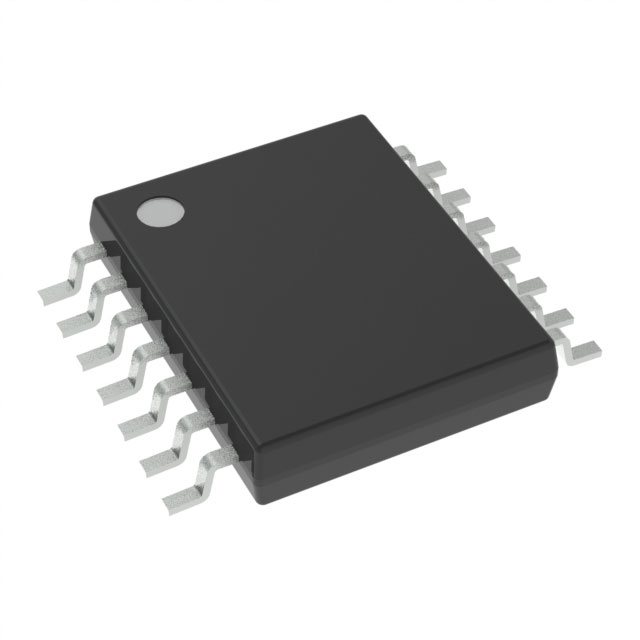
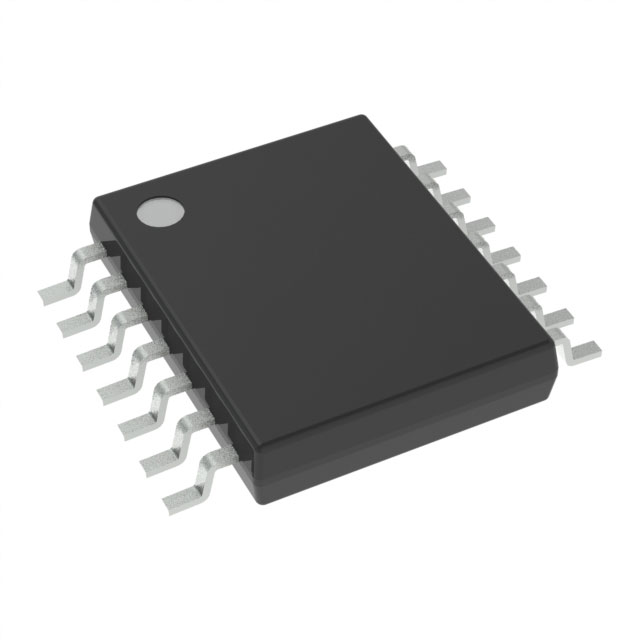
The MCP609T-I/ST is a CMOS operational amplifier featuring four independent circuits in a 14-TSSOP surface mount package. This device operates across a 2.5V to 6V supply range with rail-to-rail output capability, making it suitable for low-power analog signal processing applications. The part is currently active in production with 1555 units in stock. Substitute parts are identified based on matching electrical performance parameters, package compatibility, and functional equivalence for direct circuit board replacement.
Substiute Parts
Key Parameters
| Parameter | Value | Unit |
|---|---|---|
| Amplifier Type | CMOS | — |
| Number of Circuits | 4 | — |
| Output Type | Rail-to-Rail | — |
| Slew Rate | 0.08 | V/µs |
| Gain Bandwidth Product | 155 | kHz |
| Current - Input Bias | 1 | pA |
| Voltage - Input Offset | 250 | µV |
| Current - Supply (x4 Channels) | 18.7 | µA |
| Current - Output / Channel | 17 | mA |
| Voltage - Supply Span (Min) | 2.5 | V |
| Voltage - Supply Span (Max) | 6 | V |
| Operating Temperature | -40 to 85 | °C |
| Package / Case | 14-TSSOP (0.173", 4.40mm Width) | — |
| Mounting Type | Surface Mount | — |
| RoHS Status | ROHS3 Compliant | — |
| Moisture Sensitivity Level | 1 (Unlimited) | — |
Substitute Part Grouping Explanation
Substitute parts for the MCP609T-I/ST are identified based on the following critical parameters:
Electrical Equivalence Criteria:
- Four independent amplifier circuits in single package
- Rail-to-rail output configuration
- CMOS amplifier topology with picoampere input bias current
- 14-TSSOP package footprint compatibility
- Supply voltage range overlap (minimum 2.5V operation)
Substitution Categories:
Category 1: Direct Microchip Equivalent MCP609-I/ST shares identical electrical specifications with the main part, differing only in packaging format (Tube vs. Tape & Reel). This part is a direct functional replacement with no performance trade-offs.
Category 2: Texas Instruments CMOS Amplifiers LMV344IPW and LMV344IPWR maintain CMOS amplifier topology with 1 pA input bias current and 250 µV input offset voltage. These parts feature enhanced slew rate (1V/µs vs. 0.08V/µs) and higher gain bandwidth product (1 MHz vs. 155 kHz), supporting broader application bandwidth while maintaining supply voltage compatibility (2.5V to 5.5V).
Category 3: Texas Instruments General Purpose Amplifiers LMV324Q1MTX/NOPB and LMV324Q3MT/NOPB are general purpose amplifiers with higher input bias current (15 nA) and input offset voltage (1.7 mV) compared to the MCP609T-I/ST. These parts offer automotive qualification (AEC-Q100) and extended temperature range (-40°C to 125°C for Q1MTX variant).
Category 4: Texas Instruments Precision Amplifiers OPA4376AIPW, OPA4376AIPWR, and OPA4376AIPWRG4 are general purpose amplifiers with superior precision characteristics: 0.2 pA input bias current and 5 µV input offset voltage. These parts feature higher slew rate (2V/µs) and gain bandwidth product (5.5 MHz), with extended temperature range to 125°C.
Parameter Comparison
| Part Number | Manufacturer | Amplifier Type | Slew Rate (V/µs) | GBW (kHz) | Input Bias (pA) | Input Offset (µV) | Supply Current (µA) | Output Current (mA) | Supply Min (V) | Supply Max (V) | Temp Range (°C) | Package | Status |
|---|---|---|---|---|---|---|---|---|---|---|---|---|---|
| MCP609T-I/ST | Microchip | CMOS | 0.08 | 155 | 1 | 250 | 18.7 | 17 | 2.5 | 6 | -40 to 85 | 14-TSSOP | Active |
| MCP609-I/ST | Microchip | CMOS | 0.08 | 155 | 1 | 250 | 18.7 | 17 | 2.5 | 6 | -40 to 85 | 14-TSSOP | Active |
| LMV344IPW | Texas Instruments | CMOS | 1 | 1000 | 1 | 250 | 107 | 113 | 2.5 | 5.5 | -40 to 125 | 14-TSSOP | Last Time Buy |
| LMV344IPWR | Texas Instruments | CMOS | 1 | 1000 | 1 | 250 | 107 | 113 | 2.5 | 5.5 | -40 to 125 | 14-TSSOP | Active |
| LMV324Q1MTX/NOPB | Texas Instruments | General Purpose | 1 | 1000 | 15 | 1700 | 410 | 160 | 2.7 | 5.5 | -40 to 125 | 14-TSSOP | Active |
| LMV324Q3MT/NOPB | Texas Instruments | General Purpose | 1 | 1000 | 15 | 1700 | 410 | 160 | 2.7 | 5.5 | -40 to 85 | 14-TSSOP | Active |
| OPA4376AIPW | Texas Instruments | General Purpose | 2 | 5500 | 0.2 | 5 | 760 | 50 | 2.2 | 5.5 | -40 to 125 | 14-TSSOP | Active |
| OPA4376AIPWR | Texas Instruments | General Purpose | 2 | 5500 | 0.2 | 5 | 760 | 50 | 2.2 | 5.5 | -40 to 125 | 14-TSSOP | Active |
| OPA4376AIPWRG4 | Texas Instruments | General Purpose | 2 | 5500 | 0.2 | 5 | 760 | 50 | 2.2 | 5.5 | -40 to 125 | 14-TSSOP | Discontinued at DiGi Electronics |
Engineering Selection Recommendations
For Direct Replacement (No Circuit Modification Required):
MCP609-I/ST is the primary substitute, offering identical electrical performance to the MCP609T-I/ST. The only difference is packaging format (Tube vs. Tape & Reel). This part maintains full compatibility with existing PCB designs and requires no design verification.
For Enhanced Performance Applications:
LMV344IPW and LMV344IPWR are suitable when increased slew rate (1V/µs) and gain bandwidth product (1 MHz) are beneficial. Both parts maintain CMOS amplifier characteristics with 1 pA input bias current and 250 µV input offset voltage. LMV344IPWR is preferred due to Active product status; LMV344IPW is in Last Time Buy status. Supply voltage range is reduced to 5.5V maximum.
For Automotive and Extended Temperature Applications:
LMV324Q1MTX/NOPB provides AEC-Q100 automotive qualification with extended operating temperature to 125°C. This part accepts higher input bias current (15 nA) and input offset voltage (1.7 mV) compared to the MCP609T-I/ST. Minimum supply voltage increases to 2.7V.
For Precision-Critical Applications:
OPA4376AIPWR offers superior precision with 0.2 pA input bias current and 5 µV input offset voltage, along with higher slew rate (2V/µs) and gain bandwidth product (5.5 MHz). This part is suitable for applications requiring lower noise and offset drift. Supply voltage range extends to 2.2V minimum and 5.5V maximum. OPA4376AIPWRG4 shares identical specifications but is discontinued at DiGi Electronics and should not be selected for new designs.
Compliance and Regulatory Status:
All substitute parts listed are ROHS3 compliant and REACH unaffected. Moisture sensitivity levels range from 1 (Unlimited) for Microchip and LMV344 variants to 2 (1 Year) for OPA4376 variants. Selection should account for storage and handling requirements based on MSL classification.
Frequently Asked Questions (FAQ)
Q: Can MCP609-I/ST be used as a direct replacement for MCP609T-I/ST?
A: Yes. MCP609-I/ST is electrically identical to MCP609T-I/ST. The difference is packaging format: MCP609-I/ST is supplied in Tube packaging while MCP609T-I/ST is supplied in Tape & Reel format. Both parts are compatible with the same PCB footprint and require no circuit modifications.
Q: What is the key difference between CMOS and General Purpose amplifier types in the substitute list?
A: CMOS amplifiers (MCP609, LMV344) feature picoampere input bias current (1 pA) and are optimized for ultra-low input current applications. General Purpose amplifiers (LMV324, OPA4376) have higher input bias current (15 nA to 0.2 pA) but offer enhanced bandwidth and slew rate performance. Selection depends on whether input bias current or bandwidth is the limiting factor in the application.
Q: Can I use LMV344IPWR in place of MCP609T-I/ST without circuit changes?
A: LMV344IPWR is pin-compatible and footprint-compatible in the 14-TSSOP package. However, the maximum supply voltage is reduced from 6V to 5.5V. If your circuit operates above 5.5V, this substitution is not suitable. Additionally, LMV344IPWR has higher supply current (107 µA vs. 18.7 µA), which may impact power budget in battery-powered applications.
Q: What are the advantages of OPA4376AIPWR over MCP609T-I/ST?
A: OPA4376AIPWR provides superior precision (0.2 pA input bias, 5 µV offset vs. 1 pA and 250 µV), higher slew rate (2V/µs vs. 0.08V/µs), and higher gain bandwidth product (5.5 MHz vs. 155 kHz). These improvements benefit precision analog signal conditioning and higher-frequency applications. Trade-offs include higher supply current (760 µA vs. 18.7 µA) and reduced minimum supply voltage (2.2V vs. 2.5V).
Q: Is LMV324Q1MTX/NOPB suitable for automotive applications?
A: Yes. LMV324Q1MTX/NOPB carries AEC-Q100 automotive qualification and is rated for -40°C to 125°C operating temperature. However, input bias current (15 nA) and input offset voltage (1.7 mV) are significantly higher than MCP609T-I/ST, which may affect precision-dependent circuits. Minimum supply voltage is 2.7V instead of 2.5V.
Q: Why is OPA4376AIPWRG4 listed if it is discontinued?
A: OPA4376AIPWRG4 is included for reference purposes only. This part is discontinued at DiGi Electronics and should not be selected for new designs. Use OPA4376AIPWR (Active status) instead, which offers identical electrical specifications.
Q: What is the significance of Moisture Sensitivity Level (MSL) in the substitute parts?
A: MSL 1 (Unlimited) parts like MCP609 and LMV344 have no moisture sensitivity restrictions and can be stored indefinitely. MSL 2 (1 Year) parts like OPA4376 must be used within one year of the manufacturing date if exposed to moisture. Storage conditions and handling procedures differ based on MSL classification. Verify your supply chain and storage capabilities before selecting MSL 2 parts.
Q: Can I use multiple substitute parts interchangeably in the same design?
A: No. While all listed parts are functionally equivalent in 14-TSSOP package, they have different electrical characteristics. Mixing parts with different input bias currents, offset voltages, or slew rates in the same circuit may cause performance inconsistencies. Select one substitute part type and maintain consistency across all units in production.
Q: What is the impact of reduced supply voltage range in LMV344 variants?
A: LMV344 parts operate from 2.5V to 5.5V, while MCP609T-I/ST operates from 2.5V to 6V. If your circuit requires 6V operation, LMV344 is not suitable. Verify your actual supply voltage requirements before substitution. If your circuit operates at 5.5V or below, LMV344 substitution is acceptable from a voltage perspective.
Q: How do I determine which substitute part is best for my application?
A: Prioritize based on: (1) Supply voltage range requirements, (2) Input bias current and offset voltage tolerance, (3) Required bandwidth and slew rate, (4) Power consumption constraints, (5) Temperature range requirements, (6) Automotive or other certifications needed. Cross-reference these requirements against the parameter comparison table to identify compatible alternatives.
Alternative Parts

SJ6012L2TP
Littelfuse Inc.
6 Alternative Parts

JMK107BBJ476MA-RE
Taiyo Yuden
10 Alternative Parts

GMK107BBJ475MA-T
Taiyo Yuden
5 Alternative Parts
SJ6020N2ARP
Littelfuse Inc.
3 Alternative Parts
SJ6025R2ATP
Littelfuse Inc.
4 Alternative Parts

2474-05L
API Delevan Inc.
1 Alternative Parts

4590R-684K
API Delevan Inc.
1 Alternative Parts

CM6560R-334
API Delevan Inc.
1 Alternative Parts

CM6460-104
API Delevan Inc.
1 Alternative Parts

5526-12
API Delevan Inc.
1 Alternative Parts