




Request Quote
(Ships tomorrow)
LP3988IMF-3.0 Linear Voltage Regulator - Equivalent & Substitute Parts
Part Overview
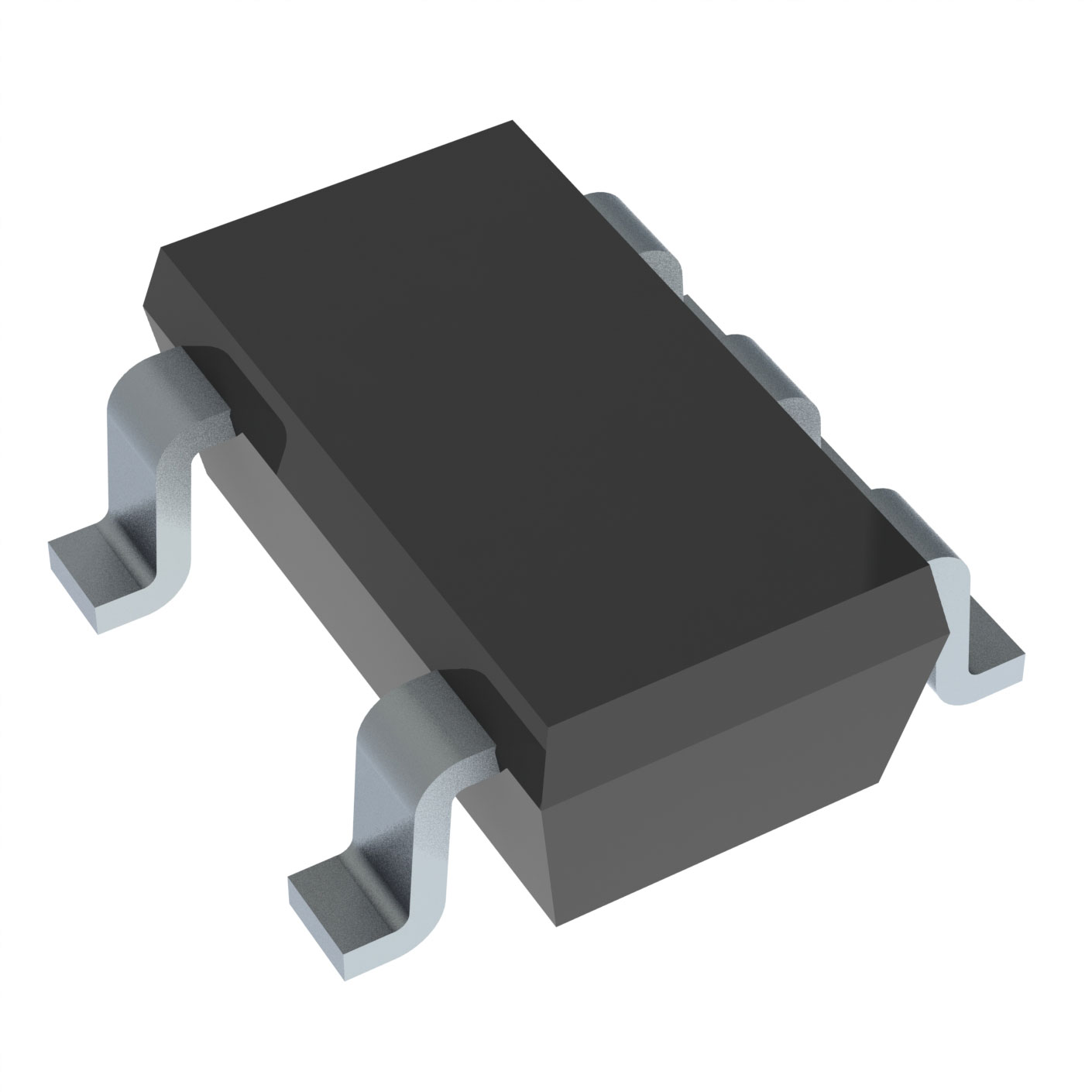
The LP3988IMF-3.0 is a micropower linear voltage regulator IC from Texas Instruments, designed to deliver a fixed 3V output at up to 150mA. This device features integrated enable and power good control functions, along with over-temperature and short-circuit protection. The part is classified as obsolete, making identification of suitable equivalent and substitute components essential for ongoing design support and production continuity. Equivalent parts maintain identical electrical and mechanical specifications, while substitute parts offer compatible functionality within the allowed parameter ranges for this power management category.
Substiute Parts
Key Parameters
| Parameter | Value |
|---|---|
| Manufacturer Part Number | LP3988IMF-3.0 |
| Manufacturer | Texas Instruments |
| Category | Power Management (PMIC) |
| Output Configuration | Positive |
| Output Type | Fixed |
| Voltage - Output (Min/Fixed) | 3V |
| Voltage - Input (Max) | 6V |
| Current - Output | 150mA |
| Voltage Dropout (Max) | 0.15V @ 150mA |
| Current - Quiescent (Iq) | 120 µA |
| Package / Case | SC-74A, SOT-753 |
| Supplier Device Package | SOT-23-5 |
| Operating Temperature | -40°C ~ 125°C |
| Product Status | Obsolete |
Substitute Part Grouping Explanation
Substitution for the LP3988IMF-3.0 is determined by strict alignment of the following critical parameters:
- Fixed output voltage of 3V
- Maximum output current of 150mA
- Positive output configuration
- Maximum input voltage of 6V
- SOT-23-5 package compatibility
- Operating temperature range of -40°C to 125°C
- Surface mount mounting type
The identified substitute parts maintain these core electrical and mechanical specifications. Variations in secondary parameters such as quiescent current, dropout voltage, PSRR characteristics, and specific control features are documented to enable informed selection based on application requirements.
Parameter Comparison
| Parameter | LP3988IMF-3.0 (Main) | LP3988IMF-3.0/NOPB | MIC5256-3.0YM5-TR |
|---|---|---|---|
| Manufacturer | Texas Instruments | National Semiconductor | Microchip Technology |
| Product Status | Obsolete | Active | Active |
| Output Configuration | Positive | Positive | Positive |
| Output Type | Fixed | Fixed | Fixed |
| Voltage - Output (Min/Fixed) | 3V | 3V | 3V |
| Voltage - Input (Max) | 6V | 6V | 6V |
| Current - Output | 150mA | 150mA | 150mA |
| Voltage Dropout (Max) | 0.15V @ 150mA | 0.15V @ 150mA | 0.25V @ 150mA |
| Current - Quiescent (Iq) | 120 µA | 120 µA | 150 µA |
| Current - Supply (Max) | 200 µA | 200 µA | Not specified |
| PSRR | 65dB ~ 45dB (1kHz ~ 10kHz) | 65dB ~ 45dB (1kHz ~ 10kHz) | 60dB ~ 45dB (10Hz ~ 10kHz) |
| Control Features | Enable, Power Good | Enable, Power Good | Enable |
| Protection Features | Over Temperature, Short Circuit | Over Temperature, Short Circuit | Over Current, Over Temperature, Under Voltage Lockout (UVLO) |
| Operating Temperature | -40°C ~ 125°C | -40°C ~ 125°C | -40°C ~ 125°C |
| Package / Case | SC-74A, SOT-753 | SC-74A, SOT-753 | SC-74A, SOT-753 |
| Supplier Device Package | SOT-23-5 | SOT-23-5 | SOT-23-5 |
| RoHS Status | RoHS non-compliant | Not specified | ROHS3 Compliant |
| Packaging | Not specified | Bulk | Tape & Reel (TR) |
Engineering Selection Recommendations
LP3988IMF-3.0/NOPB (National Semiconductor): This part is a parametric equivalent with identical electrical specifications to the main part, including matching dropout voltage (0.15V @ 150mA), quiescent current (120 µA), and control features (Enable, Power Good). The primary distinction is product status: this part is active and currently available. Selection of this substitute eliminates obsolescence risk while maintaining full functional compatibility.
MIC5256-3.0YM5-TR (Microchip Technology): This part is an active substitute that meets all core substitution criteria. Notable differences include a higher dropout voltage (0.25V @ 150mA versus 0.15V), slightly elevated quiescent current (150 µA versus 120 µA), and the absence of a dedicated Power Good output. The MIC5256 includes additional protection features (Over Current and Under Voltage Lockout) not present in the original design. This part carries ROHS3 compliance, addressing environmental regulatory requirements. Selection of this substitute is appropriate for applications where the increased dropout voltage and absence of Power Good functionality do not impact system performance.
Frequently Asked Questions (FAQ)
Q: Can LP3988IMF-3.0/NOPB be used as a direct replacement for LP3988IMF-3.0?
A: Yes. The LP3988IMF-3.0/NOPB maintains identical electrical and mechanical specifications, including output voltage, current rating, dropout voltage, quiescent current, control features, and package type. The primary advantage is active product status and current availability.
Q: What are the key differences between LP3988IMF-3.0 and MIC5256-3.0YM5-TR?
A: Both parts deliver 3V at 150mA in SOT-23-5 packaging. The MIC5256 exhibits higher dropout voltage (0.25V versus 0.15V at 150mA) and slightly higher quiescent current (150 µA versus 120 µA). The MIC5256 lacks a Power Good output but includes Over Current and UVLO protection. The MIC5256 is ROHS3 compliant.
Q: Are there any package compatibility concerns when substituting these parts?
A: All three parts use identical SOT-23-5 packaging (SC-74A, SOT-753). Pin-to-pin compatibility is maintained, allowing direct PCB substitution without layout modifications.
Q: Which substitute should be selected for new designs?
A: Selection depends on specific application requirements. For designs requiring Power Good functionality and minimal dropout voltage, LP3988IMF-3.0/NOPB is preferred. For designs where additional protection features and RoHS3 compliance are priorities, MIC5256-3.0YM5-TR is suitable, provided the higher dropout voltage is acceptable.
Q: What is the impact of the higher dropout voltage in MIC5256-3.0YM5-TR?
A: The MIC5256 requires 0.25V headroom between input and output at 150mA, compared to 0.15V for the original part. This affects minimum input voltage requirements and power dissipation characteristics. Applications with tight input voltage margins must account for this difference.
Alternative Parts

SJ6012L2TP
Littelfuse Inc.
6 Alternative Parts

JMK107BBJ476MA-RE
Taiyo Yuden
10 Alternative Parts

GMK107BBJ475MA-T
Taiyo Yuden
5 Alternative Parts
SJ6020N2ARP
Littelfuse Inc.
3 Alternative Parts
SJ6025R2ATP
Littelfuse Inc.
4 Alternative Parts

2474-05L
API Delevan Inc.
1 Alternative Parts

4590R-684K
API Delevan Inc.
1 Alternative Parts

CM6560R-334
API Delevan Inc.
1 Alternative Parts

CM6460-104
API Delevan Inc.
1 Alternative Parts

5526-12
API Delevan Inc.
1 Alternative Parts