




Request Quote
(Ships tomorrow)
DSA60C60PB Equivalent & Substitute Parts
Part Overview
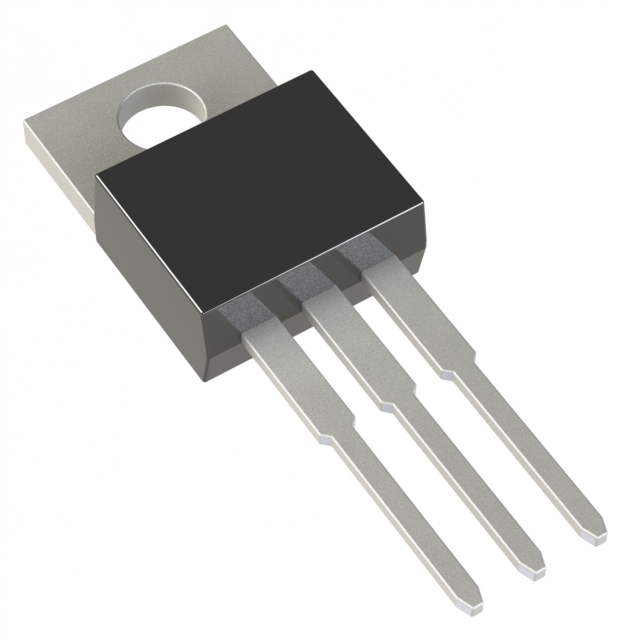
The DSA60C60PB is an IXYS Schottky diode array configured as 1 pair common cathode with 60 V reverse voltage rating and 30 A average rectified current per diode. The device is packaged in TO-220-3 through-hole configuration and is currently in active product status. Substitute parts are identified when equivalent electrical and mechanical parameters are required for design flexibility, inventory management, or component availability across multiple manufacturers.
Substiute Parts
Key Parameters
| Parameter | Value | Unit |
|---|---|---|
| Voltage - DC Reverse (Vr) (Max) | 60 | V |
| Current - Average Rectified (Io) (per Diode) | 30 | A |
| Voltage - Forward (Vf) (Max) @ If | 850 mV @ 30 A | mV |
| Technology | Schottky | — |
| Diode Configuration | 1 Pair Common Cathode | — |
| Speed | Fast Recovery ≤ 500ns, > 200mA (Io) | — |
| Operating Temperature - Junction | -55°C ~ 175°C | °C |
| Mounting Type | Through Hole | — |
| Package / Case | TO-220-3 | — |
| RoHS Status | ROHS3 Compliant | — |
Substitute Part Grouping Explanation
Substitution of the DSA60C60PB is determined by the following critical parameters:
Mandatory Matching Parameters:
- Voltage - DC Reverse (Vr) (Max): 60 V
- Diode Configuration: 1 Pair Common Cathode
- Mounting Type: Through Hole
- Package / Case: TO-220-3
Current Rating Consideration: The DSA60C60PB operates at 30 A average rectified current per diode. Substitute parts are grouped by current capacity: parts rated at 10 A, 15 A, 20 A, and 15 A represent lower current alternatives suitable for applications with reduced current demands. Parts with current ratings below 30 A are direct substitutes only when circuit design permits operation at the lower current specification.
Technology Variants: Schottky technology (DSA60C60PB, MBR2060CTG, STPS20L60CT, STPS30H60CT, STPS41L60CT) and Super Barrier technology (SBR1060CT, SBR20U60CT, SBR3060CT, SBR30A60CT, SBR30A60CT-G) both satisfy fast recovery speed requirements and are functionally interchangeable within the 60 V, TO-220-3 platform.
Compliance and Status: All substitute parts maintain ROHS3 compliance and active or equivalent product status, with the exception of MBR2560CT, which carries obsolete status and automotive qualification (AEC-Q101).
Parameter Comparison
| Part Number | Manufacturer | Vr (Max) [V] | Io per Diode [A] | Vf (Max) [mV] | Technology | Speed | Tj (Max) [°C] | Product Status |
|---|---|---|---|---|---|---|---|---|
| DSA60C60PB | IXYS | 60 | 30 | 850 @ 30A | Schottky | Fast Recovery ≤ 500ns | 175 | Active |
| MBR2060CTG | onsemi | 60 | 10 | 850 @ 10A | Schottky | Fast Recovery ≤ 500ns | 175 | Active |
| MBR2560CT | Diodes Incorporated | 60 | 15 | 750 @ 15A | Schottky | Fast Recovery ≤ 500ns | 150 | Obsolete |
| SBR1060CT | Diodes Incorporated | 60 | 5 | 680 @ 5A | Super Barrier | Fast Recovery ≤ 500ns | 150 | Active |
| SBR20U60CT | Diodes Incorporated | 60 | 10 | 710 @ 20A | Super Barrier | Fast Recovery ≤ 500ns | 150 | Active |
| SBR3060CT | Diodes Incorporated | 60 | 15 | 700 @ 15A | Super Barrier | Fast Recovery ≤ 500ns | 150 | Active |
| SBR30A60CT | Diodes Incorporated | 60 | 15 | 600 @ 15A | Super Barrier | Fast Recovery ≤ 500ns | 150 | Active |
| SBR30A60CT-G | Diodes Incorporated | 60 | 15 | 600 @ 15A | Super Barrier | Standard Recovery >500ns | 150 | Active |
| STPS20L60CT | STMicroelectronics | 60 | 10 | 600 @ 10A | Schottky | Fast Recovery ≤ 500ns | 150 | Active |
| STPS30H60CT | STMicroelectronics | 60 | 15 | 660 @ 15A | Schottky | Fast Recovery ≤ 500ns | 175 | Active |
| STPS41L60CT | STMicroelectronics | 60 | 20 | 600 @ 20A | Schottky | Fast Recovery ≤ 500ns | 150 | Active |
Engineering Selection Recommendations
Primary Substitutes (Equivalent Current Rating): No substitute parts in the provided list match the 30 A current rating of the DSA60C60PB. The highest-rated alternative is STPS41L60CT at 20 A, which operates below the original specification.
Secondary Substitutes (Reduced Current Rating): For applications requiring lower current capacity, the following parts are suitable:
- STPS41L60CT (20 A): Schottky technology, 60 V, active status, maximum junction temperature 150°C
- STPS30H60CT (15 A): Schottky technology, 60 V, active status, maximum junction temperature 175°C
- SBR30A60CT (15 A): Super Barrier technology, 60 V, active status, lower forward voltage (600 mV @ 15 A)
- SBR3060CT (15 A): Super Barrier technology, 60 V, active status
Compliance Considerations: All recommended substitutes maintain ROHS3 compliance. MBR2560CT carries obsolete product status and is not recommended for new designs despite automotive qualification (AEC-Q101).
Temperature Performance: STPS30H60CT and DSA60C60PB both support maximum junction temperature of 175°C, providing thermal equivalence. Most other substitutes operate at 150°C maximum junction temperature.
Recovery Speed: SBR30A60CT-G exhibits standard recovery (>500ns) rather than fast recovery (≤500ns), which may impact switching performance in high-frequency applications.
Frequently Asked Questions (FAQ)
Q: Can the DSA60C60PB be replaced with a lower current-rated part? A: Substitution with lower current-rated parts is permissible only when circuit design and load requirements operate within the reduced current specification. The substitute part must maintain the same 60 V reverse voltage rating and TO-220-3 package configuration. Current derating does not affect voltage or package compatibility.
Q: What is the difference between Schottky and Super Barrier diode technologies in these substitutes? A: Both Schottky and Super Barrier technologies satisfy the fast recovery speed requirement (≤500ns) and 60 V voltage rating. Super Barrier variants (SBR series) typically exhibit lower forward voltage drop, which reduces power dissipation. Technology selection depends on application-specific thermal and efficiency requirements.
Q: Is the MBR2560CT suitable for new designs? A: MBR2560CT carries obsolete product status and is not recommended for new designs. Although it maintains ROHS3 compliance and automotive qualification, active alternatives such as STPS30H60CT or SBR3060CT are preferred for design continuity and long-term availability.
Q: What is the impact of operating temperature differences between substitutes? A: The DSA60C60PB and STPS30H60CT both support -55°C to 175°C junction temperature range. Most other substitutes operate at -65°C to 150°C. Lower maximum junction temperature limits thermal headroom in high-temperature applications. Verify application thermal requirements before selecting a substitute with reduced temperature rating.
Q: Are all substitute parts available in the same TO-220-3 package? A: All substitute parts listed are configured for through-hole mounting in TO-220-3 package or equivalent supplier device package designation. Physical footprint and pin configuration are identical, enabling direct mechanical substitution on printed circuit boards.
Q: Does forward voltage variation affect circuit performance? A: Forward voltage differences range from 600 mV to 850 mV across the substitute parts at their respective rated currents. Lower forward voltage reduces power dissipation and heat generation. Circuit designs with tight voltage regulation or thermal constraints should account for forward voltage variation when selecting substitutes.
Q: Can SBR30A60CT-G be used in place of DSA60C60PB? A: SBR30A60CT-G is mechanically and electrically compatible at 60 V and TO-220-3 package. However, it exhibits standard recovery speed (>500ns) rather than fast recovery (≤500ns). This difference may affect switching frequency performance and electromagnetic interference characteristics in high-speed switching applications.
Alternative Parts

SJ6012L2TP
Littelfuse Inc.
6 Alternative Parts

JMK107BBJ476MA-RE
Taiyo Yuden
10 Alternative Parts

GMK107BBJ475MA-T
Taiyo Yuden
5 Alternative Parts
SJ6020N2ARP
Littelfuse Inc.
3 Alternative Parts
SJ6025R2ATP
Littelfuse Inc.
4 Alternative Parts

2474-05L
API Delevan Inc.
1 Alternative Parts

4590R-684K
API Delevan Inc.
1 Alternative Parts

CM6560R-334
API Delevan Inc.
1 Alternative Parts

CM6460-104
API Delevan Inc.
1 Alternative Parts

5526-12
API Delevan Inc.
1 Alternative Parts