


Request Quote
(Ships tomorrow)
CD4067BE Equivalent & Substitute Parts
Part Overview
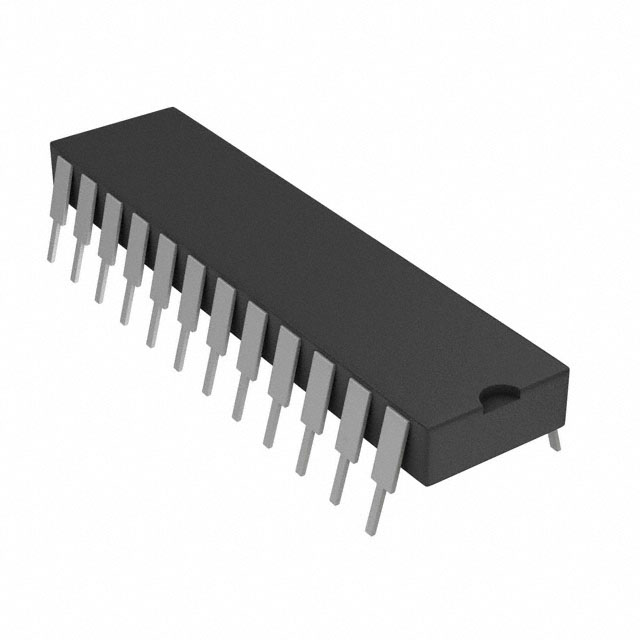
The CD4067BE is a 16:1 multiplexer/demultiplexer interface IC manufactured by Texas Instruments, housed in a 24-pin DIP package for through-hole mounting. This component functions as an analog switch matrix, enabling single-channel selection from 16 input or output lines with a maximum on-state resistance of 240Ω. The CD4067BE is classified as obsolete, making equivalent substitute parts necessary for new designs and production continuity. Active alternatives with identical electrical specifications but different packaging options are available to support modern manufacturing processes.
Substiute Parts
Key Parameters
| Parameter | Value |
|---|---|
| Multiplexer/Demultiplexer Circuit | 16:1 |
| Number of Circuits | 1 |
| On-State Resistance (Max) | 240Ω |
| Channel-to-Channel Matching (ΔRon) | 5Ω |
| Voltage - Supply, Single (V+) | 3V ~ 18V |
| -3dB Bandwidth | 14MHz |
| Channel Capacitance (CS(off), CD(off)) | 0.2pF, 55pF |
| Current - Leakage (IS(off)) (Max) | 100nA |
| Operating Temperature | -55°C ~ 125°C (TA) |
| RoHS Status | ROHS3 Compliant |
| Moisture Sensitivity Level (MSL) | 1 (Unlimited) |
Substitute Part Grouping Explanation
Substitution of the CD4067BE is determined by strict electrical and mechanical parameter matching within the CD4067 base product family. The primary substitution criterion is functional equivalence: all substitute parts must maintain identical multiplexer circuit configuration (16:1), on-state resistance (240Ω maximum), supply voltage range (3V ~ 18V), and operating temperature range (-55°C ~ 125°C).
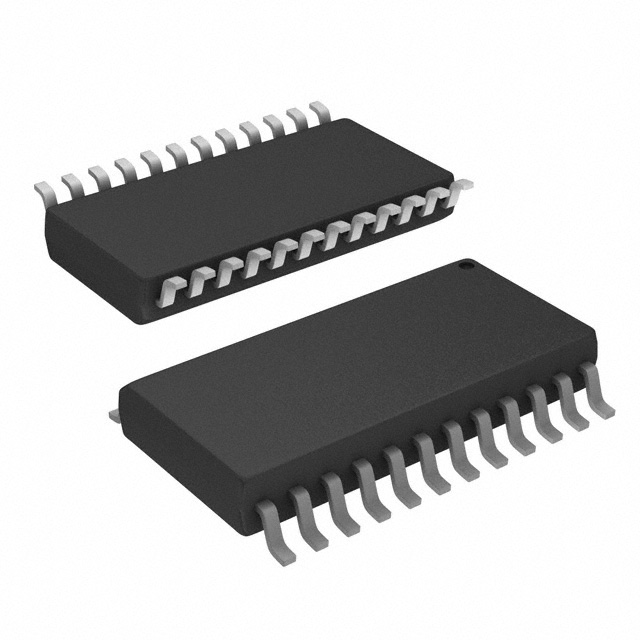
The key differentiator between the CD4067BE and its substitutes is the mounting technology and package format. The CD4067BE uses through-hole DIP packaging, while active substitutes employ surface-mount SOIC packaging. This distinction reflects manufacturing process evolution rather than functional divergence. All parts within this substitution group share the same base product number (CD4067) and maintain identical electrical performance specifications, including bandwidth (14MHz), leakage current (100nA maximum), and channel capacitance characteristics.
Compliance certifications (ROHS3, MSL Level 1, REACH Unaffected) are consistent across all substitutes, ensuring regulatory compatibility in equivalent applications.
Parameter Comparison
| Parameter | CD4067BE (Main Part) | CD4067BM96 (Substitute) |
|---|---|---|
| Manufacturer | Texas Instruments | Texas Instruments |
| Base Product Number | CD4067 | CD4067 |
| Multiplexer/Demultiplexer Circuit | 16:1 | 16:1 |
| Number of Circuits | 1 | 1 |
| On-State Resistance (Max) | 240Ω | 240Ω |
| Channel-to-Channel Matching (ΔRon) | 5Ω | 5Ω |
| Voltage - Supply, Single (V+) | 3V ~ 18V | 3V ~ 18V |
| -3dB Bandwidth | 14MHz | 14MHz |
| Channel Capacitance (CS(off), CD(off)) | 0.2pF, 55pF | 0.2pF, 55pF |
| Current - Leakage (IS(off)) (Max) | 100nA | 100nA |
| Operating Temperature | -55°C ~ 125°C (TA) | -55°C ~ 125°C (TA) |
| Product Status | Obsolete | Active |
| Mounting Type | Through Hole | Surface Mount |
| Package / Case | 24-DIP (0.600", 15.24mm) | 24-SOIC (0.295", 7.50mm Width) |
| RoHS Status | ROHS3 Compliant | ROHS3 Compliant |
| Moisture Sensitivity Level (MSL) | 1 (Unlimited) | 1 (Unlimited) |
Engineering Selection Recommendations
The CD4067BE is obsolete; therefore, the CD4067BM96 is the primary active substitute from Texas Instruments. Both parts are ROHS3 compliant and carry MSL Level 1 certification, ensuring equivalent regulatory and environmental compliance.
Selection between these parts depends on board design requirements:
- CD4067BE: Use only in legacy designs or when through-hole mounting is mandatory. Availability is limited to existing inventory.
- CD4067BM96: Specified for new designs and production. This part is actively manufactured and stocked, with superior long-term availability. Surface-mount SOIC packaging reduces board footprint and supports automated assembly processes.
Electrical performance is identical between both options. PCB layout and assembly process changes are the only design considerations when transitioning from DIP to SOIC packaging.
Frequently Asked Questions (FAQ)
Q: Can CD4067BM96 replace CD4067BE in existing designs? A: Electrically, yes. The CD4067BM96 provides identical multiplexer functionality, on-state resistance, bandwidth, and operating specifications. However, the package change from 24-DIP to 24-SOIC requires PCB redesign and different assembly processes. Direct socket substitution is not possible.
Q: What is the difference between CD4067BE and CD4067BM96? A: Both are 16:1 multiplexer ICs from Texas Instruments with identical electrical specifications. The CD4067BE uses through-hole DIP packaging (obsolete), while the CD4067BM96 uses surface-mount SOIC packaging (active production). All functional parameters—resistance, voltage range, bandwidth, and temperature rating—are equivalent.
Q: Is the CD4067BM96 ROHS compliant? A: Yes. The CD4067BM96 is ROHS3 compliant with MSL Level 1 rating, matching the compliance profile of the CD4067BE.
Q: Why is the CD4067BE obsolete? A: The CD4067BE is obsolete due to industry transition from through-hole DIP packaging to surface-mount SOIC packaging. Modern manufacturing processes favor surface-mount technology for cost efficiency and board density optimization.
Q: Can I use other CD4067 variants as substitutes? A: Substitution is valid only among CD4067 base product variants that maintain identical electrical specifications (16:1 configuration, 240Ω on-state resistance, 3V ~ 18V supply range, -55°C ~ 125°C operating temperature). Package format differences do not affect electrical equivalence but require design and assembly process changes.
Alternative Parts

SJ6012L2TP
Littelfuse Inc.
6 Alternative Parts

JMK107BBJ476MA-RE
Taiyo Yuden
10 Alternative Parts

GMK107BBJ475MA-T
Taiyo Yuden
5 Alternative Parts
SJ6020N2ARP
Littelfuse Inc.
3 Alternative Parts
SJ6025R2ATP
Littelfuse Inc.
4 Alternative Parts

2474-05L
API Delevan Inc.
1 Alternative Parts

4590R-684K
API Delevan Inc.
1 Alternative Parts

CM6560R-334
API Delevan Inc.
1 Alternative Parts

CM6460-104
API Delevan Inc.
1 Alternative Parts

5526-12
API Delevan Inc.
1 Alternative Parts