


Request Quote
(Ships tomorrow)
BC548A Equivalent & Substitute Parts
Part Overview
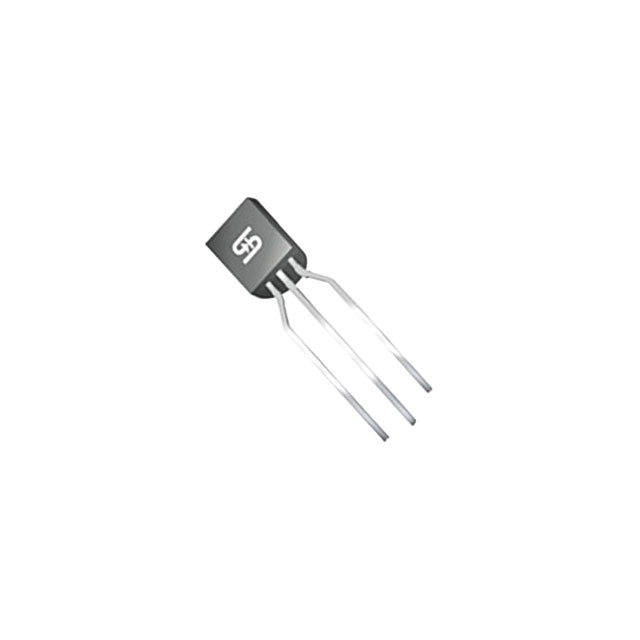
The BC548A is an NPN bipolar junction transistor manufactured by Taiwan Semiconductor Corporation, designed for general-purpose switching and amplification applications. This through-hole component operates at a maximum collector voltage of 30V with a maximum collector current of 100mA and dissipates up to 500mW. The BC548A maintains Active product status with 7270 units in current inventory. Substitute parts are identified to provide alternative sourcing options when the primary part becomes unavailable or when design flexibility requires component alternatives that meet equivalent electrical and mechanical specifications.
Substiute Parts
Key Parameters
| Parameter | BC548A |
|---|---|
| Transistor Type | NPN |
| Voltage - Collector Emitter Breakdown (Max) | 30V |
| Current - Collector (Ic) (Max) | 100mA |
| Power - Max | 500mW |
| DC Current Gain (hFE) (Min) @ Ic, Vce | 110 @ 2mA, 5V |
| Current - Collector Cutoff (Max) | 15nA (ICBO) |
| Operating Temperature Range | -65°C ~ 150°C (TJ) |
| Mounting Type | Through Hole |
| Package / Case | TO-92-3 (TO-226AA) |
| RoHS Status | ROHS3 Compliant |
Substitute Part Grouping Explanation
Substitution of the BC548A is determined by equivalence in the following critical parameters:
Transistor Type: Both the main part and substitute must be NPN configuration to maintain circuit polarity and biasing requirements.
Package / Case: Both components utilize the TO-92-3 (TO-226AA) through-hole package, ensuring mechanical and pin compatibility on printed circuit boards.
Mounting Type: Both are through-hole mounted components, allowing direct replacement without PCB redesign.
Voltage Rating: The substitute part must equal or exceed the maximum collector-emitter breakdown voltage of the main part to ensure safe operation within the same circuit voltage envelope.
Current Rating: The substitute part must equal or exceed the maximum collector current rating to handle equivalent load conditions.
Power Dissipation: The substitute part must equal or exceed the maximum power rating to accommodate thermal requirements.
Compliance Standards: Both parts maintain ROHS3 compliance and REACH Unaffected status, ensuring regulatory equivalence for industrial and commercial applications.
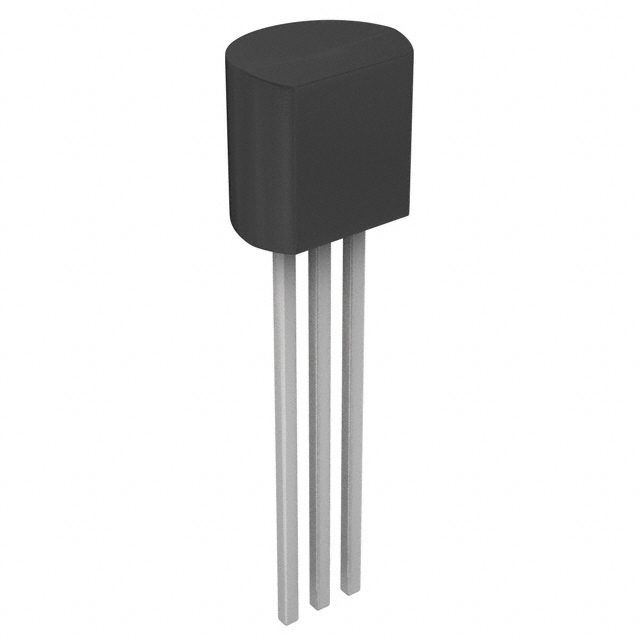
The LP395Z/NOPB from Texas Instruments meets these substitution criteria with a higher collector-emitter breakdown voltage (36V versus 30V) and compatible through-hole TO-92-3 packaging.
Parameter Comparison
| Parameter | BC548A (Taiwan Semiconductor) | LP395Z/NOPB (Texas Instruments) |
|---|---|---|
| Transistor Type | NPN | NPN |
| Voltage - Collector Emitter Breakdown (Max) | 30V | 36V |
| Mounting Type | Through Hole | Through Hole |
| Package / Case | TO-92-3 (TO-226AA) | TO-92-3 (TO-226AA) |
| Operating Temperature Range | -65°C ~ 150°C (TJ) | 0°C ~ 125°C (TA) |
| RoHS Status | ROHS3 Compliant | ROHS3 Compliant |
| REACH Status | REACH Unaffected | REACH Unaffected |
| Product Status | Active | Active |
Engineering Selection Recommendations
Both the BC548A and LP395Z/NOPB maintain Active product status with current manufacturing and inventory availability. Selection between these components is based on application-specific requirements and compliance certifications.
The BC548A offers an extended operating temperature range of -65°C to 150°C (junction temperature), making it suitable for applications requiring operation in extreme thermal environments or with high internal power dissipation.
The LP395Z/NOPB provides a higher collector-emitter breakdown voltage rating of 36V compared to the BC548A's 30V, offering additional voltage margin in circuits operating near the upper voltage limit of the BC548A specification.
Both components satisfy ROHS3 compliance and REACH Unaffected regulatory requirements, ensuring compatibility with environmental and hazardous substance restrictions in industrial, commercial, and consumer applications.
Selection should prioritize the BC548A when the extended temperature range is required for the application. The LP395Z/NOPB is selected when higher voltage headroom is necessary or when Texas Instruments sourcing is preferred for supply chain continuity.
Frequently Asked Questions (FAQ)
Q: Can the LP395Z/NOPB directly replace the BC548A in existing circuit designs?
A: Yes. Both components share identical NPN transistor type, TO-92-3 through-hole package configuration, and pin compatibility. The LP395Z/NOPB's higher 36V collector-emitter breakdown voltage provides additional voltage margin compared to the BC548A's 30V rating, making it suitable for direct substitution in circuits operating at or below 30V.
Q: What is the primary difference between these two transistors?
A: The primary differences are the collector-emitter breakdown voltage (BC548A: 30V; LP395Z/NOPB: 36V) and operating temperature range (BC548A: -65°C to 150°C junction temperature; LP395Z/NOPB: 0°C to 125°C ambient temperature). The LP395Z/NOPB offers higher voltage capability, while the BC548A supports extended low-temperature operation.
Q: Are both parts compliant with environmental regulations?
A: Yes. Both the BC548A and LP395Z/NOPB are ROHS3 compliant and REACH Unaffected, meeting current environmental and hazardous substance restrictions for industrial and commercial applications.
Q: Does the package type differ between these transistors?
A: No. Both components use the TO-92-3 (TO-226AA) through-hole package, ensuring identical mechanical fit and pin configuration on printed circuit boards without requiring PCB modifications.
Q: Which transistor should be selected for low-temperature applications?
A: The BC548A is specified for operation down to -65°C (junction temperature), making it the appropriate choice for applications requiring extended low-temperature performance. The LP395Z/NOPB is specified for 0°C minimum ambient temperature operation.
Q: Are there inventory considerations when selecting between these parts?
A: The BC548A currently has 7270 units in stock, while the LP395Z/NOPB has 4144 units available. Selection may be influenced by supply chain requirements and lead time considerations for high-volume production.
Alternative Parts

SJ6012L2TP
Littelfuse Inc.
6 Alternative Parts

JMK107BBJ476MA-RE
Taiyo Yuden
10 Alternative Parts

GMK107BBJ475MA-T
Taiyo Yuden
5 Alternative Parts
SJ6020N2ARP
Littelfuse Inc.
3 Alternative Parts
SJ6025R2ATP
Littelfuse Inc.
4 Alternative Parts

2474-05L
API Delevan Inc.
1 Alternative Parts

4590R-684K
API Delevan Inc.
1 Alternative Parts

CM6560R-334
API Delevan Inc.
1 Alternative Parts

CM6460-104
API Delevan Inc.
1 Alternative Parts

5526-12
API Delevan Inc.
1 Alternative Parts