


Request Quote
(Ships tomorrow)
6N139 Optoisolator Equivalent & Substitute Parts
Part Overview
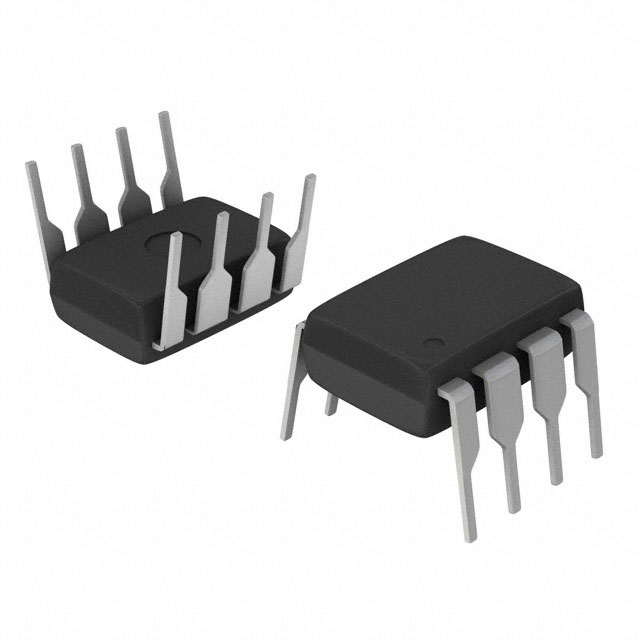
The 6N139 is an optoisolator with Darlington output configuration designed for low input current applications. This component provides galvanic isolation up to 5000Vrms in a single-channel configuration with 8-DIP through-hole packaging. The part is currently active in production and widely available. Equivalent and substitute parts are identified to support procurement flexibility, inventory management, and supply chain continuity when the primary manufacturer source is unavailable or when alternative compliance certifications are required.
Substiute Parts
Key Parameters
| Parameter | Value |
|---|---|
| Part Number | 6N139 |
| Category | Optoisolators |
| Number of Channels | 1 |
| Voltage - Isolation | 5000Vrms (minimum) |
| Current Transfer Ratio (Min) | 500% @ 1.6mA |
| Output Type | Darlington with Base |
| Voltage - Output (Max) | 18V |
| Current - Output / Channel | 60mA |
| Input Type | DC |
| Operating Temperature Range | -55°C to 100°C |
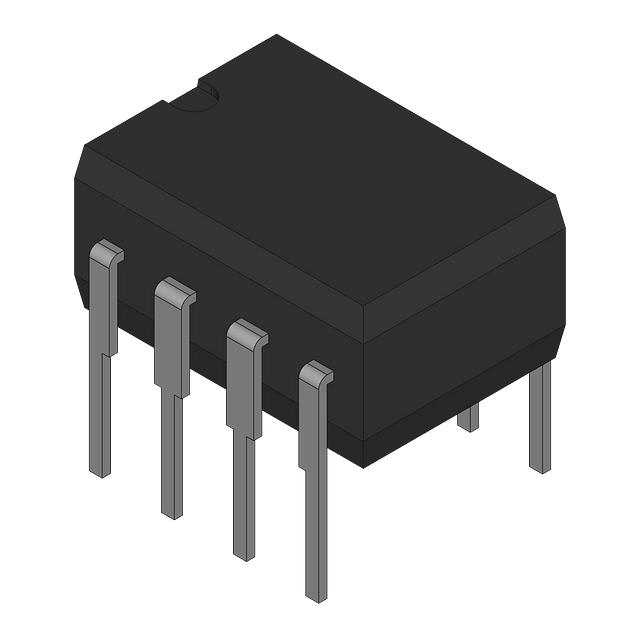
| Package / Case | 8-DIP (0.300", 7.62mm) |
| Mounting Type | Through Hole |
| Moisture Sensitivity Level (MSL) | 1 (Unlimited) |
Substitute Part Grouping Explanation
Substitution eligibility for the 6N139 optoisolator is determined by strict equivalence across the following critical parameters:
Mandatory Matching Parameters:
- Number of Channels: 1 channel configuration
- Output Type: Darlington with Base output stage
- Input Type: DC input
- Package / Case: 8-DIP (0.300", 7.62mm) through-hole
- Current Transfer Ratio (Min): 500% @ 1.6mA
- Voltage - Output (Max): 18V
- Current - Output / Channel: 60mA
- Operating Temperature Range: -55°C to 100°C
- Mounting Type: Through Hole
Allowable Parameter Variations:
- Voltage - Isolation: Minimum 5000Vrms; higher isolation ratings are acceptable
- Turn On / Turn Off Time: Variations permitted within functional requirements
- Voltage - Forward (Vf): 1.4V nominal; minor variations acceptable
- Current - DC Forward (If) (Max): 25mA maximum; lower values acceptable
The 6N139 from Texas Instruments meets all mandatory matching parameters and qualifies as a parametric equivalent substitute.
Parameter Comparison
| Parameter | 6N139 (QT Brightek) | 6N139 (Texas Instruments) | Compatibility |
|---|---|---|---|
| Number of Channels | 1 | 1 | Match |
| Voltage - Isolation | 5000Vrms | 5300Vrms | Compatible (TI higher) |
| Current Transfer Ratio (Min) | 500% @ 1.6mA | 500% @ 1.6mA | Match |
| Output Type | Darlington with Base | Darlington with Base | Match |
| Voltage - Output (Max) | 18V | 18V | Match |
| Current - Output / Channel | 60mA | 60mA | Match |
| Input Type | DC | DC | Match |
| Voltage - Forward (Vf) (Typ) | 1.4V | 1.4V | Match |
| Current - DC Forward (If) (Max) | 25mA | 25mA | Match |
| Operating Temperature | -55°C to 100°C | -55°C to 100°C | Match |
| Package / Case | 8-DIP (0.300", 7.62mm) | 8-DIP (0.300", 7.62mm) | Match |
| Mounting Type | Through Hole | Through Hole | Match |
| Turn On / Turn Off Time (Typ) | 4.8µs, 15µs | 600ns, 1.5µs | Compatible (TI faster) |
| Moisture Sensitivity Level (MSL) | 1 (Unlimited) | 1 (Unlimited) | Match |
Engineering Selection Recommendations
Primary Selection (QT Brightek 6N139):
- RoHS3 Compliant status
- REACH Unaffected classification
- Suitable for applications requiring full environmental compliance documentation
- Recommended for new designs with strict regulatory requirements
Substitute Selection (Texas Instruments 6N139):
- Higher isolation voltage rating (5300Vrms vs. 5000Vrms) provides additional safety margin
- Faster switching performance (600ns/1.5µs vs. 4.8µs/15µs) supports higher-frequency applications
- RoHS non-compliant status requires compliance verification in target application
- REACH Affected status requires supply chain documentation review
- Suitable for applications where enhanced isolation and switching speed are beneficial and compliance restrictions do not apply
Both parts share identical pin configuration, package footprint, and core electrical specifications, enabling direct substitution at the circuit board level when compliance and performance requirements align.
Frequently Asked Questions (FAQ)
Q: Can the Texas Instruments 6N139 be used as a direct replacement for the QT Brightek 6N139?
A: Yes, at the circuit board level. Both parts feature identical 8-DIP pinouts, matching electrical specifications for isolation voltage (5000Vrms minimum), current transfer ratio, output current, and operating temperature range. However, compliance certifications differ. The Texas Instruments version is RoHS non-compliant and REACH Affected, requiring verification against application requirements before substitution.
Q: What are the key differences between these two 6N139 variants?
A: The Texas Instruments version provides higher isolation voltage (5300Vrms vs. 5000Vrms) and significantly faster switching times (600ns/1.5µs vs. 4.8µs/15µs). These differences represent performance enhancements rather than functional incompatibilities. Compliance status differs: QT Brightek is RoHS3 Compliant and REACH Unaffected; Texas Instruments is RoHS non-compliant and REACH Affected.
Q: Are there any package or pinout differences?
A: No. Both versions use identical 8-DIP (0.300", 7.62mm) through-hole packaging with matching pin assignments. PCB layouts and socket compatibility are identical.
Q: Which version should be selected for new designs?
A: Selection depends on application requirements. For designs requiring RoHS3 and REACH compliance, use QT Brightek. For applications prioritizing faster switching performance and higher isolation margins, use Texas Instruments, provided compliance restrictions do not apply.
Q: Can these parts be mixed in the same production batch?
A: Electrical interchangeability is confirmed. However, compliance documentation and supply chain traceability must be maintained separately. Mixing requires explicit approval from quality assurance and regulatory compliance functions.
Q: What is the significance of the faster switching times in the Texas Instruments version?
A: Faster turn-on (600ns vs. 4.8µs) and turn-off (1.5µs vs. 15µs) times enable operation at higher switching frequencies and reduce propagation delay in time-sensitive applications. This is a performance advantage with no functional impact on standard-speed applications.
Alternative Parts

SJ6012L2TP
Littelfuse Inc.
6 Alternative Parts

JMK107BBJ476MA-RE
Taiyo Yuden
10 Alternative Parts

GMK107BBJ475MA-T
Taiyo Yuden
5 Alternative Parts
SJ6020N2ARP
Littelfuse Inc.
3 Alternative Parts
SJ6025R2ATP
Littelfuse Inc.
4 Alternative Parts

2474-05L
API Delevan Inc.
1 Alternative Parts

4590R-684K
API Delevan Inc.
1 Alternative Parts

CM6560R-334
API Delevan Inc.
1 Alternative Parts

CM6460-104
API Delevan Inc.
1 Alternative Parts

5526-12
API Delevan Inc.
1 Alternative Parts