


Request Quote
(Ships tomorrow)
Renesas Electronics 2308-4DCG Equivalent & Substitute Parts
Part Overview
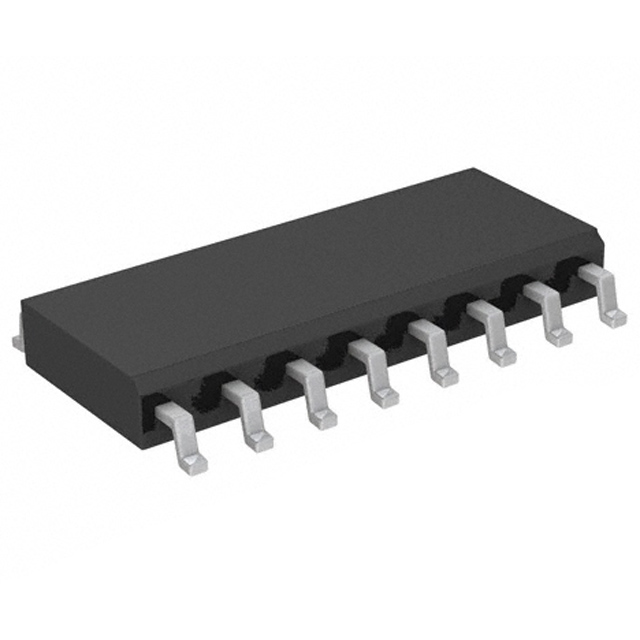
The Renesas Electronics 2308-4DCG is a Multiplier, Zero Delay Buffer IC designed for clock and timing applications. This device operates at a maximum frequency of 133.3MHz with a 1:8 input-to-output ratio and features integrated PLL with bypass capability. The part is classified as Obsolete, making identification of suitable substitute components essential for ongoing system support and new design implementations.
Substiute Parts
Key Parameters
| Parameter | Value |
|---|---|
| Manufacturer Part Number | 2308-4DCG |
| Manufacturer | Renesas Electronics Corporation |
| Category | Clock/Timing |
| Type | Multiplier, Zero Delay Buffer |
| Frequency - Max | 133.3MHz |
| Ratio - Input:Output | 1:8 |
| Input Signal Type | LVTTL |
| Output Signal Type | LVTTL |
| Voltage - Supply | 3V ~ 3.6V |
| Operating Temperature | 0°C ~ 70°C |
| Package / Case | 16-SOIC (0.154", 3.90mm Width) |
| Mounting Type | Surface Mount |
| Product Status | Obsolete |
| RoHS Status | ROHS3 Compliant |
| MSL Rating | 3 (168 Hours) |
Substitute Part Grouping Explanation
Substitution of the 2308-4DCG requires evaluation based on the following critical parameters:
Functional Compatibility Criteria:
- Clock/Timing category classification
- PLL with bypass functionality
- Frequency capability meeting or exceeding 133.3MHz maximum
- Input and output signal compatibility (LVTTL or compatible logic families)
- Supply voltage range overlap with 3V ~ 3.6V specification
Physical and Environmental Criteria:
- Surface mount packaging suitable for PCB integration
- RoHS3 compliance for regulatory alignment
- MSL rating of 3 or better for moisture sensitivity
- Operating temperature range supporting 0°C ~ 70°C minimum
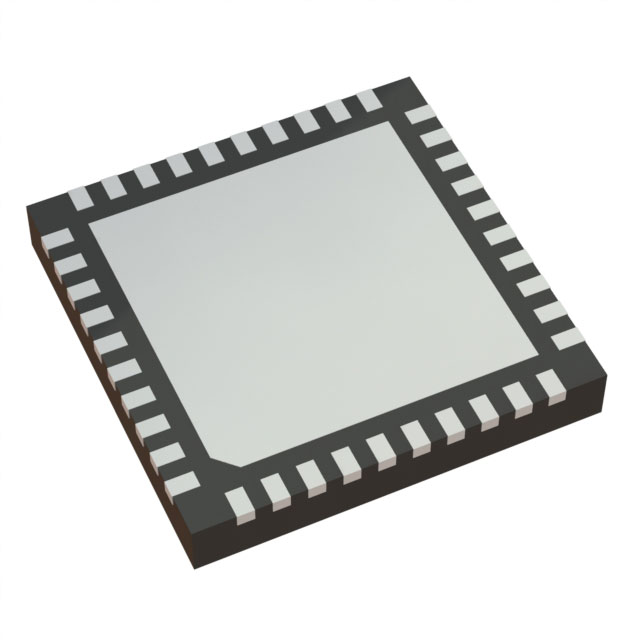
The substitute part 8T49N240-998NLGI is classified as a Jitter Attenuator IC from the FemtoClock® NG series. While this device operates at a significantly higher maximum frequency (867MHz) and provides enhanced signal conditioning through jitter attenuation, it maintains functional compatibility through PLL architecture, multi-format input/output support including LVCMOS and LVDS, and equivalent compliance certifications.
Parameter Comparison
| Parameter | 2308-4DCG (Main Part) | 8T49N240-998NLGI (Substitute) |
|---|---|---|
| Manufacturer | Renesas Electronics Corporation | Renesas Electronics Corporation |
| Category | Clock/Timing | Clock/Timing |
| Type | Multiplier, Zero Delay Buffer | Jitter Attenuator |
| PLL Architecture | Yes with Bypass | Yes |
| Frequency - Max | 133.3MHz | 867MHz |
| Number of Circuits | 1 | 1 |
| Mounting Type | Surface Mount | Surface Mount |
| Voltage - Supply | 3V ~ 3.6V | 1.71V ~ 3.465V |
| Operating Temperature | 0°C ~ 70°C | -40°C ~ 85°C |
| Product Status | Obsolete | Active |
| RoHS Status | ROHS3 Compliant | ROHS3 Compliant |
| MSL Rating | 3 (168 Hours) | 3 (168 Hours) |
| Package / Case | 16-SOIC (0.154", 3.90mm Width) | 40-VFQFN Exposed Pad (6x6) |
Engineering Selection Recommendations
The 8T49N240-998NLGI serves as an active substitute for the obsolete 2308-4DCG. Selection of this substitute is supported by the following engineering factors:
Product Lifecycle Status: The 2308-4DCG is classified as Obsolete, whereas the 8T49N240-998NLGI maintains Active product status with current manufacturing support and availability.
Regulatory Compliance: Both devices maintain ROHS3 compliance and equivalent MSL ratings, ensuring compatibility with current manufacturing and environmental standards.
Functional Capability: The substitute device provides enhanced frequency capability (867MHz versus 133.3MHz) and integrated jitter attenuation, delivering superior performance for clock distribution and timing applications. The PLL architecture with flexible input/output format support (LVCMOS, LVDS, LVPECL, HCSL) accommodates a broader range of system interfaces compared to the fixed LVTTL specification of the original part.
Supply Voltage Compatibility: The substitute's supply voltage range (1.71V ~ 3.465V) encompasses the original specification (3V ~ 3.6V), ensuring direct compatibility with existing power distribution networks.
Thermal Operating Range: The substitute extends the operating temperature range to -40°C ~ 85°C, providing enhanced performance margin for industrial and extended-temperature applications.
Package Consideration: The substitute utilizes a 40-VFQFN package versus the original 16-SOIC package. PCB layout redesign is required to accommodate the different footprint and pin configuration.
Frequently Asked Questions (FAQ)
Q: Can the 8T49N240-998NLGI directly replace the 2308-4DCG without PCB modification?
A: No. The substitute device uses a 40-VFQFN package compared to the original 16-SOIC package. PCB layout redesign, including footprint modification and signal routing updates, is required. Pin assignments and functional mapping must be verified against the respective datasheets.
Q: What are the key differences in signal compatibility between these devices?
A: The 2308-4DCG operates with fixed LVTTL input and output. The 8T49N240-998NLGI supports multiple input formats (LVCMOS, LVDS, LVHSTL, LVPECL, Crystal) and output formats (HCSL, LVCMOS, LVDS, LVPECL). System design must account for these expanded interface options and configure the substitute accordingly.
Q: Does the substitute device maintain the same frequency multiplication ratio?
A: No. The 2308-4DCG provides a 1:8 input-to-output ratio. The 8T49N240-998NLGI provides a 2:4 ratio with integrated divider/multiplier functionality. Frequency scaling and clock distribution architecture must be re-evaluated for the target application.
Q: Are both devices suitable for the same operating temperature range?
A: The 2308-4DCG operates from 0°C to 70°C. The 8T49N240-998NLGI extends this range to -40°C to 85°C. For applications requiring the original 0°C to 70°C range, the substitute provides additional thermal margin and flexibility for extended-temperature deployments.
Q: What is the impact of the higher maximum frequency specification?
A: The substitute's 867MHz maximum frequency capability exceeds the original 133.3MHz specification. This provides performance headroom for future system upgrades and supports higher-speed clock distribution requirements. System design must ensure PCB signal integrity and EMI considerations are addressed for the higher frequency operation.
Q: Are moisture sensitivity levels equivalent between the two devices?
A: Yes. Both devices maintain MSL rating 3 (168 Hours), ensuring equivalent handling, storage, and reflow requirements during manufacturing and assembly processes.
Alternative Parts

SJ6012L2TP
Littelfuse Inc.
6 Alternative Parts

JMK107BBJ476MA-RE
Taiyo Yuden
10 Alternative Parts

GMK107BBJ475MA-T
Taiyo Yuden
5 Alternative Parts
SJ6020N2ARP
Littelfuse Inc.
3 Alternative Parts
SJ6025R2ATP
Littelfuse Inc.
4 Alternative Parts

2474-05L
API Delevan Inc.
1 Alternative Parts

4590R-684K
API Delevan Inc.
1 Alternative Parts

CM6560R-334
API Delevan Inc.
1 Alternative Parts

CM6460-104
API Delevan Inc.
1 Alternative Parts

5526-12
API Delevan Inc.
1 Alternative Parts