



Request Quote
(Ships tomorrow)
TE Connectivity 2176075-2 Equivalent & Substitute Parts
Part Overview
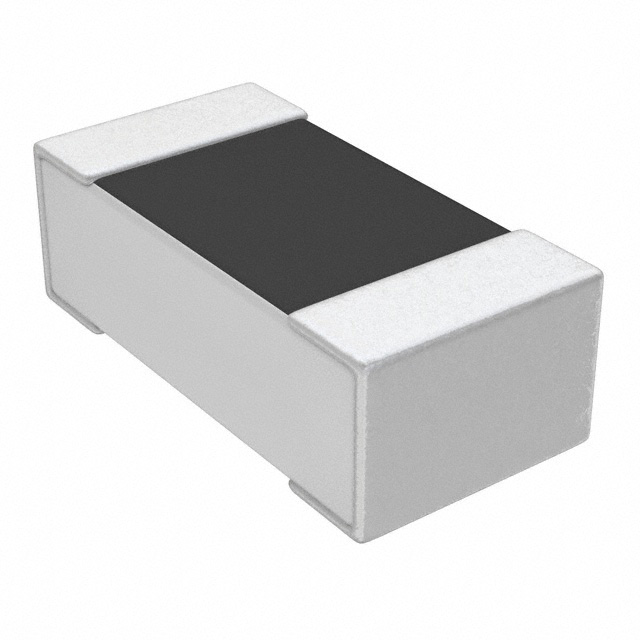
The TE Connectivity 2176075-2 is a 0.2 nH unshielded thin film inductor rated for 400 mA maximum current with 200 mOhm maximum DC resistance in a 0201 (0603 Metric) surface mount package. This component is classified as obsolete product status. Identifying equivalent substitute parts is necessary to maintain design continuity and ensure component availability for production and repair applications.
Substiute Parts
Key Parameters
| Parameter | Value |
|---|---|
| Inductance | 0.2 nH |
| Current Rating | 400 mA |
| DC Resistance (DCR) | 200 mOhm Max |
| Package / Case | 0201 (0603 Metric) |
| Shielding | Unshielded |
| Mounting Type | Surface Mount |
| Inductance Frequency - Test | 500 MHz |
| Product Status | Obsolete |
Substitute Part Grouping Explanation
Substitution of the TE Connectivity 2176075-2 is determined by the following critical parameters:
Inductance Value: The substitute part must maintain the 0.2 nH inductance specification. The Murata LQP03TG0N2B02D meets this requirement with identical inductance.
Package Compatibility: Both the main part and substitute utilize the 0201 (0603 Metric) surface mount package with matching physical dimensions (0.024" L x 0.012" W / 0.60mm x 0.30mm), ensuring mechanical and electrical compatibility on printed circuit boards.
Unshielded Configuration: The substitute part maintains the unshielded design, preserving electromagnetic characteristics and board layout requirements.
Current Rating Consideration: The substitute part (Murata LQP03TG0N2B02D) provides a higher current rating of 850 mA compared to the original 400 mA specification. This represents an enhanced capability suitable for applications requiring the original 400 mA rating.
DC Resistance: The substitute part features 80 mOhm maximum DC resistance, which is lower than the original 200 mOhm specification, resulting in reduced power dissipation.
Frequency Performance: Both parts are tested at 500 MHz inductance frequency, maintaining consistent RF performance characteristics.
Compliance Status: The substitute part carries active product status with ROHS3 compliance and REACH unaffected designation, ensuring long-term availability and regulatory alignment.
Parameter Comparison
| Parameter | TE Connectivity 2176075-2 | Murata LQP03TG0N2B02D |
|---|---|---|
| Manufacturer | TE Connectivity Passive Product | Murata Electronics |
| Inductance | 0.2 nH | 0.2 nH |
| Inductance Tolerance | ±0.2 nH | ±0.1 nH |
| Current Rating (Amps) | 400 mA | 850 mA |
| DC Resistance (DCR) | 200 mOhm Max | 80 mOhm Max |
| Shielding | Unshielded | Unshielded |
| Package / Case | 0201 (0603 Metric) | 0201 (0603 Metric) |
| Size / Dimension | 0.024" L x 0.012" W (0.60mm x 0.30mm) | 0.024" L x 0.012" W (0.60mm x 0.30mm) |
| Mounting Type | Surface Mount | Surface Mount |
| Inductance Frequency - Test | 500 MHz | 500 MHz |
| Frequency - Self Resonant | 9 GHz | 20 GHz |
| Product Status | Obsolete | Active |
| RoHS Status | ROHS3 Compliant | ROHS3 Compliant |
| Moisture Sensitivity Level (MSL) | 1 (Unlimited) | 1 (Unlimited) |
| ECCN | EAR99 | EAR99 |
Engineering Selection Recommendations
The Murata LQP03TG0N2B02D serves as a direct substitute for the obsolete TE Connectivity 2176075-2 based on the following engineering criteria:
Identical Inductance and Package: Both components share the same 0.2 nH inductance value and 0201 (0603 Metric) surface mount package, ensuring drop-in compatibility without circuit board redesign.
Active Product Status: The Murata part maintains active product status, providing assured long-term availability and supply chain continuity compared to the obsolete TE Connectivity component.
Regulatory Compliance: Both parts are ROHS3 compliant with EAR99 export classification. The Murata part carries REACH unaffected status, confirming regulatory alignment for current manufacturing standards.
Enhanced Electrical Performance: The substitute part provides superior electrical characteristics including tighter inductance tolerance (±0.1 nH versus ±0.2 nH), higher current rating (850 mA versus 400 mA), and lower DC resistance (80 mOhm versus 200 mOhm). These improvements result in reduced power dissipation and enhanced current handling capability.
Moisture Sensitivity: Both components maintain MSL 1 (Unlimited) classification, indicating identical moisture handling and storage requirements.
Frequently Asked Questions (FAQ)
Q: Can the Murata LQP03TG0N2B02D directly replace the TE Connectivity 2176075-2 without circuit modifications?
A: Yes. Both components share identical inductance (0.2 nH), package type (0201 / 0603 Metric), and physical dimensions (0.024" L x 0.012" W). No circuit board layout or schematic modifications are required for substitution.
Q: What are the key differences between these two inductors?
A: The primary differences are: (1) Murata part has tighter inductance tolerance (±0.1 nH versus ±0.2 nH), (2) higher current rating (850 mA versus 400 mA), (3) lower DC resistance (80 mOhm versus 200 mOhm), and (4) higher self-resonant frequency (20 GHz versus 9 GHz). The TE Connectivity part is obsolete while the Murata part is active.
Q: Are there any compliance or certification differences?
A: Both parts are ROHS3 compliant with EAR99 export classification. The Murata part carries REACH unaffected status. Both maintain MSL 1 (Unlimited) moisture sensitivity level.
Q: Does the higher current rating of the Murata part affect circuit operation?
A: No. The higher current rating (850 mA) of the Murata part represents enhanced capability. For applications requiring the original 400 mA specification, the Murata part operates within its rated parameters with additional margin.
Q: What is the impact of lower DC resistance in the substitute part?
A: The lower DC resistance (80 mOhm versus 200 mOhm) in the Murata part results in reduced power dissipation and lower heat generation during operation, providing improved thermal performance.
Q: Are the packaging formats identical?
A: Yes. Both components use 0201 (0603 Metric) surface mount packages with identical physical dimensions and mounting characteristics, ensuring compatibility with existing pick-and-place equipment and PCB designs.
Q: What is the significance of the different self-resonant frequencies?
A: The Murata part exhibits a higher self-resonant frequency (20 GHz versus 9 GHz), indicating extended usable frequency range. For applications operating at the 500 MHz test frequency specified for both parts, this difference does not impact functional performance.
Alternative Parts

SJ6012L2TP
Littelfuse Inc.
6 Alternative Parts

JMK107BBJ476MA-RE
Taiyo Yuden
10 Alternative Parts

GMK107BBJ475MA-T
Taiyo Yuden
5 Alternative Parts
SJ6020N2ARP
Littelfuse Inc.
3 Alternative Parts
SJ6025R2ATP
Littelfuse Inc.
4 Alternative Parts

2474-05L
API Delevan Inc.
1 Alternative Parts

4590R-684K
API Delevan Inc.
1 Alternative Parts

CM6560R-334
API Delevan Inc.
1 Alternative Parts

CM6460-104
API Delevan Inc.
1 Alternative Parts

5526-12
API Delevan Inc.
1 Alternative Parts